
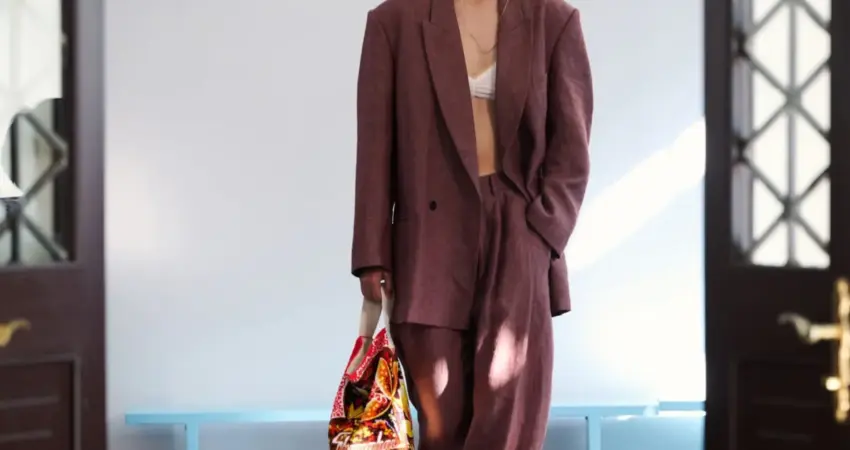
The presentation of the Samuel Guì Yang Spring 2027 collection at the Shanghai Film CHAO marked a significant moment in the evolution of the London-based, Chinese-rooted label. Set within the architectural remains of a 1930s edifice that seamlessly integrates Art Deco Western influences with traditional Chinese structural elements, the show provided a physical manifestation of the brand’s core philosophy: the intersection of disparate cultures and the fluid nature of identity. Designers Samuel Yang and Erik Litzén utilized this setting to debut a collection inspired by the 1993 cinematic masterpiece Green Snake, directed by Tsui Hark. By drawing on the visual language of the film—a modern, avant-garde retelling of the ancient Chinese Legend of the White Snake—the designers explored themes of transformation, shedding, and the cyclical nature of history.
The Spring 2027 collection represents a departure from the brand’s previous focus on structured, voluminous tailoring, moving instead toward a sinuous and body-conscious silhouette. This shift was underscored by a color palette that evoked the elemental properties of water, ranging from the hazy blues of glaciers and smoke to vibrant electric greens and muted pinks. The use of painterly prints and graduated color gradients allowed the garments to appear as though they were in a constant state of flux, shifting and shimmering as models moved through the historic corridors of the Shanghai Film CHAO.
Historical and Cinematic Foundations of the Collection
The primary creative catalyst for the season was Tsui Hark’s Green Snake, a film renowned for its surrealist aesthetics and its subversion of traditional Chinese folklore. The film, starring Maggie Cheung and Joey Wong, redefined the legend of the snake spirits for a contemporary audience, emphasizing the fluidity of gender, the complexity of human emotion, and the blurring of boundaries between the animal and human worlds. For Yang and Litzén, this narrative provided a rich metaphorical framework for a collection centered on the idea of "shedding."
In fashion terms, this metaphor was translated through the use of snakeskin motifs, which were treated with a high degree of abstraction. Rather than literal interpretations of reptilian textures, the patterns were printed onto delicate silks or woven into complex jacquards, suggesting a process of renewal rather than mere decoration. The designers noted that the concept of the snake—an animal that must outgrow its skin to survive—served as a poignant symbol for the brand’s own evolution and the broader trajectory of fashion history.
The choice of venue, the Shanghai Film CHAO, further deepened these historical resonances. Built during Shanghai’s golden age in the 1930s, the building stands as a testament to the city’s long-standing role as a bridge between the East and the West. Its restored interiors, which feature a mix of dark wood, geometric tiling, and intricate stonework, mirrored the "cultural crossovers" that Samuel Guì Yang has championed since its inception.
Technical Innovation and Design Evolution
For a brand traditionally associated with "generous proportions" and a certain architectural stiffness, the Spring 2027 collection introduced a newfound softness and intimacy with the human form. The silhouette was notably more elongated, utilizing fitted jerseys and layered textiles to trace the contours of the body. Openwork techniques and strategically placed cut-outs further emphasized this sinuous line, creating a sense of vulnerability and transparency that contrasted with the brand’s earlier, more protective outerwear.
Key technical highlights included:
- Textile Gradation: The use of "washed" surfaces and ombre dyes created a visual effect of movement, mimicking the rippling of water or the dissipating of smoke.
- Hybrid Jacquards: The integration of archival prints from previous Samuel Guì Yang collections with new Song-dynasty-inspired motifs. These were not merely superimposed but woven into the fabric itself, creating a multi-layered historical narrative.
- Materiality: A focus on natural fibers, including high-grade silks and fine-gauge jerseys, which allowed for the "slithering" movement of the garments as models walked.
The designers emphasized that their use of Chinese references—such as the influence of Song-dynasty water paintings—is a fundamental part of their creative practice rather than a decorative afterthought. This "Neo-Chinese" approach seeks to internalize cultural heritage into the construction and drape of the garment, moving away from the "Chinoiserie" tropes that have historically dominated Western interpretations of Chinese fashion.
Market Context and the Growth of Independent Chinese Design
The Samuel Guì Yang Spring 2027 show occurs at a time of significant transition for the Chinese luxury market. As consumer preferences in the region shift toward "quiet luxury" and a deeper appreciation for local heritage, independent designers who can navigate the complexities of both global and domestic identities are seeing increased relevance.
According to market data from 2026, the demand for "Neo-Chinese" fashion has grown by approximately 18% year-on-year, driven by a younger demographic that values cultural authenticity and artisanal quality. Samuel Guì Yang, founded in 2015, has been at the forefront of this movement. By maintaining a design studio in London while producing and showcasing heavily in China, the brand occupies a unique position in the global supply chain.
The brand’s trajectory reflects a broader trend among Chinese designers who are moving away from the "Made in China" stigma toward a "Created in China" ethos. This involves a rigorous engagement with historical research and a commitment to high-end craftsmanship that rivals European heritage houses. The Spring 2027 collection, with its focus on archival revival and historical continuity, aligns with this drive for longevity in a fast-paced industry.
Chronology of the Spring 2027 Showcase
The presentation was structured as a chronological journey through the themes of the collection, divided into three distinct movements:
- The Emergence (The Blue Phase): The show opened with a series of garments in icy blues and smoky greys. These pieces focused on the "hazy" quality of water, featuring elongated silhouettes and sheer layering that established the theme of transformation.
- The Metamorphosis (The Green and Pink Phase): As the soundtrack shifted to more rhythmic, organic tones, the color palette transitioned into electric greens and soft pinks. This segment introduced the snakeskin jacquards and the more fitted, "sinuous" jersey pieces, representing the peak of the "Green Snake" inspiration.
- The Synthesis (The Archival Phase): The final segment featured a blend of the brand’s signature tailoring with the new, more fluid elements. Archival prints were re-imagined in the context of the new silhouette, bridging the gap between the brand’s past and its future.
Industry observers noted that the pacing of the show echoed the narrative structure of the Legend of the White Snake, moving from a state of ethereal calm to one of intense transformation and eventual resolution.
Responses and Industry Implications
Initial reactions from fashion critics and retail buyers have highlighted the collection’s maturity and its successful navigation of "the body." While Samuel Guì Yang has always been respected for its intellectual approach to design, this season’s move toward a more sensual and form-fitting aesthetic is seen as a strategic evolution that could broaden the brand’s commercial appeal in both Asian and European markets.
"The collection demonstrates a sophisticated understanding of how history can be made contemporary without losing its soul," noted one lead buyer from a prominent Shanghai-based multi-brand boutique. "The integration of the Song-dynasty influences was subtle and masterful, proving that cultural identity in fashion is most powerful when it is felt rather than explicitly seen."
The broader implications for the fashion industry lie in the brand’s refusal to follow a linear path of Westernization. Instead, Samuel Guì Yang suggests that the future of fashion is "slithering"—a non-linear progression where the past is constantly being shed and re-assimilated. This approach challenges the traditional "trend-based" model of the industry, advocating instead for a more reflective and historically grounded creative process.
Conclusion: The Path Forward for Samuel Guì Yang
As the Spring 2027 season concludes, Samuel Guì Yang remains a pivotal figure in the dialogue between East and West. The collection at Shanghai Film CHAO successfully communicated that fashion is not merely about the production of new garments, but about the "continual shedding and renewal" of ideas. By looking back to the cinematic innovations of the 1990s and the artistic traditions of the Song dynasty, Yang and Litzén have created a collection that feels both ancient and remarkably modern.
The success of the show reinforces Shanghai’s growing status as a global fashion capital that is no longer just a destination for Western brands, but a fertile ground for homegrown talent to redefine the global aesthetic landscape. For Samuel Guì Yang, the slithering line of history continues to move forward, weaving together the threads of heritage, cinema, and contemporary identity into a cohesive and compelling vision for the future of luxury.

0 Comments