
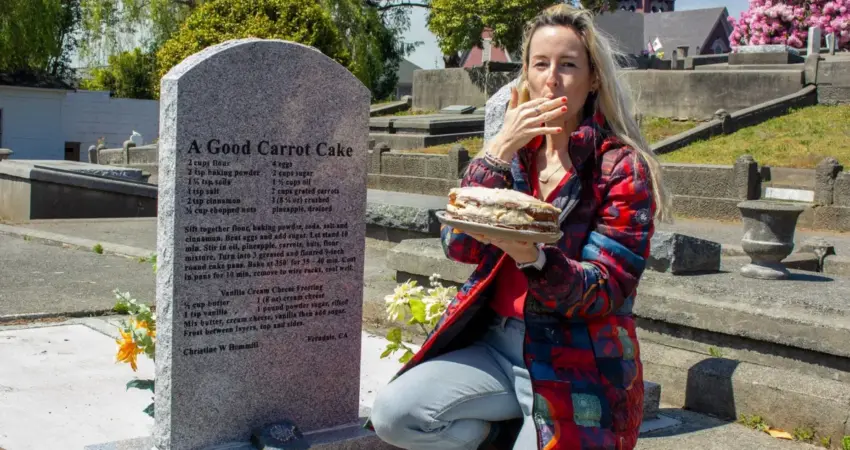
The culinary world often celebrates the living, the innovative, and the chef-driven. Yet, a unique archival project, now transformed into a published cookbook, delves into a less explored, yet profoundly resonant, aspect of food: the recipes left behind, quite literally, on gravestones. Rosie Grant, the visionary behind the project and author of To Die For: A Cookbook of Gravestone Recipes, has meticulously collected and curated these edible legacies, transforming them into a tangible testament to the lives and loves of ordinary individuals. This endeavor, born from a personal curiosity, has blossomed into a nationwide phenomenon, touching upon themes of memory, identity, and the enduring power of shared meals.
Grant’s journey began with a spark of fascination ignited during a digital archives internship at the Congressional Cemetery in Washington, D.C. It was here, amidst the hushed solemnity of resting places, that she discovered the poignant inscriptions of recipes etched into headstones. This discovery sparked a deep dive into the practice, leading her to establish social media platforms, @ghostlyarchive on TikTok and Instagram, to document her findings. Over the past five and a half years, her archival quest has expanded exponentially, taking her across the United States, from the remote landscapes of Nome, Alaska, to the historic environs of Nova Scotia, to unearth these culinary memorials and the stories of the individuals they represent.
The Genesis of a Gravestone Archive
The concept of inscribing recipes on tombstones, while seemingly unusual, taps into a deeply human desire for remembrance and connection. These are not the recipes of celebrated chefs, but rather the cherished dishes that defined everyday life for teachers, dentists, neighbors, and community pillars. The act of sharing food was, and remains, a primary way many people expressed love and nurtured their communities. By immortalizing these recipes on their final resting places, individuals ensured that a tangible piece of their culinary heritage, and the love it represented, would endure.
Grant’s initial curiosity evolved into a profound realization about identity, place, and the indelible marks we leave behind. The project’s roots can be traced to a growing interest in the Death Positive Movement, an initiative that advocates for open conversations about mortality, grief, and end-of-life planning. This movement recognizes that acknowledging death is not morbid, but rather a vital component of a healthy, fulfilling life. Grant’s work, by bringing the comforting and life-affirming aspect of food into discussions about death, offers a gentle and accessible entry point into these often-taboo subjects.
A Culinary Tapestry of American Lives
The resulting cookbook, To Die For, is a rich mosaic of American culinary nostalgia, interspersed with surprising historical footnotes. It features over 40 recipes, each meticulously vetted and approved by the families of the deceased. The collection showcases a wide array of baked goods, often prepared in large batches, reflecting the comforting traditions associated with funeral foods. Classics such as spritz cookies, brownies, and carrot cake stand alongside more unique entries like a World War II-era guava cobbler, a no-bake blueberry pie, and the untold story behind the beloved Irish coffee. Savory dishes also feature prominently, including Jack Daniel’s marinade, easy cheese and ranch dips, rustic breads, meatloaf described as “Texas’ best,” fried ripe tomato, spaghetti chicken casserole, and kasha varnishkes.

The inclusion of these diverse recipes underscores the breadth of American culinary traditions and the personal histories woven into them. For instance, the story of Naomi Odessa Miller-Dawson, whose spritz cookie recipe is famously inscribed on her headstone in Brooklyn’s Green-Wood Cemetery, exemplifies the enduring impact of a beloved family recipe. Her son, Richard Dawson, and granddaughter, Nailah, shared with Grant the profound memories associated with Naomi’s baking, including the nostalgic smells and the anticipation of warm cookies straight from the oven. This personal narrative, as recounted by Grant, transformed the project from a simple collection of recipes into an exploration of memory, sensory experience, and intergenerational connection.
The Archival Process: From Headstones to Homes
Grant’s archival process is both methodical and deeply personal. It involves extensive internet sleuthing, primarily through obituaries and social media, to locate surviving family members. The crucial step of obtaining permission from these families ensures that the publication of these recipes is done with respect and honor. This often leads to deeply moving interactions, where Grant not only learns about the recipes but also the lives of the individuals who created them.
One of the most poignant aspects of Grant’s work is her direct engagement with the families. She has cooked with seven families featured in the book, bringing the recipes back to life in communal settings. These culinary pilgrimages often involve visiting the gravesites with the prepared dishes, a symbolic act of remembrance and connection. This immersive approach has provided Grant with invaluable insights into the evolving nature of burials and grave markers. The advent of mass industrialization and advancements in stone working have made granite headstones more accessible and durable, allowing for greater customization and personalization. This shift reflects a broader cultural evolution towards more individualistic and expressive memorials, transforming cemeteries into vibrant repositories of personal histories.
The Power of Culinary Memory and Grief
Grant posits that engaging with recipes can serve as a surprisingly comforting and life-affirming way to approach the sensitive topics of mortality and death. The act of sharing a meal or stepping into a memory-filled kitchen can break down conversational barriers, facilitating open dialogue about loss and remembrance. She draws a parallel to her own upbringing, where her parents, who conducted ghost tours, were more comfortable with the spectral than the practicalities of planning for the inevitable. "Something like a recipe feels so life-giving," Grant explains. "Talking about these many life-filling moments might be an easier way to talk about tough topics."
This sentiment resonates deeply with many of Grant’s followers and the families she has worked with. The act of revisiting these recipes offers a form of sensory catharsis, providing comfort and a tangible connection to loved ones. For many, the cookbook has inspired them to consider their own familial food legacies and the recipes they might wish to preserve. The regret of not documenting such personal histories while loved ones were still alive is a common refrain among commenters, highlighting the urgent need for such initiatives.
Navigating Challenges and Fostering Connection
While Grant’s project has been met with widespread appreciation and inspiration, it has not been without its challenges. She has encountered detractors, including self-identified mediums who claim to speak for the deceased, and in one instance, a living individual who did not appreciate their culinary secrets being shared. However, these instances are outnumbered by the profound connections forged and the positive impact of the work.

The desire for a physical book, rather than a purely digital format, emerged from conversations with the families. They expressed a wish for something tangible, something "precious" that could be inherited, mirroring the sentiment of the recipes themselves. Grant has intentionally designed the book with a visual style reminiscent of heirlooms passed down through generations, further enhancing its enduring appeal.
Documenting Your Own Legacy: A Call to Action
Beyond the curated recipes, Grant’s book offers a valuable resource: a thoughtful list of questions designed to help individuals begin documenting their own familial food legacies. She acknowledges the potential awkwardness of directly asking family members to write down recipes with the explicit understanding of their eventual mortality. However, she offers practical and gentle alternatives. "It can feel really morbid to be like, ‘Hey mom, can you write down your recipe because you’re gonna die someday?’" Grant notes. Instead, she suggests less direct approaches such as photographing recipe boxes, texting them to family group chats, or saving them to a shared digital drive.
Crucially, Grant emphasizes the power of shared experiences. "Cook with your family member. Teach me how to do it, let’s cook it together," she advocates. This hands-on approach not only preserves recipes but also creates invaluable memories and strengthens familial bonds. The act of passing down culinary knowledge is, in itself, a powerful ritual, fostering a sense of continuity and shared identity.
The Enduring Significance of Culinary Heritage
To Die For transcends its function as a cookbook; it is a cultural artifact, a testament to the enduring power of food to connect us to our past, our loved ones, and our communities. The project highlights a shift in attitudes towards heritage, family, and home life, particularly from the turn of the century, when such traditions were deeply ingrained. By preserving these culinary narratives, Grant is facilitating a "rite of passage," a way for families to pass the torch to the next generation, ensuring that the flavors and memories of their ancestors continue to nourish and inspire.
Rosie Grant’s work serves as a powerful reminder of the importance of observing and maintaining these rituals. In her words, "If we don’t do it, nobody else will." This sentiment underscores the proactive role individuals can play in preserving their own legacies and the legacies of those they hold dear, proving that even in the face of mortality, the essence of a life can be beautifully and deliciously remembered. The book stands as a beacon, illuminating how the most profound connections can be forged through the simple, yet deeply meaningful, act of sharing a recipe.

0 Comments