
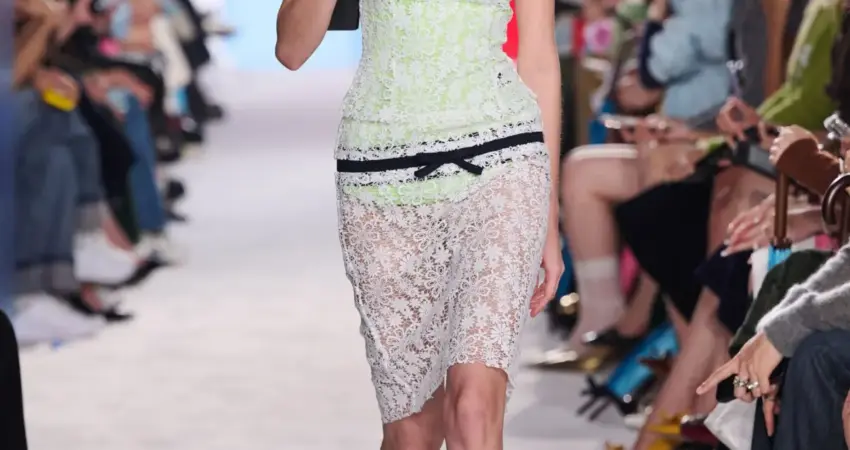
The Spring 2027 presentation by Shushu/Tong at Shanghai Fashion Week served as a sophisticated exploration of cinematic nostalgia, blending the whimsical aesthetic of 1960s French cinema with the contemporary sensibilities of East Asian youth culture. Titled "Darling Melancholy," the collection drew its primary inspiration from Jacques Demy’s 1964 musical masterpiece, The Umbrellas of Cherbourg. Upon entering the venue, attendees were greeted by a visual tribute to the film: a colorful umbrella placed on every seat, signaling a departure from the somber tones often associated with the word "melancholy." Designers Liushu Lei and Yutong Jiang utilized this thematic foundation to construct a narrative that was less about the heartbreak depicted in Demy’s work and more about the vibrant, stylized optimism of the era’s fashion.
The Cinematic Influence: From Cherbourg to Shanghai
The choice of The Umbrellas of Cherbourg as a creative touchstone provided a rich palette of saturated pastels and structured silhouettes. The film, known for its sung-through dialogue and meticulously coordinated wallpaper-and-wardrobe color schemes, offered a blueprint for Shushu/Tong’s exploration of high-concept femininity. However, the designers did not merely replicate the costumes of Catherine Deneuve; instead, they filtered the 1960s European "Mod" movement through what they described as an "Asian lens." This perspective integrated the sharp, geometric lines of Mary Quant and the space-age minimalism of André Courrèges with the exaggerated, almost surreal prettiness found in Japanese shoujo anime.
The resulting garments featured short, "girly" silhouettes that have become a hallmark of the Shushu/Tong brand. Petal-edged details and balloon skirts dominated the runway, executed in a series of candy-colored combinations that defied the collection’s title. While Demy’s film concludes on a bittersweet note of lost love and practical compromise, Lei and Jiang’s interpretation was decidedly upbeat. The "melancholy" was relegated to the conceptual title, while the physical manifestations—pink umbrellas, beaded daisies, and macramé lace—suggested a resilient, playful approach to emotional complexity.
Technical Artistry and Materiality
The Spring 2027 collection demonstrated a high level of technical proficiency in its construction and textile choice. The use of macramé lace added a tactile depth to the garments, bridging the gap between traditional craft and modern luxury. Embellishments were used strategically rather than excessively; beaded daisies provided a rhythmic texture to the surfaces of dresses and separates, maintaining a sense of lightheartedness.
Proportion played a critical role in the collection’s success. The designers managed to balance the volume of balloon skirts with neatly proportioned bodices, ensuring that the "unreal prettiness" of the anime-inspired aesthetic remained "disarmingly wearable." This balance is essential for the brand’s commercial viability, as it appeals to a demographic of "Very Important Customers" (VICs) who seek statement pieces that can transition into a high-end daily wardrobe.
The accessories served as the final punctuation mark for each look. Models carried ladylike boxy bags in the crooks of their arms, their rigid structures and bright colors giving them the appearance of Pop Art toys. These accessories reinforced the collection’s dialogue between mid-century formality and contemporary playfulness, suggesting that even the most "adult" accessories can be reimagined through a lens of youthful obsession.
The Evolution of Shushu/Tong: A Chronological Context
Founded in 2015 by London College of Fashion graduates Liushu Lei and Yutong Jiang, Shushu/Tong has spent over a decade carving out a unique niche in the global fashion landscape. The brand emerged during a pivotal moment in the Chinese fashion industry, characterized by a shift away from international labels toward domestic designers who could offer a distinct cultural narrative.
- 2015–2018: The brand established its core identity, focusing on the "modern girl" archetype. It gained early traction by subverting traditional schoolgirl uniforms and incorporating elements of subculture fashion.
- 2019–2022: Shushu/Tong expanded its international footprint, securing placements in prestigious global retailers such as Dover Street Market and SSENSE. During this period, the designers began experimenting with more complex themes, moving beyond simple "cuteness" to explore the darker, more obsessive undertones of femininity.
- 2023–2026: The label became a leading voice in the "Girlhood Economy," a market segment driven by Gen Z and Millennial consumers who embrace hyper-feminine aesthetics (often referred to as "Coquette-core" or "Balletcore").
- Spring 2027: The "Darling Melancholy" collection represents a maturation of this trajectory. By referencing 1960s French cinema, the designers are situating their work within a broader historical and artistic context, signaling their readiness to compete on a global stage of heritage and storytelling.
Market Analysis: The Rise of the ‘Girlhood Economy’ in China
The enthusiastic reception of the Spring 2027 collection by the front-row audience—described as "well-groomed" and possessing "laser focus"—highlights the significant economic power of the Shushu/Tong consumer. In China, the luxury market has seen a diversification of interests. While traditional heritage brands like Chanel and Louis Vuitton remain dominant, there is a growing appetite for "designer brands" that offer a more niche, personalized aesthetic.
According to retail data from the previous fiscal year, the "designer brand" segment in China has grown by an estimated 12% annually. Shushu/Tong occupies a strategic position within this growth. Their ability to blend high-fashion concepts with the visual language of anime and internet culture resonates deeply with a generation of consumers who grew up in a digital-first environment. For these VICs, purchasing a balloon skirt or a beaded daisy top is not just a fashion choice; it is an act of identity performance.
The brand’s success is also reflective of the "Guochao" (national trend) movement, though Shushu/Tong approaches this differently than many of its peers. Rather than using overt traditional Chinese motifs, they apply a Chinese creative perspective to global cultural references. This "Asian lens" allows them to reinterpret Western fashion history in a way that feels fresh and relevant to both domestic and international markets.
Statements and Perspectives
While the designers remained focused on the creative inspirations of their childhood and cinematic interests, industry analysts have noted the strategic brilliance of the Spring 2027 show. A representative from a major Shanghai-based luxury boutique commented on the collection’s retail potential: "Shushu/Tong understands the psychology of their customer better than almost any other contemporary label. They offer a sense of escapism that is grounded in high-quality manufacturing. The Spring 2027 pieces are already seeing high pre-order interest because they are ‘Instagrammable’ but also technically superior to fast-fashion imitations."
The designers themselves emphasized that their work is a reflection of their personal evolution. "We are always looking back at what shaped us," Liushu Lei stated in a post-show interview. "But we are looking at it from where we are now. The 1960s were a time of great change and optimism, and we wanted to bring that energy to the present, even if we call it melancholy."
Broader Impact and Implications for Shanghai Fashion Week
The success of Shushu/Tong’s Spring 2027 show reinforces Shanghai’s status as a global fashion capital. No longer just a manufacturing hub or a secondary market for European houses, Shanghai is now a source of genuine creative innovation. The "Darling Melancholy" collection demonstrates that Chinese designers are capable of taking complex Western cultural references—like French New Wave cinema—and transforming them into something entirely new and commercially potent.
Furthermore, the collection signals a shift in the "feminine" aesthetic. By moving away from the "bittersweet longing" of its source material and toward a more assertive, "sporty," and "upbeat" presentation, Shushu/Tong is redefining what it means to be "girly" in 2027. It is a femininity that is self-aware, curated, and unapologetically commercial.
As the fashion industry continues to grapple with the balance between artistry and profitability, Shushu/Tong’s Spring 2027 collection serves as a case study in how to achieve both. By staying true to their "childhood obsessions" while refining their technical craft and market strategy, Liushu Lei and Yutong Jiang have ensured that their brand remains at the forefront of the modern fashion dialogue. The "melancholy" may have been left in the title, but the impact of the collection will likely be felt throughout the retail season, as those "boxy bags" and "petal-edged" skirts move from the runway into the carts of consumers worldwide.

0 Comments