
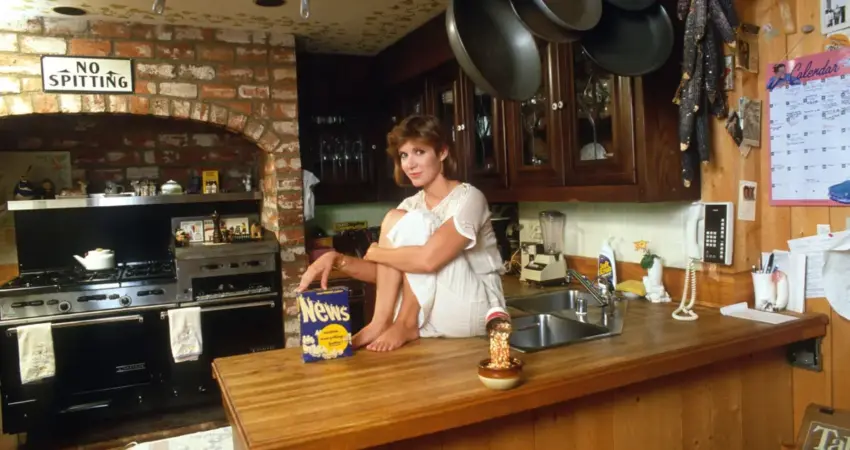
Carrie Fisher, the beloved actress, writer, and cultural icon, lived a life as vibrant and multifaceted as the characters she portrayed. Throughout her decades in the public eye, Fisher called several distinctive residences home, each reflecting her unique personality and artistic spirit. From her formative years in Hollywood to her final sanctuary in the Hollywood Hills, Fisher’s homes were not just places of dwelling but extensions of her creative and emotional landscape. Her proximity to her mother, Debbie Reynolds, in their later years, especially, painted a picture of enduring familial love and a shared life lived close to the heart of show business.

The narrative of Carrie Fisher’s homes is inextricably linked to her personal journey and her profound bond with her mother, Debbie Reynolds. In the years leading up to their tragic deaths just a day apart in late 2016, the two were virtually inseparable. Fisher resided in a charming Spanish-style estate nestled high in the Hollywood Hills. At her suggestion, Reynolds moved into a neighboring cottage, a living arrangement Reynolds described as "very nice." This close proximity not only facilitated their daily lives but also allowed for cherished time with Fisher’s daughter, Billie Lourd, and her son, Todd Fisher, who also lived nearby. This period of shared life was poignantly captured in the 2016 documentary Bright Lights, where Fisher famously stated, "I’m my mom’s best friend… Far more than I ever would want to, I know what my mother feels and wants." The profound grief that followed their untimely passing, with Reynolds reportedly not wanting to leave Carrie and "not wanting her to be alone," as Todd Fisher recounted to 20/20, underscored the depth of their connection. As Fisher would have celebrated her 70th birthday, her homes offer a tangible glimpse into the life of a woman who filled her spaces with as much character as she brought to her roles.
The Foundations of a Hollywood Dynasty
Carrie Fisher’s earliest memories of home were shaped by the golden age of Hollywood. Born in Burbank, California, in 1956, she was the daughter of screen legend Debbie Reynolds and the immensely popular singer and actor Eddie Fisher. The family’s first significant move as a unit, prior to the birth of Carrie’s younger brother, Todd, in February 1958, was to a spacious two-story, four-bedroom white-brick house on Conway Avenue in Holmby Hills. Reynolds, in her autobiography Debbie: My Life, described this residence as a place that provided ample room for their growing family, featuring a large family room and a bay window that offered views of a pool and a rose garden. This period, captured in a poignant 1958 family photograph, shows a young Carrie, approximately 18 months old, nestled in her father’s lap, while Reynolds cradles an infant Todd. The image evokes a sense of domestic tranquility, a stark contrast to the tumultuous events that would soon follow.

The idyllic picture of family life began to fracture in 1959 with the highly publicized divorce of Debbie Reynolds and Eddie Fisher, precipitated by Fisher’s affair with Elizabeth Taylor. This seismic shift in the family’s structure led to a new chapter for Carrie and Todd. They moved with their mother to a Beverly Hills residence owned by Reynolds’s second husband, businessman Harry Karl. Described by Carrie as feeling "more like a place where you would get your passport stamped" than a true home, this abode was a testament to Karl’s considerable wealth. The property boasted three swimming pools, a five-car garage that housed at least two Rolls-Royces, and luxurious amenities for the children, including individual bedrooms with marble en-suite bathrooms. The home also featured a projection room that rivaled a small theater, a nod to the family’s deep immersion in the entertainment industry. The early 1960s saw Carrie and Todd navigating this opulent, yet perhaps less personal, environment.
A Star’s Own Address: The Paul Simon Years and Beyond
Carrie Fisher’s journey through adulthood saw her forge her own path, both personally and professionally. At the age of 26, she married musician Paul Simon in a private ceremony held at his Central Park West apartment in New York City. The guest list was a constellation of stars, including her parents, Billy Joel, George Lucas, Mike Nichols, Randy Newman, Robin Williams, Christie Brinkley, and Art Garfunkel, Simon’s musical partner. Despite the star-studded attendance, the marriage proved brief, lasting less than a year. However, a significant memento from this period, a Muller Frères lamp, would remain a constant in Fisher’s life. She described it as representing her marriage to Paul, and during periods of separation, it was the only possession she would take, famously stating, "No luggage, just the lamp." This lamp, which she acquired during a "manic" shopping spree for $25,000, eventually found a place of honor on her living room Steinway in her final Hollywood Hills home, a tangible link to a complex chapter of her life.

Establishing Roots: The Beverly Hills Estate
By 1983, Carrie Fisher had not only reprised her iconic role as Princess Leia in Return of the Jedi but had also achieved another significant milestone: homeownership. She purchased a 2,600-square-foot, three-bedroom house in Beverly Hills for $925,000 from actor David Soul, known for his role in Starsky & Hutch. Situated on approximately one acre of land, the property offered a serene escape with a sauna, a pool, and a lush bamboo forest. This home was more than just an investment; it was a canvas for Fisher’s evolving life. Over the years, the property passed through various notable hands, including Kevin Huvane, co-chairman of Creative Artists Agency (CAA), and filmmaker Roberto Sneider. In 2015, the home was acquired by actor Channing Tatum for $6 million, according to Variety, underscoring the enduring appeal and value of residences in this prestigious Los Angeles enclave.
A Writer’s Sanctuary: The Hollywood Hills Retreat
In 1987, the same year her semi-autobiographical novel Postcards from the Edge became a bestseller, Carrie Fisher purchased another Los Angeles property. This house, with its Spanish-style architecture, would become her most enduring residence and a sanctuary for her creative spirit. Fisher famously told Architectural Digest in 2004 that it was "my furniture that made the call" to purchase this particular home, having accumulated so much that she needed a place where it "wanted to go." The house itself had a rich history, previously owned by King Kong actor Robert Armstrong, then by legendary costume designer Edith Head, and even by the iconic actress Bette Davis.

Fisher transformed the property into a reflection of her eclectic tastes. The driveway gate featured a whimsical rodeo scene and a plaque humorously inscribed with "Wow! That Was Some Cup of Coffee Institute of Alternative Life-Styles." The grounds boasted a swimming pool lined with rocks and a treehouse adorned with a sign warning, "Beware of Trains." A fake cow added to the distinctly Western motif. This home became a hub for her life, a place where her unique sense of humor and unconventional approach to living were on full display. It was here that she lived in close proximity to her mother, Debbie Reynolds, creating a unique familial compound that would become synonymous with their intertwined lives.
A Home Filled with Life and Character
Carrie Fisher’s homes were not merely static structures; they were dynamic spaces that teemed with life, history, and personality. She was known to be a devoted pet owner, sharing her spaces with a menagerie of animals. During her time in Beverly Hills, she lived with Buddy, a Jack Russell terrier, and two talking parrots named Dean and Joan. Fisher’s fondness for birds and dogs, stemming from an allergy to cats, was well-documented. She described the parrots’ habit of repeating her phone conversations as akin to "having a lot of children in the house screaming," yet she also found companionship in their presence. Joan, in particular, would join her in the bath and even "sing opera," adding another layer of whimsical charm to her domestic life.

Her guesthouse also served as a welcoming haven for a wide array of individuals. Fisher, with her characteristic generosity and empathy, opened her doors to friends, acquaintances, and those in need of a safe harbor. The guesthouse became a temporary residence for people battling addiction, depression, cancer, and HIV, as well as those simply "passing through." This spirit of open-hearted hospitality extended to the unexpected. At one point, an upright piano was housed in the bathroom due to a lack of space, a testament to Fisher’s ability to adapt her environment to her needs and whims. This unusual placement even led to singer James Blunt using the acoustically favorable bathroom as a studio to record a song. Fisher aptly described her home as "just one of those houses that does things to people," a place that fostered creativity and offered solace.
The interior of her final Hollywood Hills home was a curated collection of her life’s experiences and aesthetic sensibilities. She decorated with oversized 1930s leather club chairs, vibrant folk art, and intricate Indian rugs, creating an atmosphere that was both comfortable and visually stimulating. Recognizing her daughter Billie Lourd’s preference for modern design, Fisher incorporated contemporary pieces like bubble and egg chairs, alongside a plush fake-suede sofa by Michel Ducaroy in the den. The den, where the family often gathered, featured a plasma TV that ingeniously emerged from a wooden window seat. While Fisher admitted to not personally favoring the modern additions, she acknowledged their playful contribution to the overall eclectic charm of the residence, a characteristic that defined her life and her spaces.

The Enduring Legacy of Shared Spaces
The profound bond between Carrie Fisher and Debbie Reynolds was a defining aspect of their later lives. Their neighboring homes in the Hollywood Hills became a symbol of this closeness. Following their tragic deaths in 2016, the combined estate, spanning 3.5 acres, was listed for $18 million, as reported by Mansion Global in June 2017. This offering presented a unique opportunity to acquire not just property, but a piece of Hollywood history intertwined with the legacy of two iconic women.
Ultimately, Billie Lourd made the deeply personal decision to keep her mother’s house. In a candid conversation with Sarah Paulson for Town & Country, Lourd revealed her reasoning: "I went back and forth on it, but it’s so magical… It’s such a special place." She envisioned continuing the spirit of community and shared living that had characterized her mother’s home, planning to have friends move in, creating "an old-style commune." This decision ensured that the essence of Carrie Fisher’s beloved sanctuary, a place filled with memories, laughter, and a unique brand of magic, would continue to endure. The homes of Carrie Fisher and Debbie Reynolds stand as a testament to their extraordinary lives, their enduring family ties, and their indelible mark on the landscape of American entertainment and culture.

0 Comments