
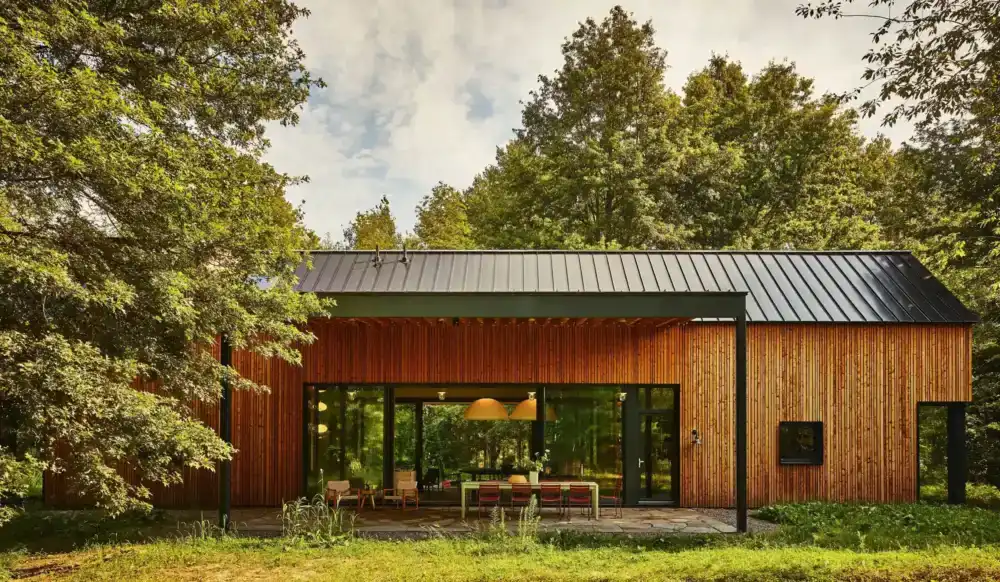
For one Hudson Valley couple, the creation of a guesthouse and writer’s studio was not merely an architectural addition; it was a profound expression of deeply held values. Their vision was to craft a sanctuary for artists, writers, and fellow creatives, a space defined by an equal measure of environmental consciousness and romantic sensibility. The new structures were designed to integrate harmoniously with the natural landscape, while simultaneously adhering to stringent passive house and net-zero energy standards. Furthermore, the material palette was meticulously curated to be entirely vegan, and the aesthetic was intended to evoke a refined Japanese-Shaker influence. This ambitious undertaking spanned two and a half years, culminating in structures that offer both profound functionality and a deep connection to their surroundings.

The Genesis of a Creative Haven
The inspiration for this unique project stemmed from a desire to cultivate distinct environments for different aspects of life. The writer’s studio was conceived as a deliberately solitary and contemplative space, intended to foster deep creative work and introspection. In stark contrast, the guesthouse was envisioned as an extension of family life and a conduit for sharing their cherished locale. "For the guesthouse, it was important to us to create a place where far-flung friends and family could come stay and get to know our children as they grow up," the husband explained. "It’s also a way of sharing this beautiful area we’re so lucky to live in." This dual purpose—a personal retreat for creative pursuits and a welcoming space for loved ones—guided every design decision.
Architectural Vision: North River’s Expertise
To translate this multifaceted vision into tangible form, the couple enlisted the expertise of North River, a distinguished architecture firm based in the Hudson Valley. Principal Chris Ruel, working alongside partners Samantha Roesemann and Miles Dandrew, spearheaded the design. The primary challenge, as Ruel articulated, was to seamlessly integrate two new structures into the existing property’s side yard without detracting from or competing with the main residence. The objective was for the new buildings to "fall away into nature" while still offering a meaningful and comfortable experience for guests.

The firm’s commitment to sustainability is evident in their design philosophy, which prioritizes long-term durability and minimal environmental impact. Both the guesthouse and the writer’s studio were designed to meet rigorous passive house standards. This certification signifies buildings that are exceptionally airtight, highly insulated, and equipped with efficient ventilation systems, drastically reducing energy consumption for heating and cooling. The net-zero aspect means the buildings are designed to produce as much renewable energy as they consume over the course of a year, often achieved through integrated solar panels or other on-site renewable energy sources.
"We’re trying to build homes that not only last 150 years because the quality of the build is beyond, but that also have a minimal impact on the environment for that entire lifespan," Ruel stated. This forward-thinking approach extends to the materials used. Thermally modified wood siding was chosen for its enhanced durability and resistance to decay, allowing the structures to blend naturally into the surrounding forest. Powder-coated aluminum trim further contributes to the longevity and low maintenance of the exterior. Ruel emphasized the tangible benefits of such construction: "What we love about passive houses and net-zero homes is not that they have a badge or that there’s some cachet to it, but that when you’re in one, it’s the most comfortable living experience you can have." This comfort is attributed to stable internal temperatures, excellent indoor air quality, and a quiet interior environment due to superior sound insulation.

Interior Design: Frances Mildred’s Tactile Restraint
For the interior design, the couple re-engaged with Frances Mildred, an architectural and interior design practice co-founded by Lauren MacCuaig and Brian Papa. Having previously collaborated on the couple’s Manhattan residence, the team understood the clients’ aesthetic sensibilities and commitment to sustainable and ethical material choices. The core objective was to imbue North River’s precisely executed architecture with a sense of warmth and lived-in comfort, all while strictly adhering to a vegan material palette.
"The question became: ‘How do we bring warmth into this kind of restrained architectural language that North River has created so elegantly?’" MacCuaig mused. This necessitated extensive research into innovative materials that could replicate the luxurious feel and comfort typically associated with animal-derived products like down and wool. This commitment to a vegan material palette extended beyond ethical considerations; it also aligned with the couple’s broader environmental values, encouraging the use of natural, renewable, and non-toxic materials.

The Writer’s Studio: A Sanctuary for Solitude
Within the writer’s studio, the design prioritizes focus and inspiration. The entry area serves as a practical transition zone, designed to manage the practicalities of seasonal weather. "This is Upstate, where weather changes throughout the seasons pretty dramatically," the designer explained. "So there was a lot of talk about where to place wet muddy shoes or your snowy boots—how do you take that all off without damaging the walls or bringing the mud into the main space?" To address this, custom stained white-oak bench, wall cladding, and shelving were designed by Frances Mildred and expertly crafted by Vernacular, a Kingston, New York-based firm renowned for its artisanal woodwork. These elements create an organized and welcoming landing strip for outerwear and accessories, ensuring the main living space remains pristine. Overhead, a Workstead flush mount fixture casts a soft, ambient light, setting a serene tone.
The heart of the writer’s studio is a custom desk, meticulously designed by Frances Mildred and brought to life by Daniel Kent. Its spare silhouette and carefully considered proportions contribute to the room’s contemplative atmosphere. "Just looking at it at a glance, it looks very simple," MacCuaig commented on the desk’s design, "But the proportions and details were actually quite precise and really beautiful." Anchoring the space, a vintage hemp rug from Galerie Shabab lends a natural texture underfoot, complemented by a vintage Pigreco-style desk chair and a classic Bruno Mathsson lounge chair, offering ergonomic comfort for extended work sessions.

The studio bathroom features a distinct design choice: walls enveloped in a rich, deep-green plaster. "I think enveloping small spaces with rich color really actually makes the space feel more expansive," MacCuaig observed. This bold use of color creates an immersive and sophisticated atmosphere. The sink is a custom cast stone piece by Le Cer, resting on a floor clad in Raja Ampat pebble tile, further enhancing the tactile and natural feel of the space.
The Guesthouse: An Extension of Family and Hospitality
The guesthouse, in contrast to the studio’s solitude, is designed for connection and conviviality. The dining room serves as a central gathering point, featuring an expansive ebonized white-oak table by Michael Robbins. This substantial piece is surrounded by Carl Hansen chairs, offering classic Danish design and comfort, alongside a pair of vintage Paolo Buffa seats, adding a touch of historical elegance. The deliberate choice of these chairs, known for their intricate craftsmanship and timeless appeal, underscores the commitment to quality and enduring style.

The lighting in the dining area is crucial to its adaptability. Oversized Oluce pendants are strategically hung at a calibrated height, allowing the room to transition seamlessly from intimate seated dinners to more lively standing gatherings. This thoughtful consideration of light height ensures optimal ambiance and functionality for various social scenarios. MacCuaig noted, "This space functions as both a place where people can gather [for a meal] inside, but they can also clear out the center for a larger group."
The guesthouse kitchen embraces a palette of natural materials and refined finishes. Custom-patinated zinc countertops, expertly crafted by Brooks Custom, offer a durable and aesthetically pleasing surface. They are paired with a Heath Ceramics tile backsplash, chosen in a landscape-inspired hue that complements the surrounding environment. A set of Suite 22 stools line the island, providing casual seating and enhancing the kitchen’s social functionality. These are complemented by Sun Valley Bronze hardware, adding a touch of understated luxury, and a Dornbracht faucet, known for its precision engineering and elegant design.

A key feature of the kitchen is the Fisher & Paykel refrigerator, clad in custom oak paneling that seamlessly integrates it into the cabinetry. This detail exemplifies the commitment to a cohesive and custom-designed aesthetic. The overall warmth of the kitchen is further amplified by stained white-oak millwork, a design element by Frances Mildred and a testament to Vernacular’s exceptional craftsmanship. This warm wood, wrapping the space, creates an inviting and tactile experience, reinforcing the project’s ethos of comfort and natural beauty.
Materiality and Sustainability: A Vegan Palette
The dedication to a vegan material palette permeated every aspect of the design, presenting both challenges and opportunities. "We really had to research new materials that would recreate the feeling and comfort that animal products like down and wool give you," MacCuaig stated. This research led to the incorporation of innovative textiles and finishes that offered the desired aesthetic and tactile qualities without compromising ethical standards. For instance, in the guesthouse, vintage Danish modern lounge chairs were reupholstered using vegan-friendly fabrics, preserving their iconic form while aligning with the project’s core values.

The guest bedrooms continue this thoughtful approach to materiality. The first guest bedroom features bedding from Les Indiennes, known for its vibrant, hand-printed textiles, layered with pillows from the same brand, contributing to a sense of global artisanal influence. A custom jute rug by Marc Phillips grounds the space, adding natural texture. A ceiling fixture by Swadoh provides a sculptural element. North River’s architectural intervention in these spaces included subtly lifting the windows into the ceiling plane, an ingenious detail that enhances the sense of continuity between the interior and the verdant landscape, blurring the lines between indoors and out.
In the second guest bedroom, a Neem Living quilt is layered with additional pillows from Les Indiennes, creating a rich tapestry of textures and patterns. A Nakashima straight-back chair, a piece celebrated for its organic forms and master craftsmanship, sits at a custom stained white-oak desk. This desk, designed by Frances Mildred and built by Vernacular, echoes the quality of craftsmanship found throughout the home. Lighting in this room includes a Noguchi Akari table lamp, casting a soft, diffused glow, and a sconce by Lumfardo, adding a modern sculptural accent.

The second guest bath further distinguishes itself from the first with a deeper shade of green on its walls, creating what MacCuaig describes as a look that’s "not a repeat, but very well coordinated." This intentional variation in color palette adds depth and character to the different spaces within the guesthouse. Designed with practicality in mind, the tub is fully wrapped in tile, ensuring the room is as resilient and easy to clean as it is aesthetically pleasing.
Harmonizing Form and Function
The overall design philosophy emphasizes a harmonious interplay between the natural environment and thoughtfully curated interiors. The guesthouse kitchen’s design, with its zinc countertops and Heath Ceramics backsplash, exemplifies this. The addition of a custom pendant, designed by Frances Mildred and fabricated by Transluxe, adds a final sculptural touch, reinforcing the room’s aesthetic appeal.

The crowning achievement is the top-floor room, which was envisioned to evoke the feeling of being nestled within the trees. "We really wanted to embrace that feeling of being in the canopies of the trees," MacCuaig remarked. This is visually achieved through the extensive use of Lewis & Wood’s Blossom wallpaper, creating an immersive, arboreal atmosphere. A custom sofa, designed by Frances Mildred, built by Vernacular, and upholstered by Pumas, provides comfortable seating and converts into a bed, offering versatile accommodation. A bespoke pendant, also by Frances Mildred and fabricated by Transluxe, adds a further layer of artistic detail. Chris Ruel expressed his particular fondness for this space, noting, "Of all the spaces in the house, this one was one of my favorite transformations."
The guesthouse bathroom features a custom vanity and medicine cabinet, designed by Frances Mildred and built by Daniel Kent, topped with white travertine. Dornbracht fixtures complement the sophisticated aesthetic, while Heath Ceramics tile and Allied Maker sconces add further refinement and a warm, sculptural glow.

Conclusion: A Testament to Intentional Design
Ultimately, this project stands as a testament to intentional design, where every element, from the structural integrity to the smallest decorative detail, serves a purpose aligned with the homeowners’ values. The writer’s studio now provides a sanctuary for focused creative endeavors, while the guesthouse thrives as a welcoming hub for family and friends. The successful integration of passive house and net-zero standards demonstrates that high-performance building can coexist with sophisticated aesthetics. The careful selection of vegan materials highlights a commitment to ethical and sustainable living without sacrificing comfort or beauty. The collaboration between North River’s architectural vision and Frances Mildred’s tactile, considered interiors has resulted in a compound that is not only environmentally responsible but also deeply personal and beautifully realized, offering a model for future conscious construction.

0 Comments