
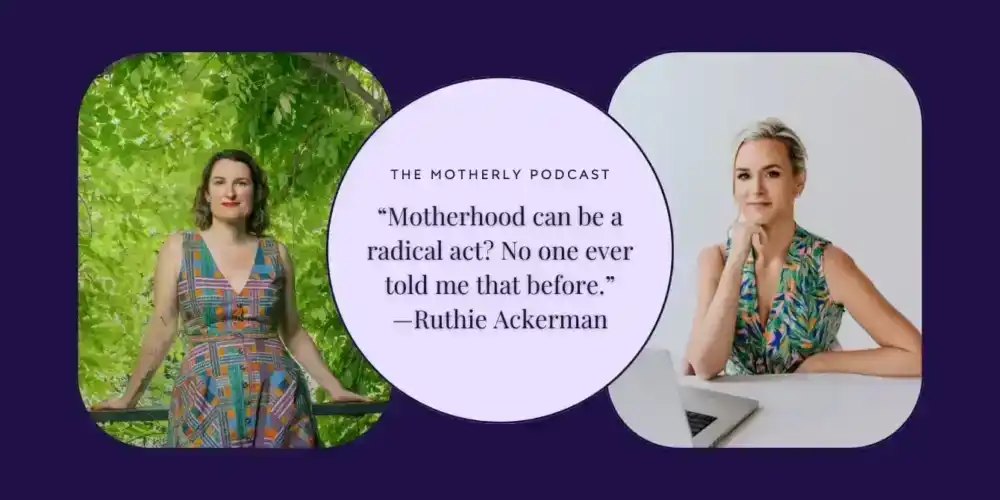
In a compelling narrative that challenges deeply ingrained societal and familial myths, author and memoirist Ruthie Ackerman reveals her transformative journey from staunch childfree conviction to the profound joys and complexities of motherhood. Her recently released memoir, The Mother Code, unpacks how unraveling personal histories, confronting fertility challenges, and discovering a lineage of "outlaw mothers" reshaped her understanding of what it truly means to be a parent. This exploration, detailed in a candid conversation on The Motherly Podcast, offers a vital perspective on modern motherhood, the systemic barriers women face, and the radical act of defining one’s own path.

Unraveling Generational Myths and Societal Archetypes

For much of her life, Ruthie Ackerman was convinced that motherhood was not her destiny. This conviction stemmed from a potent combination of personal family lore and pervasive cultural narratives. She harbored a belief that her family line was characterized by women who abandoned their children—a myth she later meticulously deconstructed. This inherited perception led her to fear a similar fate, creating a profound internal conflict.

Adding to this personal apprehension were the stark and often limiting portrayals of mothers in popular culture. Ackerman observed only two predominant archetypes: the "selfless domestic saint," epitomized by the idealized 1950s homemaker, or the "cautionary tale" – a woman who sacrifices her personal identity and career, often depicted as overwhelmed or unfulfilled. For Ackerman, neither of these models resonated, nor did they offer a space for her own complex aspirations. This binary choice left her feeling that a meaningful version of motherhood, one that aligned with her identity as a writer and an individual, simply did not exist. This sentiment is common among women who feel pressured to conform to anachronistic ideals while simultaneously striving for personal and professional fulfillment in a society that often fails to support both.

The decision to embark on her memoir, The Mother Code, marked a pivotal shift. It propelled her into a deep dive into her family’s past, revealing the layers of myth and misinterpretation that had shaped her identity. Her research uncovered that the stories of "abandonment" were far more nuanced, often reflecting complex circumstances rather than a simple dereliction of duty. This discovery was a profound liberation, suggesting that if the foundational myths were flawed, then her own future could be rewritten.

The Challenging and Costly Road to Conception

With the dismantling of her childhood myths, Ackerman’s perspective on motherhood began to evolve. What followed was a winding and emotionally arduous path through modern fertility treatments. Her journey included egg freezing, in vitro fertilization (IVF), the eventual use of donor eggs, and navigating a divorce and remarriage—a testament to the immense personal and financial investment often required to build a family today.

Ackerman first opted for egg freezing in 2013, a period when the technology was still relatively nascent and often misconstrued as an infallible "insurance policy" against age-related fertility decline. At the time, she was led to believe her chances of success with her 14 frozen eggs were as high as 80%, a figure that, in retrospect, appears significantly overstated given the general statistics for egg freezing, particularly when not performed at a very young age. Industry data from the Society for Assisted Reproductive Technology (SART) indicates that live birth rates per egg retrieved are often in the low single digits, accumulating to a roughly 30-60% chance of a live birth for women under 38 who freeze 10-20 eggs. For women over 40, these percentages drop sharply. By the time Ackerman learned her frozen eggs were not viable, she was 41, facing the stark reality that the "insurance policy" had failed.

This setback led her and her now-husband, Rob, through two rounds of IVF using her own eggs, each costing approximately $25,000, excluding medication, and without insurance coverage. These attempts also proved unsuccessful. Faced with a less than 10% chance of success with further IVF using her own eggs versus a 65% chance with donor eggs, the couple made the difficult but ultimately liberating decision to pursue donor conception. This choice, while offering a higher probability of success, initiated a new set of emotional and ethical considerations, particularly around the role of genetics in defining motherhood and family.

The Stark Reality of the Fertility Wealth Gap

Ackerman’s personal experience with the exorbitant costs and limited success rates of fertility treatments illuminated a critical societal issue: the "fertility wealth gap." She argues that the emotional and financial burden of fertility preservation and treatment disproportionately falls on young women. A single cycle of egg freezing can cost between $10,000 and $15,000, not including annual storage fees. IVF cycles can range from $12,000 to $25,000, with donor egg cycles adding another $15,000 to $30,000. For many, these costs are prohibitive, especially as comprehensive insurance coverage for fertility treatments remains inconsistent across the United States.

This financial strain occurs at a time when young women often earn less than their male counterparts, are less likely to negotiate raises, and may have fewer accumulated savings. Ackerman highlights the inherent inequity, particularly when considering that men also benefit from having children later in life—these parents are generally more educated, financially stable, and have more time to dedicate to parenting. The absence of universal healthcare policies that cover fertility treatments, coupled with a lack of robust paid parental leave, exacerbates this gap, transforming family building into a privilege rather than an accessible choice. Advocates for reproductive rights and gender equality consistently point to these economic barriers as a significant "motherhood penalty," impacting women’s financial independence and career progression.

Embracing "Outlaw Motherhood" and Redefining the Code

A pivotal moment in Ackerman’s journey was her discovery of the concept of "outlaw mothers." Through her research, she encountered women like Toni Morrison and Barbara Ehrenreich, who defied traditional expectations by pursuing both ambitious creative or professional lives and motherhood. These figures challenged the pervasive "either-or" mentality that dictates women must choose between self-actualization and family. Morrison famously spoke of writing her masterpieces amidst the "screams and cries" of her children, while Ehrenreich integrated her children into her activism and writing life.

This revelation, she notes, was profoundly empowering, offering models she wished had been presented to her earlier in life, even during her studies in feminism and women’s studies. The idea that motherhood could be a "radical act" in a society that often devalues mothers and mothering fundamentally shifted her perspective. It allowed her to envision a "mother code" that was self-authored, expansive, and deeply personal, rather than dictated by external norms or inherited fears. This concept underscores a broader contemporary feminist discourse that champions diverse forms of motherhood and rejects singular, prescriptive ideals.

The Unfinished Work of Feminism and Modern Parenthood

Ackerman’s insights resonate deeply with the ongoing discussions surrounding the "unfinished work of feminism" in the context of motherhood. The United States lags behind many developed nations in critical areas such as universal paid family leave, affordable childcare, and comprehensive maternal healthcare. The recent rollback of reproductive rights, such as the overturning of Roe v. Wade, further highlights the precarious state of women’s bodily autonomy and choices.

These systemic issues create an environment where women are often forced to make impossible choices, contributing to stress, burnout, and a feeling of being unsupported. Ackerman acknowledges that she doesn’t have all the answers but emphasizes the urgency of addressing these structural inequities. The current political and social divisions in the country, she notes, often divert attention from fundamental policy reforms that could significantly improve the lives of mothers and families.

Finding Unexpected Joy and Liberation in Motherhood

Despite the arduous journey, Ackerman describes the reality of motherhood as surprisingly joyful and liberating. Her initial fears about bonding with her daughter, Clementine—exacerbated by her family history and the use of donor eggs—proved unfounded. The bond that developed felt "natural and seamless," a powerful connection that transcended genetic ties. This experience underscored a profound truth: love and attachment are forged through care, presence, and shared life, not solely through DNA. Now, at five years old, Clementine is fully aware of her origin story, understanding it as a testament to the love and collective effort that brought her into the world. For Ackerman, her daughter’s genetic origins have become an afterthought, replaced by the vibrant reality of their relationship.

Motherhood, for Ackerman, has been a profoundly healing experience. It liberated her from the deterministic idea that her family of origin would dictate her own parenting style. She realized the immense agency individuals possess in crafting their own stories, breaking cycles, and forging new paths. Seeing herself through Clementine’s eyes has offered a unique perspective, allowing her to step outside the "patriarchal gaze" and appreciate her intrinsic worth beyond external validation. This newfound sense of self and unconditional love has been a powerful source of healing and personal growth.

Navigating Choices, Embracing Limitations, and the Superpower of Curiosity

Ackerman’s journey also reflects the continuous choices and evolving understanding that define parenthood. She openly discusses the grappling with the decision of whether to have another child, ultimately concluding that for her and Rob, one child allows them to be the people they aspire to be in the world. This decision, she notes, comes with both a sense of grief for the path not taken and a profound feeling of freedom. It highlights the importance of understanding personal limitations and prioritizing what brings joy and clarity.

In her daily life, Ackerman finds joy in her work as a book coach, helping others step into their creative lives, and in the nascent stages of her next book project. As a mother, her greatest joy lies in being present with Clementine, embracing simple moments like playing in the snow.

When asked about her "motherhood superpower," Ackerman identifies it as curiosity. This trait, she explains, is multi-faceted: it fuels her writing, allows her to be an empathetic thought partner for her clients, and helps her approach parenting with a childlike wonder that fosters connection with Clementine. Curiosity allows for openness, exploration, and a continuous learning mindset—essential qualities for navigating the unpredictable and ever-evolving landscape of motherhood.

Ruthie Ackerman’s journey, as chronicled in The Mother Code and shared on The Motherly Podcast, offers a powerful message for mothers and aspiring parents alike: the "mother code" is not a rigid set of rules, but a deeply personal narrative to be written, rewritten, and embraced with courage, curiosity, and self-compassion. Her story is a testament to the transformative power of challenging myths, advocating for systemic change, and finding profound liberation in the messy, joyful reality of parenthood.

0 Comments