
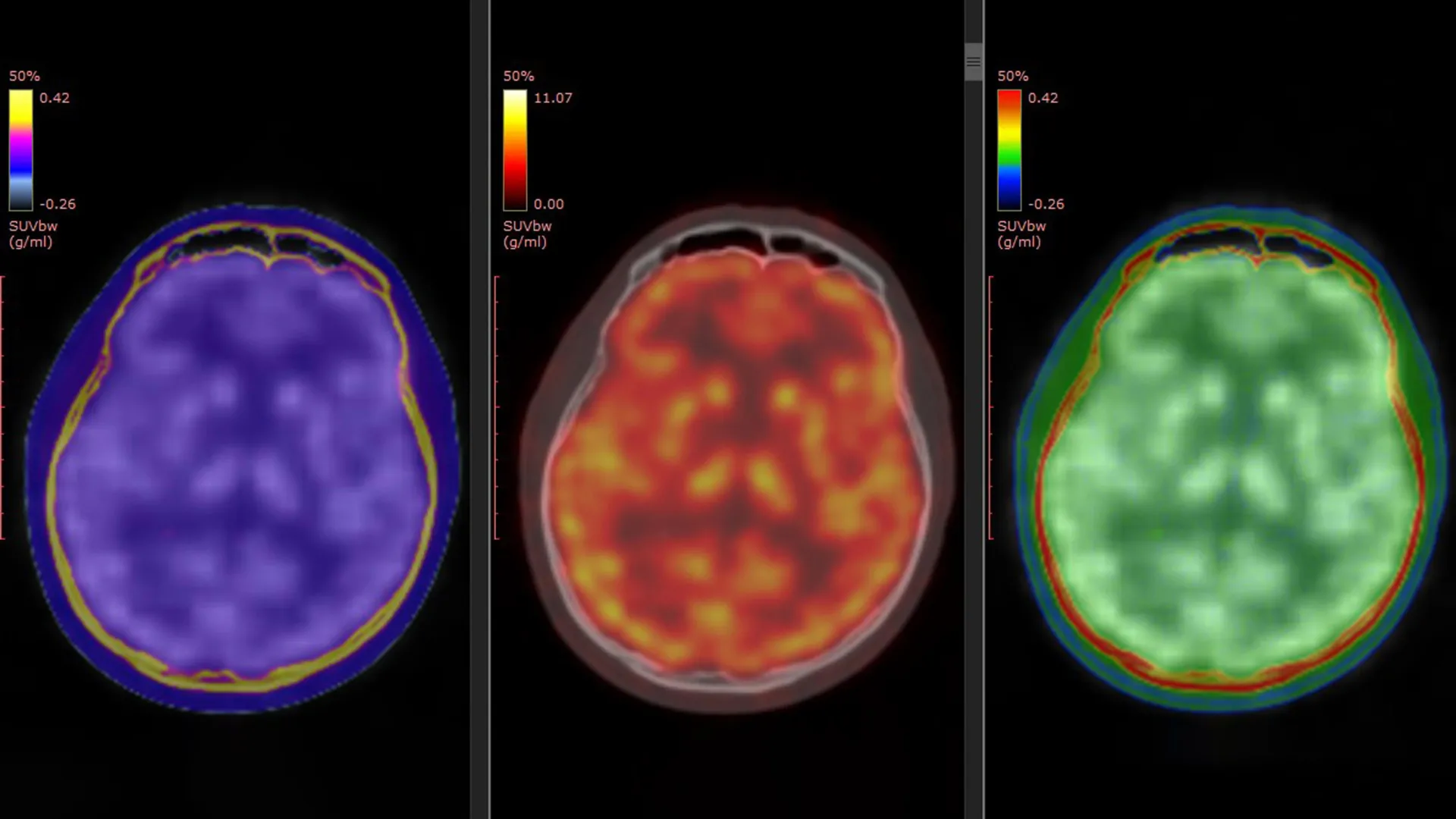
Major depressive disorder (MDD) stands as a formidable global health challenge, recognized as a principal contributor to disability worldwide. Despite advancements in psychopharmacology, a significant proportion of individuals—approximately 30%—diagnosed with depression develop treatment-resistant depression (TRD). This condition is characterized by a persistent lack of substantial symptom improvement with conventional antidepressant therapies, leaving millions searching for effective relief. In recent years, ketamine has emerged as a beacon of hope, demonstrating rapid antidepressant effects in patients grappling with TRD. However, the precise molecular mechanisms underlying ketamine’s therapeutic action within the human brain have remained an elusive puzzle, hindering the refinement and personalization of this promising treatment.
A groundbreaking study, published on March 5, 2026, in the esteemed journal Molecular Psychiatry, has taken a significant leap forward in demystifying ketamine’s enigmatic workings. Led by Professor Takuya Takahashi of the Department of Physiology at Yokohama City University Graduate School of Medicine in Japan, the research team employed a sophisticated positron emission tomography (PET) imaging technique to directly visualize changes in glutamate $alpha$-amino-3-hydroxy-5-methyl-4-isoxazole propionic acid receptors (AMPARs). These crucial proteins are instrumental in mediating communication between neurons and play a pivotal role in synaptic plasticity and glutamatergic signaling, processes heavily implicated in the response to ketamine treatment.
"Although ketamine has shown rapid antidepressant effects in patients with treatment-resistant depression, its molecular mechanism in the human brain has remained unclear," Professor Takahashi stated, underscoring the critical need for the research. "Our study provides the first direct evidence in humans, visualizing the dynamic changes in AMPARs that are directly linked to the alleviation of depressive symptoms."
Illuminating Neural Pathways: A Novel PET Tracer for Brain Receptor Visualization
The cornerstone of this innovative research was the development and application of a specialized PET tracer, designated [¹1C]K-2. This advanced tracer possesses the unique capability to visualize cell-surface AMPARs directly within the living human brain. Prior preclinical investigations, including laboratory experiments and animal models, had strongly suggested a link between ketamine’s antidepressant efficacy and AMPAR activity. However, the current study marks a pivotal moment by offering the first concrete, in-vivo evidence of this phenomenon occurring in human subjects.
To achieve this, the researchers meticulously compiled data from three distinct, registered clinical trials conducted in Japan. The study cohort comprised 34 patients formally diagnosed with treatment-resistant depression, alongside 49 healthy individuals who served as a control group to establish baseline neural activity.
The clinical trials involved a randomized, double-blind, placebo-controlled design. Patients diagnosed with TRD received either intravenous ketamine or a placebo administered over a two-week treatment period. Crucially, PET brain imaging was conducted both prior to the commencement of treatment and again following the final infusion. This carefully orchestrated temporal sequencing of imaging allowed researchers to precisely track and compare any alterations in AMPAR levels and their distribution within the brain throughout the course of the intervention.
Pinpointing Relief: Region-Specific Brain Changes Correlate with Symptom Improvement
The analytical findings revealed a compelling picture of AMPAR distribution in the brains of individuals with TRD. Compared to their healthy counterparts, TRD patients exhibited widespread abnormalities in AMPAR density. Importantly, these differences were not uniformly distributed across the entire brain but were instead concentrated within specific neural regions, suggesting a localized rather than a global disruption of glutamatergic signaling.
Further analysis demonstrated that ketamine did not induce a uniform alteration in AMPAR levels throughout the brain. Instead, the observed improvements in depressive symptoms were intricately linked to dynamic, region-specific adjustments in AMPAR density. In certain cortical areas, a notable increase in AMPAR levels was observed, indicating enhanced receptor availability. Conversely, reductions in AMPAR density were detected in brain regions associated with reward processing, most notably the habenula. These region-specific shifts in AMPAR distribution were found to be strongly correlated with the degree of improvement in patients’ depressive symptoms, providing a direct neurobiological correlate of clinical response.
"Ketamine’s antidepressant effect in patients with TRD is mediated by dynamic changes in AMPAR in the living human brain," Professor Takahashi elaborated. "Using a novel PET tracer, [¹1C]K-2, we were able to visualize how ketamine alters AMPAR distribution across specific brain regions and how these changes correlate with improvements in depressive symptoms." This direct human evidence validates and contextualizes mechanisms that had previously been inferred from animal studies, bridging the gap between preclinical findings and tangible clinical outcomes.
A Potential Predictor: AMPAR Imaging as a Biomarker for Treatment Response
Beyond elucidating the intricate molecular pathways of ketamine action, the study’s implications extend to practical clinical applications. The capacity to image AMPARs using PET scans holds significant promise as a potential biomarker for predicting individual responses to ketamine treatment in patients with TRD. In an era where a substantial number of patients fail to achieve adequate remission with standard antidepressant medications, the identification of reliable biological markers that can forecast treatment efficacy is a paramount objective in advancing mental healthcare.
The findings suggest that baseline AMPAR density or the pattern of AMPAR changes following initial ketamine administration could serve as an indicator of how well a patient will respond to the therapy. This could enable clinicians to tailor treatment strategies more effectively, potentially sparing patients from ineffective interventions and guiding them toward more appropriate therapeutic options sooner.
Charting a Course for Precision Psychiatry: Towards Personalized Depression Treatments
This pioneering research fundamentally enhances our understanding of the neurobiological underpinnings of depression and its treatment. By providing a direct method to observe AMPAR activity in the living human brain, the study effectively bridges the long-standing chasm between fundamental laboratory research and clinical psychiatry. The results firmly establish AMPAR modulation as a central mechanism driving ketamine’s rapid antidepressant effects. Furthermore, they strongly advocate for the future utility of AMPAR PET imaging as a tool to guide the development of more personalized and effective treatment strategies for individuals suffering from treatment-resistant depression.
The ability to visualize these specific receptor changes opens up avenues for novel drug development targeting AMPARs directly, potentially leading to a new generation of antidepressants with enhanced efficacy and fewer side effects. This work represents a critical step towards realizing the vision of precision psychiatry, where treatment decisions are informed by an individual’s unique neurobiological profile, ultimately leading to more successful and sustainable recovery for those affected by this debilitating condition.
Broader Context and Funding Acknowledgements
The persistent challenge of treatment-resistant depression has spurred significant research efforts globally. Historically, pharmacological interventions for depression have relied on monoamine-based hypotheses, focusing on neurotransmitters like serotonin, norepinephrine, and dopamine. While these approaches have benefited many, their limitations for a significant subset of patients have necessitated the exploration of alternative mechanisms. The glutamatergic system, particularly through NMDA and AMPA receptors, has emerged as a critical target, offering a different pathway for therapeutic intervention. Ketamine, an NMDA receptor antagonist, has been a key player in this paradigm shift, demonstrating rapid antidepressant effects that differ from traditional antidepressants in their onset and mechanism.
The development of [¹1C]K-2 by Professor Takahashi’s team represents a significant technological advancement. Previously, studying receptor dynamics in the living human brain was largely reliant on indirect measures or post-mortem analyses. The ability to visualize specific receptor subtypes like AMPARs in real-time, in response to pharmacological intervention, provides an unprecedented level of insight into brain function and drug action.
This extensive research effort was made possible through substantial support from various national and institutional bodies. Funding was provided by the Ministry of Education, Culture, Sports, Science and Technology (Special Coordination Funds for Promoting Science and Technology); the Japan Agency for Medical Research and Development (AMED) under grant numbers JP18dm0207023, JP19dm0207072, JP24wm0625304, JP25gm7010019, and JP20dm0107124; the Japan Society for the Promotion of Science KAKENHI (grant numbers: 22H03001, 20H00549, 20H05922, 23K10432, 19H03587, 20K20603, 22K15793, and 21K07508); the Takeda Science Foundation; the Keio Next-Generation Research Project Program; the SENSHIN Medical Research Foundation; and the Japan Research Foundation for Clinical Pharmacology. The collaborative and well-supported nature of this research underscores its importance and the international scientific community’s commitment to addressing the unmet needs in depression treatment. The findings are expected to stimulate further investigation into the role of AMPARs in mood disorders and pave the way for more targeted and effective therapeutic strategies.

0 Comments