
Southeast Asia has solidified its position as a global tourism powerhouse, attracting over 130 million international arrivals annually in the pre-pandemic era and showing a robust recovery toward those figures in 2024. While the "Golden Triangle" of Thailand, Vietnam, and Indonesia continues to dominate headlines, a significant shift in traveler behavior is emerging. Industry data suggests a growing preference for "slow travel" and "regenerative tourism," where visitors seek deeper connections with local communities and ecosystems rather than merely ticking off famous landmarks. As traditional hubs like Bali and Phuket grapple with the complexities of overtourism, a curated selection of secondary destinations—from the rugged cliffs of the northern Philippines to the marine sanctuaries of West Papua—offers a blueprint for the future of sustainable regional exploration.
The following analysis examines seven specific regions within Southeast Asia that represent the frontier of this travel evolution. These locations require more sophisticated logistics and a greater investment of time, yet they offer unparalleled rewards in terms of cultural authenticity and environmental preservation.
The Northern Frontier: Batanes and the Resilience of the Ivatan
Located at the northernmost tip of the Philippine archipelago, Batanes is the country’s smallest and most isolated province. Geographically closer to Taiwan than to the Philippine capital of Manila, Batanes is a stark departure from the tropical, palm-fringed imagery typically associated with the nation. The landscape is defined by massive coastal cliffs, rolling hedgerows, and volcanic mountains that draw frequent comparisons to the Scottish Highlands or the coast of New Zealand.

The province’s significance extends beyond its aesthetics. It is the ancestral domain of the Ivatan people, an Indigenous group whose culture is a testament to human adaptation in a typhoon-prone corridor. The iconic Ivatan stone houses, with walls of limestone and coral and meters-thick thatched roofs of cogon grass, were designed to withstand the region’s extreme weather. Travelers visiting Sabtang Island, particularly the heritage villages of Chavayan and Savidug, encounter a community-driven tourism model.
Official data from the Philippine Department of Tourism (DOT) indicates that Batanes maintains strict limits on visitor arrivals to preserve its "Protected Area" status under Republic Act No. 8991. This controlled approach ensures that the Ivatan way of life—centered on the concept of yaru (communal labor)—remains intact. For the visitor, the experience is defined by homestays and guided tours that emphasize local cuisine, such as uved (pith of banana) and dibang (flying fish), providing a level of intimacy rarely found in more commercialized provinces.
Archaeological Depths: The Lost Cities of Phnom Kulen, Cambodia
While the Angkor Wat complex in Siem Reap remains the crown jewel of Cambodian tourism, the spiritual and historical origins of the Khmer Empire lie 50 miles to the northeast at Phnom Kulen National Park. This sacred mountain range is where King Jayavarman II declared himself a "universal monarch" in 802 AD, marking the birth of the Khmer Empire.
For decades, the dense rainforests of Phnom Kulen hid the "lost city" of Mahendraparvata. It was only through the application of airborne LiDAR (Light Detection and Ranging) technology between 2012 and 2015 that archaeologists mapped a massive, sophisticated urban grid predating Angkor Wat by over three centuries. Today, the park serves as a multi-dimensional site where travelers can witness the "River of a Thousand Lingas"—intricate carvings on the sandstone riverbed—and the massive reclining Buddha at Preah Ang Thom.

The Cambodian Ministry of Environment has increasingly focused on Phnom Kulen as a site for eco-tourism development. By diverting traffic from the overcrowded Angkor Archaeological Park, officials hope to provide economic opportunities for the mountain’s rural inhabitants while funding the protection of its primary rainforests and waterfalls.
Navigating the Karsts: Bái Tử Long Bay, Vietnam
The UNESCO World Heritage site of Ha Long Bay is one of the most visited locations in Vietnam, often leading to significant maritime congestion. However, its immediate neighbor to the northeast, Bái Tử Long Bay, offers the same geological splendor with a fraction of the traffic. This region encompasses a massive area of limestone karsts, hidden grottoes, and emerald waters, but remains largely protected under the Bái Tử Long National Park designation.
The bay’s management has implemented stricter environmental regulations than those found in the main Ha Long area. Large-scale cruise ships are often restricted, paving the way for luxury boutique vessels and smaller eco-tours. These excursions frequently include visits to floating fishing villages like Vung Vieng, where the focus is on sustainable aquaculture and cultural exchange.
Environmental analysts point to Bái Tử Long as a successful case of "spatial deconcentration" in tourism. By marketing the bay as a premium, quiet alternative, Vietnam is able to maintain its tourism revenue while mitigating the ecological footprint on its delicate marine limestone ecosystems.

The Multicultural Tapestry of George Town, Malaysia
In the Malaysian state of Penang, the city of George Town serves as a living museum of Southeast Asian history. While many visitors use Penang as a base for beach resorts, George Town itself—a UNESCO World Heritage Site since 2008—is the primary draw for those interested in the convergence of Malay, Chinese, Indian, and British colonial influences.
The city is characterized by its well-preserved "shophouse" architecture and its world-renowned street art scene, initiated by Ernest Zacharevic’s murals in 2012. Beyond the visuals, George Town is widely regarded as the street food capital of Malaysia. The culinary scene reflects the city’s pluralistic roots, featuring dishes like Char Kway Teow, Nasi Kandar, and Assam Laksa.
Recent initiatives by the Penang Global Tourism board have focused on "Heritage Trails," which encourage walking and cycling tours through the city’s narrow alleys. This focus on human-scale exploration helps preserve the social fabric of the historic center, ensuring that heritage buildings are not merely facades but active spaces for local artisans and traditional trades.
Volcanic Soil and Specialty Coffee: The Bolaven Plateau, Laos
The Bolaven Plateau in southern Laos is a region defined by its high altitude and ancient volcanic history. Reaching elevations of up to 1,350 meters, the plateau offers a temperate climate that stands in contrast to the tropical heat of the Mekong lowlands. This unique geography has made it the heart of the Laotian coffee industry.

Coffee was first introduced to the region by French colonists in the 1920s, but in recent years, a movement toward specialty Arabica and Robusta beans has transformed the local economy. The plateau is home to several ethnic minority groups, including the Laven, Alak, and Katu. These communities are central to the region’s growing agro-tourism sector, where visitors can participate in "seed-to-cup" tours and stay in village homestays.
The Bolaven Plateau is also a destination for adventure seekers, featuring some of Southeast Asia’s most dramatic waterfalls, such as Tad Fane and Tad Yuang. The Lao National Tourism Administration has promoted the "Bolaven Loop" as a sustainable motorbike or trekking route, emphasizing ethical interactions with local farmers and the protection of the surrounding primary forests.
The Roof of Thailand: Doi Inthanon National Park
Located in Chiang Mai province, Doi Inthanon National Park encompasses Thailand’s highest peak, rising 2,565 meters above sea level. Part of the Himalayan mountain range, the park is a biodiversity hotspot, home to more species of birds than any other location in Thailand.
The park is notable for its "Royal Projects," initiated by the late King Bhumibol Adulyadej to replace opium cultivation with sustainable highland crops like strawberries, coffee, and temperate flowers. Today, these projects serve as educational centers for sustainable agriculture. The park’s higher elevations are often shrouded in mist, creating a "cloud forest" environment that supports unique mosses and epiphytes.

For the modern traveler, Doi Inthanon offers a sophisticated infrastructure of hiking trails, ranging from the accessible Ang Ka Nature Trail to the more strenuous Kew Mae Pan Nature Trail. The presence of the Twin Pagodas (Naphamethinidon and Naphaphonphumisiri), built to honor the royal family, adds a layer of contemporary Buddhist significance to the natural landscape.
The Epicenter of Biodiversity: Raja Ampat, Indonesia
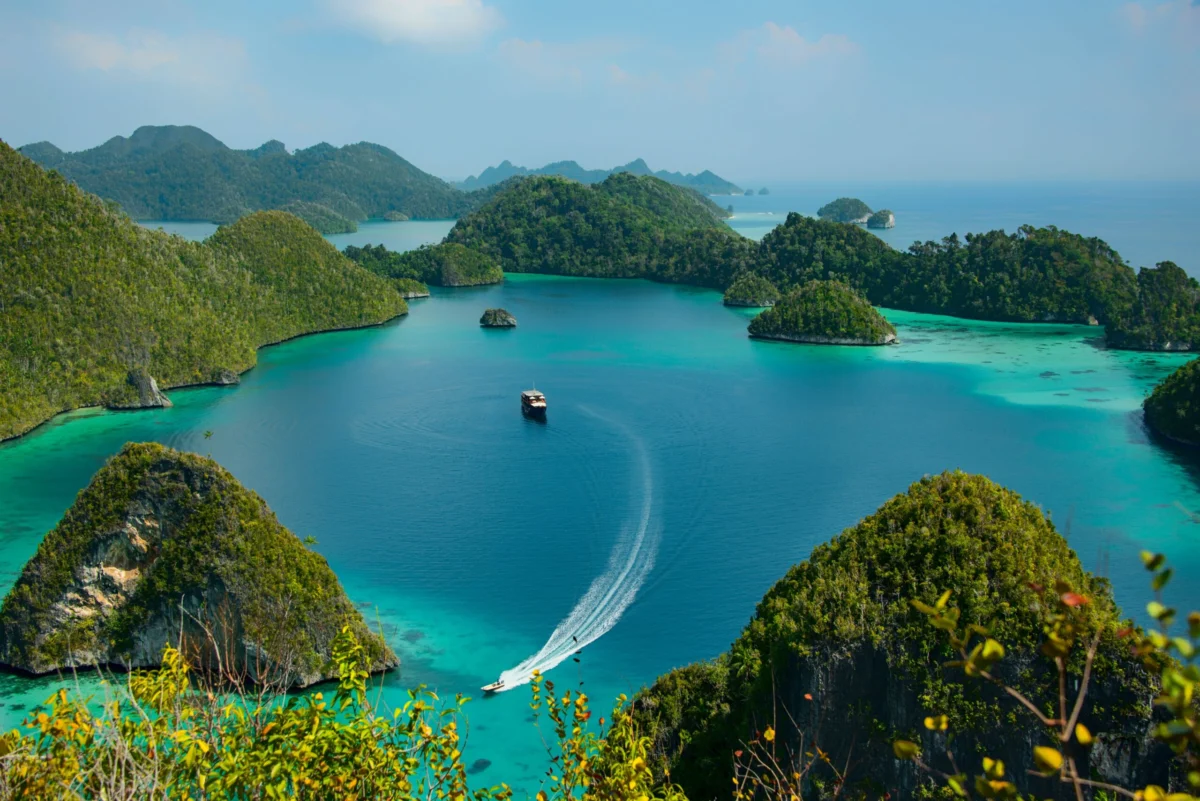
Raja Ampat, or "The Four Kings," is an archipelago of 1,500 islands located off the coast of West Papua, Indonesia. It is widely recognized by marine biologists as the global epicenter of tropical marine biodiversity. The region sits at the heart of the Coral Triangle and contains over 75% of the world’s known coral species.
The remote nature of Raja Ampat has been its greatest protection. Reaching the islands requires multiple flights and boat transfers, a logistical hurdle that has kept mass tourism at bay. The Indonesian government, in partnership with international conservation groups like Conservation International and the Nature Conservancy, has established a network of Marine Protected Areas (MPAs) that are funded through a mandatory environmental fee paid by every visitor.
Tourism in Raja Ampat is primarily centered on diving and snorkeling, with "liveaboard" vessels being the preferred mode of transport for serious enthusiasts. However, a growing number of eco-resorts are providing land-based alternatives that emphasize conservation education and community empowerment. This "high-value, low-volume" model is often cited by regional planners as the gold standard for protecting ultra-fragile ecosystems.

Broader Impact and Future Implications
The rise of these seven destinations signals a broader maturation of the Southeast Asian travel market. As infrastructure improves—such as the high-speed rail in Laos or expanded regional airports in the Philippines—access to these remote areas will inevitably increase. The challenge for regional governments and local communities will be managing this growth without sacrificing the very "untouched" qualities that make these places desirable.
Analysis of the regional tourism sector suggests that the long-term viability of these destinations depends on three factors:
- Community Sovereignty: Ensuring that Indigenous and local populations have a primary say in how their land and culture are marketed.
- Environmental Resilience: Implementing strict waste management and carrying-capacity limits to protect biodiversity.
- Economic Diversification: Using tourism as a supplement to, rather than a replacement for, traditional industries like agriculture and fishing.
For the global traveler, the shift toward these "less trodden paths" represents a move away from passive consumption and toward active participation in the preservation of the world’s cultural and natural heritage. The reward for the extra planning and time required is a profound and lasting connection to one of the most diverse regions on Earth.

0 Comments