
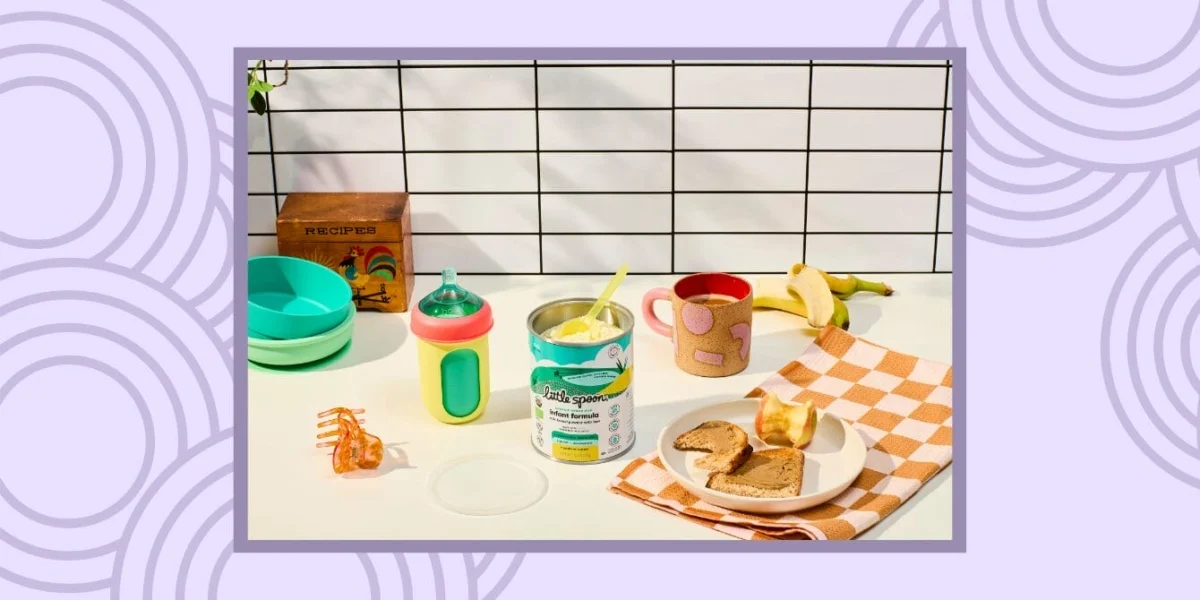
Little Spoon, a brand long recognized for its stringent ingredient philosophy in the baby and toddler food sector, has made a significant entry into the infant formula market, promising a new benchmark in product purity and transparency. This expansion, marked by the launch of their Organic Whole Milk Formula, extends the company’s signature commitment to testing for over 500 toxins and contaminants, a practice largely inspired by European Union (EU) standards, to a category that has historically faced challenges regarding regulatory oversight and consumer trust in the United States.
The introduction of Little Spoon’s formula arrives at a critical juncture for U.S. parents. The infant formula market has been a source of considerable anxiety, highlighted by recent supply chain disruptions in 2022 that left shelves bare and families scrambling. Beyond logistical concerns, ongoing debates about ingredient quality, the presence of heavy metals, and the overall transparency of manufacturing processes have fueled parental apprehension. Unlike the EU, which maintains some of the world’s strictest food safety regulations, including specific limits for contaminants in infant formula, the U.S. Food and Drug Administration (FDA) has not yet mandated comparable contaminant limits for infant formula, leaving a perceived gap in oversight that brands like Little Spoon aim to fill. This regulatory disparity has often left parents feeling overwhelmed and uncertain about the safety and nutritional integrity of available options, contributing to what is often referred to as "formula guilt" – a feeling of inadequacy or concern when breastfeeding is not feasible or chosen as the sole feeding method.
Little Spoon’s journey into infant nutrition began over eight years ago, establishing itself as a disruptor in the baby food industry by championing clean ingredients and unparalleled testing protocols. Their existing product lines, spanning baby food purees, toddler plates, and nutrient-dense smoothies, have consistently emphasized the absence of undesirable additives and the rigorous screening for potential environmental contaminants. This foundational philosophy—rooted in a belief that parents deserve to know exactly what they are feeding their children—forms the bedrock of their new venture into infant formula. The company’s established reputation for transparency, often publishing detailed ingredient lists and testing methodologies, positions them uniquely to address the pressing need for clarity in the formula sector.
The core differentiator of Little Spoon’s new formula lies in its uncompromising quality and safety standards, which surpass many existing industry norms and even some international guidelines. Every batch of their Organic Whole Milk Formula undergoes an exhaustive testing regimen for over 500 potential contaminants. This includes a comprehensive screening for heavy metals such as lead, arsenic, cadmium, and mercury, as well as an extensive panel covering 548 different pesticide residues. Crucially, any batch that fails to meet these stringent internal limits is unequivocally rejected, preventing it from reaching consumers.
Perhaps the most significant stride in transparency is Little Spoon’s pioneering decision to publicly disclose its exact heavy metal testing limits and the corresponding results directly on its website. This level of data access moves beyond mere "pass/fail" checkboxes, providing parents with verifiable, granular information. For instance, Little Spoon has set its internal lead limit at 10 parts per billion (PPB), a standard twice as strict as the EU’s threshold of 20 PPB. In cases where no established regulatory standard exists, such as for mercury, the company has proactively set its own limit of 3 PPB, demonstrating a commitment to safety that extends beyond compliance to proactive risk mitigation. Furthermore, the formula is tested for Sulfite-Reducing Clostridia, an indicator of spore-forming bacteria, at limits ten times stricter than international guidance—10 spores per gram compared to the standard of 100 spores per gram. This rigorous approach is underscored by the fact that each batch undergoes more than 2,000 documented quality and safety checks, a testament to their meticulous manufacturing process.
The nutritional foundation of Little Spoon’s formula is equally robust. It is crafted from organic whole milk sourced from grass-fed cows in New Zealand, a country where the use of growth hormones in dairy farming is strictly prohibited, not merely optional. The choice of whole milk is deliberate, as it naturally contributes a greater array of fats, thereby reducing the reliance on added oils in the formulation. The formula is designed to mirror the protein ratio found in breast milk and is fortified with plant-based DHA (docosahexaenoic acid), an omega-3 fatty acid crucial for brain and eye development, and prebiotics to support a healthy gut microbiome. These ingredients are meticulously selected to ensure the formula provides complete nutrition for a baby’s first year, meeting the rigorous organic certification standards of both the USDA (United States Department of Agriculture) and the EU.
This entry by Little Spoon is poised to significantly impact the infant formula landscape. For parents, it offers a deeply reassuring option amidst a category often characterized by complexity and ambiguity. The public disclosure of testing data and the proactive adoption of stricter-than-average safety limits empower parents with the knowledge and confidence to make informed feeding choices. This move could also alleviate some of the emotional burden associated with formula feeding, providing a product that aligns with the highest standards of safety and nutritional integrity.
From an industry perspective, Little Spoon’s bold step could catalyze a broader shift towards greater transparency and higher quality standards. By publicly setting and meeting such stringent criteria, Little Spoon creates pressure on other formula manufacturers to re-evaluate their own testing protocols and disclosure practices. This competitive dynamic could lead to an overall elevation of product quality across the market, benefiting all consumers. Food safety advocates and public health organizations have long called for enhanced regulatory frameworks for infant formula in the U.S., and Little Spoon’s initiative could serve as a powerful example of industry leadership, potentially influencing future FDA guidelines.
While the FDA has expressed its commitment to reviewing and updating infant formula regulations, the pace of regulatory change can be slow. In this context, companies like Little Spoon that voluntarily adopt and exceed existing standards play a crucial role in safeguarding public health. A hypothetical statement from a Little Spoon executive might emphasize their commitment: "We believe parents deserve unequivocal peace of mind when it comes to infant nutrition. Our entry into formula is a natural extension of our mission to provide the cleanest, safest food for babies, backed by unprecedented transparency. We hope our rigorous standards not only offer a trusted choice but also inspire a broader industry conversation about elevating safety benchmarks." Similarly, a food safety expert might commend the move, stating, "Little Spoon’s public disclosure of heavy metal testing data is a game-changer. It sets a new precedent for corporate responsibility and consumer empowerment in an industry where such transparency has been sorely lacking." Pediatricians might also welcome the development, noting that "having a formula option that meets such high standards of purity and nutritional completeness, while also being transparent about its testing, provides valuable reassurance for healthcare providers and the families we serve, particularly those navigating complex feeding journeys."
The formula is designed with the realities of modern parenting in mind. Whether parents are combo feeding to achieve flexibility, transitioning from breast to bottle due to changing circumstances, or supplementing while they figure things out, Little Spoon’s formula is presented as a versatile solution. It can be used alongside breastfeeding (prepared separately before combining), as a transition tool, or as the primary feeding method, acknowledging that there is no single "right" way to nourish an infant. This practical approach recognizes the diverse challenges and needs of parents, aiming to provide a supportive and reliable feeding option rather than prescribing a rigid method.
In conclusion, Little Spoon’s foray into the infant formula market with its Organic Whole Milk Formula represents more than just a new product launch; it signifies a potential paradigm shift in infant nutrition. By extending its established philosophy of extreme ingredient scrutiny and unparalleled transparency to a category desperately in need of both, the company is not only offering a premium, meticulously tested option for parents but also setting a formidable challenge for the entire industry. In an aisle often fraught with confusion and concern, Little Spoon aims to provide a clear, confident choice, empowering parents with the knowledge that what they are feeding their baby meets standards that are not just high, but publicly verifiable and continuously scrutinized. This commitment to going beyond mere compliance underscores a powerful message: that every baby deserves the purest start, and every parent deserves the certainty that comes with true transparency.

0 Comments