
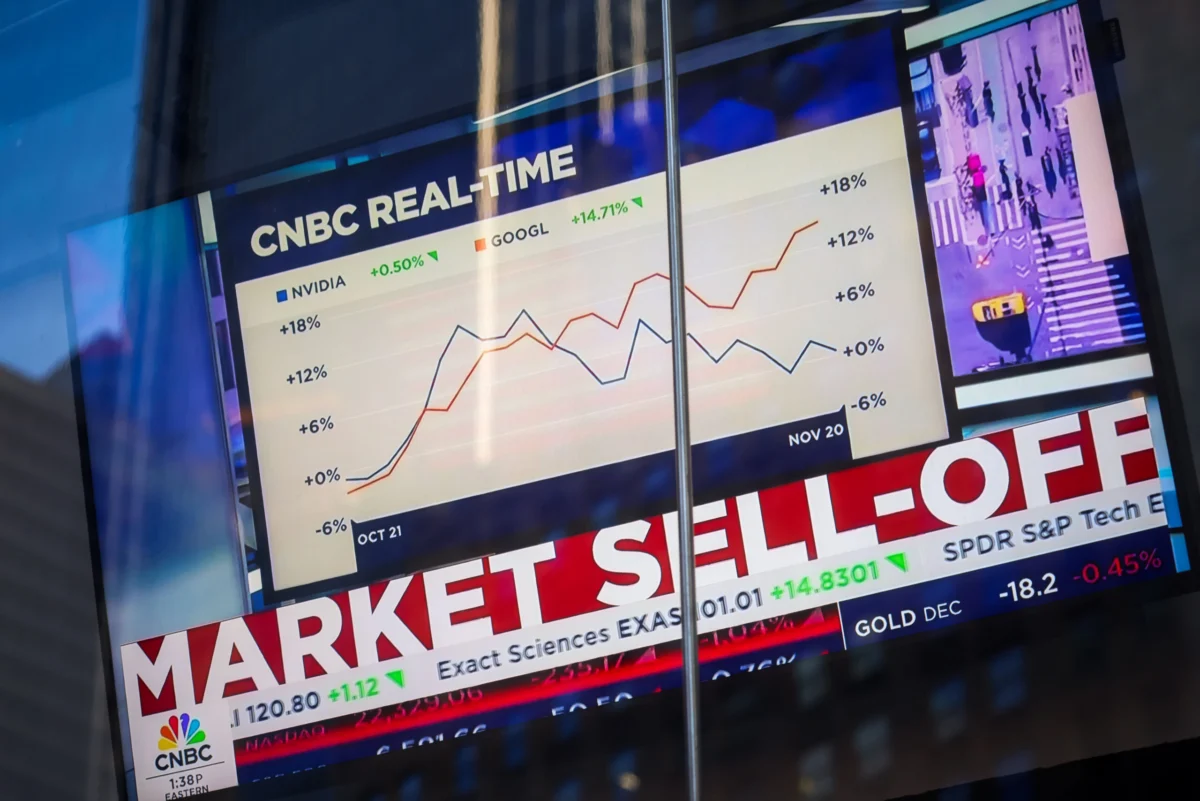
Investors are urged to exercise extreme caution and undertake comprehensive risk assessments as global financial markets grapple with an unprecedented confluence of geopolitical tensions and economic uncertainties, leading to erratic asset movements. According to Andrew Beer, managing member at DBi, the traditional predictive mechanisms of the market appear to be "broken," signaling a deeply abnormal environment for financial navigation. This assessment underscores a growing consensus among market veterans that the prevailing conditions demand a fundamental re-evaluation of investment strategies, moving away from past paradigms of consistent growth.
The Unsettling Landscape of Global Markets
Beer, a veteran with over three decades in the hedge fund industry, articulated his concerns during a recent appearance on CNBC’s "ETF Edge." He observed, "It’s not normal for big markets to move as much as they are right now. Something is deeply wrong in the market’s ability to forecast the state of the world." This statement highlights a profound shift from periods where market behavior, while cyclical, largely adhered to discernible patterns and responded predictably to economic data or policy changes. The current environment, however, is characterized by sharp, often contradictory swings that defy conventional analysis, leaving many investors disoriented.
The core of Beer’s argument is that the market’s capacity to act as a forward-looking indicator – its metaphorical "crystal ball" – has been severely impaired. Historically, markets have been adept at discounting future events, pricing in anticipated economic growth, corporate earnings, or geopolitical outcomes. Yet, the current volatility, especially the speed and magnitude of reversals in key asset classes, suggests an inability to coherently process the multitude of risks. This breakdown in foresight necessitates a defensive posture, as Beer advises: "The only thing we can all do as investors is: This is the moment to plan and to prepare for the worst. You hope for the best."
A Confluence of Geopolitical and Economic Headwinds
The current market instability is not born of a single event but rather a complex interplay of escalating global challenges. Beer emphasized the sheer volume of stressors, stating, "You just you have more geopolitical risks stacked on top of each other today [and] more economic risk factors than I remember at any time in my career."
-
Geopolitical Instability: The ongoing conflict in Ukraine, now in its third year, continues to ripple through global supply chains, energy markets, and food security. Simultaneously, escalating tensions in the Middle East, including the Israel-Hamas conflict and Houthi attacks on Red Sea shipping, have introduced significant uncertainty regarding global trade routes and oil prices. The strategic rivalry between the United States and China, encompassing trade disputes, technological competition, and geopolitical posturing over Taiwan, adds another layer of systemic risk. These flashpoints create an unpredictable environment, where military actions, diplomatic breakdowns, or shifts in alliances can trigger immediate and often outsized market reactions, making long-term forecasting exceedingly difficult. The VIX index, often referred to as the "fear gauge," has frequently spiked in response to these geopolitical events, reflecting heightened investor anxiety and expected volatility. While not consistently at historical highs, its sudden surges and prolonged elevation above historical averages underscore the fragile sentiment.
-
Persistent Economic Pressures: Alongside geopolitical turmoil, the global economy continues to navigate the aftermath of unprecedented monetary stimulus and subsequent aggressive tightening. Inflation, which proved more persistent than initially anticipated post-pandemic, prompted central banks worldwide to embark on rapid interest rate hiking cycles. While inflation has shown signs of moderating in some regions, it remains elevated compared to historical targets. High interest rates have increased the cost of borrowing for businesses and consumers, raising concerns about potential economic slowdowns or even recessions in major economies. The debate surrounding a "soft landing" versus a "hard landing" continues to fuel market uncertainty. Furthermore, high government debt levels in many developed nations present fiscal challenges, limiting policy flexibility and potentially exacerbating economic vulnerabilities during downturns. The divergence in economic performance between regions, with some economies showing resilience while others face stagnation, further complicates the global outlook.
Recent Market Anomalies: Gold, Silver, Bitcoin, and Crude Oil
The difficulty in calibrating portfolios is starkly illustrated by the recent erratic movements in key asset classes. Beer specifically cited gold, silver, bitcoin, and crude oil as examples of assets exhibiting sharp reversals over short periods, defying conventional wisdom and historical correlations.

- Gold and Silver: Traditionally considered safe-haven assets, gold and silver often appreciate during times of economic uncertainty or inflation. While they have seen periods of significant gains, their trajectory has not been a straightforward upward climb, experiencing pullbacks that challenge their "insurance" role. For instance, gold prices surged to record highs, driven by geopolitical risk and central bank buying, yet have also seen abrupt corrections, making it challenging for investors to time entries and exits.
- Crude Oil: Oil prices have been particularly sensitive to geopolitical developments, especially those impacting the Middle East and Russia. Supply disruptions, OPEC+ decisions, and global demand forecasts have led to rapid price swings, creating inflationary pressures and impacting corporate earnings across various sectors. The price of Brent crude, for example, has seen multi-dollar swings within days, reflecting the high degree of uncertainty surrounding supply and demand dynamics.
- Bitcoin and Cryptocurrencies: The cryptocurrency market, inherently volatile, has also mirrored the broader market’s unpredictability. Despite periods of significant rallies, often fueled by institutional adoption or specific regulatory news, cryptocurrencies remain susceptible to sharp corrections and are highly sensitive to changes in investor risk appetite and macroeconomic data, further complicating portfolio diversification efforts.
These volatile movements underscore a market where fundamental analysis is often overshadowed by reactive trading and sentiment shifts, leaving no clear playbook for investors.
Echoes of Past Crises: Learning from 2008 and 2022
Beer’s warning resonates with the painful lessons of recent market downturns, particularly the Global Financial Crisis of 2008 and the bear market of 2022. He urged investors to introspect: "How would they act if a 2008 or 2022 market downturn happens again?"
- The 2008 Global Financial Crisis: Triggered by the collapse of the U.S. housing bubble and subprime mortgage market, the 2008 crisis revealed systemic vulnerabilities within the global financial system. It led to widespread deleveraging, a credit crunch, and a severe global recession. Key lessons included the importance of understanding interconnected risks, the dangers of excessive leverage, and the critical role of robust regulatory oversight. Investors who failed to anticipate the systemic nature of the crisis suffered significant losses across nearly all asset classes.
- The 2022 Bear Market: More recently, 2022 saw a synchronized downturn in both equity and fixed-income markets, challenging the traditional 60/40 portfolio diversification strategy. Aggressive interest rate hikes by central banks to combat surging inflation led to a sharp re-pricing of assets. Technology stocks, which had thrived in the low-interest-rate environment, were particularly hard hit. This period highlighted the vulnerability of portfolios when bonds, typically a hedge against equity downturns, also decline due to rising rates.
Beer’s caution against complacency is particularly pertinent when he states, "Investing like it’s 2025 could turn into regret." He elaborated, "The best thing to do in 2025 was just turn off your computer beginning of the year and come back at the end of the year, and you’ve made money, your stocks and your bonds and everything else. It won’t continue like that. We will go through a more difficult period." This serves as a stark reminder that the easy gains of past bull markets, often driven by accommodative monetary policy, are unlikely to be replicated in the current environment of higher rates, persistent inflation, and elevated risks. The expectation should be for more challenging, choppy markets requiring active management and a focus on capital preservation.
The Human Element of Investing
Beyond the financial metrics, Beer emphasized the profound human impact of market volatility. "These financial assets are, they’re an investment, but they’re also what you need to survive, to live on, to retire, and so it’s the very real human side of it that I hope people will focus on," he added. This perspective highlights that investment decisions are not merely about maximizing returns but are deeply intertwined with individuals’ life goals, financial security, and peace of mind. A significant market downturn can derail retirement plans, educational savings, or even basic living expenses, creating immense psychological stress. This underscores the need for strategies that prioritize resilience and protect against catastrophic losses, rather than solely chasing high returns.
Navigating the Unknown: Strategies for Resilience
In this complex landscape, experts advocate for robust and adaptive investment strategies that move beyond conventional approaches.
- Diversification Beyond Traditional Assets: The synchronized decline of both stocks and bonds in 2022 highlighted the limitations of traditional diversification models. Investors are increasingly seeking alternative asset classes and strategies that offer non-correlated returns and genuine downside protection.
- The Role of Managed Futures ETFs: Nate Geraci, president of NovaDius Wealth Management, specifically highlighted exchange-traded funds (ETFs) designed to offer portfolio protection, particularly managed futures ETFs. "This is absolutely something that is a longer-term allocation, and I almost view it as portfolio insurance," Geraci stated in the same interview. "You want that insurance when something goes bad in the market, and maybe that’s stocks and bonds going down together."
- What are Managed Futures? Managed futures strategies involve professional money managers (Commodity Trading Advisors or CTAs) who trade futures contracts across a wide range of asset classes, including commodities, currencies, equities, and fixed income. They typically employ systematic, trend-following approaches, going long (buying) assets that are trending up and short (selling) assets that are trending down.
- Benefits as "Portfolio Insurance": Managed futures strategies are often lauded for their potential to provide non-correlated returns to traditional stock and bond portfolios. This means they can potentially generate positive returns during periods when stocks and bonds are declining, acting as a valuable hedge. Their ability to go both long and short allows them to profit from both rising and falling markets, providing diversification benefits that traditional long-only portfolios lack. For example, during a stock market downturn, a managed futures strategy might profit from short positions in equity futures or long positions in safe-haven currencies or commodities. This characteristic makes them particularly attractive in environments where traditional asset correlations break down.
- Prudent Risk Management: Beer’s repeated emphasis on planning and preparing for the worst translates into practical risk management principles. This includes maintaining adequate liquidity, avoiding excessive leverage, setting realistic return expectations, and regularly reviewing portfolio allocations to ensure they align with an investor’s risk tolerance and financial goals, especially in light of potential adverse scenarios.
- Monitoring Systemic Vulnerabilities: Beer’s vigilance extends to less transparent corners of the financial system, as he is "watching for signs of strain in private credit, insurance company portfolios and other corners of the market where unusual stress could begin to spread."
- Private Credit: The rapid growth of the private credit market in recent years, often involving direct lending to companies outside traditional banking channels, has raised concerns about transparency, valuation, and liquidity, particularly if economic conditions deteriorate. These loans can be highly leveraged and less regulated than public markets, posing potential risks if default rates rise.
- Insurance Company Portfolios: Insurers hold vast portfolios of assets to back their liabilities. Exposure to certain illiquid assets, commercial real estate, or corporate debt could become a source of systemic risk if these assets experience significant devaluation or liquidity issues during a prolonged downturn. The interconnectedness of these less visible segments of the market means that stress in one area could quickly propagate throughout the broader financial system, echoing the contagion witnessed in previous crises.
Broader Market Implications and Forward Outlook
The current environment necessitates a paradigm shift in how investors, institutions, and policymakers approach financial stability. For institutional investors and pension funds, the challenge is to meet long-term liabilities in a world where traditional asset classes offer diminishing returns and increased volatility. This drives greater allocation to alternatives, but with careful due diligence. Retail investors, on the other hand, face the daunting task of navigating complex markets without the sophisticated tools available to professionals. This highlights the evolving role of financial advisors, who must now guide clients not just on growth, but critically on resilience and downside protection.
The "broken crystal ball" signifies that the future is less predictable than ever. While hope for the best is a natural human inclination, the prevailing expert consensus underscores that robust planning and preparation for adverse scenarios are no longer merely prudent but essential for long-term financial survival and prosperity in an increasingly turbulent global economy. The era of easy gains appears to be receding, replaced by a period demanding adaptive strategies, disciplined risk management, and a deep understanding of interconnected global risks.

0 Comments