
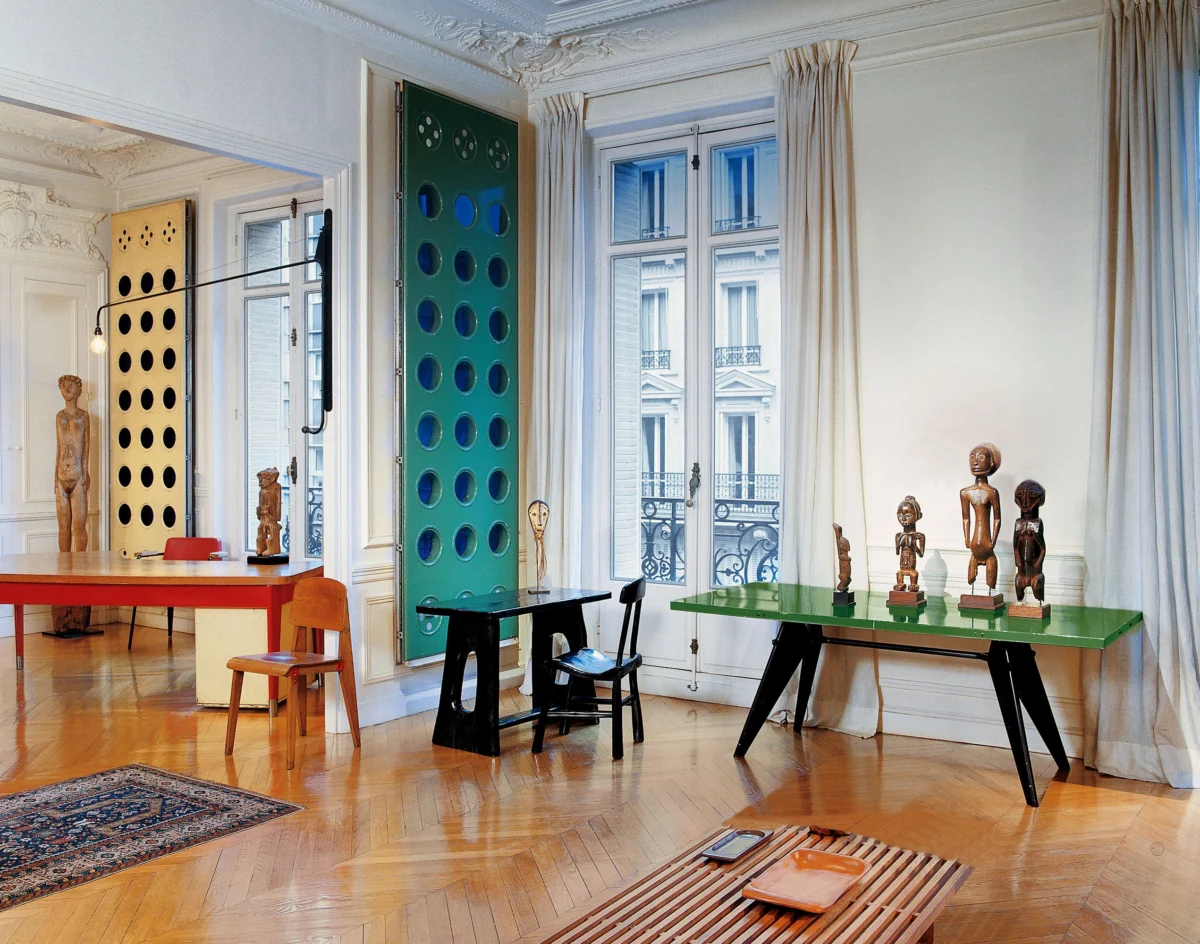
In 1925, a pivotal moment occurred at the Exposition Internationale des Arts Décoratifs et Industriels Modernes in Paris, an event that would indelibly christen the Art Deco movement. It was here, amidst the burgeoning modernist aesthetic, that French architect Jean Prouvé, long before his celebrated designs for demountable houses and utilitarian furniture, crafted two imposing wrought-iron doors for the Pavilion de Nancy. This commission marked a profound turning point for Prouvé, igniting a deep fascination with a material that would define much of his subsequent career: sheet steel. Its inherent strength and remarkable malleability offered a new vocabulary for architectural expression, one that emphasized functionality and industrial efficiency.
Within a mere four years, Prouvé had fully embraced this newfound material passion. By 1929, sheet steel was a cornerstone of his designs, appearing in doors, partitions, windows, and even elevator shafts. This marked the genesis of his ambition to mass-produce these architectural elements, transforming them from bespoke creations into standardized components. These industrially produced parts would soon become the defining characteristics of his diverse portfolio, adorning residences, municipal buildings, grand ocean liners, and housing projects. Through the ingenious application of this catalog of prefabricated elements, Prouvé achieved a distinctive architectural style characterized by streamlined, machinelike structures that spoke to the efficiency and optimism of the modern age.
From Exposition to Industrial Production: A Material Revolution
The genesis of Prouvé’s industrial approach can be traced back to his early experiments with metal. The Exposition Internationale des Arts Décoratifs et Industriels Modernes, held in Paris from April to October 1925, served as a global stage for avant-garde design. The event showcased the latest trends in decorative arts and industrial design, solidifying Art Deco as a dominant international style characterized by geometric patterns, rich ornamentation, and a blend of traditional craftsmanship with modern materials. It was within this context that Prouvé, a trained metalworker and engineer by background, found fertile ground to explore the potential of industrial materials. His commission for the Pavilion de Nancy provided an opportunity to move beyond purely decorative ironwork and explore the structural and aesthetic possibilities of wrought iron on a grand scale.

However, it was the subsequent encounter with sheet steel that truly catalyzed his design philosophy. The material’s ability to be pressed, bent, and welded with relative ease allowed for the creation of precise, reproducible components. This realization was not merely an aesthetic choice but a fundamental shift towards an industrial model of architecture. Prouvé envisioned a system where standardized elements could be efficiently manufactured in a factory setting and then assembled on-site, akin to an industrial assembly line. This approach promised to democratize design, making well-crafted and aesthetically pleasing architecture more accessible and affordable.
The Factory and the Catalogue of Parts
From his factory located near Nancy, France, until 1953, Prouvé meticulously produced this range of robust, tactical-looking architectural components. Initially crafted from sheet steel, later iterations incorporated aluminum, a lighter and more corrosion-resistant material. These elements were not conceived as generic units but were often meticulously tailored to the specific climatic conditions and geographical terrains of their intended destinations. A recurring feature in many of these designs was the inclusion of porthole windows. These circular openings served a dual purpose: they allowed natural light to penetrate the interiors, fostering a brighter and more inviting atmosphere, while simultaneously reducing the overall weight of the panels. This reduction in weight was a crucial consideration for ease of transport, particularly for Prouvé’s innovative relief structures designed for rapid deployment, which were intended to be dropped on-site by aircraft, a testament to his forward-thinking approach to humanitarian architecture.
The strategic thinking behind these mass-produced components extended beyond mere aesthetics and structural integrity. Prouvé’s understanding of logistics and deployment was revolutionary for his time. For instance, his designs for emergency housing, often referred to as "prefabricated houses," were engineered for rapid assembly and disassembly, making them ideal for post-war reconstruction efforts or disaster relief. The ability to transport these components efficiently, even by air, underscores his commitment to practical and responsive architectural solutions. The catalog of parts he developed provided a flexible system, allowing for a multitude of configurations to suit diverse needs, from a small family dwelling to larger community structures.
A Personal Manifesto: Prouvé’s Home as a Living Archive
Following his departure from his workshop in the 1950s, Prouvé, facing financial constraints, embarked on a deeply personal project: the construction of his own home in the picturesque hills above Nancy. This residence became a unique testament to his lifelong dedication to industrial design and architectural innovation. It was built using an ingenious assembly of cast-off architectural components from his nearby factory, a deliberate act of reclamation and reinterpretation. Patrick Seguin, a prominent gallerist who works closely with Prouvé’s estate, aptly describes the house as "a personal manifesto, where doors and panels designed for mass production are reintegrated into a domestic setting." This home stands as a powerful embodiment of Prouvé’s philosophy, demonstrating how even discarded industrial elements could be repurposed to create a functional, aesthetically compelling, and deeply personal living space.

The house in Nancy is more than just a dwelling; it is a living museum of Prouvé’s design principles. Visitors can observe firsthand how components originally conceived for mass production—such as his iconic doors, window frames, and wall panels—were thoughtfully integrated into a cohesive architectural whole. The juxtaposition of these industrial elements within a domestic context highlights their inherent beauty and structural elegance. The porthole windows, a signature of his industrial designs, punctuate the façade, allowing light to flood the interior and offering framed views of the surrounding landscape. The exterior, a testament to Prouvé’s pragmatic approach, showcases the raw beauty of the materials he favored, with exposed steel structures and carefully crafted metalwork.
The Collector’s Market and Enduring Influence
While Prouvé’s ambitious vision of his prefabricated components becoming the standard for architects and builders did not fully materialize in his lifetime, the pieces produced during his active years have steadily found their way into the discerning collector market. These historically significant artifacts are now highly sought after by connoisseurs and institutions alike. Some collectors, such as the esteemed AD100 designer Steven Volpe, have integrated these Prouvé elements into their projects as originally intended. In a soaring Manhattan apartment, Volpe has incorporated a Prouvé door, demonstrating its continued relevance and ability to imbue contemporary spaces with a sense of architectural gravitas and historical depth.
Similarly, the fashion powerhouse The Row, known for its minimalist and sophisticated aesthetic, has utilized Prouvé’s architectural components in their flagship store in Paris. This application speaks to the enduring appeal of Prouvé’s designs, which resonate with a modern sensibility that values clean lines, functionality, and timeless elegance. These examples highlight the versatility of Prouvé’s work, proving that his designs can seamlessly transition from their original industrial or utilitarian contexts to become integral parts of high-end residential and retail environments.
However, the appreciation for Prouvé’s work extends beyond functional integration. Many collectors choose to exhibit his pieces as standalone works of art, recognizing their sculptural qualities and historical significance. This elevated status is further validated by their inclusion in the permanent collections of world-renowned institutions. New York City’s Museum of Modern Art (MoMA) and Paris’s Centre Pompidou, both bastions of modern and contemporary art and design, house significant examples of Jean Prouvé’s architectural creations. This institutional recognition underscores the profound impact of his innovative approach to design and manufacturing.

Steven Volpe, in his own words, articulates the deeper value of these architectural fragments: "These fragments aren’t decorative—they carry history, material integrity, and a modernist vision that still resonates today." This sentiment captures the essence of Prouvé’s enduring legacy. His work transcends mere aesthetics, offering a tangible connection to a pivotal era in design history. The material honesty, the rigorous engineering, and the forward-thinking vision embedded within each component continue to inspire architects, designers, and enthusiasts, proving that the lessons of Jean Prouvé’s industrial modernism remain profoundly relevant in the 21st century. His approach serves as a powerful reminder of the potential for beauty and innovation that lies within functional design and the intelligent application of industrial materials.
The article "The Enduring Legacy of Jean Prouvé’s Prefabricated Architectural Components" originally appeared in the April issue of Architectural Digest.

0 Comments