
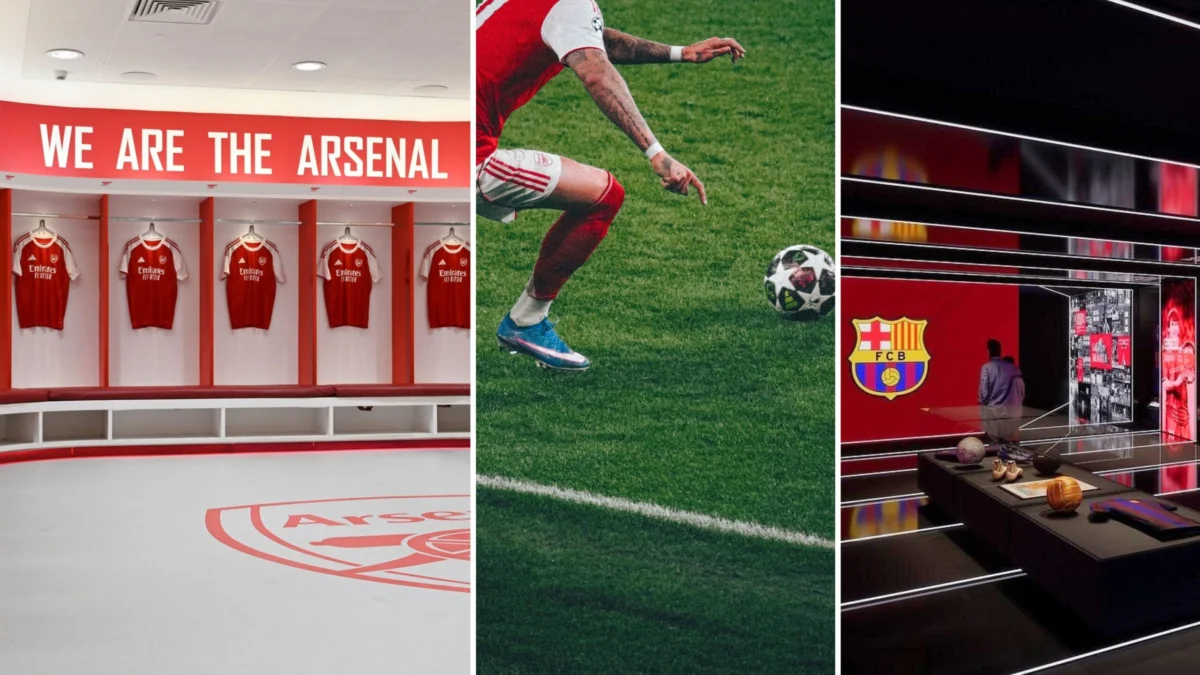
The global sports landscape is currently undergoing a significant shift as the 2026 FIFA World Cup approaches, an event set to be hosted across North America in a massive expansion of the tournament’s footprint. While soccer fans across the globe are currently scrambling to secure tickets for matches in the United States, Mexico, and Canada, a parallel trend in "sports heritage tourism" is seeing record numbers of travelers heading to the traditional epicenters of the sport in Europe and the United Kingdom. For many enthusiasts, the inability to secure high-priced World Cup tickets has not dampened their spirits; instead, it has catalyzed a movement toward visiting the historical "cathedrals" of soccer—the stadiums where the modern game was forged.
Stadium tours have evolved from simple walk-throughs into sophisticated, all-encompassing cultural experiences. These tours offer an affordable and intimate alternative to the high-stakes environment of a live match, providing behind-the-scenes access to dressing rooms, press conference halls, and the hallowed turf of the pitches themselves. As the sport continues to globalize, these venues serve as living museums that reflect the identity of their respective cities. From the architectural marvels of London to the trophy-laden halls of Madrid, the following 11 stadium tours represent the pinnacle of soccer pilgrimage sites.
The Scottish Legacy: Celtic Park in Glasgow
To fully comprehend the depth of Scottish football culture, a visit to Celtic Park in Glasgow is considered essential by industry experts and historians alike. As Scotland’s largest football stadium, it serves as the home of Celtic Football Club, an institution with a history deeply intertwined with the social fabric of the city. The stadium is affectionately known by supporters as "Paradise," a term that originated when the club moved from its original site—somewhat grimly referred to as "the graveyard"—to the current location in 1892.
The guided tour of Celtic Park offers a professional deep dive into the club’s 1967 European Cup-winning legacy. Visitors gain access to the players’ tunnel and the dressing rooms, areas usually strictly off-limits to the public. Beyond the physical structure, the tour emphasizes the high-energy atmosphere that has made the venue one of the most intimidating environments for visiting teams in Europe. The availability of multiple departure times reflects the growing demand for sports tourism in Glasgow, allowing the city to integrate its athletic heritage into its broader tourism strategy.
The Manchester Rivalry: Old Trafford and the Etihad Campus
Manchester remains a unique case study in global sports due to the intense and historic rivalry between Manchester United and Manchester City. The city’s football heritage is so pervasive that it defines the local geography, food, and nightlife. A comprehensive heritage tour of Manchester typically begins at Old Trafford, the "Theatre of Dreams," which has been the home of Manchester United since 1910. The tour explores the stadium’s exterior, including the Munich Tunnel—a memorial to the 1958 air disaster—and the iconic statues of Sir Matt Busby and the "United Trinity."

The narrative then shifts to the Etihad Campus, representing the modern, state-of-the-art era of Manchester City. This portion of the tour covers both the men’s and women’s stadiums, highlighting the club’s rapid ascent in the 21st century. The experience concludes in Ancoats, a neighborhood recognized as the original home of the city’s football pioneers. Analysts note that these tours succeed by blending legendary folklore—such as the story of the dog that saved Manchester United from bankruptcy—with the hard facts of how these clubs helped globalize the sport.
Spanish Grandeur: The Bernabéu and Camp Nou
In Spain, soccer is more than a sport; it is a central pillar of national identity. Real Madrid’s Santiago Bernabéu Stadium is currently one of the most discussed architectural projects in the world. Following a massive renovation exceeding €900 million, the stadium has been transformed into a multi-use technological marvel. Tours led by local experts allow visitors to see the stadium from every angle, including the expansive museum that houses a record-breaking collection of UEFA Champions League trophies. The tour is curated to highlight the club’s 120-year history, tracing its evolution from a local Madrid side to a global commercial juggernaut.
In Barcelona, the experience is equally immersive but focuses on the "Més que un club" (More than a club) philosophy. While the historic Camp Nou undergoes its own significant renovation, specialized tours led by veterans like Gabriel—a local with two decades of international club experience—provide a comprehensive look at the FC Barcelona legacy. These tours often include access to the presidential box and the media rooms where the world’s most famous managers have held court. By linking the sport to the history of neighborhoods like Gràcia, these tours transcend mere athletics, offering a sociological view of Catalonia.
London’s Architectural Icons: Stamford Bridge and the Emirates
London boasts a higher density of elite soccer stadiums than perhaps any other city in the world. Chelsea FC’s Stamford Bridge offers an intimate look at a club that has become synonymous with the modern, high-spending era of the Premier League. The guided tour emphasizes the "pitch-side" experience, where fans can walk the same tunnel used by legends like Frank Lampard and John Terry. The adjacent Chelsea FC Museum serves as a repository for the glittery artifacts of the club’s recent domestic and European successes.
Conversely, Arsenal FC’s Emirates Stadium represents the pinnacle of modern arena design. Opened in 2006 to replace the historic Highbury, the Emirates is one of the largest and most technologically advanced stadiums in the UK. The tour features an audio guide narrated by club legends and media personalities, providing a curated "match day experience" that includes never-before-seen footage. A highlight for many is the photo opportunity with the trophy commemorating the 2003-04 "Invincibles" season, an achievement that remains unmatched in the modern Premier League era.
The History of the English Game: Anfield and Wembley
Liverpool’s Anfield Stadium is often cited as the most atmospheric venue in England. The tour, often facilitated through platforms like Airbnb and hosted by specialized event companies, provides unparalleled access to the dressing rooms and the famous "This is Anfield" sign. For many visitors, the draw is the club’s storied history in European competition, a narrative that is carefully preserved in the stadium’s museum and archives. The tour is designed to be family-friendly, catering to a demographic that spans multiple generations of supporters.

No survey of English soccer is complete without Wembley Stadium. As the home of the England national team and the venue for the most significant domestic cup finals, Wembley is the ultimate symbol of the sport’s prestige. The 90-minute tour traces the stadium’s history from the 1924 British Empire Exhibition to the 1966 World Cup win and the recent success of the England Women’s team in the Euros. The "Walk of Legends" and the access to the Royal Box provide a sense of the grandeur associated with the English game’s most historic site.
The Italian Cathedrals: Stadio Olimpico and San Siro
Italy’s contribution to soccer heritage is centered in Rome and Milan. In the capital, the Stadio Olimpico serves as the shared home for fierce rivals AS Roma and SS Lazio. Tours here are a sophisticated blend of sports, history, and art, focusing on the Mussolini-era architecture of the surrounding Foro Italico. The experience is designed to explain the cultural divide between the two clubs while allowing visitors to walk the same pitch that has hosted Olympic Games and World Cup finals.
In Milan, the San Siro (officially the Stadio Giuseppe Meazza) remains a bucket-list destination, though its future is currently a subject of intense debate among urban planners and club officials. The stadium, home to both AC Milan and Inter Milan, features a unique "mixed zone" and a museum dedicated to the "Italia 110 & Lode" exhibition. This collection tracks the history of the Italian National Team and is a must-see for anyone interested in the tactical evolution of the game.
The French National Pride: Stade de France
Finally, the Stade de France in Paris stands as a monument to the nation’s greatest sporting achievements. As the host of the 1998 FIFA World Cup final, where France secured its first title, the stadium holds a sacred place in the hearts of "Les Bleus" supporters. Behind-the-scenes tours bring visitors through the locker rooms and the players’ tunnel, culminating in a museum visit that showcases autographed memorabilia and jerseys from the nation’s most iconic players. For those seeking a more contemporary experience, many travelers combine this tour with a visit to the Parc des Princes to witness the star-studded Paris Saint-Germain (PSG) in action, providing a complete picture of French soccer’s past and present.
Analysis: The Economic and Cultural Impact of Stadium Tourism
The rise of stadium tours is not merely a niche travel trend; it is a significant economic driver for European cities. Data from tourism boards suggest that sports-related travel accounts for nearly 10% of global tourism spend, with a high percentage of that revenue generated by stadium-related activities. For the clubs, these tours represent a crucial "non-matchday" revenue stream, allowing them to monetize their brand 365 days a year.
Furthermore, these tours play a vital role in cultural preservation. By maintaining museums and offering guided narratives, clubs ensure that their history—and by extension, the history of their cities—is passed down to new generations of global fans. As the 2026 World Cup approaches, the success of these European models is providing a blueprint for North American host cities, which are increasingly looking at how to turn their own stadiums into year-round tourist destinations. The enduring appeal of these tours confirms that while players and coaches may change, the "sacred ground" of the stadium remains the ultimate anchor for the world’s most popular sport.

0 Comments