
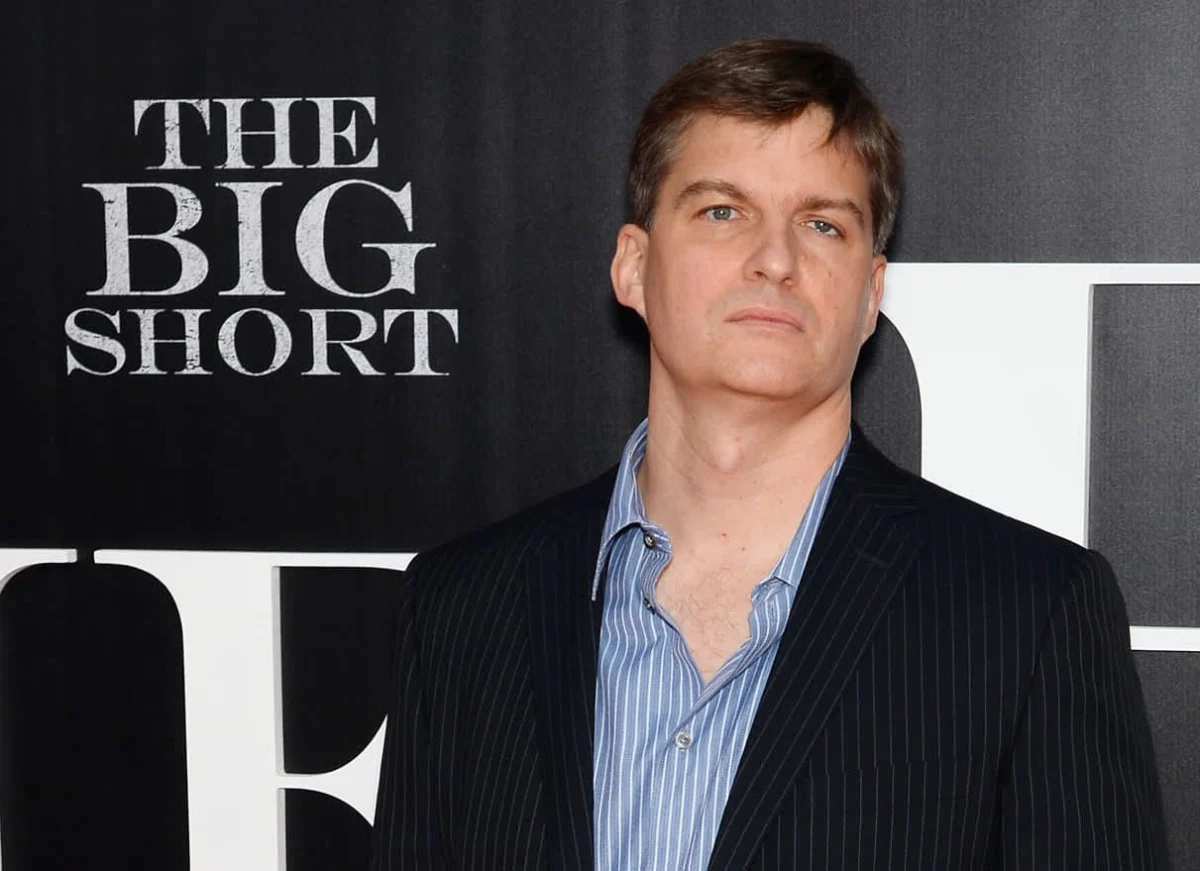
Michael Burry, the investor famously depicted in "The Big Short" for his prescient wager against the 2008 housing bubble, has solidified and expanded his significant bearish positions against two prominent technology firms: Palantir Technologies and Nvidia. This move comes despite a public endorsement from former President Donald Trump that briefly buoyed Palantir’s stock, underscoring Burry’s unwavering conviction that both companies are profoundly overvalued.
Burry disclosed his continued and deepened commitment to long-dated put options on Palantir through a Substack post on Friday. His initial bearish stance against the artificial intelligence software and data analytics firm commenced in the fall of 2025, a position he has consistently rolled over, indicating a sustained belief in its eventual decline. "I now own the June 17 2027 Strike Price 50 Puts and the Decembers 19, 2026 Strike Price 100 Puts. I am not selling these today," Burry stated, signaling his long-term outlook and firm resolve.
The timing of Burry’s reiteration is particularly noteworthy, following a Truth Social post by former President Trump on Friday that praised Palantir’s "great warfighting capabilities and equipment," hinting at its strategic importance, particularly in the context of ongoing global conflicts, including the inferred "Iran war." Trump’s endorsement provided a temporary lift to Palantir shares, pulling them off their intraday lows. However, this bounce proved fleeting, as the stock ultimately concluded the week with a significant 13.7% decline, pushing its year-to-date losses for 2026 to approximately 28%. Palantir closed Friday at $128.06 per share, a figure Burry explicitly contests as detached from its intrinsic value.
The Contrarian’s Rationale: Palantir’s Perceived Overvaluation
Burry’s investment philosophy is deeply rooted in value investing principles and a contrarian approach, often seeking out mispriced assets and identifying market bubbles before they burst. His assessment of Palantir hinges on a fundamental belief that the company’s valuation has become dangerously inflated. He noted that the stock had "weakened since reaching a peak near $200 last year," implying a peak sometime in 2025. Despite acknowledging the potential for short-term rallies, possibly fueled by external factors like political endorsements or sector-wide movements, Burry maintains that Palantir’s "fundamental value… is well under $50/share." This stark divergence between market price and perceived intrinsic value forms the bedrock of his bearish wager.
His comments came as Palantir had already experienced an 18% drop over the three days preceding Trump’s post, reflecting broader pressures on software and technology stocks. Burry views any temporary recovery as merely a "wind" that the stock might "catch," rather than a sustainable shift in its underlying trajectory.
Palantir Technologies: A Deep Dive into its Dual Identity
To understand the contentious debate surrounding Palantir’s valuation, it is crucial to examine its unique operational structure and market positioning. Co-founded in 2003 by Peter Thiel, Alex Karp, and others, with initial funding from the CIA’s venture capital arm, In-Q-Tel, Palantir has always operated at the intersection of cutting-edge technology and national security.
The company develops sophisticated data integration and artificial intelligence software platforms, primarily Foundry and Gotham. Gotham is tailored for government agencies, assisting intelligence services, defense departments, and law enforcement with complex data analysis, pattern recognition, and decision support in critical operations. Foundry serves commercial clients, helping businesses across various sectors, from manufacturing to healthcare, optimize operations and derive insights from vast datasets.
Palantir’s deep engagement with the U.S. military and intelligence community is a core part of its identity and revenue stream. Its technology has been instrumental in counter-terrorism efforts, military planning, and logistical support. This "sticky" government business is often cited by its proponents as a stable, high-margin revenue source, characterized by long contract cycles and substantial barriers to entry for competitors. During the implied timeframe of Trump’s second administration, Palantir has reportedly secured new government contracts and deepened its collaboration with the Pentagon, despite earlier periods of tension between CEO Alex Karp and certain government factions. Karp has notably maintained regular engagement with the administration, emphasizing the company’s commitment to national defense.
The "Iran war" context, as alluded to by Trump, highlights the perceived strategic importance of Palantir’s offerings. In modern warfare, data superiority and rapid analytical capabilities are paramount. Palantir’s platforms are designed to aggregate disparate data sources—from satellite imagery and intelligence reports to sensor data and operational logistics—and present actionable insights to commanders and analysts, potentially giving military forces a decisive edge. This utility in high-stakes geopolitical scenarios reinforces its perceived value by national security proponents.
However, critics, including Burry, often point to several factors challenging Palantir’s high valuation multiples. These include:
- Customer Concentration: A significant portion of its revenue historically came from a relatively small number of government clients, raising concerns about dependency. While efforts have been made to diversify into commercial markets, the government segment remains pivotal.
- Profitability Challenges: For many years, Palantir struggled with consistent GAAP profitability, often prioritizing growth and investment over immediate earnings. While it has shown recent strides towards profitability, questions remain about the sustainability of these margins at scale.
- Commercial Growth: Expanding its commercial footprint has been a slower and more challenging endeavor compared to its entrenched government business. The sales cycle can be long, and competition from established enterprise software providers is fierce.
- Ethical Concerns: Palantir’s work with surveillance, intelligence, and law enforcement agencies has periodically drawn criticism from privacy advocates and civil liberties groups, potentially impacting its brand perception and commercial appeal in some sectors.
These factors contribute to Burry’s conviction that the market is overestimating Palantir’s long-term growth potential and profitability, leading to a valuation that is "wildly overvalued" relative to its fundamental earnings power and cash flow generation.
Nvidia: The AI Darling Under Scrutiny
Beyond Palantir, Burry has also intensified his bearish stance on Nvidia, a company that has been at the epicenter of the artificial intelligence revolution. "I added to my NVDA puts, this time buying the January 27 Strike 115 puts at 3.30," Burry revealed in his Substack post. He acknowledged the high implied volatility in Nvidia’s options but expressed a preference for puts over shorting the stock outright due to the limited maximum loss and manageable time decay in the near term.
Nvidia has experienced an unprecedented surge in its stock price over the past two years, fueled by its dominant position in the market for Graphics Processing Units (GPUs), which are critical for training and running complex AI models. The company’s data center segment, driven by demand for its AI accelerators, has seen exponential revenue growth, making it one of the most valuable technology companies globally. Analysts frequently laud Nvidia’s innovation, ecosystem dominance, and seemingly unassailable lead in the specialized hardware crucial for AI development.
However, Burry’s move suggests he perceives risks even within this seemingly robust narrative. Potential concerns contributing to a bearish view on Nvidia could include:
- Extreme Valuation: Nvidia’s valuation multiples (price-to-earnings, price-to-sales) have reached historic highs, pricing in years of aggressive growth. Any slowdown in the AI spending cycle or increased competition could lead to a significant re-rating.
- Competition: While dominant, Nvidia faces increasing competition from other chipmakers (AMD, Intel), as well as from large tech companies (Google, Amazon, Microsoft) developing their own custom AI chips.
- Supply Chain Dependencies: Reliance on advanced manufacturing partners and a complex global supply chain exposes Nvidia to geopolitical risks and production bottlenecks.
- Sustainability of AI Hype: While AI is transformative, the current pace of investment and the "gold rush" mentality could lead to an eventual cooling off or a more rational assessment of returns on AI infrastructure.
Burry’s decision to buy puts, rather than shorting directly, reflects a strategic approach to managing risk. Put options allow an investor to profit from a stock’s decline while limiting potential losses to the premium paid, unlike short selling, where losses can theoretically be unlimited. His mention of time decay (theta decay) indicates a careful consideration of the options’ lifespan, with a plan to "roll" the position if necessary before significant value erodes due to the passage of time.
A History of Contrarian Calls and Market Impact
Michael Burry’s reputation as a sagacious, albeit sometimes early, contrarian investor precedes him. His fame stems primarily from his audacious bet against the U.S. housing market in the mid-2000s, a story immortalized in Michael Lewis’s book "The Big Short" and its subsequent film adaptation. Operating from his hedge fund, Scion Capital, Burry accurately predicted the collapse of the subprime mortgage market, netting his investors substantial returns while many others faced catastrophic losses.
Since then, Burry has continued to make headlines with his often-provocative market calls. He has, at various times, taken bearish positions against popular high-growth stocks like Tesla and has been a vocal critic of what he perceives as speculative bubbles in areas like ARK Invest’s innovation-focused ETFs. His track record lends considerable weight to his pronouncements, often leading to increased scrutiny of the companies he targets.
It is this reputation that makes his recent bets against Palantir and Nvidia particularly significant. His previous bearish stance against both companies, disclosed by his former hedge fund Scion Asset Management last year (referring to 2025), had already drawn a sharp reaction from Palantir CEO Alex Karp. In November 2025, Karp publicly dismissed Burry’s wagers as "super weird" and "bats— crazy," underscoring the deep philosophical divide between Burry’s value-driven skepticism and the growth-oriented optimism of many tech executives. Karp’s passionate defense highlighted the conviction within Palantir’s leadership regarding the company’s long-term trajectory and strategic importance.
Understanding Put Options: The Mechanics of Burry’s Bet
At the heart of Burry’s strategy are put options, financial derivatives that give the holder the right, but not the obligation, to sell an underlying asset (like a stock) at a specified price (the strike price) on or before a certain date (the expiration date).
- Profiting from Decline: An investor buys a put option expecting the stock price to fall below the strike price before expiration. If it does, the put option gains value, allowing the investor to sell it for a profit or exercise it to sell shares at the higher strike price.
- Limited Risk, High Reward Potential: The maximum loss for a put option buyer is limited to the premium paid for the option. However, the potential profit can be substantial if the stock experiences a significant decline.
- Time Decay (Theta): Options lose value as they approach their expiration date, a phenomenon known as time decay. Burry’s choice of long-dated options (June 2027 for Palantir, January 2027 for Nvidia) gives his positions more time for his thesis to play out, mitigating the immediate impact of time decay. His comment about rolling positions also indicates active management to counter this effect.
- Implied Volatility: Burry noted "Implied Volatility is high" for Nvidia. High implied volatility typically makes options more expensive, reflecting the market’s expectation of larger price swings. While it increases the cost of buying options, it can also lead to larger profits if the predicted move occurs.
Broader Market Implications and Expert Perspectives
Burry’s reinforced bearish bets on Palantir and Nvidia resonate with broader market discussions about the sustainability of current technology valuations, particularly within the artificial intelligence sector. Many analysts acknowledge the transformative potential of AI but also raise concerns about the rapid run-up in stock prices, questioning whether future growth has been excessively priced in.
The Palantir situation, in particular, highlights the complex interplay between technology, national security, and political influence. While government contracts offer stability, they can also be subject to political shifts and budgetary constraints. The company’s ability to significantly scale its commercial business remains a key determinant of its long-term value, beyond its role as a defense contractor.
For Nvidia, the market’s enthusiasm for AI is almost unparalleled. Yet, the history of technology bubbles suggests that even revolutionary technologies can experience periods of significant correction if valuations become detached from realistic earnings trajectories. Burry’s move signals a belief that such a correction may be on the horizon for these market leaders.
While many investors remain bullish on the long-term prospects of both AI and data analytics, Burry’s contrarian stance serves as a potent reminder of the inherent risks in highly valued assets. His history of identifying market vulnerabilities makes his current positions a significant point of interest for investors and market watchers worldwide, prompting a re-evaluation of the underlying fundamentals versus the prevailing market sentiment for these influential technology companies. The coming months and years will determine whether Burry’s latest "big short" will once again prove to be a prescient call.

0 Comments