
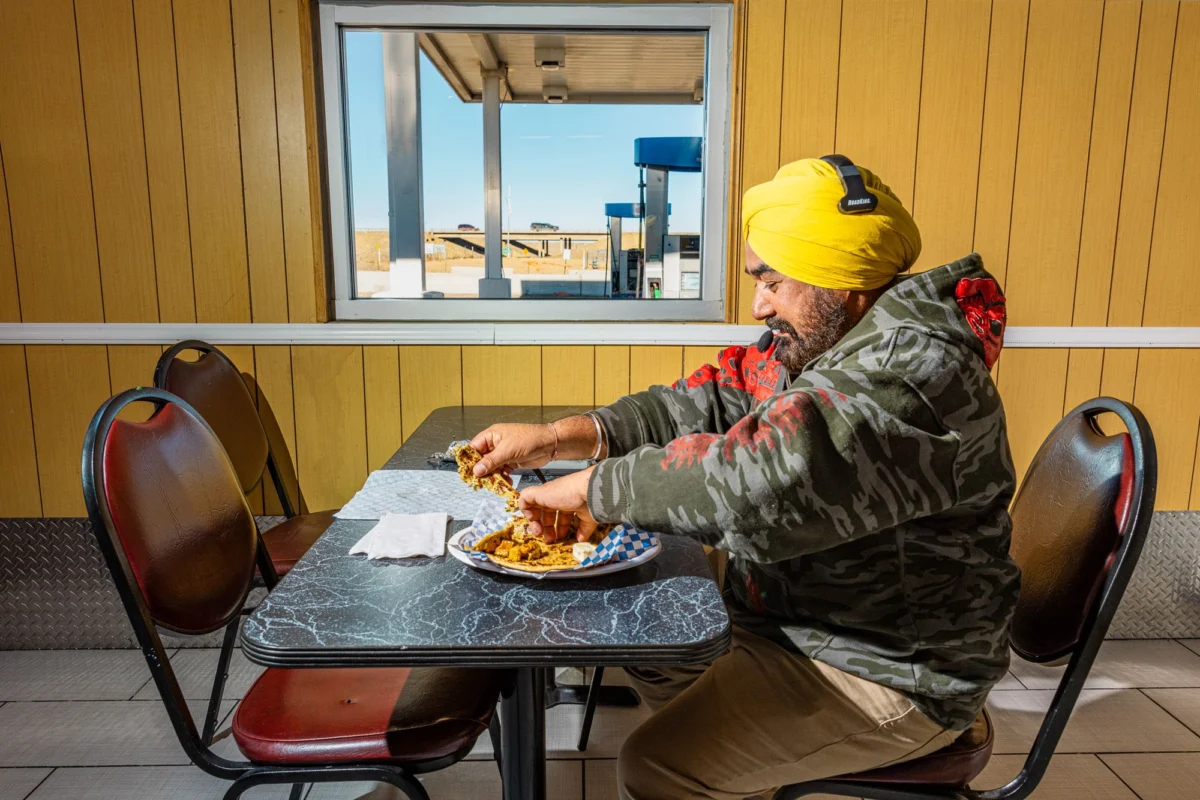
Inside Akal Travel Center, a 24-hour truck stop on Wyoming’s high plains, the smells of sizzling garlic and earthy curry powder permeate the air, a fragrant counterpoint to the utilitarian grit of the open road. It’s a gray, windy day in late January, a typical winter scene for this stretch of Interstate 80. Ediquis Brown, a long-haul trucker whose rig is currently parked at the fuel station about 20 miles from downtown Laramie, exemplifies the diverse clientele drawn to this unlikely culinary haven. He navigates past aisles stocked with the usual truck stop fare – candy bars and kitschy souvenirs – to the checkout counter. Without even glancing at the faded whiteboard menu, he knows his order: tandoori chicken, garlic naan, one mango lassi, and two cups of creamy chai.
Brown, based out of Fort Lauderdale, Florida, traverses the country weekly in his 18-wheeler, often enduring up to 11-hour driving shifts. Like many in his profession, he frequently eats meals within the confines of his vehicle to maintain a demanding schedule. Yet, Akal Travel Center offers a compelling deviation from this norm. He is one of dozens of motorists who, daily, seek out the establishment for its distinct offerings: house-made batches of beautifully blistered naan, golden-hued butter chicken, and biryani, a fragrant rice dish often bejeweled with vibrant carrots and peas.
"We attract customers with the cheapest diesel – and the food," states Gurjot Singh, the truck stop’s manager since 2014. Singh’s tenure began just two years after Mintu Pandher and his wife, Amandeep, purchased the property. The Pandhers, along with all ten of their employees, relocated to Laramie from the Punjab region of northwest India. They now reside in a housing complex situated behind the gas station, a testament to their commitment to building a life and a business in this remote corner of Wyoming.
A Cultural Nexus in a Sparse Landscape
Wyoming, a state where less than 2 percent of the population identifies as Asian according to U.S. Census Bureau data, presents a landscape where such cultural enclaves are rare. In this context, Akal Travel Center emerges as a significant hub of Indian cuisine and culture along the I-80 corridor. It is a Punjabi kitchen, vibrantly alive and humming with activity, nestled beside rows of fuel pumps, a stark contrast to the prevailing roadside amenities. The establishment’s commitment to its cultural roots extends further: a Sikh gurdwara, a place of worship and community for Sikhs, is also located on-site, accessible to both staff and any visitors who wish to partake in its spiritual offerings.
The dining area, characterized by its wood-paneled walls and intimate four-table setup, provides a space for reflection and connection. It is here that Brown, while awaiting his order from the pickup window, strikes up a conversation with Anthony Masonar, another long-haul trucker. Both Brown and Masonar frequent Akal two to four times a month, not only for fuel but also for a hot, flavorful Indian meal. They articulate a shared sentiment: that these dishes represent a tastier and healthier alternative to the ubiquitous fast-food chains that tend to dominate the landscape, particularly in rural and sparsely populated areas.
For these drivers, Akal represents more than just a meal stop; it’s a ritual, a welcome respite from the monotony of the road. It’s a bastion of slow simmering and authentic flavors, a culinary experience rarely found so conveniently situated near a major highway. "I don’t like Wendy’s," Brown candidly states. "This is my spot. A place to get good fresh food." This sentiment underscores the deep appreciation for the quality and authenticity that Akal provides, transforming a routine necessity – refueling – into an anticipated culinary experience.
From Punjab to the Plains: The Pandher Family’s Journey
The story of Akal Travel Center is inextricably linked to the entrepreneurial spirit and cultural heritage of its owners, Mintu Pandher and Amandeep. Their decision to purchase and transform the truck stop in 2012 marked a significant undertaking, not just in business but in establishing a foothold for their community in a new land. Relocating from Punjab, a region renowned for its agricultural richness and vibrant culinary traditions, presented both opportunities and challenges.
The Punjab region of India, often referred to as the “breadbasket of India,” is celebrated for its hearty cuisine, characterized by the extensive use of dairy products, wheat, and a skillful blend of aromatic spices. Dishes like butter chicken, tandoori specialties, and various lentil preparations are staples, reflecting a culture that values communal dining and robust flavors. It is this culinary heritage that Mintu and Amandeep Pandher have diligently brought to Wyoming.
The acquisition of the truck stop in 2012, followed by their managerial and operational roles, signifies a strategic move to leverage their background and provide a service that fills a void. The subsequent relocation of their employees from India further solidifies their commitment to building a self-sustaining operation rooted in their cultural identity. This move also highlights the economic ties that can develop between immigrant communities and the businesses they establish, creating employment and fostering a sense of belonging.
Economic and Cultural Implications
The presence of Akal Travel Center has a multifaceted impact on the Laramie region and the I-80 corridor. Economically, it contributes to local commerce through employment, the purchasing of supplies, and the revenue generated from fuel and food sales. The business model, which combines competitive diesel pricing with a unique food offering, is a sound strategy for attracting and retaining a loyal customer base in a competitive industry.
Culturally, Akal serves as a vital point of contact for Indian culture and cuisine in an area where such exposure is limited. For drivers like Brown and Masonar, it offers a taste of home or a welcome alternative to conventional roadside dining. For the local community, it provides an opportunity to experience authentic Indian food and learn about Sikh traditions through the on-site gurdwara. This cross-cultural exchange is invaluable in fostering understanding and appreciation in diverse communities.
The establishment of the gurdwara on-site is particularly significant. Gurdwaras are central to Sikh life, serving not only as places of worship but also as community centers where langar, a free communal kitchen serving vegetarian meals, is often provided. The presence of a gurdwara at Akal suggests a commitment to the spiritual and social well-being of the staff and potentially the broader community, reinforcing the establishment’s role as more than just a commercial enterprise.
Operational Strategies and Customer Loyalty
The success of Akal Travel Center can be attributed to a combination of strategic decisions. Firstly, the offering of competitive diesel prices is a critical draw for the trucking industry, where fuel costs are a significant operational expense. By positioning themselves as a cost-effective refueling option, they ensure a steady stream of potential customers.
Secondly, and perhaps more distinctively, is the emphasis on high-quality, authentic Indian cuisine. In an industry often characterized by quick-service, standardized food options, Akal differentiates itself by providing a culinary experience that is both satisfying and healthier. The use of fresh ingredients, traditional cooking methods, and the family recipes brought from Punjab are key to this appeal. The fact that the staff, all from the same cultural background, are responsible for the preparation of the food ensures consistency and authenticity.
The creation of a dedicated dining space, even a small one, alongside the take-out option, acknowledges the importance of a comfortable environment for customers. For long-haul truckers, a place to sit, relax, and enjoy a hot meal away from the confines of their cab can be a significant comfort.
The loyalty of customers like Ediquis Brown and Anthony Masonar is a testament to the effectiveness of this dual strategy. They are drawn by the practical necessity of fuel and retained by the exceptional quality and unique cultural offering of the food. This creates a symbiotic relationship where the business provides a necessary service and an appealing amenity, while the customers provide consistent patronage.
Future Outlook and Broader Context
The model established by Akal Travel Center offers insights into the potential for businesses that bridge cultural divides and cater to specific niche markets, even in unexpected locations. As the trucking industry continues to evolve, and as consumers increasingly seek out authentic and diverse culinary experiences, establishments like Akal are likely to find growing appreciation.
The story of Akal also reflects broader trends of globalization and the movement of people and cultures. The Pandher family’s journey from Punjab to Wyoming, and their successful integration into the local economy through their business, is a narrative of entrepreneurship and cultural contribution. Their establishment serves as a reminder that culinary diversity can flourish in even the most remote landscapes, enriching the lives of both those who live there and those who pass through.
In the context of Wyoming’s demographic makeup, Akal plays a crucial role in providing a touchpoint for Indian culture. This can have a positive impact on social cohesion and understanding, fostering a more inclusive environment. The continued success of Akal Travel Center will likely depend on its ability to maintain its commitment to quality, its competitive pricing, and its unique cultural identity, solidifying its position as a beloved destination on Wyoming’s high plains. The fragrant aromas wafting from its kitchen are more than just the scent of delicious food; they are the scent of community, culture, and a successful American entrepreneurial dream.

0 Comments