
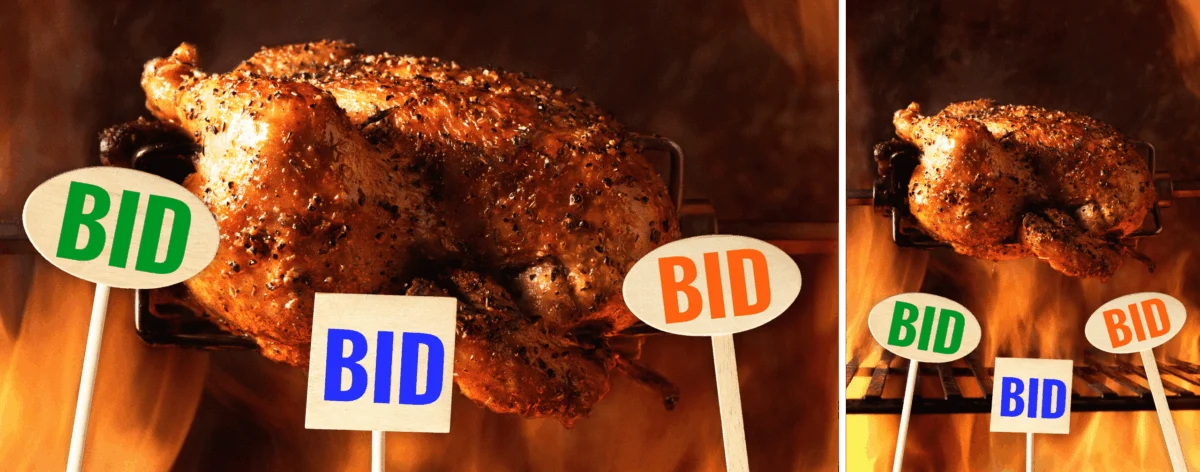
The hum of New York City, a symphony of ceaseless activity and diverse offerings, rarely stops this particular Brooklyn resident in their tracks. Yet, the sight of a newly posted menu, specifically the price of a rotisserie chicken, caused an involuntary step backward, a silent gasp of disbelief. The listed price of $77 for a whole rotisserie chicken at Gigi’s, a highly anticipated new establishment, sparked a citywide conversation that quickly transcended mere sticker shock, exposing deeper fissures in the city’s economic landscape.
The initial reaction, shared via a rapid-fire text exchange within a neighborhood group chat, quickly confirmed that this was not an isolated case of misreading. Guesses for the cost of a rotisserie chicken at this "cool new spot" fell far short of the $77 mark, which, according to the menu, includes "roasted potatoes and a trio of sauces." This eye-watering price point, particularly for a dish often considered a culinary staple accessible to a broad spectrum of the population, ignited an immediate online firestorm.
The Spark of Outrage: Social Media and Political Reactions
The internet, a rapid conduit for public sentiment, buzzed with commentary. Influencer Mike Chau’s Instagram post detailing the $40 price for a half chicken at Gigi’s became a focal point for widespread condemnation. The online reaction was swift and vociferous, with critics labeling the price as exorbitant and out of touch. Adding a political dimension to the controversy, New York City Council Member Chi Ossé, representing a neighboring district, amplified the public outcry by sharing a vividly colored, all-caps meme that read, "$40 HALF CHICKEN AT A WINE BAR? REALLY?" The post garnered over 8,000 likes, signaling the broad resonance of his sentiment.
This public discourse underscores a fundamental tension: the perception of rotisserie chicken as "the people’s protein," readily available from grocery store aisles to casual eateries across the nation, contrasted sharply with its new, stratospheric price tag in a high-end dining context. The juxtaposition raised critical questions about the widening wealth gap, the increasing disparity between leisure and working classes, and the pervasive affordability crisis that is reshaping urban living.
Decoding the Price: The Anatomy of a $77 Chicken
To understand the justification, or lack thereof, behind Gigi’s pricing, a closer examination of the ingredients and preparation process is necessary. The restaurant sources its chickens from a small, specialized farm in upstate New York, where the birds themselves cost approximately $13 to $14 each. This premium sourcing is the first step in a meticulously crafted culinary process.
Following acquisition, the chickens undergo a rigorous brining process, a technique that imbues the meat with moisture and flavor. They are then chilled for approximately 24 hours, a crucial step for achieving the perfect texture and allowing flavors to meld. The cooking itself occurs in a specialty rotisserie oven, designed for even cooking and optimal crisping of the skin. Chef Thomas Knodell further elevates the dish by preparing a jus from the drippings, a rich sauce that enhances the overall flavor profile. The accompanying roasted potatoes are sourced from Organic Norwich Farm, indicating a commitment to high-quality, often more expensive, produce.
Restaurateur’s Perspective: Labor, Inflation, and Perception
Hugo Hivernat, the French restaurateur behind Gigi’s, addressed the controversy directly, emphasizing the restaurant’s commitment to ethical labor practices. He stated that all employees receive fair wages, paid time off, and health insurance, costs that significantly contribute to operational expenses. Hivernat also positioned himself as an "everyday person," refuting any perception of ostentatious wealth. Despite this, he acknowledged the potential for a pricing misstep and indicated a willingness to rebrand the $77 dish, perhaps as a "chicken set," to better convey its comprehensive offering.
Hivernat’s comments also directly addressed the prevailing economic climate. He articulated that the current inflation rates and the broader affordability crisis necessitate such pricing structures. "It’s not our fault we have to do these prices," he stated, framing the situation as a reflection of larger systemic economic pressures rather than a deliberate attempt to price out ordinary diners. He differentiated Gigi’s as a "small sit-down restaurant, not a bodega," suggesting that comparisons to more affordable, casual establishments are misplaced.

Market Realities: A Broader Context of High-End Dining
The conversation around Gigi’s pricing is not occurring in a vacuum. New York City’s culinary scene has long featured establishments that command premium prices for seemingly simple dishes, pushing the boundaries of what consumers are willing to pay. A Reddit thread from the previous summer highlighted this trend, soliciting nominations for the most expensive half chicken dishes in the city.
Among the examples cited were Chez Fifi, an upscale brasserie on the Upper East Side, which offers a $78 poulet rôti accompanied by foie gras jus, pommes Fifi, and salade verte. Another contender is King, a chic SoHo bistro, whose "half a golden chicken chargrilled with a bowl of baked borlotti beans, wild cress leaves and salsa verde" is priced at $85. These examples demonstrate that Gigi’s pricing, while striking, is not entirely unprecedented within certain echelons of New York City’s dining landscape.
Contrasting Models: Value and Affordability in Practice
In contrast to the high-end pricing, other establishments are exploring different models for offering quality rotisserie chicken. Badaboom, a French restaurant in Bed-Stuy, offers a rotisserie chicken with potatoes for $32 for a half portion and $58 for a whole. Co-owner Henry Glucroft highlighted their approach, including a "pay what you think is fair" evening, as a way to engage with the community and address the perceived disconnect in pricing.
Glucroft also offered a critical perspective on the market, stating, "There’s been mass-produced, artificially cheap chicken in the market for some time now, and it’s creating this divide." He asserted that his restaurant’s aim is to "serve quality chicken," a pursuit that inherently incurs higher costs. Despite the price point, Glucroft noted that their half chicken, when shared between two people at $16 each, is considered "an insane value" and remains their top-selling item. He further observed that the primary pushback on pricing comes from individuals who have not actually purchased the dish.
The Affordability Crisis: Implications for Restaurants and Diners
The debate surrounding Gigi’s rotisserie chicken price point serves as a microcosm of a larger, more pervasive issue within the restaurant industry: the escalating costs of operation and their impact on pricing. The industry has long been characterized by thin margins and high failure rates. Factors such as rising rents, increased ingredient costs due to inflation and supply chain disruptions, and the imperative to provide competitive wages and benefits for staff all contribute to the pressure on restaurant owners to adjust their prices.
For diners, the implications are profound. As prices for staple dishes like rotisserie chicken climb, the ability of many New Yorkers to frequent their beloved local, independent restaurants diminishes. This raises concerns about the future of dining out as a regular pastime for non-wealthy residents. The potential exists for restaurants to become exclusive venues for special occasions, rather than accessible neighborhood hubs, further exacerbating social and economic divisions.
Looking Ahead: A Call for Reevaluation
The controversy surrounding Gigi’s $77 rotisserie chicken is more than a fleeting social media trend; it is a symptom of a deeply entrenched economic challenge. While the intrinsic value of a $77 chicken may be a matter of individual perception, its price tag undeniably reflects the broader crisis within the restaurant industry and its ripple effects on urban affordability.
The situation prompts a necessary reevaluation of what, and who, is truly valued within the economic system. As Hivernat seeks dialogue with city officials and establishments like Badaboom experiment with alternative pricing models, the conversation is evolving. The enduring question remains: can New York City’s vibrant culinary scene adapt to these economic realities without alienating the very communities it serves, or will the escalating costs push cherished neighborhood dining experiences beyond the reach of most? The "pecking order of capitalism" may favor those at the top, but a costly rotisserie chicken could, perhaps, serve as a catalyst for rethinking a more equitable and sustainable future for all.
The city also boasts more traditional, wallet-friendly options. Pio Pio offers a whole Peruvian rotisserie chicken for $28, and The Fly features a trendy rotisserie chicken for $34. Even closer to Gigi’s, Jubilee Market’s "Five Buck Cluck" is locally lauded as an exceptional supermarket rotisserie chicken, a sentiment this author can attest to. These examples highlight the diverse range of options available, from casual convenience to upscale indulgence, each reflecting different economic realities and consumer expectations. The stark contrast between these offerings and Gigi’s price point fuels the ongoing debate about value, perception, and the economic stratification evident in New York City’s dynamic food scene.

0 Comments