
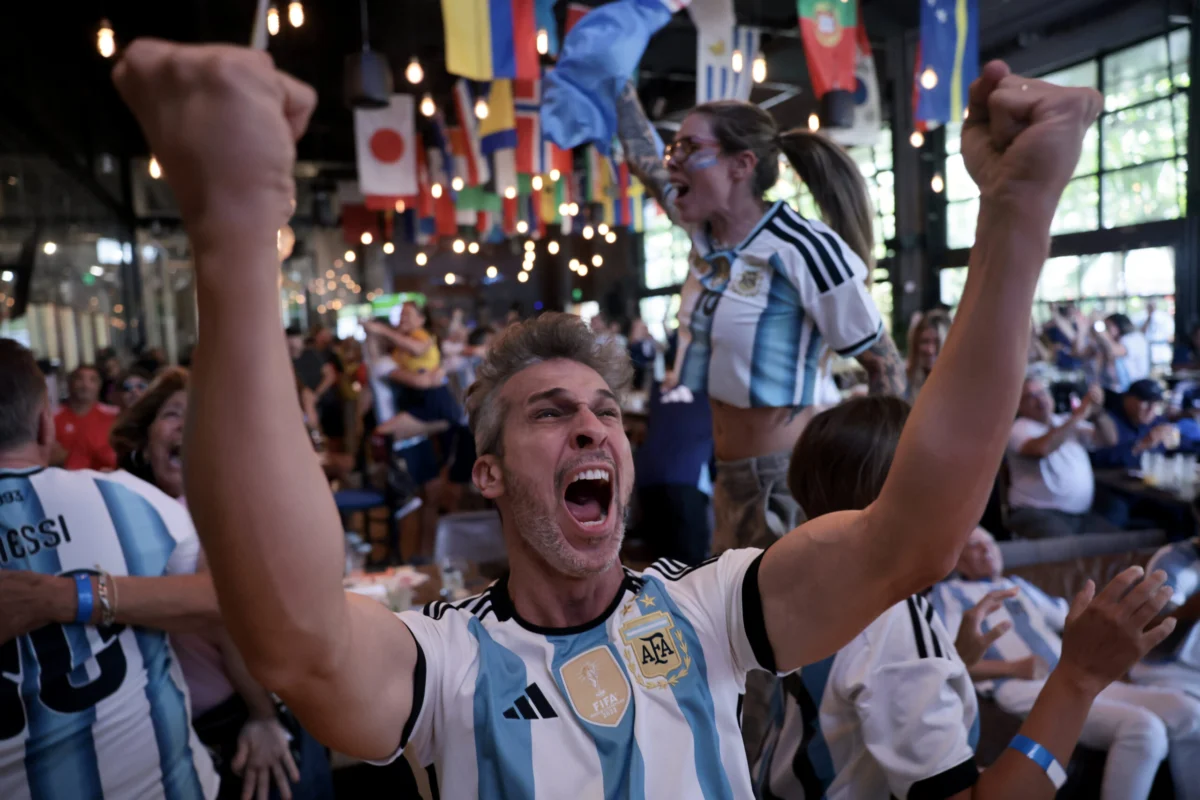
The 2026 FIFA World Cup, a global spectacle uniting nations and igniting fervent passions, has propelled prediction market trading volumes to unprecedented heights across various platforms, with Kalshi emerging as a dominant force, reporting millions of new users and record-breaking transaction figures. This surge in activity, however, unfolds against a complex backdrop of intense regulatory scrutiny and a high-stakes legal battle over the very definition and oversight of these burgeoning financial instruments.
The World Cup Phenomenon and Prediction Markets’ Ascent
The 2026 FIFA World Cup, co-hosted by the United States, Canada, and Mexico, was anticipated to be the largest and most commercially successful iteration of the tournament to date. With an expanded format featuring 48 teams and 104 matches, it captivated billions worldwide, generating an estimated global economic impact exceeding $10 billion and driving massive engagement across digital and traditional media. For prediction markets, platforms where users can bet on the outcome of future events using financial contracts, the World Cup presented an unparalleled opportunity to tap into this global fervor. Unlike traditional sports betting, which typically involves betting on specific game outcomes, prediction markets often allow trading on broader event outcomes, policy decisions, or even scientific breakthroughs, positioning themselves as tools for collective intelligence and economic forecasting.
Kalshi, a prominent player in this evolving landscape, capitalized spectacularly on the tournament’s immense appeal. The company announced a staggering acquisition of 3 million new users over the course of the World Cup, a testament to the event’s broad reach and Kalshi’s aggressive marketing strategies. This influx of new participants drove trading volumes to historic levels, with more than $1.2 billion transacted on contracts related to predicting the ultimate winner of the World Cup alone. This single market, which concluded with Spain and Argentina battling for the title on Sunday, July 20, 2026, set a new record for a singular event on the platform, dwarfing previous high-volume markets.
Vijay Viswanathan, an associate dean of integrated marketing communications at Northwestern University, underscored the unique global appeal of soccer. "I don’t think there’s any game like football," Viswanathan remarked, highlighting its ubiquitous presence across nearly every country. "In terms of the total addressable market, there’s really nothing that comes close to the FIFA World Cup." This sentiment encapsulates the strategic rationale behind Kalshi’s deep dive into World Cup-centric marketing.
Kalshi’s Multi-pronged Marketing Blitz: A Chronology of Engagement
Kalshi’s strategy to leverage the World Cup was multifaceted, combining traditional advertising, strategic partnerships, and innovative digital campaigns. The company’s marketing efforts spanned several key phases leading up to and throughout the tournament.
-
Early Tournament Engagement (June 2026): As the World Cup kicked off, Kalshi launched a series of high-profile advertisements. A notable spot featured Hollywood actor Timothee Chalamet in June, strategically coinciding with his public appearances at high-profile NBA Finals games, thereby extending Kalshi’s brand appeal beyond traditional sports enthusiasts. This early move aimed to broaden the platform’s demographic reach, appealing to a younger, pop-culture-savvy audience. Elizabeth Johnson, executive director of the Wharton Neuroscience Initiative at the University of Pennsylvania, commented on this approach: "This is also a way for them to say, ‘oh, but we’re also relevant to all these other people who might not be that interested in sports, too.’ They’re seizing this moment to remind people about the ubiquitousness of what these prediction markets are."
-
Strategic Partnerships and Official Endorsements (June-July 2026): A pivotal move was Kalshi’s partnership with ADI Predictstreet, the official prediction market sponsor of the World Cup. This collaboration allowed for co-branded advertisements to be featured prominently in stadiums, granting Kalshi unparalleled visibility within the tournament’s physical venues. "Our partnership with Kalshi has been instrumental in bringing the excitement of prediction markets to a global audience within the World Cup ecosystem," stated an inferred spokesperson for ADI Predictstreet, emphasizing the synergy between the two entities in reaching millions of fans.
-
AI Integration and Digital Reach (July 2026): In a move highlighting its embrace of cutting-edge technology, Kalshi announced a partnership with OpenAI in mid-July. This integration meant that when users queried ChatGPT about World Cup games or odds, Kalshi’s contract odds would be featured directly in the AI’s responses. This unprecedented digital reach allowed Kalshi to be present at the point of inquiry for millions of users seeking real-time information and insights into the tournament, significantly enhancing its organic visibility. An inferred statement from an OpenAI representative might highlight the partnership’s value in "providing users with timely and relevant market insights powered by our advanced AI, enhancing the overall user experience for sports enthusiasts."
-
Celebrity Power and Influencer Marketing (Throughout June & July 2026): Kalshi heavily invested in endorsements from some of soccer’s most revered figures. Croatian midfield maestro Luka Modric and legendary Real Madrid coach José Mourinho lent their considerable gravitas to the campaign. Perhaps the most impactful was a partnership with the Argentina national team, which culminated in a direct feature by superstar Lionel Messi on his immensely popular Instagram account. Such a post, reaching hundreds of millions of followers globally, provided an authentic and highly credible endorsement within the soccer community. Later in the tournament, Colombian music sensation J Balvin also joined the roster of non-soccer celebrities, further diversifying Kalshi’s appeal.
-
Agility and Real-time Content Creation: Kalshi CEO Tarek Mansour, who plays a direct role in guiding the company’s marketing strategy, emphasized the importance of speed and responsiveness. "Our volumes are where the news is at," Mansour stated. "It’s a lot of the approach for the World Cup. The most important thing is enable creativity based on what’s happening." This agile approach was exemplified by an advertisement featuring former professional soccer stars playing a scrimmage, conceived, executed, and released within a mere 24 hours on the Friday before the final match. This ability to react swiftly to unfolding events allowed Kalshi to maintain relevance and capture fleeting moments of public attention.
Navigating the Regulatory Minefield: A Looming Battle
Even amidst this celebratory period of growth, Kalshi and the broader prediction market industry face significant regulatory headwinds. A protracted dispute between the federal government and various states over the legal classification of sports-related prediction market contracts continues to cast a shadow. States argue that these contracts are functionally equivalent to sports betting, an activity traditionally regulated and taxed at the state level. This perspective is often championed by established gambling companies, who view prediction markets as encroaching on their incumbent positions. The American Gaming Association, for example, has previously estimated that states have lost over $1 billion in potential tax revenue due to the unregulated nature of certain prediction market activities, particularly in sports.
Kalshi, conversely, aligns with the federal government’s position, asserting that the Commodity Futures Trading Commission (CFTC)—the federal agency responsible for regulating swaps and derivatives—holds the sole authority to oversee prediction markets. Tarek Mansour robustly dismissed state-level concerns, framing them as a competitive maneuver by traditional gambling companies. "They are worried about losing their dominant, incumbent positions," Mansour asserted, suggesting an economic motivation behind the state-level pushback.
The regulatory uncertainty is not merely theoretical; it has real-world implications. While Kalshi celebrated its World Cup success, the broader prediction market landscape was reminded of its inherent risks and controversial elements. Earlier in the year, on March 9, 2026, a major scandal unfolded in Creteil, France, involving a $54 million lawsuit concerning bets related to recent strikes in Iran. Although this incident was unrelated to Kalshi’s World Cup operations and involved different platforms, it served as a stark reminder of the potential for high-stakes disputes and the need for clear regulatory frameworks in an industry that can touch upon sensitive political and social events.
Brian Sung, a partner specializing in derivatives and digital assets at Haynes Boone, offered a nuanced perspective on the impact of Kalshi’s aggressive marketing. While he doesn’t believe the advertising strategies directly influence how courts might rule, Sung acknowledged their effect on public and political perception. "It does kind of weaken their perception, in public or politics," he noted. "They are trying to push against this idea that they’re really only about sports. I mean, that is where the bulk of their activity is." This highlights the tightrope prediction markets walk: leveraging popular events like the World Cup for growth while simultaneously trying to shed the "sports betting" label to maintain their preferred regulatory classification.
Beyond the Final Whistle: The Challenge of User Retention
With the World Cup final now concluded, Kalshi faces its next significant challenge: converting its 3 million new users into recurring traders. Historical data suggests that trading volumes on days without major World Cup matches were significantly lower than on game days, indicating a potential drop-off in engagement post-tournament. This "event-driven" usage pattern is common for platforms that see spikes around major global happenings.
Mansour, however, expressed confidence in Kalshi’s long-term strategy, drawing parallels to previous cycles of growth. "This cycle has happened before: a major event that drives volume higher, with a temporary decline after only for it to keep marching higher off of other events," he explained. He remains optimistic about the continuous flow of global events that can drive market activity. "You have to believe there’s not going to be any news after Sunday," he quipped. "Maybe, but the more probable thing is that there’s going to be like a bunch of things going on in the world, and Kalshi’s going to be there to service it."
The company’s strategy for retention will likely involve diversifying its contract offerings beyond sports, focusing on political events, economic indicators, technological advancements, and other news-driven topics to maintain broad appeal. Educational initiatives and user-friendly interface enhancements will also be crucial in guiding new users to explore the full breadth of the platform’s offerings.
Future Outlook and Broader Implications
Kalshi’s World Cup success underscores the immense potential of prediction markets to engage a global audience and drive significant trading volume. The convergence of major sporting events, celebrity endorsements, and advanced AI integration (through partnerships like OpenAI) represents a powerful new frontier in digital finance and entertainment.
However, the industry’s trajectory remains heavily dependent on the resolution of its regulatory status. A clear and consistent regulatory framework, whether at the federal or state level, is vital for the long-term stability and legitimacy of prediction markets. The ongoing legal battles are not just about market control but about defining the very nature of these platforms: are they sophisticated financial instruments or merely a new form of gambling? The answer will dictate their future growth, investor confidence, and public perception.
As Kalshi moves forward, its ability to innovate, diversify its offerings, and successfully navigate the complex regulatory landscape will determine whether its World Cup triumph was a singular peak or a foundational step toward becoming a truly ubiquitous and accepted financial marketplace. The industry, still in its relative infancy, stands at a critical juncture, poised between explosive growth and the inherent challenges of establishing its place within the established financial ecosystem.
Disclosure: CNBC and Kalshi have a commercial relationship that includes customer acquisition and a minority investment.

0 Comments