
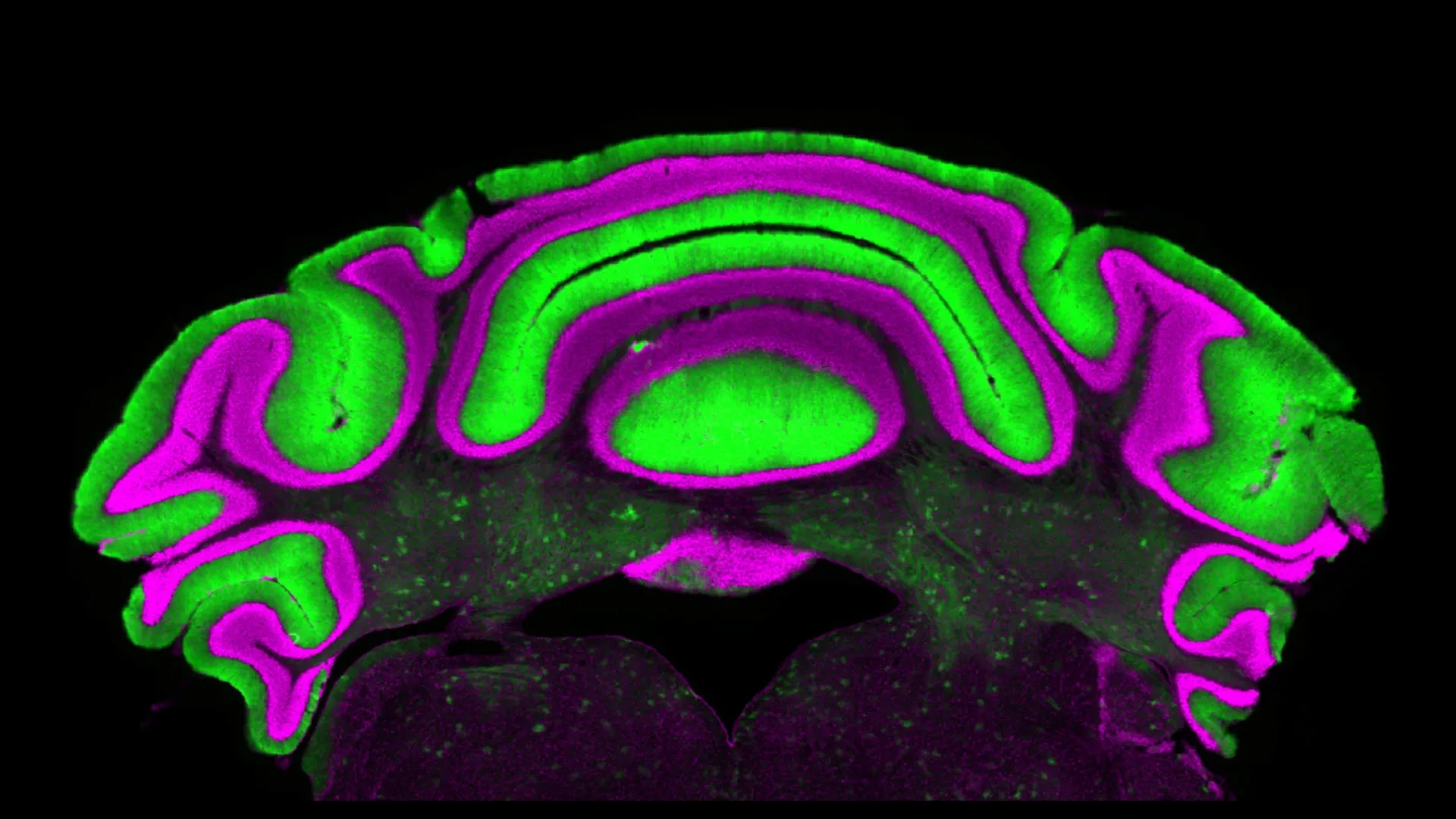
New research from a Virginia Tech neuroscientist at the Fralin Biomedical Research Institute at VTC is raising profound questions about a long-standing approach to studying chronic neurological conditions such as dystonia, ataxia, and tremor. For decades, the scientific community has operated under the assumption that understanding the activity of Purkinje cells in the cerebellum provides a direct and reliable window into the workings of deep cerebellar nuclei cells. However, a groundbreaking study led by Meike van der Heijden, assistant professor at the Fralin Biomedical Research Institute, published in the prestigious Journal of Physiology, suggests this fundamental premise may be flawed, potentially necessitating a significant re-evaluation of research strategies and therapeutic development for these debilitating disorders.
The Cerebellum’s Crucial Role in Movement
These neurological conditions, characterized by involuntary muscle contractions, abnormal postures, and uncontrollable tremors, all trace their origins to disruptions within the cerebellum. This vital brain region, situated at the back of the skull beneath the cerebral hemispheres, plays an indispensable role in motor control, coordination, balance, and fine-tuning movements. When the intricate circuitry of the cerebellum is compromised, the precise orchestration of our physical actions breaks down, leading to the hallmark symptoms of these movement disorders.
Historically, research into cerebellar function has heavily focused on the intricate relationship between two principal types of neurons within this region: Purkinje cells and deep cerebellar nuclei (DCN) cells. Purkinje cells, known for their elaborate dendritic trees, are the sole output neurons of the cerebellar cortex. They exert an inhibitory influence on the DCN cells, which are the primary output pathways of the cerebellum, relaying processed motor commands to other parts of the brain, including the brainstem and the cerebral cortex. This inhibitory connection has led to a prevailing scientific paradigm: that the activity of Purkinje cells serves as a reliable indicator of the activity and functional state of the DCN cells. Researchers have often inferred the state of the DCN cells by measuring Purkinje cell activity, largely due to practical considerations related to accessibility.
Challenging a Foundational Assumption
The new study, spearheaded by Van der Heijden and with Alyssa Lyon, a doctoral candidate in Virginia Tech’s Translational Biology, Medicine, and Health Graduate Program, as the first author, directly challenges this deeply entrenched assumption. By meticulously analyzing a comprehensive database of electrophysiology recordings from pre-clinical models exhibiting cerebellar disease, the research team discovered an unexpected and concerning disconnect. Their findings indicate that activity in Purkinje cells does not, in fact, reliably predict the activity in DCN cells, even though a direct anatomical connection exists between them.
"We see that there’s not a clear linear relationship between activity in the Purkinje cells and in the deep nuclei cells. So there’s very limited predictive power in monitoring one to understand what’s going on in the other," stated Van der Heijden in an interview. This observation is critical because it suggests that decades of research, which have often used Purkinje cell activity as a proxy for DCN cell function, may have been based on an incomplete or even misleading understanding of cerebellar dynamics.
Implications for Dystonia, Ataxia, and Tremor Research and Treatment
The implications of this study are far-reaching, potentially revolutionizing how scientists approach the study and treatment of cerebellar movement disorders. Dystonia, characterized by sustained muscle contractions causing twisting and repetitive movements and abnormal postures; ataxia, marked by a lack of voluntary coordination of muscle movements; and tremor, involving involuntary rhythmic shaking, are all conditions where cerebellar dysfunction is a central feature. A more accurate understanding of the interplay between Purkinje and DCN cells is therefore paramount for developing effective therapies.
"Purkinje and cerebellar deep nuclei cell activity is disrupted in a disease state, and a better understanding of the relationship between these neuron types will ultimately help optimize treatments for diseases such as dystonia, ataxia, and tremor," explained Lyon. She further elaborated on the historical rationale behind the focus on Purkinje cells: "One reason Purkinje cells have received so much attention is that they are easier to study. They sit in the outer layer of the cerebellum, making them more accessible to researchers. Deep nuclei cells, by contrast, are located farther beneath the brain’s surface and are more difficult to measure directly." This practical accessibility led many to treat Purkinje cell activity as a convenient and assumedly valid biomarker for the state of the deeper, less accessible DCN cells.
Unexpected Results From Cerebellar Recordings
Under standard physiological conditions, the inhibitory role of Purkinje cells on DCN cells leads to an intuitive expectation: increased Purkinje cell activity should correlate with decreased DCN cell activity, and vice-versa. This inverse relationship is a fundamental principle taught in neuroscience. However, the research team’s analysis of electrophysiological data from models of cerebellar disease yielded a starkly different picture. The study found no significant correlation between the firing patterns of these two crucial neuronal populations. This suggests that the complex cellular environment and pathological processes occurring within the diseased cerebellum can decouple the expected relationship between Purkinje cell output and DCN cell input.
Van der Heijden, who also holds an appointment in Virginia Tech’s School of Neuroscience, emphasized the necessity of a paradigm shift. "We suggest that if you want to know how the cerebellum is behaving in a disease state, you have to look at the deep nuclei neurons, not just the Purkinje cells," she asserted. This call to action highlights the critical need for researchers to develop and employ techniques that allow for direct and simultaneous measurement of DCN cell activity, rather than relying on indirect inferences from Purkinje cells.
A Cautionary Tale for Future Research and Therapeutics
The findings serve as a significant cautionary note for the entire field of cerebellar neuroscience. Not only does it question past research methodologies, but it also raises concerns about current and future therapeutic strategies. Many experimental treatments for movement disorders aim to modulate neuronal activity in the cerebellum. If these strategies target Purkinje cells with the expectation that this will predictably alter DCN cell function, they may be misdirected or less effective than anticipated.
"This is a cautionary tale for understanding cerebellar activity in disease, but also for treating these challenging diseases," Van der Heijden cautioned. "We need to be very careful in making assumptions, and to actually do experiments to test our hypotheses." This sentiment underscores the importance of rigorous scientific inquiry and the continuous re-evaluation of established paradigms in light of new evidence.
Broader Impact and Future Directions
The implications of this research extend beyond the immediate scope of dystonia, ataxia, and tremor. The cerebellum is implicated in a wider range of cognitive functions, including learning, language, and emotional processing. Understanding its intricate neural mechanisms is fundamental to unraveling a spectrum of neurological and psychiatric disorders.
The study’s methodology, which involved analyzing a robust dataset of electrophysiology recordings, represents a powerful approach to uncovering complex neural relationships. The use of pre-clinical models allows for controlled experimentation and the isolation of specific cellular interactions, which is often challenging in human studies.
Moving forward, this research is likely to spur the development of novel techniques and experimental designs. Scientists may need to invest in advanced imaging and recording technologies capable of accessing and monitoring DCN cells with greater precision. Furthermore, computational modeling may play an increasingly important role in deciphering the complex dynamics of cerebellar circuitry, moving beyond simple linear relationships.
The findings also highlight the importance of interdisciplinary collaboration. Bringing together neurophysiologists, computational scientists, geneticists, and clinicians will be crucial in translating these fundamental discoveries into tangible improvements for patients suffering from movement disorders. The Virginia Tech Fralin Biomedical Research Institute, with its multidisciplinary focus, is well-positioned to lead such collaborative efforts.
In conclusion, the work by Van der Heijden and Lyon represents a significant advancement in our understanding of cerebellar function. By challenging a long-held assumption, their research opens new avenues for investigation and offers a critical reminder that scientific progress often hinges on the willingness to question established beliefs and to rigorously test hypotheses with empirical data. The potential impact on the future of research and treatment for devastating neurological conditions is substantial, offering a renewed sense of optimism for patients and a clear directive for the scientific community.

0 Comments