
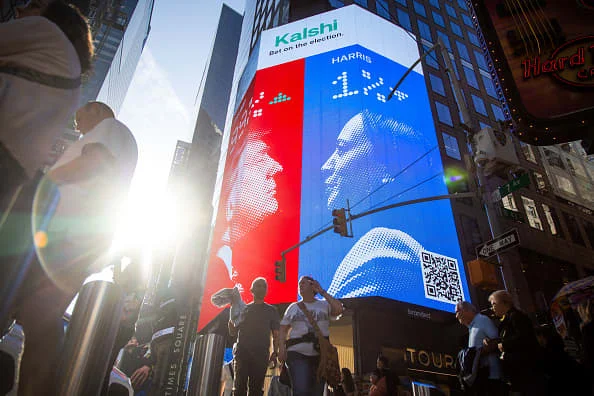
Prediction market platform Kalshi has announced the launch of its innovative "Midterms Hub," a dedicated online portal designed to provide political enthusiasts and analysts with a comprehensive, real-time view of how traders are forecasting the outcomes of the 2026 U.S. midterm elections. This strategic move underscores Kalshi’s deepening commitment to integrating financial market mechanics with political forecasting, aiming to offer a distinct alternative to traditional polling and punditry. The new hub is expected to become a central resource for anyone seeking data-driven insights into the forthcoming electoral landscape, from individual Senate and House races to the broader control of Congress.
The Architecture of the Midterms Hub: A Data-Rich Ecosystem
At its core, the Midterms Hub is engineered to aggregate and visualize the collective intelligence derived from Kalshi’s event contracts. Users will gain immediate access to the latest odds for individual U.S. Senate and House of Representatives races, presented both as raw probabilities and through an interactive national map, allowing for granular and macro-level analysis of the electoral battleground. This visual representation of market sentiment aims to make complex data accessible and intuitive, catering to a broad audience ranging from seasoned political strategists to casual observers.
Beyond raw prediction market odds, the hub is designed as a multifaceted informational platform. It will feature integrated polling averages, offering a crucial comparative lens through which users can assess how prediction market sentiment aligns with, or diverges from, statistical surveys of the electorate. This dual perspective is particularly valuable given the historical fluctuations in the accuracy of both polling and market-based forecasts. Furthermore, the platform will incorporate the latest Federal Election Commission (FEC) fundraising reports for individual candidates, providing transparency into the financial underpinnings of each campaign. Complementing these data streams will be a curated selection of news and analytical content from various reputable outlets, ensuring that users have access to a holistic understanding of the political narratives shaping the elections.
Crucially, Kalshi has emphasized that the Midterms Hub is not solely for active traders. The company noted that approximately three-quarters of all visitors to its platform are not engaged in active trading but rather seek out current odds and insights. This statistic highlights a significant demand for accessible, market-derived political information, positioning the Midterms Hub as a vital tool for those who wish to understand the ‘wisdom of the crowds’ without necessarily participating in the trading itself.
Prediction Markets: A New Paradigm for Political Forecasting
The emergence and growing prominence of prediction markets like Kalshi represent a significant evolution in how society attempts to forecast future events, particularly in the realm of politics. Unlike traditional polls, which survey a sample of individuals about their intentions or opinions, prediction markets operate on the principle of "wisdom of the crowds," where aggregated bets placed with real money are believed to reflect the collective probability of an event occurring. The underlying theory suggests that participants, motivated by financial incentives, will incorporate all available information into their decisions, thereby producing more accurate forecasts than any single expert or poll.
Kalshi, notably, holds a unique position in this nascent industry as the first federally regulated exchange for event contracts in the United States, operating under the oversight of the Commodity Futures Trading Commission (CFTC). This regulatory framework distinguishes Kalshi from offshore betting sites or less regulated platforms, lending it a degree of legitimacy and transparency that its predecessors often lacked. The CFTC’s approval, granted in 2021, allowed Kalshi to offer contracts on a wide array of verifiable future events, marking a pivotal moment for the industry’s integration into mainstream financial markets. This regulatory clarity is paramount, as it addresses long-standing concerns about the legality and integrity of such markets, differentiating them from traditional gambling by framing them as legitimate financial instruments for hedging or speculating on specific outcomes.
Tarek Mansour, co-founder and CEO of Kalshi, articulated this unique value proposition in a statement regarding the Midterms Hub’s launch. "Prediction markets have a unique perspective," Mansour stated, asserting their resilience against political bias. He further elaborated, "They cut through polarization and show you what the wisdom of the crowds actually believes, backed by real money, not rhetoric. That kind of clarity is rare right now and that’s what people are getting with the Midterms Hub." Mansour, an MIT graduate with prior experience as a trader at Citadel and an analyst at Goldman Sachs, brings a robust financial background to his vision for Kalshi, emphasizing data integrity and market efficiency. His assertion highlights a growing skepticism towards traditional media narratives and politically charged discourse, suggesting that financial markets, by their very nature, demand a more objective assessment of probabilities.
Kalshi’s Expanding Political Footprint: A Chronology of Innovation
The introduction of the Midterms Hub is not an isolated initiative but rather the latest in a series of strategic moves by Kalshi to solidify its presence in the political forecasting arena. The platform has systematically expanded its offerings, demonstrating a clear trajectory towards becoming a leading source of political market intelligence.
- Founding and Regulatory Approval (2019-2021): Kalshi was founded in 2019 by Tarek Mansour and Hooman Mohammadi, with a vision to create a regulated exchange for event contracts. After navigating the complex regulatory landscape, Kalshi received approval from the CFTC in 2021, becoming the first legal U.S. exchange for event contracts, a significant milestone that paved the way for its current operations.
- Initial Political Contracts: From its inception, Kalshi began listing contracts related to various political events, including elections, legislative outcomes, and policy decisions. These early contracts allowed traders to speculate on specific questions, such as which party would control Congress or the outcome of presidential primaries, building a foundational user base interested in political market dynamics.
- The American Power Index (May 2026): Just months before the Midterms Hub, in May 2026, Kalshi introduced the "American Power Index" (API). Described by the company as an "S&P 500 for politics," the API is an innovative index designed to track the overall political standing of the major parties. By measuring aggregated market sentiment across a basket of political contracts, the API provides a high-level, real-time indicator of which political party is gaining or losing influence. This index serves as a valuable barometer for the broader political climate, offering a macro perspective that complements the granular insights provided by individual election contracts.
- Pre-Midterm Volume Surge: The period leading up to the 2026 midterm elections has already witnessed a substantial surge in prediction market volume on Kalshi. More than $30 million has reportedly been traded on contracts tied to which party will ultimately control the House and Senate in 2026. This heightened activity mirrors trends observed during previous major electoral cycles, such as the 2024 Presidential election, where prediction markets experienced significant spikes in engagement and trading volume. This pattern underscores the growing public interest in leveraging financial markets to anticipate political outcomes.
The "Wisdom of Crowds" Versus Traditional Polling: A Comparative Analysis
The debate over the accuracy and utility of prediction markets compared to traditional public opinion polls is a perennial one. Each method possesses distinct strengths and weaknesses, and the Midterms Hub’s inclusion of both polling averages and market odds offers a unique opportunity for direct comparison.
Traditional polls, conducted by reputable organizations, rely on statistical sampling methods to infer the opinions and intentions of a larger population. Their strength lies in their ability to capture nuanced public sentiment, identify demographic trends, and gauge support for specific policies or candidates. However, polls are susceptible to various challenges, including sampling error, response bias (e.g., social desirability bias), declining response rates, and the difficulty of accurately modeling voter turnout. Recent electoral cycles, particularly the 2016 and 2020 U.S. Presidential elections, saw instances where polls significantly underestimated certain outcomes, leading to widespread scrutiny and a demand for alternative forecasting methods.
Prediction markets, conversely, are argued to circumvent some of these pitfalls. Their proponents contend that because participants are betting real money, they are incentivized to seek out and process all available information, irrespective of their personal political leanings. This financial incentive is believed to filter out mere "rhetoric" or aspirational voting intentions, focusing instead on the most probable outcome. Historical data from platforms like the Iowa Electronic Markets (IEM) has often shown prediction markets to be as accurate, if not more so, than traditional polls, especially in the final weeks leading up to an election. For instance, the IEM famously outperformed many polls in predicting the outcomes of several U.S. presidential elections.
However, prediction markets are not without their own limitations. They require sufficient liquidity and participation to function effectively; thin markets can be volatile and susceptible to manipulation. Concerns about market manipulation, insider trading, and the potential for these markets to be used for illicit purposes are frequently raised, although regulatory oversight, like that provided by the CFTC for Kalshi, aims to mitigate these risks. Furthermore, while they predict outcomes, they typically do not provide the granular data on why an outcome is likely, which polls can offer through demographic breakdowns and issue-specific questions. The Midterms Hub’s integrated approach, combining both market odds and polling data, seeks to harness the strengths of both methodologies, offering a more robust and holistic view of the electoral landscape.
Broader Implications and the Future of Event Contracts
The launch of Kalshi’s Midterms Hub and the broader growth of prediction markets have significant implications across several domains:
- Political Journalism and Analysis: These platforms offer a new, dynamic data source for journalists and political analysts, enabling them to report not just on what people say they will do, but what a financially incentivized market believes will happen. This could lead to more nuanced reporting and a greater focus on underlying probabilities rather than just horse-race narratives.
- Voter Engagement and Education: For the general public, the hub could serve as an engaging tool to better understand the complexities of elections. By providing access to diverse data points—market odds, polling, fundraising, and news—it empowers citizens to make more informed assessments of the political climate.
- Innovation in Financial Markets: The expansion of event contracts into political and other non-traditional domains represents a frontier in financial innovation. As regulators and market participants become more comfortable with these instruments, they could pave the way for new forms of hedging against or speculating on a wider array of verifiable real-world events, from climate trends to technological breakthroughs.
- Challenges and Ethical Considerations: Despite their potential, prediction markets continue to face scrutiny. Ethical debates persist regarding the "financialization" of societal events, questions about market integrity, and the fine line between legitimate financial instruments and gambling. As the industry matures, ongoing dialogue between platforms, regulators, and the public will be crucial to ensure responsible growth and mitigate potential harms. The regulatory framework, particularly for a CFTC-regulated entity like Kalshi, is designed to address these concerns by ensuring transparency, preventing fraud, and protecting market participants.
In conclusion, Kalshi’s Midterms Hub stands as a testament to the evolving landscape of information dissemination and political forecasting. By synthesizing real-money market predictions with traditional polling data, fundraising reports, and curated news, it aims to provide an unparalleled resource for understanding the intricate dynamics of the 2026 U.S. midterm elections. As the political cycle intensifies, the hub will serve as a critical nexus for those seeking clarity and objective insight, embodying Kalshi CEO Tarek Mansour’s vision of cutting through the rhetoric with the unvarnished wisdom of the crowds.

0 Comments