
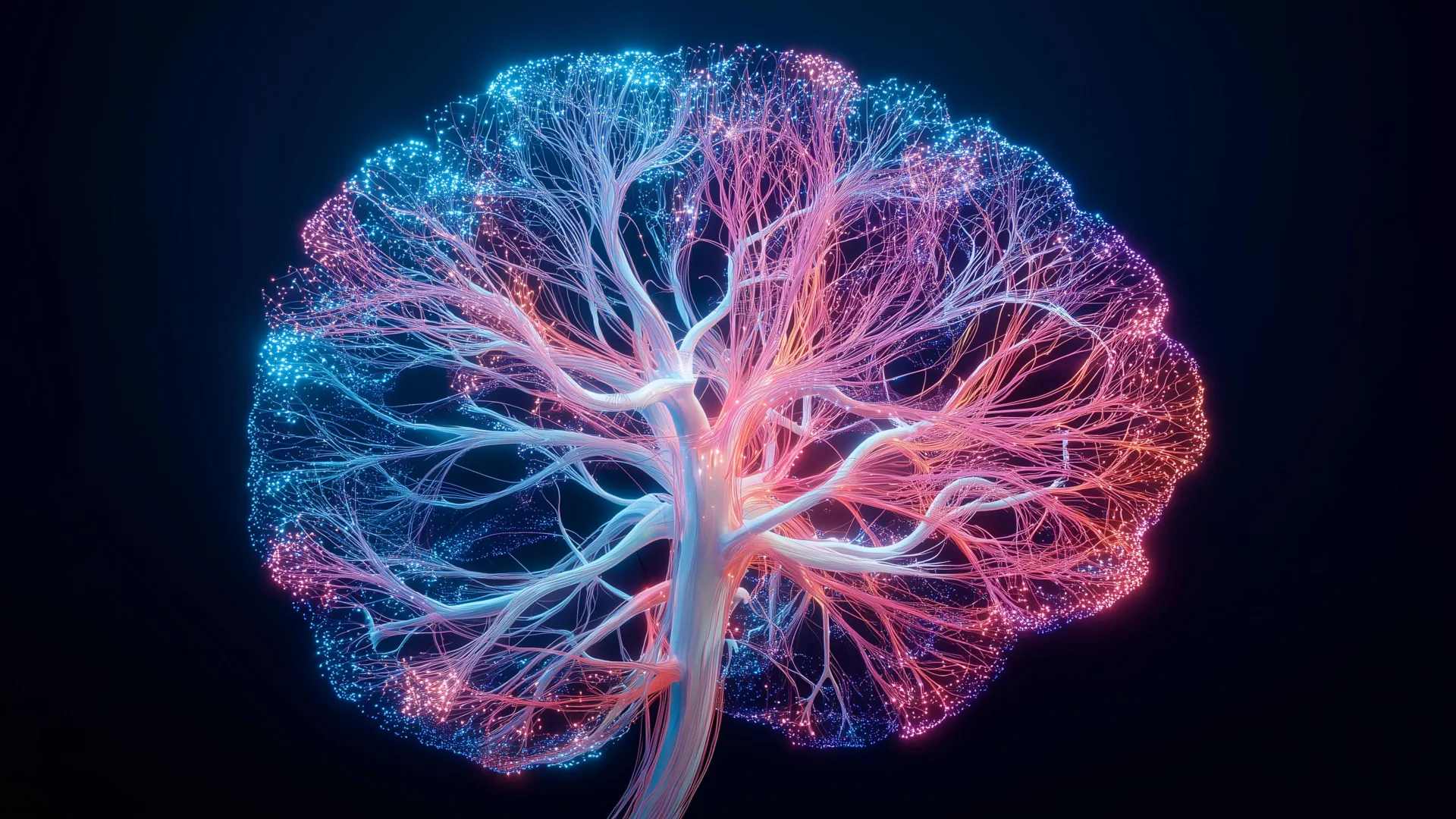
Scientists at the University of Illinois Urbana-Champaign have uncovered compelling evidence that could fundamentally reshape our understanding of both the human brain and the future trajectory of artificial intelligence. Their groundbreaking research, published in the prestigious journal Proceedings of the National Academy of Science (PNAS), suggests that the intricate process of decision-making commences much earlier in the brain’s sensory processing regions than traditional neuroscientific theories have proposed. This paradigm-shifting discovery not only offers fresh perspectives on biological intelligence but also provides crucial insights for designing next-generation AI systems that are demonstrably more capable and remarkably more energy-efficient.
The research, spearheaded by Yurii Vlasov, a professor of electrical and computer engineering at The Grainger College of Engineering, challenges a long-held dogma in neuroscience. For decades, the prevailing model posited that sensory information travels in a strictly hierarchical fashion, ascending through increasingly complex brain regions until it reaches higher cortical areas, such as the frontal cortex, where the final decision is formulated. However, Vlasov and his team’s findings indicate a more dynamic and integrated system, where early sensory regions play an active and earlier role in the decision-making cascade.
Rethinking the Neural Architecture of Decision-Making
The human brain, a biological marvel considered the most complex structure in the known universe, continues to be a frontier of scientific inquiry. The National Academy of Engineering identified the reverse engineering of the brain as one of the 14 grand challenges for engineering in the 21st century in 2008, underscoring the profound and persistent mystery surrounding its intricate workings.
Historically, many successful artificial intelligence systems, including widely adopted convolutional neural networks (CNNs), have drawn inspiration from a simplified, unidirectional view of brain processing. This conventional approach conceptualizes information flow as a sequential upward progression, akin to an assembly line, where raw sensory input is processed at lower levels and gradually refined into abstract representations at higher levels before a decision is rendered. This model has yielded significant advancements in AI, enabling capabilities such as image recognition and natural language processing.
However, Vlasov and a growing contingent of researchers have voiced increasing skepticism about the completeness of this unidirectional model. They posit that this simplified architecture might not fully capture the nuanced and adaptive nature of biological intelligence, which has been honed over hundreds of millions of years of evolutionary refinement. The alternative framework being explored emphasizes the critical role of interconnected feedback loops, enabling information to traverse in both directions between different brain regions. This bidirectional communication allows for continuous refinement, integration, and modulation of neural signals, leading to more robust and efficient processing.
The impetus for this re-evaluation is deeply rooted in the stark contrast between the energy consumption of biological and artificial systems. The human brain, despite its immense computational power and ability to perform extraordinarily complex tasks, operates on an astonishingly low power budget, estimated to be around 20 watts. In contrast, contemporary AI systems, particularly large-scale deep learning models, often require vast amounts of energy, necessitating powerful hardware and significant power infrastructure. Understanding the architectural principles of biological intelligence, therefore, holds immense potential for guiding the development of future AI that can achieve similar feats with a fraction of the energy.
"We want to learn from a billion years of evolution," Vlasov stated in a press release, articulating the core motivation behind his team’s research. "How is that biological intelligence organized architecturally? Can we learn from the architectural side of the brain and emulate that to make AI more effective, less power hungry, and more intelligent than it currently is? In the level of decision-making, that’s where current AI is lacking." This statement highlights the critical gap in current AI capabilities, particularly in adaptive and context-aware decision-making, which biological brains excel at.
Early Sensory Regions Demonstrate Decision-Making Prowess
To empirically investigate the early stages of decision-making within the brain, Vlasov’s research team focused their attention on the initial phases of sensory perception and processing. They designed an experiment involving mice navigating a sophisticated virtual reality corridor, a controlled environment that allowed for precise monitoring of neural activity as the animals made perceptual decisions.
The team recorded neural signals in real-time as the mice encountered stimuli and made choices within the virtual environment. Their findings revealed a significant and unexpected presence of decision-related neural activity in the primary somatosensory cortex (S1). S1 is recognized as one of the brain’s earliest cortical areas responsible for processing somatosensory information, such as touch, temperature, and pain. The presence of decision-making signals in such an early sensory region directly contradicts the established hierarchical model, which would typically delegate such cognitive functions to much later stages of processing.
Crucially, the data suggested that S1 was not merely passively relaying raw sensory data to higher brain centers. Instead, the neural activity within S1 appeared to be dynamically modulated by feedback signals originating from higher brain regions. This "top-down" regulation implies that the decision-making process is not a linear, unidirectional flow but rather a continuous, multi-directional dialogue between various neural populations. This intricate interplay allows for the constant refinement and contextualization of sensory information, influencing the very early stages of perception to align with ongoing goals or predictions.
This discovery aligns with emerging theories in neuroscience that emphasize the predictive nature of the brain. Instead of simply reacting to incoming stimuli, the brain is thought to constantly generate predictions about the world and then update these predictions based on sensory evidence. Early sensory regions, in this context, would be involved not only in receiving raw data but also in integrating this data with ongoing predictions and prior knowledge to inform immediate behavioral responses.
"The neural code of the brain is still mostly an unknown language," Vlasov acknowledged, underscoring the complexity of the problem. "But this systems-level understanding can be viewed as a potential impact on how more efficient artificial neural networks can be built – how the next generation of AI can be thought through. Maybe with these analogies that we learn from real brains, we can improve AI further." This sentiment encapsulates the hope that by deciphering the brain’s sophisticated communication strategies, researchers can unlock new architectural principles for AI.
Implications for the Future of Artificial Intelligence
The findings from the University of Illinois Urbana-Champaign study do not present a ready-made blueprint for constructing superior artificial intelligence systems. Rather, they offer profound new insights into the fundamental organizational principles of biological decision-making. These insights have the potential to inspire novel AI architectures that more closely mimic the efficiency, adaptability, and robustness of the brain.
The implications for AI design are far-reaching. By understanding how early sensory processing and higher-level cognitive functions are integrated through feedback loops, developers could create AI systems that are:
- More Energy Efficient: Mimicking the brain’s ability to perform complex computations with minimal power could lead to AI that requires significantly less energy, making it more sustainable and deployable in resource-constrained environments.
- More Adaptive and Context-Aware: The bidirectional flow of information allows biological brains to adapt their processing based on context and past experiences. AI systems designed with similar feedback mechanisms could exhibit greater flexibility and respond more intelligently to novel or ambiguous situations.
- More Robust to Noise and Uncertainty: The continuous refinement through feedback loops can help biological systems filter out noise and make more accurate decisions even with incomplete or degraded information. This could lead to AI that is less susceptible to errors caused by imperfect data.
- Capable of Earlier and More Nuanced Decision-Making: If early sensory regions are involved in decision-making, AI systems could potentially make decisions or adjustments much earlier in the processing pipeline, leading to faster response times and more efficient overall operation.
The research team is now embarking on the next phase of their investigation, aiming to delve deeper into the temporal dynamics of these neural signals. Understanding the precise timing and coordination of these feedback loops is crucial for fully grasping how they contribute to decision-making. This may involve developing innovative technologies for measuring neural activity with unprecedented temporal resolution.
"By looking at the fast temporal dynamics of neural activity, maybe we can understand better how these feedback loops are engaged in making decisions," Vlasov elaborated. "Maybe that’s the approach that potentially uncovers these currently unknown mechanisms – how these feedback loops are organized dynamically and how they form and shape different levels of processing. Maybe that can be implemented in new architectures for AI." This forward-looking perspective highlights the team’s commitment to not only uncovering fundamental biological principles but also translating these discoveries into tangible technological advancements.
The research also opens avenues for interdisciplinary collaboration. Neuroscientists, computer scientists, and engineers will likely find common ground in exploring these findings. The challenge lies in translating the complex, analog nature of neural computation into the discrete, digital world of artificial systems. However, the success of previous bio-inspired AI, such as CNNs, demonstrates the profound potential of such cross-pollination.
Broader Impact and Future Directions
The scientific community has reacted with considerable interest to these findings. While specific commentary from external parties was not immediately available, the publication in PNAS suggests rigorous peer review and validation. Experts in computational neuroscience and AI are likely to scrutinize the data and methodology closely, potentially leading to a wave of new research exploring similar hypotheses across different brain regions and cognitive functions.
The implications extend beyond AI development. A deeper understanding of how early sensory regions contribute to decision-making could also shed light on neurological disorders characterized by impaired decision-making, such as schizophrenia, addiction, or attention-deficit/hyperactivity disorder (ADHD). By identifying disruptions in these early feedback mechanisms, researchers might uncover new diagnostic markers or therapeutic targets.
Looking ahead, Vlasov and his team plan to expand their investigations to include other sensory modalities and more complex decision-making scenarios. They are also exploring computational modeling approaches to simulate the observed neural dynamics and test hypotheses about the functional role of feedback loops. The ultimate goal is to bridge the gap between biological intelligence and artificial intelligence, fostering a new era of AI that is not only powerful but also efficient, adaptable, and deeply inspired by the elegance of the natural world. This research marks a significant step in that ambitious journey, challenging long-held assumptions and paving the way for a more intelligent and sustainable technological future.

0 Comments