
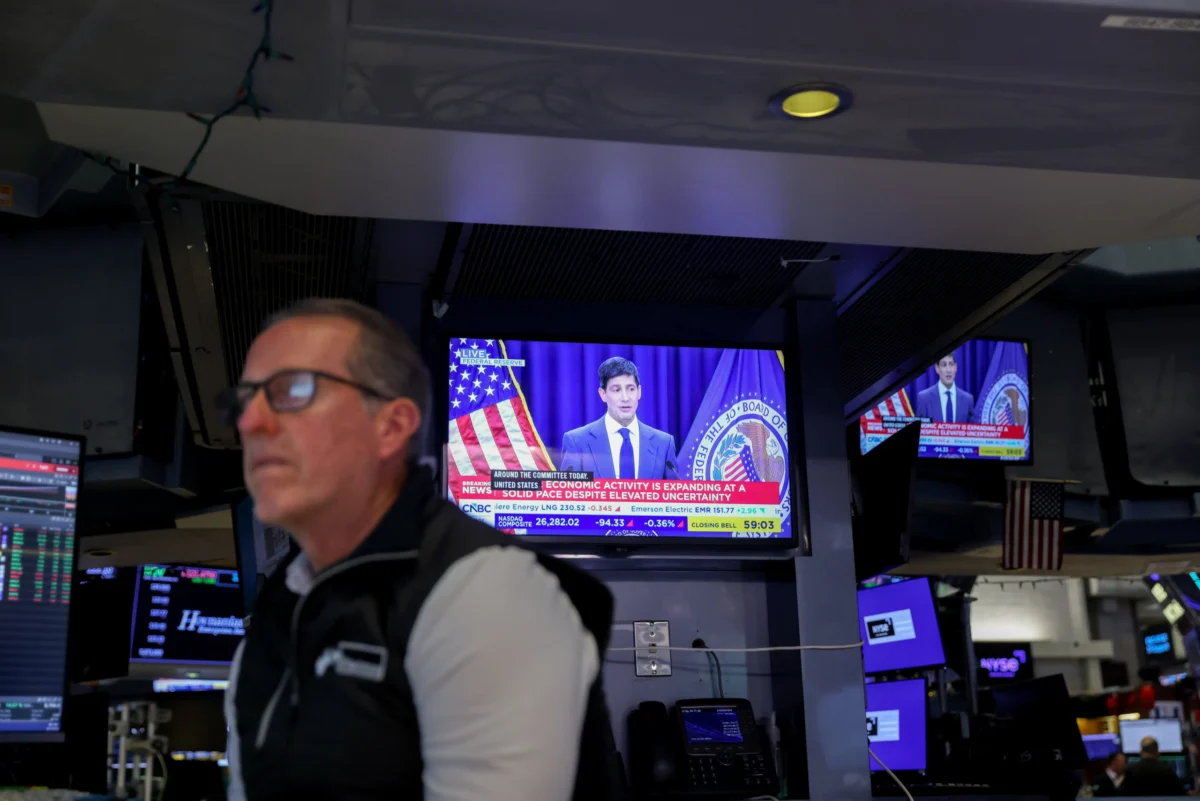
Investors are rapidly adjusting their outlook, increasingly bracing for the U.S. Federal Reserve to resume hiking interest rates. This dramatic shift in market sentiment is primarily driven by a confluence of escalating global oil prices and a persistently robust domestic labor market, creating a complex challenge for the central bank as it navigates its dual mandate of price stability and maximum employment. The prospect of tighter monetary policy looms large, sending ripples through financial markets and sparking renewed debate over the trajectory of the world’s largest economy.
The Shifting Sands of Monetary Policy: A Delicate Balancing Act
The Federal Reserve, through its rate-setting body, the Federal Open Market Committee (FOMC), wields significant influence over the U.S. economy. Its primary tools for managing economic conditions are adjusting the federal funds rate, which in turn affects borrowing costs across the economy, and quantitative easing or tightening. For months, the Fed has maintained a steady hand, holding the federal funds rate target range at 3.50% to 3.75% after an aggressive series of hikes aimed at taming inflation that surged post-pandemic. This period of stability was intended to allow the cumulative effects of past tightening to work through the economy, bringing inflation down without triggering a severe recession. However, recent developments suggest this pause may be drawing to a premature close.
The Fed’s mandate requires it to balance two often-conflicting objectives: achieving maximum sustainable employment and maintaining price stability. Historically, strong employment figures might prompt the Fed to hold off on tightening, fearing a slowdown. Yet, in an environment where inflation remains a concern, a booming job market can be interpreted as a sign of an overheating economy, providing the central bank with more leeway to focus on curbing price pressures. This delicate balancing act is currently exacerbated by external shocks, particularly in the energy sector, which directly feeds into inflationary expectations and consumer costs.
Rising Odds: The FedWatch Tool’s Alarming Signal
A key indicator of market sentiment regarding future Fed actions is the CME FedWatch Tool, which tracks the probability of interest rate changes based on futures trading data. The latest readings from this tool reveal a stark shift in expectations. Just a week ago, the probability of the central bank lifting borrowing costs at its September policy meeting stood below 53%. Today, that likelihood has surged to approximately 82%. This dramatic increase underscores a rapid re-evaluation by market participants, reflecting growing conviction that the Fed will be compelled to act sooner rather than later.
While the consensus for the upcoming FOMC gathering next week still leans towards maintaining the current rate range, even that position is showing cracks. Futures trading now indicates a nearly 38% probability of a quarter percentage point hike at the July meeting, a significant jump from less than 12% just a week prior. This growing minority view signals that some investors are preparing for an immediate response from the Fed, anticipating that current economic conditions and external pressures may necessitate a more urgent intervention. The market’s increasing hawkishness signals a departure from the earlier narrative that the Fed was nearing the end of its tightening cycle, or even contemplating cuts in the near future.
Geopolitical Fires Fueling Inflationary Pressures
A primary catalyst for this shift in monetary policy expectations is the sudden and significant surge in global oil prices. Brent crude, the international benchmark, pierced the critical $100 a barrel threshold on Thursday, marking its highest level since late May. This milestone was not an isolated event but a direct consequence of a new, intensifying round of tit-for-tat attacks between the United States and Iran. The escalating geopolitical tensions in the Strait of Hormuz, a vital chokepoint for global oil shipments, have injected a substantial risk premium into energy markets. Traders are pricing in the potential for supply disruptions, even minor ones, given the strategic importance of the region.
The impact of this global volatility is immediately felt at the domestic level. The average price for a gallon of gasoline in the U.S. has climbed to $4 this week, according to AAA, reaching its highest point in over a month. For American consumers, higher gasoline prices act as a regressive tax, reducing disposable income and impacting purchasing power. This directly fuels broader inflationary concerns, as transportation costs ripple through supply chains, affecting the price of goods and services. Historical precedents, such as the oil shocks of the 1970s and early 2000s, vividly illustrate how rapidly rising energy costs can derail economic stability and necessitate strong monetary policy responses. The current scenario places the Fed in a precarious position, as it cannot directly influence geopolitical events but must contend with their economic fallout.
Robust Labor Market Bolsters Hawk’s Case
Further strengthening the argument for a more hawkish stance from the Federal Reserve is the latest employment data. The Labor Department reported that initial jobless claims dropped to 187,000 in the week ended July 18. This figure represents the fewest claims since 1969, a remarkable statistic considering the U.S. population has grown by approximately 60% since then. Such historically low jobless claims underscore the enduring strength and resilience of the American labor market.
This robust employment picture provides the Fed with additional room to maneuver on the inflation front. With unemployment remaining low and job creation continuing, the central bank can afford to focus more intently on its price stability mandate without immediately fearing a significant deterioration in the labor market. As Christopher Rupkey, chief economist at FWDBONDS, observed, "At the moment, the outlook for economic growth is showing some signs of overheating if today’s weekly jobless claims figures can be believed." Rupkey’s statement encapsulates the current dilemma: a strong economy, while desirable, can also generate inflationary pressures if demand outstrips supply, especially when coupled with external shocks like rising energy prices. The critical question, as he highlights, remains "for how long is the question if energy prices continue to spiral upward."
Market Tremors: A Perfect Storm for Equities
The confluence of rising rate hike expectations and surging oil prices has created significant turbulence in the stock market. Thursday saw major indices experience considerable downward pressure. The blue-chip Dow Jones Industrial Average tumbled about 500 points, reflecting broad-based investor apprehension. The Nasdaq Composite, heavily weighted towards technology stocks, shed more than 2%. Technology companies are particularly sensitive to higher borrowing costs because their valuations often rely on future growth expectations, which are discounted more heavily in a higher interest rate environment. Furthermore, many tech firms rely on readily available and affordable capital for innovation and expansion.
Larry Tentarelli, chief technical strategist at the Blue Chip Daily Trend Report, described the situation as "a perfect storm of headwinds right now." Beyond the immediate concerns of potential rate hikes and oil price inflation, Tentarelli also pointed to the concurrent rise in Treasury yields – which directly compete with equities for investor capital – and a post-earnings swoon from a major tech player like Alphabet. This combination of factors has created an environment of heightened caution among investors. "We’ve got a Fed meeting in six days, and I think investors should not be in a hurry to buy anything," Tentarelli advised. "There’s times where you can just sit it out and be patient." His counsel reflects a broader sentiment of uncertainty and the need for strategic patience in volatile market conditions.
The Yield Curve’s Whispers: Decoding Treasury Signals
For market participants seeking deeper insights into the Federal Reserve’s likely trajectory, the U.S. Treasury market, particularly the 2-year Treasury yield, offers a critical "readthrough." On Thursday, the 2-year yield rose approximately 5 basis points, signaling an immediate reaction from bond investors to the evolving economic landscape and Fed expectations. The 2-year Treasury yield is often seen as a proxy for market expectations of the federal funds rate over the next couple of years. A rising 2-year yield typically indicates that investors anticipate higher short-term interest rates from the Fed.
Ross Mayfield, an investment strategist at Baird, affirmed the significance of this indicator, noting that the 2-year yield offers crucial clues about "what the Fed might do next." While Mayfield suggested that investors need not overly concern themselves with an interest rate move at the immediate upcoming meeting, he unequivocally stated that September feels like a "live" meeting for the Fed. This implies that by September, the data — particularly on inflation and energy prices — might compel the FOMC to act. The bond market’s immediate response underscores its role as a leading indicator, often pricing in future Fed actions well in advance of official announcements.
Further corroborating this sentiment are the predictive markets. Kalshi traders have similarly ramped up their bets on a September quarter-point increase. Odds of such a move at that meeting climbed to 48% midday on Thursday, a notable increase from roughly 30% just a week ago. These platforms, which allow individuals to trade on the outcome of future events, provide another layer of insight into aggregated market expectations, often reflecting a high degree of sensitivity to new information.
Navigating the Path Ahead: Divergent Forecasts
Despite the short-term market frenzy and the surge in rate hike probabilities, the broader consensus among economists for the remainder of 2026 and into 2027 presents a somewhat divergent picture. According to FactSet, the consensus forecast still indicates that the Federal Reserve will not hike rates this year. Looking further ahead to 2027, economists largely anticipate the central bank will actually lower borrowing costs by half a percentage point. This contrast highlights the inherent uncertainty in economic forecasting and the rapid pace at which the outlook can change based on new data and geopolitical developments.
The discrepancy between market expectations for immediate action and economists’ longer-term forecasts underscores the Fed’s challenging position. While the Fed must respond to immediate inflationary pressures, it also aims to avoid over-tightening and inducing a recession. The current situation suggests that market participants are focusing on the immediate inflation risks and the strong labor market, while economists may be factoring in a potential cooling of the economy or a resolution of geopolitical tensions further down the line, which would then allow for rate cuts.
However, if energy prices continue their upward spiral, fueled by persistent geopolitical instability, the consensus among economists may very well shift. A prolonged period of high oil prices could embed inflationary expectations more deeply into the economy, making the Fed’s job significantly harder and potentially necessitating a more aggressive and sustained tightening cycle than currently anticipated by long-term forecasts.
Broader Economic Implications
The prospect of higher interest rates, coupled with elevated energy costs, carries significant implications for various segments of the U.S. economy. For consumers, increased borrowing costs translate into higher rates for mortgages, auto loans, and credit card debt, impacting affordability and potentially dampening consumer spending. The dual burden of pricier gasoline and more expensive credit could squeeze household budgets, particularly for lower and middle-income families, potentially leading to a slowdown in discretionary spending.
Businesses will also feel the pinch. Higher interest rates increase the cost of capital, making it more expensive for companies to borrow for expansion, investment in new technologies, or even day-to-day operations. This could lead to a slowdown in hiring and capital expenditure, impacting economic growth. Sectors reliant on consumer spending or large capital investments, such as housing and manufacturing, are particularly vulnerable.
From a broader macroeconomic perspective, the Federal Reserve faces the daunting task of engineering a "soft landing" – bringing inflation back to its 2% target without triggering a recession. The current environment, characterized by strong employment but rising external cost pressures, increases the risk of "stagflation," a scenario where high inflation coexists with stagnant economic growth. The Fed’s decisions in the coming months will be pivotal in determining whether the U.S. economy can navigate these headwinds successfully or if it will be pushed into a period of more pronounced economic contraction. The global nature of the energy crisis also means that the U.S. economy’s fate is increasingly intertwined with international events, adding another layer of complexity to the Fed’s already challenging mandate.
In conclusion, the U.S. Federal Reserve stands at a critical juncture. The convergence of persistent geopolitical tensions driving up oil prices and surprisingly robust domestic employment data has dramatically altered market expectations, pushing the likelihood of further interest rate hikes to the forefront. As investors and economists alike scrutinize every incoming data point and geopolitical development, the central bank is poised to make decisions that will profoundly shape the economic landscape for months, if not years, to come.

0 Comments