
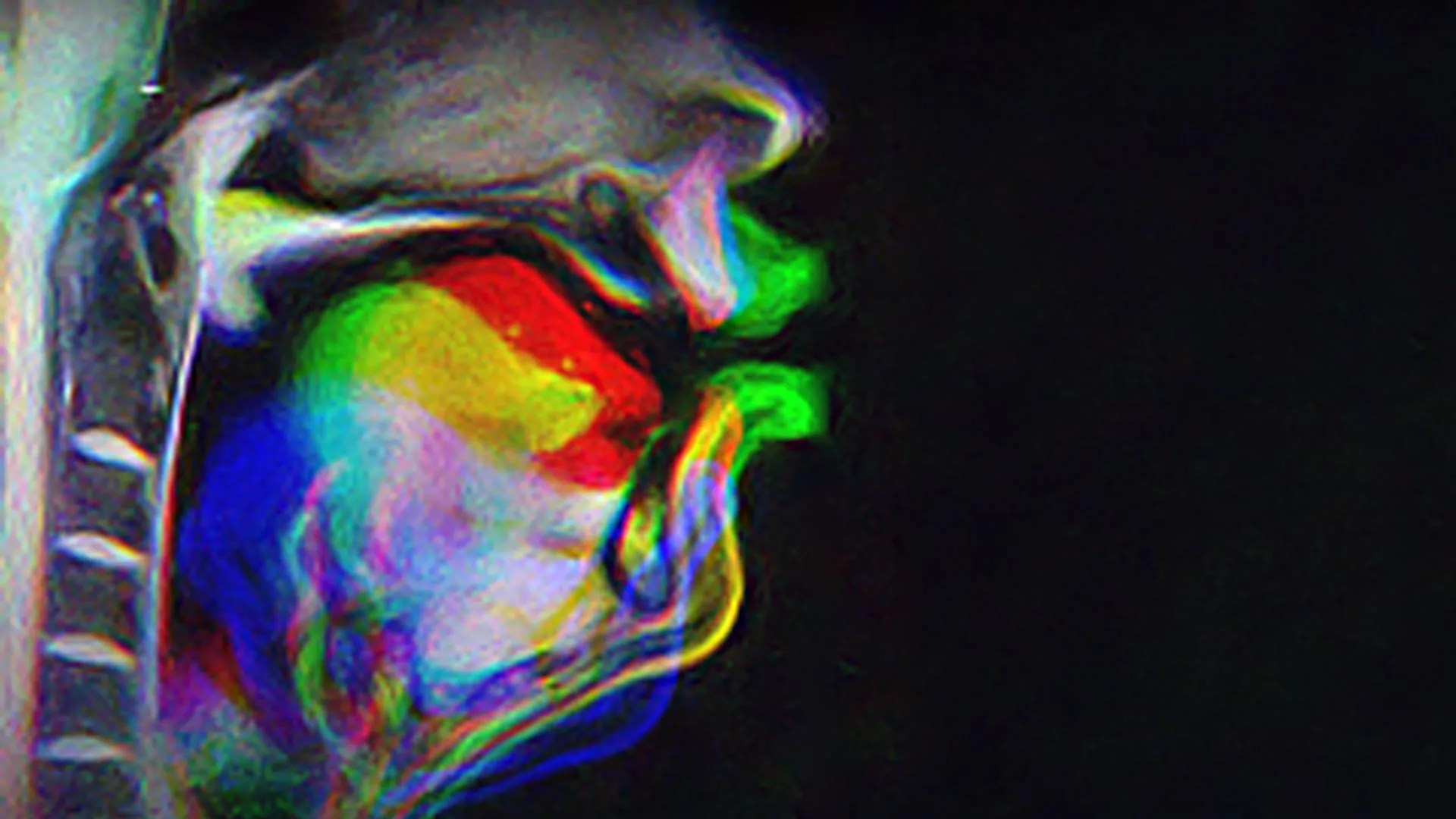
A groundbreaking study, emerging from the collaborative efforts of McGill University and the Yale School of Medicine, is poised to fundamentally alter our understanding of how humans acquire and retain the intricate skills of speech. For decades, the prevailing scientific consensus attributed the lion’s share of speech learning and memory to the brain’s motor centers – those regions orchestrating the complex dance of the face, mouth, and vocal tract. However, this new research compellingly suggests that the brain’s sensory processing areas, specifically those dedicated to auditory perception and physical sensation, play a far more pivotal role than previously acknowledged. This paradigm shift has profound implications, not only for basic neuroscience but also for the future development of sophisticated speech recognition systems and innovative brain-computer interfaces designed to restore communication for individuals who have lost this fundamental ability.
Rethinking the Brain’s Role in Speech Acquisition
Historically, the field of sensorimotor neuroscience has operated under the assumption that the execution of voluntary movements, including the highly specialized movements required for speech, is primarily driven by motor cortices located in the frontal lobes. These areas are understood to generate the neural commands that initiate and control muscle activity. Consequently, the process of learning a new language or recovering speech after neurological damage was largely conceptualized as a refinement of these motor pathways. This perspective implied that mastering pronunciation and intonation involved intricate adjustments and practice within the brain’s motor control networks.
However, the findings published in the prestigious journal Proceedings of the National Academy of Sciences of the United States of America (PNAS) present a significant departure from this long-held view. The research, spearheaded by Professor David Ostry of McGill University and Associate Research Scientist Nishant Rao of Yale University, posits that the auditory cortex, responsible for processing sound, and the somatosensory cortex, which handles tactile information and bodily sensations, are far more central to the learning and retention of speech patterns.
"Sensorimotor neuroscience has traditionally focused on frontal motor areas as the principal drivers of movement," stated Professor Ostry in a recent interview. "This study changes that understanding by showing that human speech learning is extensively sensory in nature. It suggests that our ability to adapt and solidify new speech sounds is deeply rooted in how we perceive those sounds and the proprioceptive feedback we receive from our vocal apparatus."
This recalibration of understanding could have a direct impact on the trajectory of artificial intelligence development. As researchers strive to create more natural and intuitive speech recognition and synthesis technologies, incorporating a deeper appreciation for the sensory underpinnings of human speech could lead to algorithms that are not only more accurate but also more adaptable to individual variations in speech. Furthermore, the implications for restorative technologies are particularly exciting. For individuals affected by conditions like stroke, traumatic brain injury, or neurodegenerative diseases that impair speech, future therapeutic interventions could be designed to leverage these newly identified sensory pathways, potentially offering more effective avenues for communication recovery.
Unraveling the Sensory Mechanisms with Targeted Brain Stimulation
To empirically investigate the differential roles of various brain regions in speech learning, the research team devised a sophisticated experimental paradigm. Participants were subjected to a real-time alteration of their own speech. As they spoke, the acoustic feedback they received through headphones was subtly modified. This manipulation created a discrepancy between the intended speech sound and the perceived sound, effectively nudging participants to adjust their vocalizations in order to achieve their desired auditory outcome. This process is a form of speech motor learning, where the brain adapts to sensory error signals.
Following this adaptation phase, the researchers employed transcranial magnetic stimulation (TMS), a non-invasive neuroimaging technique that uses magnetic pulses to temporarily stimulate or inhibit specific areas of the brain. TMS offers a powerful tool for probing the causal role of brain regions in cognitive processes. The team strategically applied TMS to three key areas implicated in speech production and perception: the auditory cortex, the somatosensory cortex, and the motor cortex.
The experimental design was predicated on a clear hypothesis: if a particular brain region was crucial for the formation and storage of new speech-related memories, then temporarily disrupting its activity should impair the retention of the learned speech patterns. Conversely, if a region was not essential for this memory consolidation, its disruption should have little to no impact on retention.
The results, collected over a 24-hour period to assess memory consolidation, provided compelling evidence for the primacy of sensory processing. When TMS was used to temporarily suppress activity in either the auditory cortex or the somatosensory cortex, participants demonstrated a significant and measurable decline in their ability to recall and reproduce the newly acquired speech patterns. This indicated that these sensory areas were integral to both the initial learning and the long-term storage of these motor memories.
In stark contrast, when the motor cortex was targeted with TMS, the impact on speech retention was notably diminished. Participants who experienced disruption in motor areas showed little to no significant difference in their recall of the learned speech patterns compared to baseline. This finding directly challenges the long-standing assumption that motor learning is exclusively or even predominantly mediated by motor output regions.
"Our study challenges the assumption that new speech memories are solely reliant on changes in motor areas of the brain," commented Nishant Rao, a lead author on the study. "Instead, it underscores the importance of changes in auditory and somatosensory brain areas in shaping how we learn to speak. This is a significant step towards understanding the intricate neural architecture that supports our most fundamental form of communication."
Brain Plasticity and the Horizon of Restorative Therapies
This research is not an isolated finding but rather part of a broader, ongoing scientific endeavor to elucidate the mechanisms of brain plasticity, particularly within the sensory systems, and their contribution to learning and memory formation. The McGill and Yale team has previously conducted analogous studies focusing on motor learning in the limbs, specifically arm and hand movements. Those investigations yielded similar results, revealing that disrupting sensory regions of the brain similarly hampered the capacity to learn and retain new motor skills, further strengthening the hypothesis that sensory feedback plays a foundational role across various forms of motor learning.
The implications for individuals suffering from communication disorders are profound. Conditions such as aphasia, often a consequence of stroke, can severely impair an individual’s ability to speak, understand language, or both. Current rehabilitation strategies often involve extensive speech therapy, focusing on relearning motor commands and vocal articulation. However, by recognizing the critical role of auditory and somatosensory feedback, future therapeutic approaches could be optimized.
For instance, technologies could be developed to provide enhanced or altered sensory feedback during rehabilitation exercises. This might involve sophisticated auditory cues that highlight subtle phonetic differences or haptic feedback devices that allow patients to "feel" the correct positioning of their tongue or lips. The research suggests that by actively engaging and training the brain’s sensory networks, therapists might accelerate the process of speech recovery and improve the long-term efficacy of interventions.
"The field is moving towards a more holistic view of motor control and learning," explained Professor Ostry. "We are increasingly recognizing that the brain doesn’t operate in isolated silos. For speech, the perception of what we’re saying and the feeling of our vocal tract in action are just as crucial, if not more so, than the motor commands themselves."
Future research endeavors by the team are slated to delve deeper into identifying the specific neural circuits within the auditory and somatosensory cortices that are most active during speech learning. Understanding these precise pathways could pave the way for even more targeted and effective interventions. Furthermore, the researchers are keen to explore the potential of sensory-based treatments for a range of movement disorders, with a particular emphasis on stroke rehabilitation and the restoration of speech capabilities. The ultimate goal is to translate these fundamental scientific discoveries into tangible clinical benefits, offering new hope to millions affected by communication impairments.
Funding and Publication Details
The foundational research underpinning these groundbreaking discoveries was made possible through the generous support of the U.S. National Institute on Deafness and Other Communication Disorders. The comprehensive study, titled "Sensory Basis of Speech Motor Learning and Memory," was authored by Nishan Rao, Rosalie Gendron, Timothy Manning, and David Ostry, and was officially published in Proceedings of the National Academy of Sciences of the United States of America, a leading scientific journal known for publishing high-impact research across all scientific disciplines. The collaborative nature of this work, spanning two major academic institutions, highlights the power of interdisciplinary research in pushing the boundaries of scientific knowledge and addressing complex human health challenges.

0 Comments