
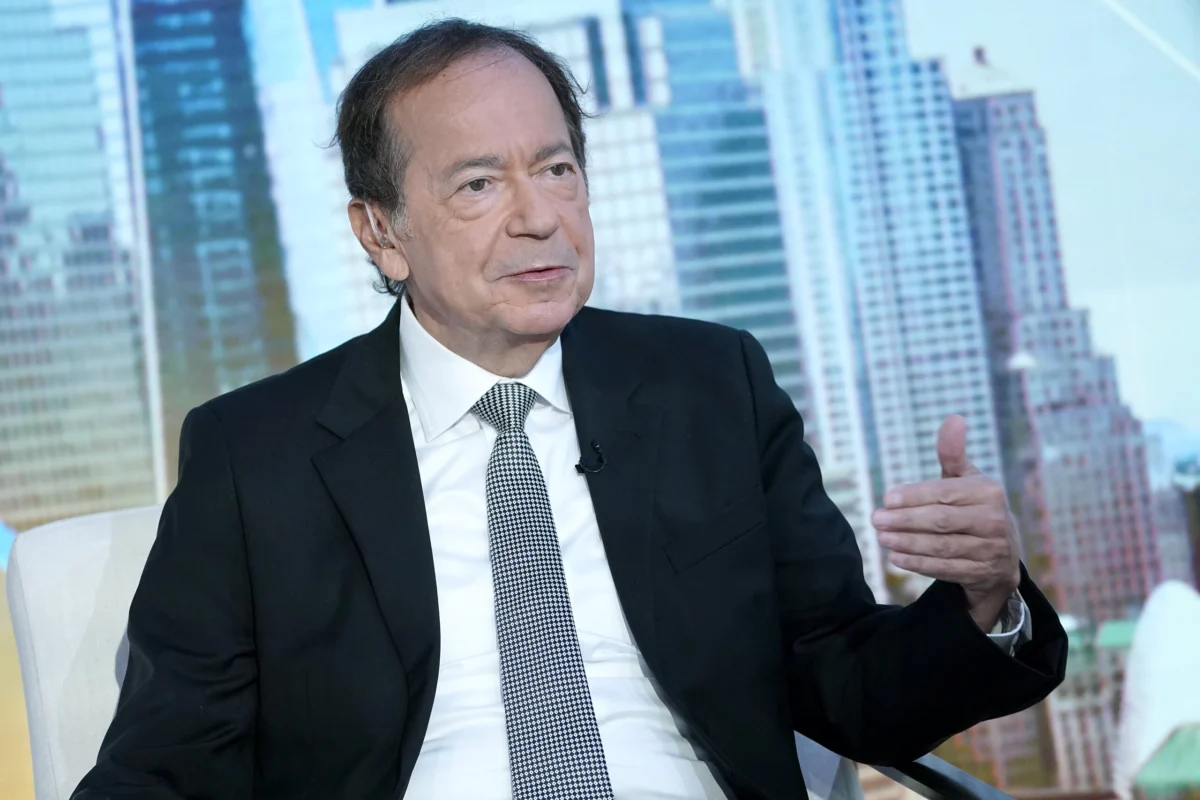
Hedge fund titan John Paulson, renowned for his prescient bet against the U.S. housing market that yielded billions, has reiterated his staunch belief that gold is merely in the nascent phase of a protracted bull market. Paulson, who has been a vocal proponent of the precious metal for over a decade, articulated his views on CNBC’s "The Exchange" on Wednesday, emphasizing gold’s burgeoning role as a credible alternative to conventional fiat currencies amidst growing global economic uncertainties. His pronouncements coincide with a strategic move by NovaGold Resources to acquire Paulson Advisers’ 40% stake in the significant Donlin Gold project in Alaska, further solidifying his direct investment in the gold mining sector.
Paulson’s Strategic Shift: From Subprime to Gold
John Paulson’s journey to becoming one of the most influential voices in the gold market is deeply rooted in his legendary wager against the U.S. subprime mortgage market in 2007-2008. His firm, Paulson & Co., famously generated an estimated $15 billion for investors by shorting the housing bubble, a trade immortalized in Michael Lewis’s book "The Big Short." This monumental success cemented his reputation as a contrarian investor with an uncanny ability to identify systemic risks and capitalize on them.
Following the global financial crisis, as central banks worldwide unleashed unprecedented fiscal and monetary stimulus packages, including quantitative easing and near-zero interest rates, Paulson pivoted his investment strategy. In 2009, he began to accumulate significant positions in gold, arguing that the massive influx of liquidity and burgeoning national debts would inevitably lead to inflation and a devaluation of fiat currencies, particularly the U.S. dollar. His rationale was simple yet profound: in a world awash with paper money, gold, with its finite supply and intrinsic value, would serve as the ultimate store of wealth and a hedge against economic instability. This shift marked a significant turning point in his investment philosophy, moving from shorting specific assets to embracing a macro-thematic play on global currency debasement.
The Bullish Case for Gold: A New Reserve Currency?
Paulson’s current thesis on gold is a continuation and amplification of his long-held convictions. He firmly believes that gold is transitioning from a mere commodity or inflation hedge to becoming the "most apt reserve currency in the world," gradually replacing traditional fiat currencies. This assertion is supported by observable trends in global financial markets, particularly the sustained demand from official institutions.
"As people lose faith in paper currencies, gold as an alternative will continue to grow," Paulson stated, encapsulating his core argument. This sentiment reflects a broader concern among some investors and economists about the long-term stability of government-issued money, especially given persistent inflation pressures, geopolitical tensions, and an increasingly complex global economic landscape. The post-pandemic era has seen a resurgence of inflationary pressures not witnessed in decades, prompting central banks to raise interest rates aggressively. However, the underlying concerns about fiscal profligacy and the potential for currency debasement persist, providing a fertile ground for gold’s appeal.
Historical Performance and Current Market Dynamics
Since Paulson’s initial bullish pivot in 2009, gold prices have indeed experienced substantial appreciation. In 2009, gold was trading in the range of $900 to $1,000 per ounce. Following his endorsement and subsequent global economic shifts, the precious metal embarked on a significant rally, reaching an initial peak above $1,900 per ounce by 2011. After a period of correction and consolidation in the mid-2010s, gold began another powerful ascent in the late 2010s, accelerating into the 2020s. It breached the $2,000 per ounce mark for the first time in 2020 and has since reached multiple new all-time highs, recently surpassing $2,400 per ounce. This performance underscores the validity of Paulson’s long-term outlook, even if the specific $5,000 threshold mentioned in the original context has not been reached by spot gold. Paulson’s vision implies that gold’s ascent is far from over, anticipating further significant gains as global financial dynamics evolve.
Several factors are currently fueling gold’s upward trajectory:
- Central Bank Accumulation: Central banks globally have been net buyers of gold for over a decade, accelerating their purchases in recent years. According to the World Gold Council, central banks added a staggering 1,037 tonnes to global reserves in 2023, marking the second-highest annual total on record. This trend continued into the first quarter of 2024, with robust buying activity. Nations like China, India, Turkey, and Poland have been prominent purchasers, seeking to diversify their reserves away from the U.S. dollar and hedge against geopolitical risks and economic uncertainties. This institutional demand lends significant credibility to gold’s role as a reserve asset.
- Geopolitical Instability: Ongoing conflicts, regional tensions, and global political fragmentation have amplified gold’s appeal as a safe-haven asset. In times of crisis, investors traditionally flock to gold, perceiving it as a reliable store of value when other assets become volatile.
- Inflationary Concerns: While inflation has shown signs of moderation, persistent price pressures in various sectors and the lingering effects of unprecedented monetary expansion continue to fuel demand for gold as an inflation hedge.
- Weakening Dollar Outlook: Paulson’s initial thesis heavily relied on the weakening of the U.S. dollar. While the dollar has shown resilience at times, the long-term outlook for its dominance as the sole global reserve currency is increasingly debated, with gold emerging as a potential beneficiary of any diversification trend.
- Private Sector Interest: Alongside central bank demand, private sector interest, encompassing retail investors, institutional funds, and exchange-traded funds (ETFs), has also grown. Investors are increasingly allocating portions of their portfolios to gold as a diversifier and a hedge against systemic risks.
Investing in Gold: Miners vs. Bullion

While Paulson is bullish on gold as an asset, his investment strategy extends beyond merely owning physical bullion. He strongly advocates for investing in gold mining companies, particularly "early-stage gold stocks" with large undeveloped reserves, arguing that they offer leveraged exposure to rising gold prices.
The rationale behind this strategy is straightforward:
- Operational Leverage: Gold mining companies have fixed costs associated with extraction and processing. As the price of gold rises, their profit margins expand disproportionately, leading to a leveraged return on equity compared to the percentage increase in the gold price itself.
- Exploration Upside: Early-stage companies often possess significant, yet undeveloped, gold resources. As gold prices increase, the economic viability of extracting these resources improves, unlocking substantial value that is not fully reflected in their current market capitalization. The discovery of new reserves or the re-evaluation of existing ones can provide additional catalysts for growth.
- Future Production Potential: Companies with large undeveloped reserves offer long-term growth potential. In a bull market, these reserves become increasingly valuable, attracting investment for development and promising future production.
Paulson cautions, however, that investing in mining stocks, especially early-stage ones, carries inherent risks, including operational challenges, regulatory hurdles, environmental concerns, and geopolitical risks specific to the mining locations. Nevertheless, he believes the potential rewards outweigh these risks in a sustained bull market for gold.
NovaGold Resources and the Donlin Gold Project: A Case Study
Paulson’s conviction in gold miners is exemplified by his deep involvement with NovaGold Resources. He serves as co-chairman of the company, and his firm, Paulson Advisers, has long been a significant shareholder. The recent announcement that NovaGold would acquire Paulson Advisers’ 40% stake in the Donlin Gold project is a pivotal development, consolidating NovaGold’s ownership and control over one of the world’s largest undeveloped gold deposits.
The Donlin Gold project, located in the Yukon-Kuskokwim region of southwestern Alaska, is a world-class asset. It is a 50/50 joint venture between NovaGold and Barrick Gold Corporation, one of the largest gold mining companies globally. The project boasts an impressive resource base of approximately 40 million ounces of indicated and measured gold resources and reserves. To put this into perspective, 40 million ounces represents a substantial amount of gold, equivalent to years of production for many established mining companies. Its sheer scale makes it a strategic asset with the potential for a long mine life and significant production capacity once operational.
Paulson highlighted the project’s value proposition: "NovaGold has 40 million ounces of gold indicated and measured resources and reserves at the market [capitalization] of $4.2 billion. I think the best way to play gold is through stocks like NovaGold, if not NovaGold itself." This statement underscores his belief that NovaGold, with its vast resource base, offers investors leveraged exposure to rising gold prices at a valuation that he considers attractive relative to its underlying assets. The acquisition of Paulson Advisers’ stake streamlines the ownership structure of the Donlin project, potentially facilitating future development decisions and demonstrating Paulson’s continued long-term commitment to NovaGold and the project’s success. This move can be interpreted as a strong vote of confidence from a major investor and co-chairman, signaling NovaGold’s strategic importance within his broader gold investment thesis.
Broader Implications and Market Reactions
Paulson’s continued bullish stance on gold, coupled with his active investment in NovaGold, carries significant implications for the broader investment community and the mining sector.
- Investor Sentiment: When a figure of Paulson’s stature articulates such a strong conviction, it often influences other institutional and retail investors, potentially drawing more capital into the gold market and gold equities. His "Big Short" reputation lends considerable weight to his predictions.
- Mining Sector Focus: His emphasis on early-stage miners with large undeveloped reserves could shift investor focus towards similar companies, particularly those holding significant, albeit capital-intensive, projects. This could stimulate interest in exploration and development activities within the industry.
- Validation of Gold as a Reserve Asset: Paulson’s argument that gold is becoming a primary reserve currency alternative resonates with a growing number of market participants concerned about the long-term implications of current monetary and fiscal policies globally. This could further solidify gold’s role in diversified portfolios.
- Focus on Large-Scale Projects: The Donlin Gold project exemplifies the trend towards developing large, long-life assets that can provide substantial production over decades. Paulson’s involvement underscores the attractiveness of such projects, despite their often high upfront capital requirements and lengthy development timelines.
While no specific "official responses" from other parties were provided in the original snippet, it is logical to infer that NovaGold’s management would publicly align with Paulson’s positive outlook, given his role and significant investment. The company’s press releases and investor calls typically emphasize the strategic value of Donlin Gold, its immense resource potential, and the long-term prospects for gold prices. Market analysts covering the precious metals sector are often divided on short-term price movements, but a significant portion acknowledges the fundamental drivers supporting gold’s long-term appeal, including central bank buying and geopolitical risks. Paulson’s voice adds to the chorus of those forecasting a robust future for the yellow metal.
In conclusion, John Paulson’s consistent and deeply reasoned advocacy for gold, rooted in his macroeconomic outlook and cemented by his direct investments in companies like NovaGold, positions him as a key figure in the ongoing debate about the future of global finance. His thesis—that gold is merely beginning a long-term bull market driven by a loss of faith in paper currencies and rising demand from central banks and the private sector—serves as a compelling narrative for investors seeking to navigate an increasingly uncertain economic landscape. The strategic consolidation of NovaGold’s stake in the Donlin Gold project further highlights his actionable commitment to this long-term vision, signaling confidence not just in the metal itself, but in the companies poised to extract it.

0 Comments