
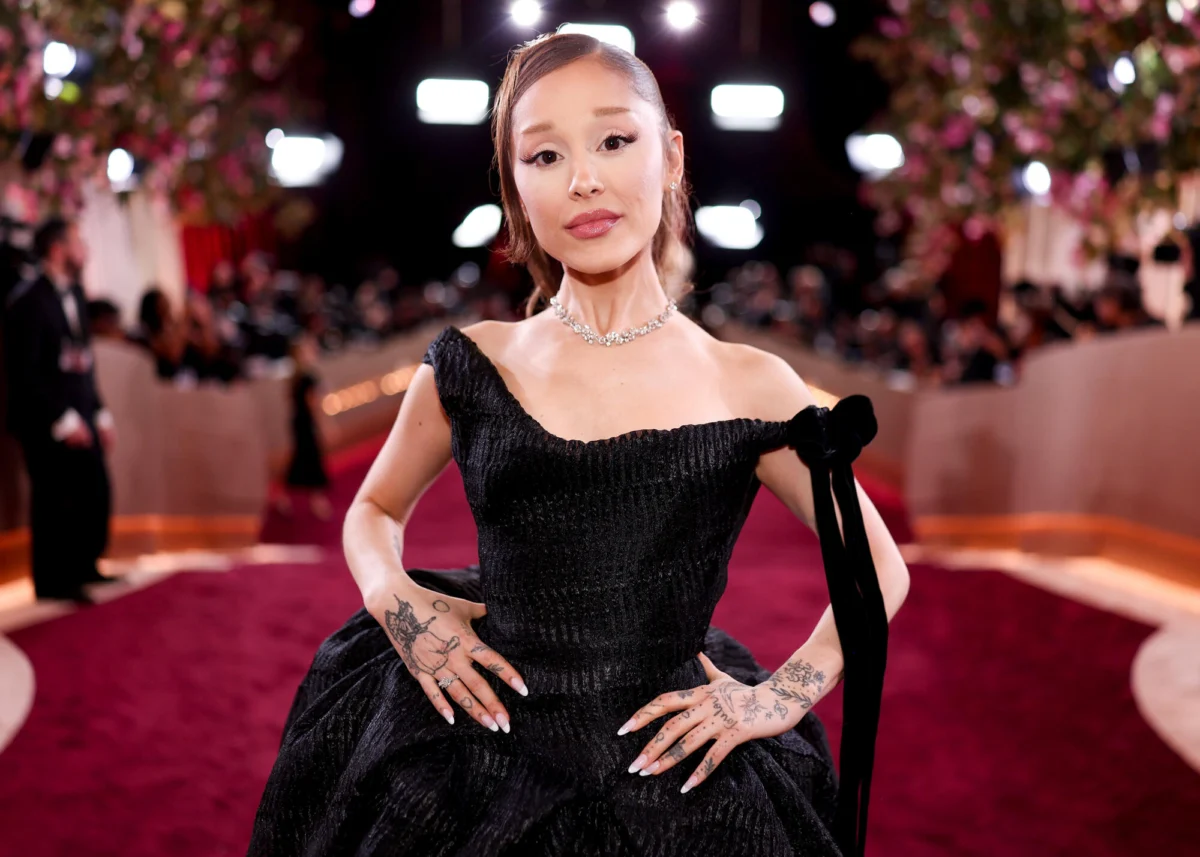
Ariana Grande, the multi-platinum recording artist and actress, has officially announced her intention to withdraw from the public eye for an indefinite period following the conclusion of her global Eternal Sunshine tour. The 33-year-old performer, who has maintained a rigorous professional schedule involving major film productions and international concert dates over the last several years, confirmed through a representative that she will prioritize her health and personal well-being once her final performances in London conclude this September. The decision marks a significant turning point in the career of one of the 21st century’s most prolific pop icons, signaling a shift toward long-term recovery and privacy amid persistent public discourse regarding her physical appearance and mental health.
The announcement follows the July 31 release of the music video for "Petal," a track from her latest critically acclaimed album. While the video was initially intended as a creative milestone, its release triggered a resurgence of online commentary and speculative analysis concerning Grande’s physical stature. A spokesperson for Grande clarified to People magazine that the singer is seeking a much-needed "recharge" from the exhaustive demands of public-facing work. According to the representative, Grande intends to finish her remaining tour dates on a "high note," ensuring that her commitment to her fans is fulfilled before she transitions into a period of restorative seclusion.
The Physical and Psychological Toll of a Dual Career Path
The decision to step back is not merely a response to social media commentary but a reaction to the cumulative physical demands of her recent professional endeavors. Over the past 36 months, Grande has managed a schedule that few in the industry could sustain. This included the intensive filming of the two-part cinematic adaptation of the Broadway musical Wicked, in which she portrays Glinda the Good Witch. The production, helmed by director Jon M. Chu, required months of on-set presence in the United Kingdom, involving rigorous vocal training and physical choreography.
Simultaneously, Grande launched and executed the Eternal Sunshine world tour, a high-production endeavor that demands peak athletic performance. Sources close to the artist have noted that the "athleticism" involved in her nightly sets is substantial, requiring hours of dance and vocal exertion. Juggling the promotional cycles for her music, the filming of a major motion picture franchise, and the maintenance of a global tour has, according to industry insiders, led to a state of professional and physical fatigue.
In a move that underscores the seriousness of her hiatus, Grande has also officially withdrawn from her scheduled starring role in next summer’s West End production of Sunday in the Park with George. This departure from a high-profile theatrical commitment indicates that her break is not a temporary pause but a strategic withdrawal designed to prevent long-term burnout.
A Chronology of Recent Events and Public Discourse
To understand the context of Grande’s hiatus, one must look at the timeline of her professional output and the corresponding public reaction over the last two years:
- Early 2024: Grande releases her seventh studio album, Eternal Sunshine, which debuts at number one on the Billboard 200. The album is praised for its vulnerability and sophisticated production.
- Late 2024 – Early 2025: Production for Wicked intensifies. Grande spends the majority of her time in London, balancing the technical demands of a film set with the final stages of tour rehearsals.
- Spring 2026: The Eternal Sunshine tour begins, receiving rave reviews for Grande’s vocal prowess and the show’s elaborate staging.
- July 31, 2026: The music video for "Petal" is released. Within hours, social media platforms are flooded with screenshots and "concern-trolling" posts regarding Grande’s weight and overall health.
- August 3, 2026: Grande’s representative confirms the hiatus to major news outlets, citing the need for health-focused recovery and an escape from "endless, ongoing public scrutiny."
- September 2026: The tour is scheduled to conclude in London, marking Grande’s final public appearance for the foreseeable future.
The Sociological Impact of Celebrity Scrutiny
The scrutiny directed at Grande highlights a growing tension between celebrity culture and the evolving standards of digital ethics. Health and wellness experts have voiced significant concern over the "dissection" of female bodies in the digital age. While many social media users frame their comments as expressions of "concern" for a celebrity’s health, psychologists argue that these public discussions often have the opposite effect.
By projecting health diagnoses onto a public figure based solely on visual evidence, the audience often strips that individual of their agency and privacy. Furthermore, experts suggest that such commentary reinforces toxic beauty standards and contributes to a culture of body dysmorphia among the general public who view these interactions. Grande herself has addressed this phenomenon directly, noting in past interviews that there is a "dangerous comfortability" in how the public feels entitled to comment on a person’s face, body, and perceived health status.

In her 2026 single "yes, and?", Grande articulated this frustration through her lyrics: "Don’t comment on my body, do not reply / Your business is yours and mine is mine." The song served as a preemptive strike against the narrative that her physical appearance was public property, yet the subsequent reaction to the "Petal" video suggests that the boundary she attempted to set was largely ignored by the digital masses.
Official Responses and Industry Reactions
The response from the music and film industries has been largely supportive. Representatives from Universal Pictures, the studio behind Wicked, have expressed their admiration for Grande’s work ethic and their support for her decision to prioritize her health. Similarly, peers within the music industry have begun to speak out about the necessity of mental health breaks in an era of 24/7 connectivity.
"She performs healthily and successfully at a very high level night after night," a source close to the production told People. This statement seeks to counter the narrative that Grande’s physical appearance is indicative of an inability to perform her duties. Instead, it frames the hiatus as a proactive measure taken by a disciplined professional who recognizes the limits of the human body and mind.
The broader implications of Grande’s hiatus may influence how talent agencies and production companies structure contracts in the future. As more high-profile artists—including Shawn Mendes and Justin Bieber in previous years—cancel tours or take extended breaks to address mental health, the industry is being forced to reckon with the sustainability of the modern "superstar" lifestyle.
The Path Forward: Privacy and Advocacy
As Grande prepares for her final shows in London, the focus remains on her desire to exit the stage on a "high note." For Grande, this hiatus represents more than just a vacation; it is a reclamation of her private life. Having spent nearly two decades in the spotlight—transitioning from a child actor on Nickelodeon to a global pop phenomenon—the singer has rarely had a period of adulthood that was not subject to intense public observation.
The hiatus also serves as a reminder of the resources available to those who face similar struggles with body image and public pressure. Organizations like the National Eating Disorders Association (NEDA) emphasize that commentary on a person’s body, regardless of the intent, can be a trigger for those in recovery. Grande’s decision to step away provides a high-profile example of setting boundaries for the sake of one’s mental and physical health.
In the interim, Grande’s fan base, known as the "Arianators," has largely rallied behind her, advocating for her right to privacy and encouraging others to cease the speculation. While the music industry will undoubtedly feel the absence of one of its most consistent hitmakers, the precedent Grande is setting may ultimately contribute to a healthier environment for future artists.
For those who find themselves affected by the themes present in the current discourse surrounding Grande, confidential support remains available. The National Eating Disorders Association (NEDA) provides a helpline at 1-800-931-2237 and a 24/7 crisis text line (text "NEDA" to 741741). These resources offer a necessary bridge for individuals navigating the complex intersections of body image, health, and societal pressure.
Ariana Grande’s departure from the public sphere after September will likely be remembered as a landmark moment in the conversation regarding celebrity wellness. By choosing to step back at the height of her professional success, she has sent a clear message: no amount of public acclaim is worth the sacrifice of one’s fundamental health and peace of mind. The "Eternal Sunshine" era may be drawing to a close, but the impact of Grande’s decision to prioritize herself over her persona will likely resonate for years to come.

0 Comments