
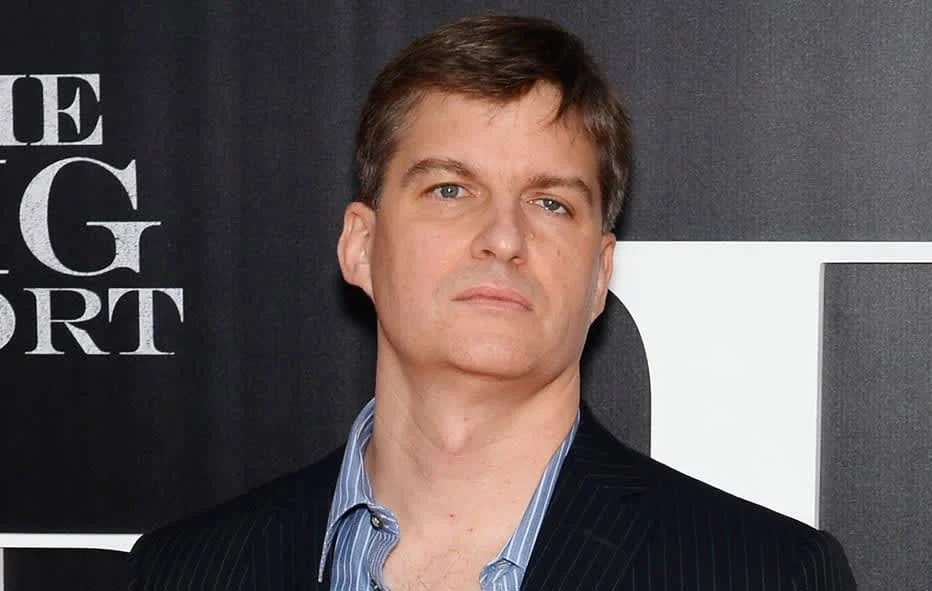
Michael Burry, the prescient investor famously immortalized in "The Big Short" for his foresight into the 2008 financial crisis, is steadfast in his bearish market wagers despite the S&P 500 recently surging to unprecedented highs. Burry’s latest pronouncements paint a cautionary picture, suggesting that the current market rally could be nearing a significant apex, potentially culminating in a sharp, sudden sell-off reminiscent of the infamous 1987 stock-market crash. This stark warning, disseminated via a Tuesday Substack post, places him squarely against the prevailing tide of market optimism, even as the allure of new record highs threatens to draw fresh capital into the equity markets.
Burry’s Alarming Outlook Amidst Market Euphoria
In his recent communication, Burry articulated his conviction, stating, "I continue to believe it is possible we are near a major top, and possible a 1987-type fall, but the S&P 500 making new highs likely will bring new money into the market." This statement captures the essence of his contrarian stance: an acknowledgment of the market’s undeniable strength but an underlying conviction that this very strength is building towards a precarious peak. His concerns extend beyond mere valuation, delving into the structural underpinnings of the current rally, particularly the dynamics surrounding the burgeoning artificial intelligence (AI) sector.
The market’s performance, however, offers a stark contrast to Burry’s gloomy forecast. The S&P 500, a bellwether for the broader U.S. equity market, recently notched its first record close since June, buoyed by a confluence of factors. Stronger-than-expected corporate earnings reports from several industry titans provided a fundamental tailwind, suggesting robust underlying business performance. Simultaneously, a notable drop in oil prices, fueled by hopes of a swift reopening of the crucial Strait of Hormuz to maritime traffic, eased inflationary pressures and improved consumer sentiment. The tech-heavy Nasdaq Composite, often a barometer for growth and innovation, soared by a significant 2.7% on the same Tuesday, extending its impressive gains to nearly 5% within the first two trading days of the week. This vigorous upward momentum, particularly in technology and growth stocks, appears to defy Burry’s warnings, at least in the short term.
The Perils of the AI Boom and Self-Reinforcing Cycles
Burry has emerged as one of Wall Street’s most vocal skeptics regarding the sustainability of the artificial intelligence boom. His critique centers not on the transformative potential of AI itself, but on the financial mechanisms driving its infrastructure buildout. He posits that the intense demand for AI infrastructure, from advanced semiconductors to data centers, is being primarily fueled by financing arrangements that may prove unsustainable in the long run. This implies a potential house of cards, where the underlying economics might not justify the current pace of investment and valuation.
Furthermore, Burry highlighted a dangerous "self-reinforcing cycle" at play within the market. As volatility declines, a common consequence of sustained upward trends, systematic investors and quantitative funds are incentivized to increase their exposure to equities. These "vol-targeting funds" automatically adjust their leverage based on market volatility, amplifying market movements. "Remember," Burry wrote, "the market going up on falling volatility forces vol-targeting funds to leverage up, and brings leverage from other momentum strategies into play." This mechanism suggests that the market’s current ascent is not solely driven by fundamental improvements but is also being propelled by mechanical, leverage-driven strategies that could exacerbate a downturn once the trend reverses. This echoes some of the structural issues identified in past market dislocations, where interconnected trading strategies amplified volatility.
Burry’s Conviction: A Glimpse into His Short Portfolio
Despite the market’s bullish trajectory, Burry remains committed to his bearish wagers. His short positions, which profit from a decline in asset prices, target several high-profile companies and sectors heavily associated with the current market narrative, particularly the AI and technology sectors. His portfolio of shorts includes the iShares Semiconductor ETF (SOXX), a broad bet against the semiconductor industry; individual tech giants such as Micron and Nvidia, key players in memory and AI chip manufacturing respectively; and other high-growth or industrial companies like Caterpillar, Palantir, Tesla, and Applied Materials.
These specific short positions reveal Burry’s targeted skepticism. His bet against the semiconductor sector (SOXX, Micron, Nvidia, Applied Materials) directly challenges the core components of the AI boom, suggesting he believes valuations or future demand are overstated. His short on Nvidia, in particular, is significant given the company’s meteoric rise on the back of its leadership in AI hardware. Tesla, a long-time subject of debate regarding its valuation, also remains a target, indicating Burry’s continued belief in its overpricing relative to fundamentals. Palantir, a data analytics firm, and Caterpillar, an industrial giant, represent a broader skepticism across different market segments.
Burry expressed confidence in the long-term outlook for these short positions, reiterating his conviction even as the market moves against him in the short term. However, he also displayed a pragmatic approach, stating that he would cut his losses if these trades moved decisively against his expectations. As of his recent update, he noted that all his short positions, with the notable exception of his bet against Nvidia, remained profitable. This highlights the inherent difficulty and risk in short selling, especially against strong market trends and highly momentum-driven stocks. His candid advice, "Again, shorting is not for everyone. I must short. Most should not," serves as a crucial reminder of the complexity and danger associated with such a high-risk investment strategy, underscoring that his approach is tailored to his unique market insights and risk tolerance.
Echoes of Black Monday: The 1987 Stock Market Crash
To fully appreciate the gravity of Burry’s "1987-type fall" warning, it is essential to revisit the events of October 19, 1987, famously known as "Black Monday." On that single day, the Dow Jones Industrial Average plummeted by 508 points, representing a staggering 22.6% loss of its value. This remains the largest single-day percentage drop in stock market history.
The factors leading up to Black Monday were multifaceted. In the preceding months, the market had experienced a robust rally, fueled by a period of strong economic growth and corporate earnings. However, underlying concerns began to emerge. Rising trade deficits in the U.S., coupled with fears of inflation and a series of interest rate hikes by the Federal Reserve, created an increasingly tense environment. The market was also trading at elevated valuations, with the S&P 500’s price-to-earnings (P/E) ratio having expanded significantly.
A critical technological factor that exacerbated the crash was "program trading." This involved computer-driven strategies that automatically executed large-volume trades based on pre-set conditions, often related to arbitrage between futures and underlying stocks. When the market began to fall, these programs triggered massive sell orders, creating a cascading effect that overwhelmed liquidity and accelerated the decline. Unlike today’s "circuit breakers" designed to halt trading during extreme volatility, such mechanisms were largely absent in 1987. The crash spread globally, impacting markets across Europe and Asia, highlighting the interconnectedness of global financial systems even before the internet age.
The aftermath of Black Monday saw swift intervention from central banks, particularly the Federal Reserve under Alan Greenspan, which provided liquidity to prevent a systemic collapse. Regulators also implemented new rules, including the aforementioned circuit breakers, to manage extreme volatility. While the economy did not immediately plunge into a recession, the event left an indelible mark on investor psychology and market regulation. Burry’s comparison to this historical event is not made lightly, suggesting he perceives a similar confluence of overvaluation, leverage, and potentially destabilizing systematic trading strategies at play today.
The Broader Market Context: Bullish Counterarguments and Economic Indicators
While Burry champions a bearish stance, many analysts and investors maintain a more optimistic outlook, citing several factors supporting the current rally. Corporate earnings, for instance, have largely exceeded expectations, particularly in the technology sector, indicating that many companies are adapting well to economic challenges and capitalizing on new opportunities like AI. The narrative of a "soft landing" for the U.S. economy, where inflation cools without triggering a severe recession, has gained considerable traction, reducing fears of an imminent downturn.
The innovation driving the AI boom is often cited as a powerful, long-term economic catalyst. Proponents argue that the transformative potential of AI justifies current valuations and will drive sustained growth across various industries. Furthermore, expectations of potential interest rate cuts by central banks later in the year, as inflation shows signs of moderation, are providing a forward-looking tailwind for equity markets, making future earnings streams more attractive. Consumer sentiment, while still volatile, has shown resilience, and employment figures remain robust, suggesting a healthy underlying economy capable of supporting corporate profits.
However, even bullish perspectives acknowledge potential headwinds. Geopolitical tensions, particularly in Eastern Europe and the Middle East, could disrupt supply chains and commodity markets. Persistent inflation, should it re-accelerate, could force central banks to maintain higher interest rates for longer, dampening economic activity. And the ongoing debate about the U.S. national debt and fiscal policy adds another layer of uncertainty.
Burry’s Legacy and the Nuance of Contrarian Investing
Michael Burry’s reputation as a financial oracle stems primarily from his audacious and ultimately correct bet against the U.S. housing market leading up to the 2008 global financial crisis. His meticulous research into subprime mortgage bonds, detailed in Michael Lewis’s book "The Big Short," showcased his ability to identify systemic risks that the broader market and established institutions overlooked. This track record lends significant weight to his current warnings, compelling many to at least consider his perspective, even if they disagree.
However, Burry’s history also includes instances where his contrarian calls were either premature or did not materialize as dramatically as his 2008 prediction. Market timing, even for the most insightful investors, remains an incredibly challenging endeavor. His warnings, while rooted in deep analysis, are often long-term outlooks that can take months or even years to fully play out, during which time the market can continue its upward trajectory, testing the conviction of even seasoned investors. This inherent difficulty underscores the high-risk nature of his short-selling strategy and why he advises against it for most individuals.
Implications for Investors and the Path Ahead
Should Burry’s prediction of a "1987-type fall" come to fruition, the implications for investors, the broader economy, and financial regulators would be profound. A sudden, sharp decline of over 20% in a single day or a short period would undoubtedly trigger widespread panic, erase trillions in wealth, and severely impact consumer and business confidence. It would test the resilience of modern market structures and regulatory safeguards, including circuit breakers and liquidity provisions, that were put in place precisely to prevent a repeat of Black Monday.
For individual investors, such an event would underscore the importance of diversification, risk management, and maintaining a long-term investment horizon rather than attempting to time the market. It would also highlight the psychological toll of extreme market volatility and the temptation to make rash decisions. Regulators would face immense pressure to understand the causes and implement further reforms, particularly concerning the role of algorithmic trading and leveraged systematic strategies.
As the S&P 500 continues its ascent, fueled by corporate earnings and the undeniable allure of AI, Michael Burry’s bearish pronouncements serve as a powerful counter-narrative. His warnings about unsustainable financing in AI and the self-reinforcing leverage from vol-targeting funds present a structural critique of the current market. While the market’s momentum is undeniable, the ghost of 1987 and Burry’s track record remind investors that periods of euphoria can sometimes precede sharp corrections. The coming months will be a crucial test of whether the current rally is built on solid fundamentals or if Burry’s dark premonitions will ultimately prove prescient once more.

0 Comments