
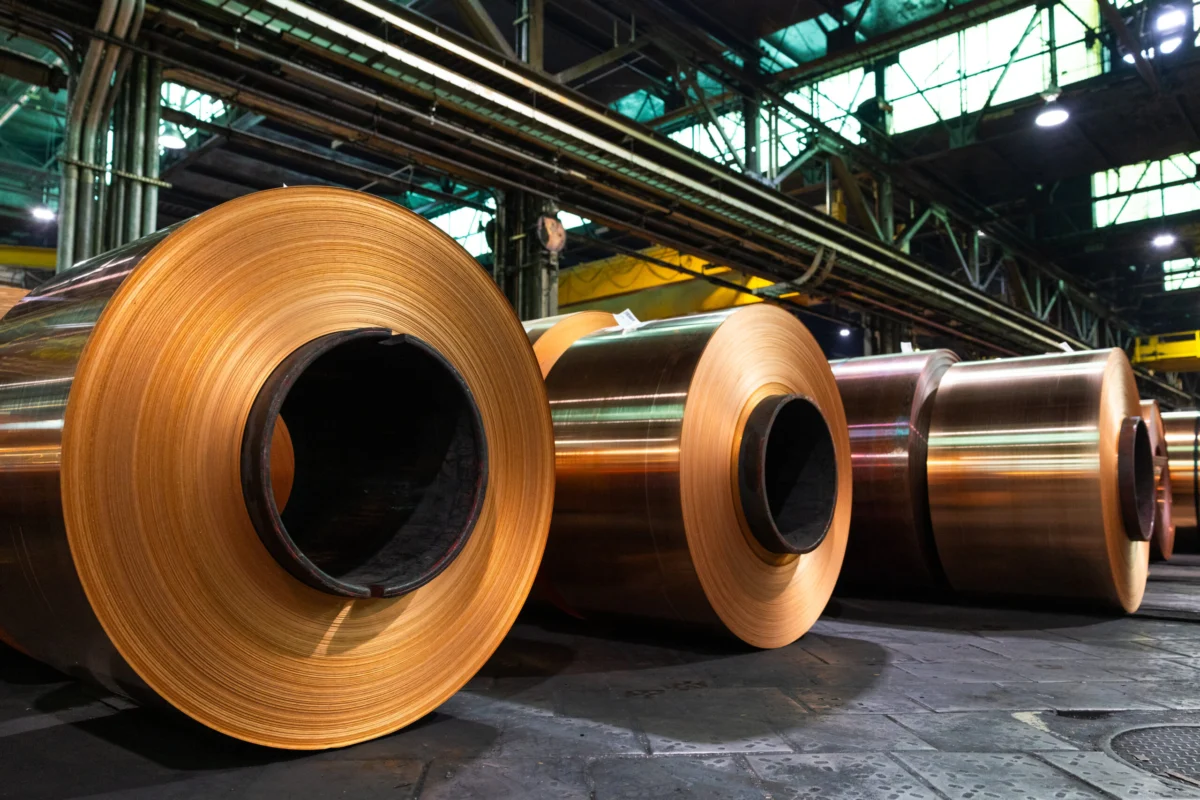
Copper, the bellwether metal historically revered as "Dr. Copper" for its perceived ability to diagnose the health of the global economy, surged to an unprecedented record high on a recent Thursday, with U.S. copper futures briefly climbing to approximately $6.90 a pound before retreating slightly by session’s end. This latest rally, however, unfolds against a more complex and nuanced global backdrop, challenging the metal’s traditional role as a straightforward indicator of broad economic prosperity. Unlike previous boom cycles largely fueled by robust industrial expansion, the current surge appears to be a confluence of deepening supply constraints, aggressive investment in global power grids, evolving trade policies, and burgeoning demand from transformative sectors like artificial intelligence (AI) and the accelerating electrification megatrend.
The Shifting Narrative of "Dr. Copper"
For decades, the price of copper served as a reliable barometer for global economic activity. Its widespread application in construction, manufacturing, transportation, and electronics meant that robust demand for the red metal was often a direct proxy for increasing industrial output and consumer spending worldwide. A rising copper price typically signaled an expanding economy, while a fall hinted at deceleration. This intuitive correlation earned it the moniker "Dr. Copper," suggesting its predictive power.
However, market analysts and commodity experts are increasingly observing a disconnect between the metal’s soaring value and the broader economic narrative. "The underpinning story of elevated copper prices has been data center and power grid demand to support the rapid AI industry expansion," noted William Osnato, Barchart’s director of commodity data research and analysis. He elaborated that the current surge in copper demand is "more acute and not the traditional broad economic growth that supports copper." This sentiment underscores a fundamental shift: copper’s trajectory is now being heavily influenced by specific, high-growth technological and infrastructural demands rather than a generalized, across-the-board economic boom.
A Deep Dive into Supply Side Challenges
One of the most critical factors underpinning copper’s historic ascent is a persistent and worsening supply deficit. The process of discovering, developing, and bringing new copper mines online is notoriously capital-intensive, fraught with environmental complexities, and incredibly time-consuming, often requiring a decade or more from initial exploration to commercial production. This inherent inertia in supply response makes the market particularly vulnerable to disruptions.
Global Mining Disruptions and Underinvestment:
The year 2026 has witnessed several significant supply shocks. Chile, the world’s largest single copper producer, has faced substantial operational setbacks. Heavy snow, torrential rainfall, and high winds earlier in the year severely disrupted mining operations across key regions, temporarily sidelining significant production volumes. These weather-related events highlighted the vulnerability of even the most established mining regions to climate change impacts. Beyond these acute disruptions, there has been a pervasive trend of underinvestment in new mining projects globally over the past decade. Faced with declining ore grades, increasing regulatory hurdles, and rising operational costs, major mining companies have often prioritized shareholder returns over aggressive expansion, leading to a lean pipeline of new projects. Michael Widmer, Bank of America’s head of metals research, emphasized this point, stating that the current price movement wasn’t "really driven by copper demand but really driven by copper supply." He added that "there is not a lot of mine supply growth and supply disruptions have been creating additional constraints."
Geopolitical Factors and Trade Policies:
Geopolitics and trade policies are also playing an increasingly pivotal role in tightening global copper supplies. On the same Thursday that copper hit its record high, the Democratic Republic of Congo (DRC) officially implemented a ban on the export of copper and cobalt concentrates. This policy, aimed at encouraging more domestic processing and value addition within the DRC, immediately removed a significant volume of raw material from the international market, forcing global refiners to seek alternative, scarcer sources. The DRC is a crucial player in global mineral supply chains, and such policy shifts have immediate and tangible effects on market dynamics.
Concurrently, the United States has introduced protective trade measures. In June of the previous year, then-President Donald Trump signed a proclamation imposing 50% tariffs on imports of semi-finished copper products and copper-intensive derivative products. These Section 232 tariffs, ostensibly for national security reasons, have effectively raised the cost of imported copper products into the U.S. market, further contributing to supply tightness and driving up domestic prices. China, a colossal consumer and processor of copper, has also contributed to the supply squeeze through its crackdown on the availability of scrap copper, a vital secondary source of the metal. These policy interventions, both national and international, collectively create a fragmented and constrained global supply landscape.
The Unprecedented Demand from Electrification and AI
While supply remains constrained, demand for copper is experiencing an unprecedented surge, driven by structural shifts in global energy and technology landscapes rather than a cyclical economic upswing.
The Electrification Megatrend:
The global push towards electrification is arguably the most significant long-term driver of copper demand. Copper’s superior electrical conductivity and ductility make it indispensable for nearly every component of the green energy transition. Electric vehicles (EVs), for instance, require significantly more copper than traditional internal combustion engine vehicles – typically three to four times more, ranging from 80 kg to over 100 kg per vehicle, compared to 20-30 kg. The burgeoning renewable energy sector, encompassing solar panels, wind turbines, and their associated grid connections, is also intensely copper-hungry. Offshore wind farms, in particular, demand vast quantities of copper for their extensive cabling. The infrastructure required to support these technologies, including charging stations, smart grids, and energy storage systems, all rely heavily on copper.
Massive Grid Investments:
To facilitate the integration of renewable energy sources and manage the increasing electrical load from electrification, countries worldwide are embarking on ambitious power grid modernization and expansion projects. China, a global leader in infrastructure development, has made colossal commitments. In the first half of this year, China’s grid investment surged by 13% year-over-year. The nation recently unveiled an audacious plan to invest approximately $574 billion in power grid upgrades over the coming years. This monumental investment aims to enhance transmission capacity, improve grid stability, and connect vast new renewable energy projects, all of which translate into enormous demand for copper wiring, transformers, and other electrical components. Similar, albeit perhaps less dramatic, investments are underway in Europe, North America, and other regions, signaling a global commitment to grid infrastructure that will sustain copper demand for decades.
The AI Revolution and Data Centers:
A newer, but rapidly accelerating, demand driver is the explosive growth of artificial intelligence and the immense data centers that power it. AI computing requires highly efficient and robust electrical infrastructure. Data centers, which house thousands of servers, demand substantial amounts of copper for their internal wiring, power distribution units, and cooling systems. The increasing density and power consumption of AI-specific hardware mean that future data centers will be even more copper-intensive. The rapid expansion of AI capabilities and the continuous construction of new, larger data centers are creating a specialized, high-growth segment of copper demand that was barely a blip on the radar a few years ago.
Market Dynamics and Refining Costs
The combined pressure from constrained supply and burgeoning demand is creating palpable tension in the physical copper market. Osnato noted that "supply disruptions have been pushing consumers to pull metal out of London Metal Exchange (LME) warehouses." A decline in LME warehouse stocks is a critical indicator of physical market tightness, signifying that readily available supply is dwindling. When physical stocks are low, it drives up spot prices and can also increase refining costs, as processors face higher premiums to secure raw materials. This situation puts additional strain on manufacturers reliant on copper, who must either absorb higher costs or pass them on to consumers.
Broader Implications and Future Outlook
The current state of "Dr. Copper" carries profound implications across various sectors and for global economic policy.
For Industries: Manufacturers in electronics, automotive, construction, and renewable energy face the dual challenge of securing sufficient copper supplies and managing escalating costs. This could lead to innovation in material substitution, though copper’s unique properties make it difficult to replace entirely in many applications. It could also spur greater investment in recycling infrastructure to recover more secondary copper.
For the Green Energy Transition: While copper is essential for the green transition, its rising cost and scarcity could become a bottleneck. This poses a dilemma for policymakers striving to meet climate goals, as the very materials needed for decarbonization become more expensive and harder to procure.
Geopolitical Landscape: The scramble for critical minerals like copper intensifies geopolitical competition. Countries with significant reserves, like Chile and the DRC, gain increased leverage. Trade policies, like tariffs and export bans, become tools of economic nationalism, potentially leading to supply chain fragmentation and higher global prices.
Economic Forecasting: The traditional utility of "Dr. Copper" as a simple economic indicator is diminished. Economists must now disaggregate copper price movements, distinguishing between signals of broad industrial growth and those driven by specific technological shifts and supply-side constraints. This requires a more nuanced approach to interpreting commodity markets.
Investment Outlook: For investors, copper’s long-term outlook appears robust, driven by the structural demand shifts. However, the market is also subject to short-term volatility stemming from supply disruptions, policy changes, and speculative trading. Investment in mining companies, copper futures, and related sectors will likely remain attractive, but with an elevated risk profile.
In conclusion, the record-high copper price of this recent Thursday marks a pivotal moment for the global commodity market. It signifies a profound evolution in the metal’s role, moving beyond a mere reflection of cyclical economic growth to become a crucial indicator of the world’s determined, yet challenging, journey towards electrification and advanced technological integration. As William Osnato succinctly put it, "It is definitely a new situation for Dr. Copper," one that demands a fresh perspective and a deep understanding of the interwoven forces shaping our modern industrial landscape. The red metal’s future price trajectory will not only dictate the profitability of mining giants but also significantly influence the pace and cost of the global energy transition and the rollout of next-generation technologies.

0 Comments