
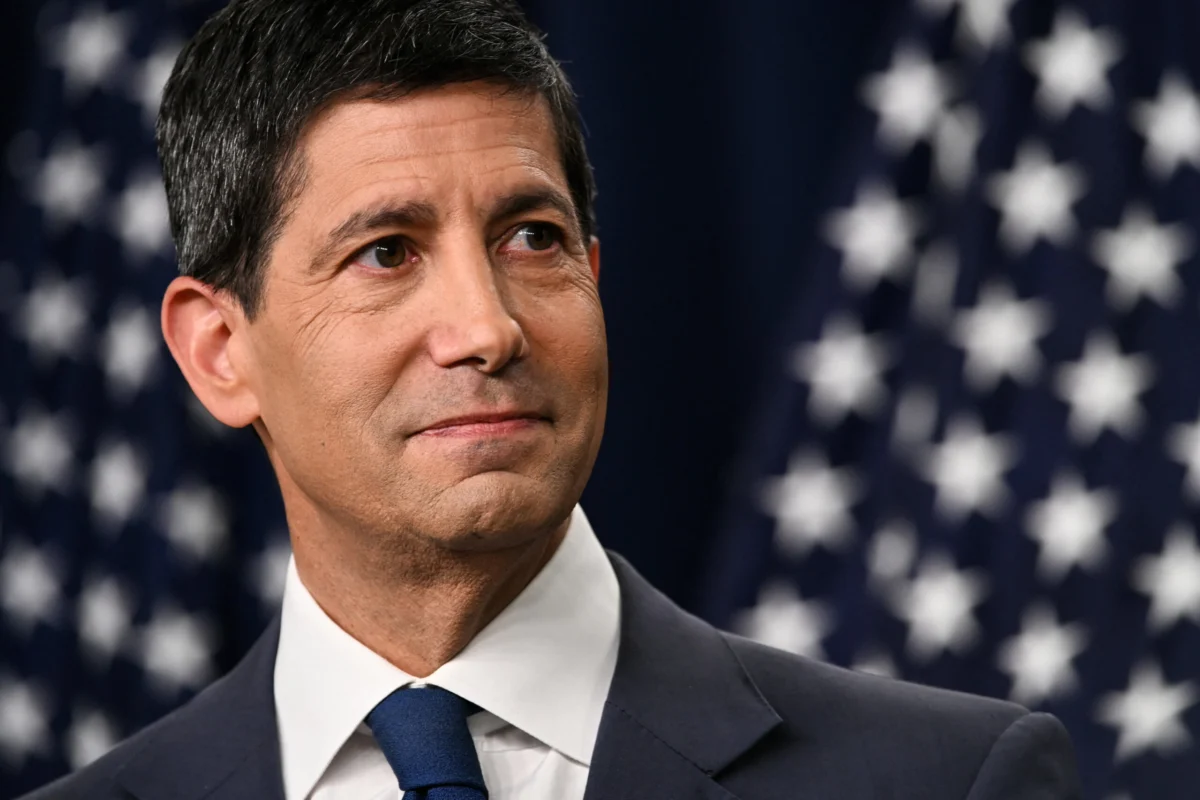
Federal Reserve Chairman Kevin Warsh is reportedly considering a significant reduction in the number of annual meetings for the rate-setting Federal Open Market Committee (FOMC), a move that would further curtail the central bank’s communication footprint on financial markets. This potential change, discussed in what a Fed source described as largely hypothetical terms, represents a bold escalation in Warsh’s broader agenda to reshape the Fed’s role and transparency since taking office in May 2026. Experts are already weighing in on the profound implications, suggesting it could usher in an era of heightened market volatility alongside new trading opportunities for investors accustomed to a more predictable Fed.
A New Era of Reduced Transparency Under Warsh
Since assuming the chairmanship from now-Governor Jerome Powell on May 22, 2026, Warsh has initiated a series of decisive measures aimed at reversing decades of Federal Reserve culture characterized by increasingly aggressive transparency. For many years, policymakers were encouraged to be overtly clear about their monetary policy intentions, a practice some critics deemed "overly transparent" for its potential to foster market dependency on Fed signals rather than economic fundamentals.
Warsh’s initial actions have been swift and impactful. He has dramatically curtailed "forward guidance," the primary mechanism through which the Fed signals its future interest rate movements. The post-meeting statements, once meticulously crafted and lengthy, have been significantly shortened, offering fewer explicit clues about the committee’s thinking. Furthermore, during the two news conferences he has held thus far, including one on July 29, 2026, Warsh has become known for providing cryptic and often evasive answers when pressed on his personal views or the Fed’s future direction. Beyond these communication shifts, Warsh has also established five specialized task forces, signaling a comprehensive, top-to-bottom reevaluation of the Fed’s approach to policy formulation, communications strategy, and data utilization. This holistic approach underscores his commitment to a fundamental philosophical shift in the central bank’s operations.
The consideration of fewer FOMC meetings, traditionally held eight times a year, represents the latest and potentially most impactful step in this evolving strategy. Such a change would inevitably lead to an even greater reduction in the communications output from the Warsh Fed, introducing a new layer of uncertainty for participants in the stock and bond markets.
Historical Precedent and the "Magic Number" Debate
The frequency of FOMC meetings has not always been fixed. Historically, the Federal Reserve has employed various meeting strategies throughout its existence. Until the early 1980s, the FOMC convened almost monthly, reflecting a different era of economic management and market expectations. It was under the chairmanship of Paul Volcker, during a period of intense economic upheaval and the fight against rampant inflation, that the schedule was standardized to eight meetings per year. This adjustment was largely a response to the growing complexity of financial markets and the need for more regular, yet not overly frequent, policy adjustments.
Despite the established eight-meeting schedule, the Fed retains the inherent flexibility to call an emergency meeting at any time. However, such an unscheduled convening carries substantial market implications, as it is widely interpreted as a signal of significant economic distress or an urgent need for policy intervention.
Several current and former Fed officials have expressed openness to reexamining the meeting schedule. Minneapolis Fed President Neel Kashkari, speaking to CNBC on Wednesday, August 5, 2026, stated, "I don’t think there’s any magic number about eight or 10 or six. You know, we always have the ability to call emergency meetings if things happen, but that’s a big event. When the FOMC calls an emergency meeting, it really sends a signal that we’re concerned about something. And so, you know, I think I’m open-minded. I don’t have a strong view."
Philadelphia Fed President Anna Paulson echoed similar sentiments in an interview with CNBC on Tuesday, August 4, 2026, suggesting, "It’s healthy to have a good discussion about that." Bill English, a former head of monetary affairs at the Fed during Warsh’s initial tenure and now a Yale professor, also downplayed the sanctity of the current schedule. "There’s nothing magical about eight meetings," English observed, acknowledging that while there are costs associated with frequent meetings, "you don’t want to have so few meetings that you end up not acting in a timely way." English himself once proposed a schedule of six meetings per year, contingent on each meeting including a news conference and an update to the Fed’s Summary of Economic Projections (SEP). While he ultimately views eight as "close to the right number," his primary concern lies with Warsh’s broader strategy of reduced communication, which he believes undermines public understanding and accountability.
Concerns Over Volatility and Market Repricing
Despite some internal support for flexibility in meeting frequency, the prevailing sentiment among many market analysts and economists leans towards caution regarding Warsh’s overall strategy. George Catrambone, head of fixed income for the Americas at DWS Group, articulated a common concern: "Certainly, it’s going to increase volatility. Having less transparency forces market participants to hedge or have a wider dispersion of outcomes." This perspective highlights a fundamental shift in market dynamics. For decades, investors have grown accustomed to a steady stream of signals from the Fed, allowing them to anticipate policy shifts and price assets accordingly. A reduction in these signals would necessitate greater independent analysis and risk-taking, potentially leading to more abrupt market movements.
Dario Perkins, head of global macroeconomics at TS Lombard, characterized the potential outcome of Warsh’s approach as "a regime of continuous market repricing." He noted that "investors have to get used to FOMC meetings at which they don’t know the outcome ahead of time." While this could lead to increased volatility, Perkins also acknowledged that "this may well be what Warsh has wanted all along," implying that such a regime could foster new trading opportunities for agile investors who can adapt to less guidance.
The "information vacuum" created by Warsh’s policies extends beyond just meeting frequency. Concerns have already been raised about the chairman’s stance on forward guidance, which has been exacerbated by a loosely defined "reaction function"—the delineation of economic conditions that would trigger a Fed policy response. Furthermore, Warsh has expressed criticism regarding the Fed’s "dot plot," a graphical representation of individual officials’ interest rate expectations. Notably, he declined to submit his own "dot" when the FOMC last updated the grid in June 2026, further signaling his desire to reduce the emphasis on individual policymaker projections.
Mark Hackett, chief market strategist at Nationwide, expressed significant apprehension about the cumulative impact of these changes. "Obviously, if the dot plot changes or if guidance changes, I don’t think that’s the end of the world," Hackett said. "If you stop start having less meetings, that’s a different level, and that could be seen as disruptive." The concern is that a market that has for decades relied on the Fed for cues will now be forced to guess at policy intentions, leading to mispricings and heightened uncertainty.
Potential Ramifications: Yields, Debt, and Accountability
The implications of reduced Fed communication extend to various segments of the financial system. Komal Sri-Kumar, president of Sri-Kumar Global Strategies, warned of a potential "bear steepener" in the bond market, where longer-term yields rise faster than shorter-term rates. This scenario typically indicates that fixed-income investors anticipate the Fed holding short-term rates low for an extended period, leading to an increase in inflation expectations and a demand for higher compensation for holding longer-dated bonds. "Bondholders are not babies trying to have their hands held," Sri-Kumar stated, "The bondholders are saying, ‘Please don’t make my life more difficult by introducing even more uncertainty.’"
Such a spike in yields could have severe consequences for the federal government, which is currently grappling with the immense challenge of financing its colossal $31.1 trillion in outstanding Treasury debt held by the public. Treasury Secretary Scott Bessent faces an increasingly tough job, as interest on the national debt has become the second-largest government outlay after Social Security, projected to reach an astounding $1.3 trillion this year. A significant increase in borrowing costs would further strain federal finances, potentially necessitating difficult fiscal choices or exacerbating inflationary pressures.
Despite these concerns, Secretary Bessent, in a CNBC appearance on Tuesday, August 4, 2026, described Warsh’s approach as a "detox" for markets, suggesting that weaning markets off their dependency on constant Fed guidance could ultimately lead to healthier, more self-reliant price discovery. This view aligns with Warsh’s explicit directive to market participants: "play the ball, not the referee." During his news conference last week, Warsh stated, "Market prices will continue to respond in the direction and magnitude they see fit. This is, in my view, a change for the better – and we are just getting started."
Muted Market Reaction – For Now
Curiously, the market’s reaction to Warsh’s radical shift in approach has, so far, been relatively muted. Since his inauguration on May 22, 2026, the Dow Jones Industrial Average has added approximately 3,500 points, or a healthy 7%. Bond yields have also risen, but not dramatically, with the policy-sensitive 2-year Treasury yield up about 8 basis points (0.08 percentage points) and the benchmark 10-year yield showing a similar increase.
This calm market response could be attributed to several factors. Investors might be willing to grant Warsh the benefit of the doubt, or perhaps they are currently more preoccupied with geopolitical events and other macroeconomic factors that are overshadowing the changes at the Fed. As Mark Hackett observed, "He’s kind of getting away with it." This could indicate that markets are either slowly adapting to the new communication style or are simply waiting for more concrete data points to react to, rather than relying on the "vagaries of Fedspeak."
However, the relative calm does not diminish the underlying risks or the ongoing debate about the long-term efficacy of Warsh’s strategy. Bill English, while acknowledging the costs of frequent meetings, remains steadfast in his belief that transparent communication is paramount. "I really don’t like this effort to communicate much less," he reiterated. "Explaining more about why you’re doing what you’re doing helps the public to understand it. It helps the public to anticipate it. It makes monetary policy more effective, and also it just seems like it’s appropriate to make the Fed accountable." This sentiment underscores a core tenet of modern central banking: that transparency fosters trust and enhances the effectiveness of monetary policy by guiding expectations.
The Path Forward: Jackson Hole and Beyond
As Chairman Warsh continues to dismantle traditional Fed communication strategies, all eyes will be on his upcoming speech at the Fed’s annual gathering in Jackson Hole, Wyoming, at the end of August 2026. This prestigious symposium has historically served as a platform for Fed chairmen to unveil new agendas or signal significant policy shifts. It presents a critical opportunity for Warsh to articulate his vision more comprehensively and address the growing concerns regarding market stability and Fed accountability.
There are plausible benefits and drawbacks to this new, less interventionist approach, and with such a short time since its inception, the ultimate impact remains uncertain. As George Catrambone of DWS Group noted, "Warsh is trying to undertake a very large change in terms of how to communicate the data and how to interpret it. I would say we should also provide a little bit of grace." The financial world is watching closely to see if Warsh’s "detox" will indeed lead to a more resilient and self-sufficient market, or if the increased uncertainty will eventually translate into significant economic instability. The debate over the optimal level of central bank transparency is far from over, and Chairman Warsh is poised to be at its epicenter.

0 Comments