
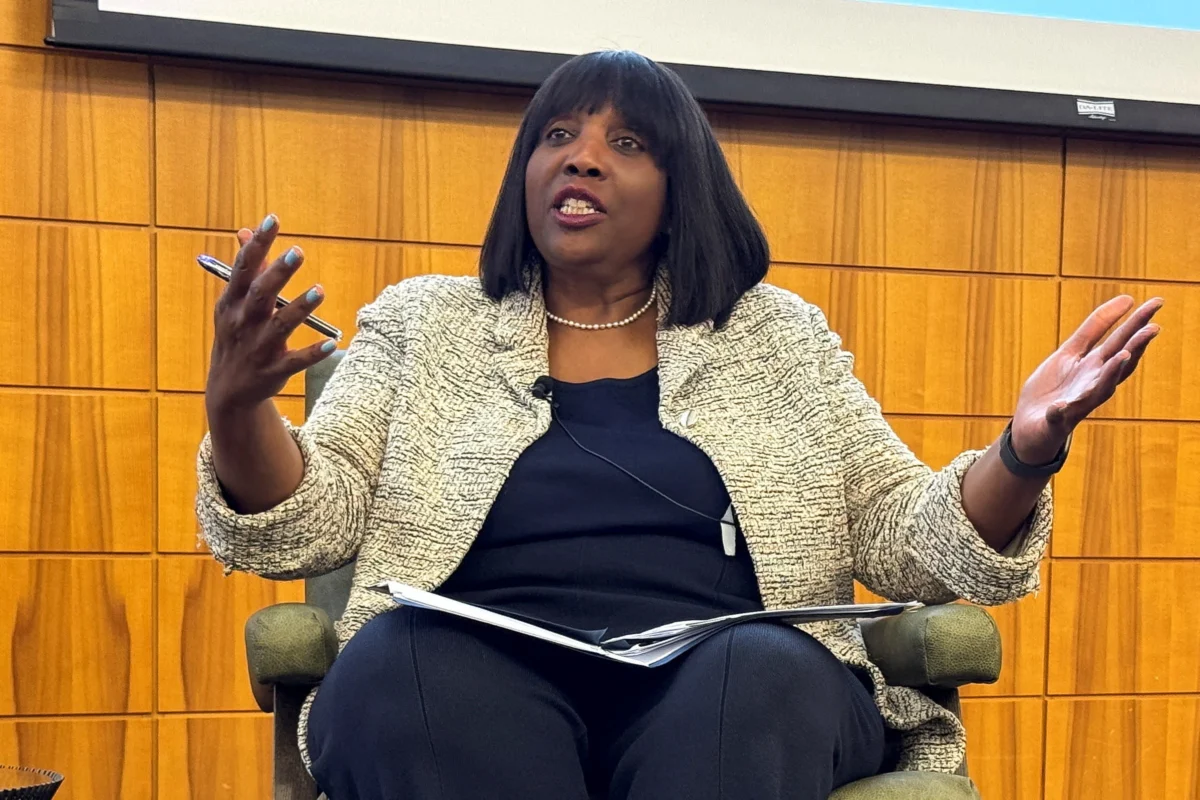
Federal Reserve Governor Lisa Cook issued a clear and resolute statement on Wednesday, indicating her strong inclination to support an interest rate hike in the near future unless a demonstrable and sustained improvement in inflation metrics materializes. Speaking in Anchorage, Alaska, Cook underscored the urgency of the situation, stating, "Inflation is too high, and I consider the risks to the inflation side of the dual mandate higher than the risks to the employment side at this point. As such, I am prepared to act by raising rates, if necessary." Her comments, delivered at a time of heightened economic uncertainty and ongoing debate within the Federal Open Market Committee (FOMC), highlight a growing hawkish sentiment among some policymakers determined to rein in stubbornly elevated prices.
The Fed’s Dual Mandate and Current Priorities
The Federal Reserve operates under a dual mandate from Congress: to foster maximum employment and maintain price stability. For years, the central bank has targeted an average annual inflation rate of 2%. However, the economic landscape of the mid-2020s has presented unprecedented challenges, pushing inflation consistently above this target. Cook’s remarks unequivocally signal a pivot in her focus, prioritizing price stability over employment concerns, a stance she justified by asserting that the risks associated with unchecked inflation now outweigh potential risks to the labor market. This rebalancing of priorities within the dual mandate is a critical indicator of the Fed’s evolving strategy as it navigates a complex global economic environment.
While acknowledging that recent June data showed some easing in inflation, largely attributed to a significant decline in energy prices, Cook cautioned against drawing premature conclusions from a single data point. She emphasized that the overall pace of price increases remains considerably above the Fed’s 2% target, necessitating a vigilant and proactive approach. This perspective aligns with a broader cautiousness within the Fed regarding transient versus persistent inflationary pressures, seeking clear evidence of a downward trend rather than short-term fluctuations.
Recent FOMC Action and Cook’s Rationale for Holding Rates
Cook’s statement comes just a week after the Federal Open Market Committee voted 9-3 to maintain the central bank’s benchmark borrowing rate within the range of 3.5%-3.75%. Cook was part of the majority that opted to hold rates steady at that meeting. She elaborated on her vote, explaining that it stemmed from a desire to observe and assess the evolving impacts of several complex geopolitical and economic factors on prices. These factors included the possible waning effects from tariffs, an energy supply shock stemming from the ongoing Iran war, and inflationary pressures associated with the burgeoning artificial intelligence (AI) buildout.
Her previous vote to hold was not an indication of complacency but rather a strategic pause to gather more data and understand the underlying dynamics. Cook explained, "If I do not see signs of continued disinflation soon, I am prepared to act." This conditional stance suggests a clear trigger for her future policy decisions: concrete evidence of inflation moderating towards the Fed’s target. The distinction between a temporary dip in a single month’s data and a sustained trend of disinflation is crucial for policymakers like Cook.
A Timeline of Persistent Inflation and Underlying Pressures
The concern over inflation is not new; Cook explicitly highlighted "five years of above-target inflation," a period that has tested the Fed’s resolve and prompted multiple policy adjustments. This extended period of elevated prices began roughly in late 2021 and intensified through 2022, driven initially by pandemic-related supply chain disruptions, robust consumer demand fueled by fiscal stimulus, and geopolitical events. By 2026, while some of these initial drivers had softened, new pressures emerged, making the inflation fight particularly challenging.
The "sharp slide in energy prices" observed in June 2026 provided a brief respite, primarily driven by a combination of factors such as increased global oil supply from non-OPEC+ producers, perhaps a temporary lull in demand due to global economic slowdown fears, and strategic releases from national reserves. However, this relief was juxtaposed against the backdrop of an "energy supply shock due to the Iran war," a conflict that has intermittently disrupted global oil and gas markets since its escalation in early 2025. This conflict has maintained a persistent upward pressure on energy costs, counteracting any temporary dips and introducing significant volatility, thereby making the overall inflation picture more complex.
Furthermore, Cook’s mention of "pressures from the artificial intelligence buildout" introduces a relatively novel inflationary factor. The rapid expansion and adoption of AI technologies require massive investments in specialized hardware, advanced semiconductors, vast data centers, and a highly skilled workforce. This surging demand can lead to significant cost-push inflation in specific sectors, as companies compete for limited resources and talent. While AI is also touted for its potential to boost productivity and eventually reduce costs, in its nascent and intensive buildout phase, it can exert upward pressure on prices for critical components and services, adding another layer of complexity to the inflation outlook. The "waning impacts from tariffs" also play a role, as the unwinding of trade barriers (e.g., those imposed during earlier US-China trade tensions) could, in theory, alleviate some import costs, but the pace and extent of this impact are subject to ongoing debate and policy changes.
The Risk of Entrenched Inflation and the Absence of "Luxury"
A central tenet of Cook’s argument for proactive intervention is the escalating risk of inflation becoming "entrenched in price- and wage-setting behavior." This refers to a scenario where businesses, expecting continued price increases, raise their prices preemptively, and workers, anticipating higher costs of living, demand higher wages. This creates a self-fulfilling prophecy, known as a wage-price spiral, which is exceedingly difficult to break once established. "The longer inflation is above target," Cook warned, "the more likely this scenario becomes."
She starkly contrasted the current economic environment with others where the Fed might have the luxury to wait longer before taking action. "We do not have that luxury in this one," she asserted, implying that the confluence of persistent, multi-faceted inflationary pressures and the duration of above-target inflation demands immediate and decisive action. This sense of urgency permeates her remarks, suggesting a limited window for the Fed to act before inflation becomes deeply embedded in economic expectations and structures.
Market Expectations and Dissenting Voices
Financial markets have been closely monitoring the Fed’s signals, attempting to price in future rate adjustments. According to the CME Group’s FedWatch tool, markets anticipate the central bank could potentially act as soon as September 2026, though they are currently pricing in higher odds for an October move. This reflects the cautious optimism among investors that the Fed might still hold off for another meeting, perhaps hoping for clearer signs of disinflation, but acknowledging the increasing pressure for a hike. For instance, current projections might show a 40% probability for a September hike and a 65% probability for October, illustrating the market’s evolving expectations.
Cook’s hawkish stance is not isolated within the Fed. Earlier on the same day, Minneapolis Fed President Neel Kashkari, one of the three dissenting votes at the July FOMC meeting, reiterated his belief that higher rates are necessary. Kashkari, a consistent advocate for tighter monetary policy to combat inflation, likely voted for an immediate rate hike in July, demonstrating a more aggressive stance than the majority. His continued vocal support for higher rates underscores the internal debate within the FOMC, with a segment of policymakers advocating for more forceful and immediate action. The other two dissenting votes in July likely also favored an immediate hike, signaling a significant hawkish minority.
Broader Economic Implications and Outlook
The implications of Cook’s statements, and potentially subsequent Fed actions, are far-reaching. For businesses, higher interest rates translate directly into increased borrowing costs for investments, expansion, and even day-to-day operations. This could lead to a slowdown in corporate spending, potentially impacting hiring and capital expenditure plans. Industries heavily reliant on debt financing, such as real estate and technology, could face particular headwinds.
Consumers would also feel the impact through higher interest rates on mortgages, auto loans, and credit card debt, potentially dampening consumer spending, which is a major driver of economic growth. The housing market, in particular, could see further cooling as mortgage rates rise, making homeownership less affordable. The overall effect would be a tightening of financial conditions across the economy, designed to slow aggregate demand and bring it back into alignment with supply, thereby easing inflationary pressures.
On financial markets, a clear signal of an impending rate hike could trigger volatility. Equity markets might react negatively to the prospect of higher borrowing costs and slower economic growth, potentially leading to corrections. Bond yields, particularly for shorter-term government bonds, would likely rise in anticipation of Fed action, reflecting higher returns for lenders. The U.S. dollar could strengthen as higher interest rates make dollar-denominated assets more attractive to international investors.
In conclusion, Federal Reserve Governor Lisa Cook’s recent remarks in Anchorage represent a significant and unambiguous signal of her readiness to support further interest rate hikes. Her emphasis on the risks of entrenched inflation, the prolonged period of above-target price increases, and the urgent need for action paints a clear picture of the challenges facing the Fed. As policymakers grapple with complex economic forces stemming from geopolitical conflicts, technological shifts, and persistent demand-supply imbalances, the path forward for monetary policy appears increasingly geared towards decisive action to restore price stability, even if it entails some economic slowdown. The coming months will be critical in determining whether inflation shows the sustained improvement Cook and other hawkish members of the FOMC require, or if the central bank will indeed "act by raising rates" to avert a more deeply entrenched inflationary future.

0 Comments