
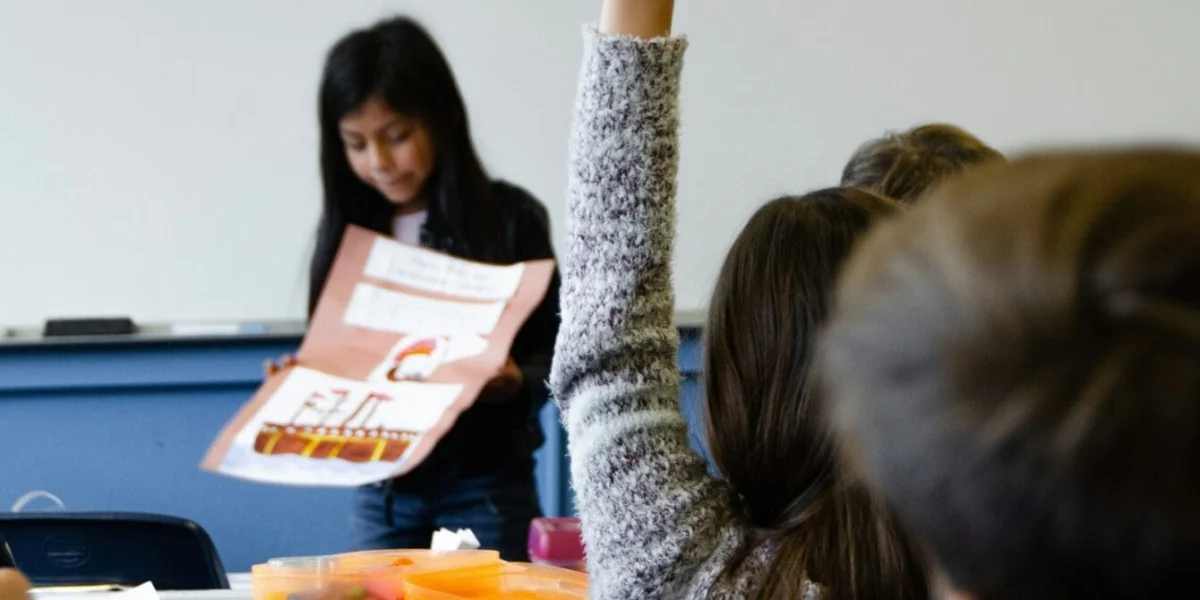
Every academic year, classrooms across the nation witness a familiar scene: bright, capable children holding back, their hands remaining firmly in their laps despite knowing the answer. This reticence, often mislabeled as inherent shyness or an unchangeable personality trait, is a significant challenge for both educators and parents. However, child development expert Sheila Fortson, Executive Director of The FAME Center, posits a compelling counter-argument. She asserts that for many children, classroom hesitation is not a matter of temperament but rather a deficit in "rep counts"—insufficient low-stakes opportunities to practice being seen and heard. This fundamental lack of exposure prevents children from developing the crucial understanding that public visibility is not only survivable but can be a source of empowerment.

Unpacking the Roots of Classroom Reticence

The conventional understanding of shyness often labels it as an intrinsic personality characteristic, something a child is "born with." While genuine shyness or social anxiety can indeed be deeply ingrained and may require specialized intervention, Fortson argues that a large proportion of children who appear quiet in class are simply unaccustomed to the spotlight. Their bodies and minds have not yet accumulated enough positive experiences of speaking in front of others to normalize the sensation. This perspective shifts the focus from a fixed trait to a developable skill, emphasizing that confidence is not a given but a cultivated attribute built through repeated, positive interactions.

Research in developmental psychology supports Fortson’s view. Studies on self-efficacy and social learning theory highlight that confidence in a specific domain is often a product of mastery experiences and vicarious learning. When children successfully navigate situations where they are observed and heard, even in small, controlled environments, their belief in their ability to perform in similar future situations grows. Conversely, a lack of such experiences can lead to avoidance behaviors, reinforcing a cycle of silence. For many students, the classroom environment presents a complex social dynamic where the fear of judgment, making a mistake, or simply being the center of attention can be overwhelming if they haven’t gradually built up their resilience to these feelings at home.

The Foundational Role of Family Rituals

Fortson, drawing from her extensive experience as a teacher and her own past as a shy child, emphasizes that the most effective interventions are often simple, consistent, and integrated into daily family life. She advocates for the creation of "low-stakes moments" at home, designed to incrementally build a child’s comfort with being observed and heard. These rituals are not about transforming a child into an extrovert, but about equipping them with the confidence to articulate their thoughts and engage when it matters, fostering a sense of agency that extends beyond the classroom.

The transition back to school, particularly after extended breaks, can exacerbate these challenges. Children are faced with new teachers, new classmates, and new expectations for participation. Establishing confidence-building rituals before the school year begins can serve as a vital preparatory step, providing children with a mental and emotional toolkit to navigate these changes with greater ease. These rituals, performed consistently, help desensitize children to the perceived pressure of being watched, transforming an anxiety-inducing experience into a familiar and manageable one.

The Family Presentation Ritual: A Stepping Stone to Self-Assurance

At the heart of Fortson’s methodology is the "family presentation ritual." This practice is remarkably straightforward: one child, taking a designated "stage" (which could be as simple as standing in front of a sofa), shares something for a few minutes while the rest of the family actively listens and offers applause at the conclusion. The content of the presentation is secondary to the act itself. Whether it’s recounting a chapter from a book, telling a joke, describing a recent creation, or simply narrating their day as a story, the core objective is to practice "standing up, being seen, and finishing." This repetitive action builds the "muscle" of public presence, much like physical exercise builds strength.

The flexibility of this ritual allows for adaptation across various age groups and developmental stages. For younger children, the presentations might be very brief and focused on simple observations or imaginative tales. As children mature, the complexity can increase, encouraging them to elaborate on ideas, express opinions, or even engage in short, structured debates. The emphasis remains on the process—the act of delivering and concluding—rather than the perfection of the content. This approach fosters a growth mindset, where effort and participation are celebrated above flawless execution.

The Quiet Power of Reading Aloud

Beyond direct presentations, Fortson identifies reading aloud as an "underrated confidence tool." This activity allows a child to project their voice, experiment with volume and expression, and command an audience’s attention, all without the added pressure of formulating their own thoughts on the spot. She aptly terms it "confidence training in a literacy costume." When children become comfortable filling a room with the sound of their own voice through reading, the cognitive and emotional leap to using their own words feels significantly less daunting. This can be incorporated into nightly routines, even for just a few minutes, gradually building vocal stamina and a sense of auditory presence.

The benefits of reading aloud extend beyond confidence. It enhances literacy skills, improves pronunciation and vocabulary, and strengthens comprehension. For a child struggling with speaking up, it offers a safe, structured way to engage orally, removing the improvisational element that often triggers anxiety. The narrative structure of a book provides a clear beginning, middle, and end, making the "performance" predictable and therefore less intimidating.

Adapting the Audience and Overcoming Resistance

A common concern for parents might be the lack of a large "audience" at home, especially for single-child families. Fortson reassures that the size of the audience is less critical than the intentionality of the moment. A single parent, a grandparent on a video call, or even a line of beloved stuffed animals can serve as an effective audience. The key is to create a distinct "okay, now it’s your turn" cue, signaling a dedicated space for the child to command attention. This deliberate framing reinforces the significance of their contribution, regardless of the number of listeners.

For children who outright refuse to participate, Fortson offers crucial advice: avoid the word "perform." This term often conjures images of perfection and judgment, which can be highly damaging to a child’s fragile confidence. Instead, she suggests easing in sideways, framing the activity as "sharing." For example, a parent could ask their child to "tell me about your day like you’re a news reporter" or "explain the rules of your favorite game to Grandma." Allowing the child to select the topic gives them a sense of control and ownership, transforming a potentially intimidating demand into an engaging invitation. This subtle linguistic shift and emphasis on choice can significantly reduce anxiety and foster voluntary participation.

The Art of Constructive Affirmation

The feedback loop following a child’s presentation is as critical as the act itself. Fortson insists on one non-negotiable rule: clap first, every time. This immediate, unconditional affirmation celebrates the bravery of the child for participating, irrespective of the quality of their "performance." It reinforces that the assignment was to do it, not to do it flawlessly. This positive reinforcement builds a foundation of psychological safety, encouraging future participation.

For older or more confident children, a small amount of constructive feedback can be offered after the applause, and always framed positively. For instance, "I loved how you looked at us; would you like to try once more and slow down a little at the end?" If they attempt it again, praise the specific improvement. The most common mistake parents make, Fortson cautions, is to immediately launch into a critique. Leading with "next time, try this…" immediately after they finish can inadvertently dismantle the safety and confidence painstakingly built. The initial moments post-presentation should be reserved solely for celebration and encouragement, with coaching deferred to a later, less emotionally charged time.

Maintaining low stakes and granting the child as much control as possible—over the topic, duration, and even whether they participate on a given day—is paramount. An anxious child needs to perceive these activities as optional and safe before they can truly embrace them as fun and empowering. This autonomy fosters intrinsic motivation rather than compliance driven by external pressure.

The 10-Minute Gateway: The Character Retell

To initiate this confidence-building journey, Fortson recommends a specific "go-to opener": the "character retell." In this exercise, the child invents a character, the sillier the better, and then recounts their day as if it happened to that character. For example, "Once upon a time there was a boy named Zippy, and Zippy went to school, and…" This imaginative distance allows the child to tell their story freely, without the pressure of strict factual recall or self-consciousness. Standing up while narrating adds the physical element of presence.

This exercise requires no props and no elaborate preparation, making it easily implementable tonight. Ten minutes dedicated to a child using their voice, imagination, and body in front of an adoring audience of one or more family members lays the groundwork for self-assurance.

Long-Term Impact and Broader Implications

The cumulative effect of these seemingly small, consistent rituals is profound. As Fortson observes, teachers typically notice a "slow unfolding" rather than a dramatic overnight transformation a few months into the school year. This manifests as a child raising their hand more often, volunteering to read aloud, projecting their voice with greater clarity, and exhibiting less hedging in their responses. The child gradually stops shrinking in moments where they once might have instinctively recoiled.

The implications of fostering such confidence extend far beyond classroom participation. Developing strong oral communication skills and self-assurance in childhood is foundational for academic success, social competence, and future professional achievements. Children who are comfortable speaking up are more likely to engage in discussions, ask clarifying questions, advocate for themselves, and articulate their ideas effectively—skills that are critical in all facets of life.

In an increasingly complex world, the ability to communicate clearly and confidently is a vital asset. By prioritizing these "rep counts" at home, parents are not merely addressing a minor classroom issue; they are investing in their child’s holistic development, nurturing their self-esteem, and preparing them to navigate a world that values articulate and engaged individuals. This proactive approach underscores the powerful role that family rituals can play in shaping a child’s future, demonstrating that confidence is indeed a muscle that, with consistent and supportive exercise, can grow robustly.

0 Comments