
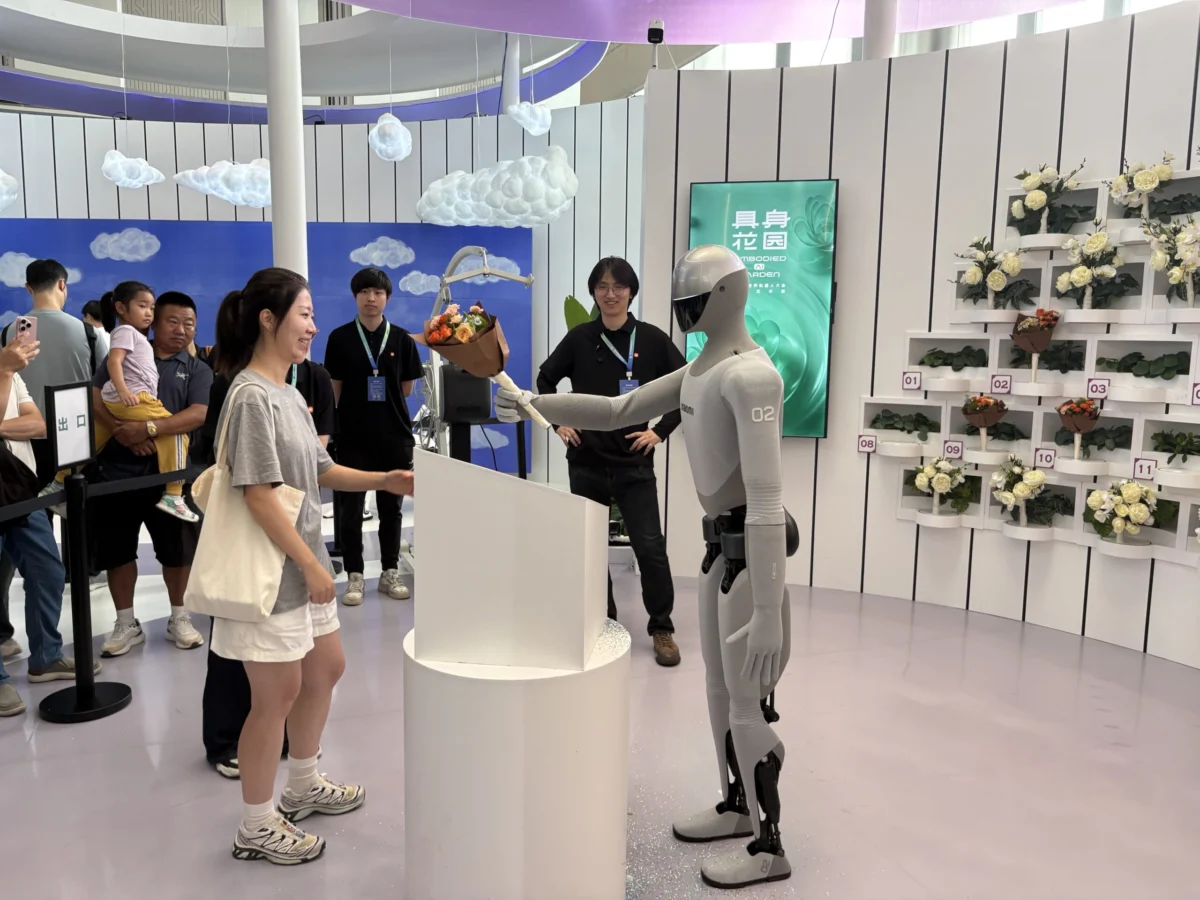
BEIJING – The aspirational vision of humanoid robots seamlessly integrating into daily life and the workforce faces significant technological and geopolitical headwinds, a reality underscored by industry leaders at the World Robot Conference (WRC) and the co-located World Humanoid Conference (WHC) held in Beijing in August 2026. Despite a flurry of innovation and substantial investment, the prevailing sentiment among experts is that the technology is not yet mature enough to meet the high expectations of widespread deployment, compounded by rising international trade barriers.
The State of Humanoid Robotics: A Chasm Between Ambition and Reality
The conferences, global focal points for robotics research and commercialization, convened thousands of researchers, engineers, executives, and policymakers. Attendees witnessed impressive demonstrations, including Chinese consumer electronics giant Xiaomi showcasing its latest humanoid prototype. Yet, behind the spectacle, a pragmatic discussion unfolded regarding the fundamental challenges impeding the industry’s progress.
Wang Xingxing, founder of Unitree Robotics, a company that recently experienced a meteoric 460% surge on its IPO day before a subsequent 18.7% drop, articulated the core dilemma. "Robots are not yet as efficient as humans, and take time to learn new skills, creating a bottleneck for the industry," Wang stated, echoing concerns across the sector. His remarks underscored the significant hurdles humanoid robots must overcome to truly enter and contribute meaningfully to the human workforce. The transient nature of Unitree’s stock performance highlighted the market’s fluctuating confidence, reflecting the speculative nature of early-stage advanced robotics investments.
The primary impediment identified by industry leaders is the gap between sophisticated robotic prototypes and commercially viable, consistently reliable solutions. While laboratories worldwide can demonstrate impressive individual feats – a robot walking, picking up objects, or even performing rudimentary tasks – scaling these capabilities to real-world, unpredictable environments with human-level efficiency and adaptability remains a monumental engineering challenge. This gap is often termed the "last mile problem" in robotics, referring to the difficulty of perfecting tasks beyond an 80% or 90% success rate to near-flawless execution required in industrial or service settings.
Geopolitical Undercurrents: The FCC’s Restrictive Measures
Adding another layer of complexity to the already intricate landscape, the U.S. Federal Communications Commission (FCC) announced in July 2026 its decision to add foreign-made advanced robotic devices, including humanoids, to a list restricting imports to the U.S. While the FCC’s statement did not explicitly name any country, the move was widely interpreted as targeting Chinese manufacturers amidst escalating technological competition and national security concerns between Washington and Beijing. The FCC clarified that retailers could still import models previously approved, but the broader implication signals a growing fragmentation in the global technology supply chain.
Jeff Burnstein, president of the Association for Advancing Automation (A3), downplayed the immediate impact of the FCC’s restriction on the humanoid sector within the U.S. "The impact of that limitation isn’t that great right now because there aren’t that many humanoids being used in the U.S.," Burnstein told CNBC. He highlighted that the more significant impact would likely be felt in the autonomous mobile robots (AMRs) segment, which is far more prevalent in U.S. factories and logistics centers than humanoids currently are. This distinction underscores the nascent stage of humanoid robot adoption compared to other, more established categories of industrial automation.
The FCC’s decision is part of a broader U.S. strategy to de-risk its supply chains and protect critical infrastructure and data from potential foreign adversaries. This approach mirrors similar actions taken in other high-tech sectors, such as telecommunications and semiconductors. For the robotics industry, it raises concerns about market access, supply chain diversification, and the potential for a bifurcated global ecosystem where different regions develop and deploy distinct technological standards and platforms. Chinese manufacturers, in response, are expected to double down on domestic innovation and expand into non-U.S. markets, potentially accelerating the development of an independent robotics ecosystem.
Market Demands: Solutions, Not Just Humanoids
A critical insight shared at the conference was the pragmatic approach customers are taking toward automation. "What I hear from customers in the U.S. [is that] ‘we want solutions. We have a problem. We need a solution. We don’t care if it’s a humanoid. We don’t care if it’s a traditional robot, a collaborative robot. We don’t even care if it’s a robot. We need a solution," Burnstein emphasized. This sentiment places the onus squarely on humanoid developers to demonstrate clear, cost-effective, and reliable applications that solve specific business problems, rather than merely showcasing advanced technology for its own sake.

The current state of technology means that companies prioritizing efficiency gains are largely focusing on proven robotic solutions – industrial robotic arms for manufacturing, AMRs for logistics, and collaborative robots (cobots) for human-robot teamwork – which offer immediate and measurable returns on investment. Humanoids, while captivating, often require substantial upfront investment in R&D and deployment, with less certain short-term returns. For humanoids to gain traction, they must prove their unique value proposition in scenarios where traditional robots fall short, perhaps in highly unstructured environments or tasks requiring fine motor skills and adaptability that only a human-like form factor can provide.
The industry’s challenge, therefore, is not just technological advancement but also market education and product-market fit. Humanoid players must present compelling business cases, demonstrating affordability, inherent safety features, and readiness for immediate deployment. This necessitates a shift from purely engineering-driven development to a more customer-centric approach, where understanding specific pain points in industries like healthcare, hospitality, or elder care drives design and functionality.
Case Study: Keenon Robotics’ Hybrid Approach
Amidst the broader industry discussions, examples of pragmatic innovation emerged. Keenon Robotics, a Shanghai-based startup, offered a glimpse into a hybrid strategy. Wan Bin, Keenon’s COO, detailed how the company is developing humanoids to work in conjunction with simpler, more specialized delivery robots. For instance, in hotels, Keenon’s delivery robots might transport linens to a floor, while a more dexterous humanoid could then handle the nuanced task of sorting and placing them in individual rooms, a process that requires a higher degree of manipulation and environmental awareness. Keenon’s business partners already include major players like Buffalo Wild Wings and Hilton, demonstrating the viability of their established product lines.
Wan Bin candidly addressed the engineering complexities, stating, "Completing 50% of a task well is relatively easy, even 80%. But to reach a 99.9% completion rate really tests engineering and training capabilities." This statement encapsulates the immense difficulty of achieving human-level reliability in complex tasks. While a robot successfully delivering a tray of food 80% of the time might be acceptable in some contexts, a 99.9% success rate is essential for critical services or large-scale adoption, where even a small percentage of failures can lead to significant operational disruptions and costs.
Keenon’s impressive deployment figures — having shipped over 100,000 robots, with projections to exceed 150,000 units by the end of next year — highlight the success of specialized, purpose-built robots in clearly defined roles. Their foray into humanoids suggests a strategic, incremental approach, leveraging their existing expertise in navigation and service robotics to tackle more complex, human-centric tasks. This evolutionary path, rather than a revolutionary leap, may represent a more realistic trajectory for humanoid integration.
The Road Ahead: Investment, Innovation, and Interoperability
The global robotics market is projected to continue its robust growth, with various reports indicating a compound annual growth rate (CAGR) exceeding 15% for the overall market through the next decade, potentially reaching hundreds of billions of dollars. Humanoid robotics, while a smaller segment, is attracting significant venture capital and strategic investments, driven by the long-term vision of general-purpose AI embodied in a physical form. Companies like Agility Robotics, Sanctuary AI, and Tesla Bot (Optimus) in the West, alongside Xiaomi, Unitree, and others in China, are pouring resources into R&D, believing that the "ChatGPT moment" for robotics – a breakthrough that unlocks widespread utility – is on the horizon.
However, the path forward is fraught with challenges. Technologically, advancements are needed in areas such as artificial intelligence for better decision-making and learning, more sophisticated sensor fusion for environmental perception, lighter and stronger materials for improved agility and payload capacity, and more energy-dense batteries for extended operational times. The development of robust, open-source software platforms and standardized interfaces will also be crucial for fostering innovation and interoperability across different manufacturers and applications.
From a geopolitical perspective, the U.S. FCC ban is a clear signal of increased scrutiny and potential fragmentation. This could lead to a divergence in technological standards and product offerings between different geopolitical blocs. While it may spur domestic innovation in restricted markets, it could also hinder global collaboration and economies of scale, potentially slowing down overall progress. Manufacturers will need to navigate these complex regulatory landscapes, potentially tailoring products for different markets or seeking to establish new global partnerships.
Ultimately, the World Humanoid Conference in Beijing served as a dual mirror, reflecting both the dazzling potential and the stark realities of humanoid robotics. While the dream of intelligent, dexterous robots working alongside humans remains a powerful motivator, the industry must first conquer formidable engineering hurdles, address market demands for practical solutions, and adapt to an increasingly complex geopolitical environment. The journey from prototype to pervasive presence is long, demanding sustained innovation, strategic investment, and a pragmatic understanding of where robots can truly deliver value today and in the foreseeable future.

0 Comments