
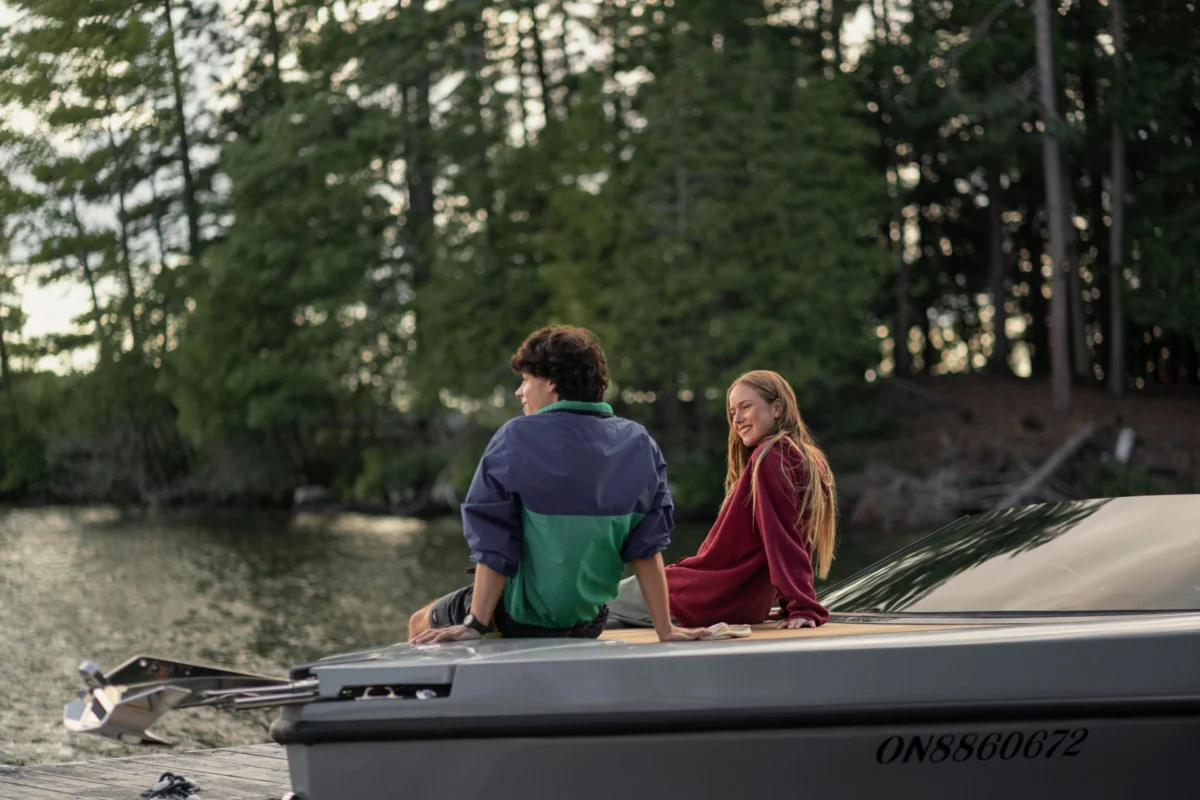
Sterling Point has emerged as a significant addition to the burgeoning genre of young adult (YA) dramas, capturing a global audience through its blend of coming-of-age tropes and high-production value settings. The series, which debuted on Prime Video, follows the journey of Annie Jacobson, portrayed by Ella Rubin, and her brother Connor, played by Keen Ruffalo. Following the death of their adoptive father in New York City, the siblings discover an unexpected inheritance: an estate known as Sterling Point, located on a remote island in the Muskoka region of Ontario, Canada. This narrative pivot from the urban density of Manhattan to the rugged, pristine wilderness of Northern Ontario serves as the foundational conflict of the series, as Annie seeks to uncover the truth about her late mother’s history and a grandfather she never knew.
The production’s commitment to authenticity is a hallmark of the series, eschewing traditional soundstages for on-location filming in the heart of Canada’s "Cottage Country." By utilizing the actual geography of Lake Muskoka, the creators have tapped into a specific aesthetic that mirrors the recent success of other YA hits such as Heated Rivalry and Off Campus. This trend reflects a broader shift in the streaming industry toward "place-based" storytelling, where the environment serves as a central character rather than a mere backdrop.

Narrative Foundations and Production Chronology
The development of Sterling Point was spearheaded by creator, director, and co-showrunner Megan Park. Park, a native of Lindsay, Ontario—located near the filming region—brought a local sensibility to the project. The production timeline was strategically set between June and October, allowing the crew to capture the full spectrum of a Canadian summer, from the vibrant greens of early July to the crisp, atmospheric shifts of the autumn shoulder season.
The series begins with Annie and Connor living a quintessentially metropolitan life in New York. The transition to Sterling Point is framed as both a mystery and a homecoming. The plot follows Annie as she integrates into a close-knit lakeside community, discovering that the serene waters of Lake Muskoka hide complex social hierarchies and long-buried family secrets. This "fish-out-of-water" narrative is supported by a cast of rising talents, including Daniel Quinn-Toye, who plays Rory, a local whose life becomes inextricably linked with Annie’s investigation.
Geographic Specifics: The Muskoka Filming Sites
Unlike many productions that utilize tax-incentivized hubs like Vancouver or Atlanta to stand in for other locations, Sterling Point was filmed almost entirely within the District Municipality of Muskoka. This region, often referred to as the "Hamptons of the North," is characterized by its granite shores, towering pines, and expansive lake systems.

Lake Muskoka and the Central Hub
The primary filming occurred on and around Lake Muskoka, the largest of the three main lakes in the region. The production team utilized the natural topography to emphasize the isolation of Sterling Point. According to executive producer Dani Gorin, the contrast between New York’s verticality and Muskoka’s horizontal, water-bound landscape was essential to the show’s visual language. The use of real islands and watercraft provided a level of immersion that digital effects could not replicate.
Mortimer’s Marina
A key location identified by local residents and frequent visitors is Mortimer’s Marina. Situated on Lake Muskoka, this site serves as a vital community hub in real life and within the show’s fictional universe. In the series, the marina acts as a point of intersection for the "summer people" and the year-round locals. Established as a family-run business, Mortimer’s Marina offers a full suite of services, including boat storage and a seasonal café. Its inclusion in the series grounds the drama in the actual logistical realities of island life, where the marina is the gateway to the mainland.
Sparrow Lake Camp
The production also featured Sparrow Lake Camp, a site with deep historical roots in the region. While the camp has operated as a United Church summer camp since 1912, its history extends much further. The area was originally inhabited by Indigenous peoples for centuries before being developed as a resort by the Massey family—one of Canada’s most prominent industrialist dynasties—in the late 19th century. By filming at Sparrow Lake, the production captured the nostalgic, communal atmosphere of summer camp culture, which is a staple of the North American youth experience.

Socio-Economic Context and Thematic Depth
Sterling Point does not shy away from the complex social dynamics of the Muskoka region. The production notes and statements from the showrunners indicate a conscious effort to address the area’s history and current economic climate. This includes the dispossession of Indigenous lands, a historical fact that informs the backdrop of many rural Canadian settings.
Furthermore, the show explores the tension between generational cottage owners and the influx of new wealth. In recent decades, Muskoka has seen a surge in "megacottages"—multimillion-dollar estates that have significantly altered the shoreline and the local economy. Megan Park noted that the series aims to showcase "Muskoka for Muskoka," which includes exploring the class divide and the gentrification of the wilderness. This thematic layer adds a degree of realism often missing from traditional YA dramas, positioning Sterling Point as a more mature entry in the genre.
Technical Execution and Visual Identity
The visual aesthetic of Sterling Point was crafted by Director of Photography Kristen Correll, a frequent collaborator of Megan Park. Shooting on water presents significant technical challenges, including fluctuating light conditions, camera stability on boats, and the logistical coordination of marine safety crews.

Correll’s approach focused on "photographing the place honestly," utilizing natural light to capture the shimmering quality of the lake and the dense shadows of the boreal forest. The decision to film during the golden hours of the Canadian summer provides the series with a warm, nostalgic glow that contrasts with the cooler, sharper tones used in the New York-based flashback sequences. This visual dichotomy reinforces the emotional arc of the characters as they transition from grief to discovery.
The Rising Trend of "Set-Jetting" and Tourism Impact
The release of Sterling Point is expected to contribute to the "set-jetting" phenomenon, a travel trend where viewers visit the real-life locations of their favorite television shows and films. According to recent tourism data, productions set in picturesque locales often lead to a measurable increase in local travel inquiries.
For the Muskoka region, which already boasts a robust tourism industry, the global reach of Prime Video provides an opportunity to market the area to a younger, international demographic. Local businesses, such as the aforementioned Mortimer’s Marina, stand to benefit from this increased visibility. However, the show’s exploration of gentrification also serves as a cautionary tale regarding the environmental and social pressures that accompany such popularity.

Broader Implications for the Young Adult Genre
The success of Sterling Point reflects a broader strategy by streaming platforms to diversify their YA portfolios. By moving away from the supernatural or dystopian themes that dominated the 2010s, platforms like Prime Video and Netflix are leaning into "contemporary realism." Shows like The Shards, which explores 1980s Los Angeles, and Heated Rivalry, which focuses on the professional sports world, indicate a shift toward character-driven narratives rooted in specific cultural or geographic niches.
Sterling Point fits into this evolution by offering a story that is as much about the setting as it is about the protagonists. The series leverages the universal appeal of "summer break" while grounding it in a uniquely Canadian context. This specificity, far from alienating global audiences, appears to enhance the show’s appeal, as viewers increasingly seek out authentic, atmospheric storytelling.
Official Responses and Industry Reception
Industry analysts have noted that Sterling Point’s production model—focusing on local talent and authentic locations—is a sustainable path forward for Canadian-based productions. By showcasing the natural beauty and historical complexity of Ontario, the series promotes the Canadian film industry’s capability to produce world-class content that resonates globally.

In statements regarding the show’s release, Prime Video executives emphasized the importance of Megan Park’s vision in bringing an "untold side of the Canadian experience" to the screen. The reception from critics has highlighted the chemistry between Rubin and Ruffalo, as well as the show’s ability to balance teen drama with more serious inquiries into heritage and identity.
As Sterling Point continues to gain traction, it stands as a testament to the power of place in modern television. By anchoring its mystery in the granite and water of Lake Muskoka, the series has created a lasting visual and emotional imprint, ensuring that the location remains as memorable as the story itself. The series is currently available for streaming on Prime Video, offering a cinematic window into the complexities of the Canadian summer.

0 Comments