
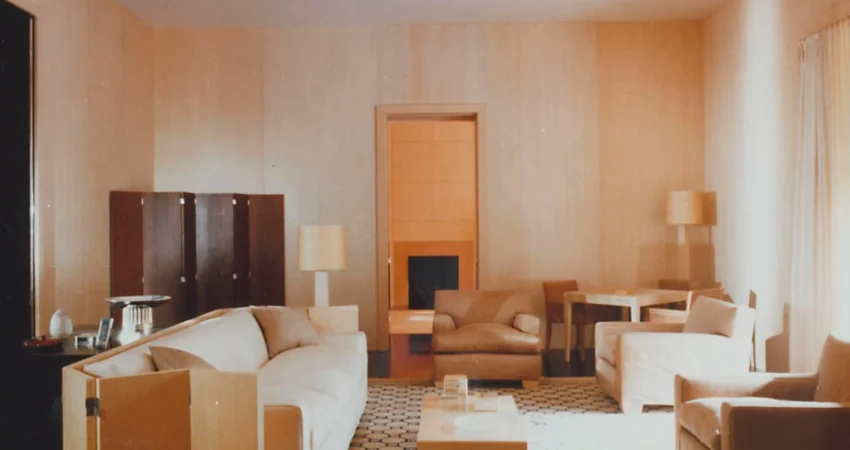
In the vibrant intellectual and artistic milieu of early 1920s Paris, the legendary French poet and playwright Jean Cocteau paid a visit to the Left Bank apartment of the acclaimed Parisian decorator Jean-Michel Frank. Overheard by onlookers, Cocteau delivered a famously witty, yet pointed, critique: "This fellow is charming. Very charming, really. What a shame he’s been burglarized." This seemingly paradoxical observation was, in fact, a testament to Frank’s radical approach to interior design, one that prioritized an almost austere minimalism, famously dubbed the "strange luxury of nothingness" by his prominent client, the Nobel laureate François Mauriac. Cocteau’s remark highlighted the stark, uncluttered aesthetic Frank cultivated, a space deliberately stripped of ornate artworks, elaborate moldings, and even much of its expected furniture, creating an environment that spoke volumes through its very absence.
Jean-Michel Frank, a figure whose influence permeated the design world of the interwar period and beyond, was a pioneer in redefining luxury. Eschewing ostentation for a refined simplicity, his philosophy resonated with a generation seeking a departure from the excesses of previous eras. His approach was not merely about emptiness, but about a carefully curated scarcity that imbued the remaining elements with profound significance. This deliberate reduction of decorative elements served to elevate the quality of materials and the structural integrity of the chosen furnishings, a stark contrast to the prevailing trends of opulence.
The furniture Frank himself employed, both in his personal spaces and for his discerning clientele, mirrored this minimalist ethos. Some design historians speculate that this approach was an extreme, yet sophisticated, reinterpretation of the streamlined 18th-century furniture styles, particularly those associated with Louis XVI, which were experiencing a notable resurgence in popularity at the time. Frank took the inherent elegance and proportional harmony of these historical pieces and distilled them to their absolute essence, creating forms that were both timeless and strikingly modern.

The Upholstered Back Armchair: A Masterclass in Simplicity
One of Frank’s earliest and most iconic designs, conceived in 1923, exemplifies this design philosophy: the upholstered back armchair. This piece, a blocky yet elegantly proportioned seating solution, featured subtly beveled feet and was meticulously produced by Adolphe Chanaux, Frank’s trusted cabinetmaker. The chair was offered in a range of sophisticated finishes, including rich oak sheathed in luxurious shearling, supple leather, or tactile wool. Its design was intentionally understated, allowing the quality of the materials and the clean lines to speak for themselves.
The impact of this armchair was immediate and far-reaching. It found its way into the sophisticated Paris salon of arts patrons Charles and Marie-Laure de Noailles, tastemakers whose patronage fostered some of the most avant-garde artistic endeavors of the era. The chair also graced the opulent San Francisco penthouse of American scion Charles Templeton Crocker, a prominent figure in California’s social and cultural landscape. Despite its presence in such high-profile settings, the armchair’s design was so inherently simple that it possessed the remarkable ability to blend seamlessly into its surroundings, often eluding immediate notice, a testament to Frank’s mastery of subtle integration.
The choice of materials, while seemingly restrained, was crucial to the chair’s luxurious appeal. Shearling, with its soft texture and natural warmth, offered an invitation to comfort. Leather, a classic choice for durability and elegance, lent a sense of gravitas. Wool, in its various weaves, provided a tactile richness. These materials, combined with the chair’s robust construction and refined silhouette, created a piece that was both visually understated and deeply comfortable.
A Resurgence of Design: Ecart and Pierre Yovanovitch
The enduring appeal of Jean-Michel Frank’s work has transcended decades, solidifying his position as a seminal figure in 20th-century design. This timeless quality has recently been recognized and revitalized by AD100 interior designer Pierre Yovanovitch. In 2024, Yovanovitch acquired Ecart, a heritage brand founded in 1978 by André Putman. Ecart has long been dedicated to reissuing the furniture designs of Frank and other influential designers, preserving their legacy for contemporary audiences.

Yovanovitch, an ardent admirer of Frank’s aesthetic, articulated the profound impact of these designs, stating, "The style is so sharp—at the end there’s actually no style, which is what makes it so timeless." This sentiment encapsulates the paradoxical nature of Frank’s genius: by stripping away overt stylistic markers, he achieved a universal and enduring aesthetic. The upcoming exhibition at Ecart’s new Paris gallery is set to showcase a curated selection of significant Frank designs, including the upholstered back armchair. Yovanovitch shared his observations on the public’s reaction to these pieces: "Every time we put one in the window people stop, come in, and say, ‘What is that?’" This recurring question underscores the captivating power of Frank’s work, which continues to intrigue and inspire, even in an era saturated with design trends.
The acquisition of Ecart by Yovanovitch signals a renewed commitment to promoting and reinterpreting the work of designers like Frank. This move ensures that these historically significant pieces will not only be preserved but also introduced to a new generation of designers and collectors. The gallery’s focus on important Frank designs, including the celebrated armchair, promises to reignite interest in his unique contribution to interior design, emphasizing his philosophy of "less is more" in a way that feels both relevant and aspirational.
The GOAT of Chairs: Enduring Comfort and Proportions
The profound impact of Frank’s upholstered back armchair is not confined to design circles; it has also garnered enthusiastic endorsement from contemporary interior designers. AD100 designer Neal Beckstedt, known for his ability to blend modern sensibilities with timeless elegance, is a vocal proponent of this iconic piece. Beckstedt acquired a pair of these armchairs at auction several years ago and subsequently reupholstered them in a casual blue linen for his Sag Harbor beach house. He described the experience of using them: "On a comfort scale of 1 to 10, it’s a 20." This hyperbolic praise highlights the exceptional comfort and thoughtful ergonomics of the design.
Beckstedt further elaborated on the chair’s merits, calling it "the GOAT of chairs," a widely recognized acronym for "Greatest Of All Time." He attributed this distinction to its "perfect proportions" and "perfect comfort." These qualities, when combined, create a seating experience that is both aesthetically pleasing and supremely functional. The chair’s ability to transcend fleeting trends and remain a benchmark of design excellence speaks volumes about Frank’s enduring vision.

The longevity of the upholstered back armchair can be attributed to several key factors:
- Timeless Proportions: Frank’s understanding of scale and balance ensured that the armchair’s dimensions are harmonious and adaptable to a variety of interior settings.
- Material Quality: The use of premium materials like shearling, leather, and wool contributes to both the chair’s tactile appeal and its long-term durability.
- Understated Form: The deliberate absence of ornamentation allows the chair’s inherent structural beauty and comfort to be the primary focus.
- Versatility: Whether upholstered in luxurious fabrics or more casual linens, the armchair’s form adapts effortlessly, making it suitable for both formal and informal environments.
The chair’s consistent presence in contemporary design projects, such as its appearance in Neal Beckstedt’s Sag Harbor beach house, demonstrates its continued relevance. This enduring popularity suggests that Frank’s “strange luxury of nothingness” has evolved from a radical statement to a sophisticated design principle, one that continues to inform and inspire the creation of beautiful and functional living spaces. The ongoing reissue and exhibition of these seminal pieces by Ecart, under the stewardship of Pierre Yovanovitch, ensures that the legacy of Jean-Michel Frank and his unparalleled contribution to the art of minimalist luxury will continue to be appreciated for generations to come. The story of this armchair, from its audacious debut to its current status as a design icon, is a compelling narrative of how simplicity, executed with profound understanding and exquisite craftsmanship, can achieve the ultimate form of luxury.

0 Comments