
Security experts and law enforcement agencies are increasingly advocating for a simplified, habit-based approach to residential safety known as the 9 p.m. routine. This protocol, popularized by security consultant Spencer Coursen and various sheriff’s departments across the United States, emphasizes that the most sophisticated technology is ineffective if basic physical security measures are neglected. The initiative stems from a growing realization among security professionals that a significant percentage of residential thefts and home invasions are crimes of opportunity, facilitated by unlocked doors, open garage entries, and valuables left in plain sight within parked vehicles.
The foundational concept of the 9 p.m. routine was highlighted in the professional experiences of Spencer Coursen, author of The Safety Trap. In one illustrative case, a high-net-worth client sought to install a multi-million-dollar security system following the theft of a luxury vehicle from his property. Investigations revealed that the thief had entered the residence through an unlocked front door, retrieved the key fobs from a bowl located in the foyer, and driven the vehicle away while the owner was present in an upstairs bedroom. When Coursen inquired if the door had been locked, the client admitted it had not. This incident underscores a critical gap in modern home security: the reliance on expensive "security theater" at the expense of fundamental behavioral habits.
Statistical Overview of Residential Burglary
To understand the necessity of a nightly routine, one must examine the empirical data regarding domestic crimes. According to the Federal Bureau of Investigation (FBI) Uniform Crime Reporting (UCR) program, property crimes result in billions of dollars in losses annually. A granular look at burglary statistics reveals that approximately 34% of burglars enter through the front door, while another 22% utilize back doors. Perhaps most striking is that nearly 40% of residential burglaries are "unlawful entries," meaning the perpetrator did not have to use force because a door or window was left unlocked.
Data from the Bureau of Justice Statistics (BJS) further indicates that the majority of residential burglaries occur during the day when occupants are at work; however, "home invasions"—burglaries that occur while residents are present—are more likely to happen during evening or nighttime hours. These incidents carry a much higher risk of violent confrontation. Law enforcement analysts suggest that a consistent nightly routine serves as a "target hardening" measure, significantly reducing the "opportunity" variable in the criminal equation (Opportunity + Desire + Ability = Crime).
The Chronology of the #9PMRoutine Movement
The formalized "9 p.m. routine" began as a social media campaign initiated by the Pasco County Sheriff’s Office in Florida in 2017. The agency recognized that a disproportionate number of vehicle burglaries and residential thefts reported to their office involved unlocked points of entry. By creating a nightly digital reminder for citizens to check their locks, the agency sought to foster a community-wide culture of vigilance.
- Phase I: Identification (2016-2017): Law enforcement agencies noted a trend in "crimes of opportunity" where suspects would walk through neighborhoods pulling on car door handles. If a door was locked, they moved to the next house.
- Phase II: Implementation (2017): The Pasco County Sheriff’s Office launched the #9PMRoutine hashtag on Twitter and Facebook, prompting residents at 9:00 p.m. every evening to perform a security sweep.
- Phase III: National Adoption (2018-Present): The campaign was adopted by hundreds of police departments globally, from the LAPD to the New South Wales Police in Australia. It has since evolved from a social media trend into a standard recommendation for personal safety experts.
Components of a Comprehensive Security Check
The 9 p.m. routine is designed to be completed in less than five minutes, focusing on the most common points of failure in home defense. Security professionals recommend a systematic "outside-in" approach during this nightly sweep.
Vehicle Security
The routine begins in the driveway or garage. Statistics show that vehicles are often the primary target for burglars looking for "easy wins." Homeowners are advised to:
- Remove all valuables, including electronics, bags, and loose currency.
- Ensure that garage door openers are not left in vehicles parked outside, as these provide a "key" to the rest of the home.
- Verify that all windows are rolled up and doors are locked.
Points of Entry
Once the vehicles are secured, the focus shifts to the perimeter of the residence. This involves:
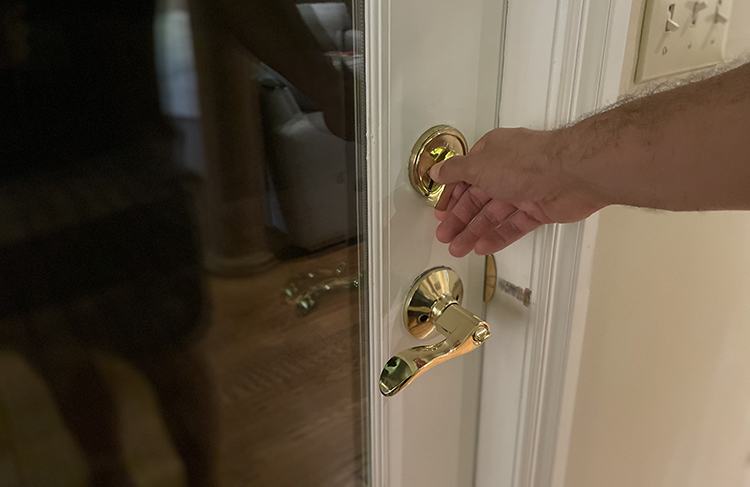
- Physically checking that all exterior doors—front, back, and side—are locked and deadbolted.
- Verifying that all ground-floor windows and accessible second-story windows are latched.
- Ensuring the "man door" (the pedestrian door leading from the garage into the house) is locked, as this is a frequently overlooked entry point.
Lighting and Visibility
Adequate lighting serves as a significant deterrent. The nightly routine should include:
- Confirming that exterior motion-sensor lights are functional.
- Turning on porch or perimeter lights that provide visibility without creating deep shadows where an intruder might hide.
- Closing blinds or curtains on the ground floor to prevent "window shopping" by potential criminals who may be scouting for high-value items like televisions or computers.
Expert Analysis: The Psychology of Habit vs. Technology
The efficacy of the 9 p.m. routine lies in the psychology of habit formation. Spencer Coursen argues that many individuals suffer from a "safety trap," a false sense of security derived from living in low-crime neighborhoods or owning expensive alarm systems. This complacency often leads to the "memory failure" mentioned in the Art of Manliness report, where a homeowner assumes a door is locked because it is "usually" locked.
Security experts suggest that the human brain is prone to "normalcy bias"—the belief that because a negative event has not happened in the past, it will not happen in the future. By tethering security checks to a specific time (9 p.m.), homeowners move the action from the realm of "remembering" to the realm of "automated behavior." This transition reduces the cognitive load required to maintain safety and ensures that the most basic, yet most effective, defenses are always in place.
Furthermore, from a tactical perspective, the 9 p.m. routine aligns with the concept of "Environmental Design" (CPTED – Crime Prevention Through Environmental Design). By consistently locking doors and removing valuables, residents are signaling to potential "scouts" that the home is a "hard target." Criminals, who generally seek the path of least resistance, are statistically likely to bypass homes that demonstrate active maintenance and security awareness.
Broader Implications and Official Responses
The widespread adoption of the 9 p.m. routine has garnered positive feedback from insurance companies and public safety officials. Many insurance providers note that a significant portion of claims related to theft could be avoided through basic diligence. While most standard homeowners’ insurance policies cover theft regardless of whether the door was locked, some "negligence" clauses or premium discounts may eventually be tied to the presence of documented security habits or smart-home logs that prove consistent locking.
Law enforcement officials emphasize that the 9 p.m. routine also has a collective benefit. When an entire neighborhood adopts the routine, it creates a "hostile environment" for opportunistic criminals. Sergeant Kim Montes of the Florida Highway Patrol has noted in public briefings that "neighborhoods that engage in these collective safety habits see a measurable dip in property crime rates compared to adjacent areas that do not."
Conclusion: The Future of Residential Security
As smart-home technology continues to evolve, the 9 p.m. routine is becoming increasingly digitized. Smart locks, automated garage door controllers, and integrated security hubs now allow homeowners to perform their nightly checks via smartphone. However, experts like Coursen caution against total reliance on automation. A physical "walk-through" allows a resident to notice things a sensor might miss, such as a window that is closed but not latched, or a strange vehicle loitering in the cul-de-sac.
The 9 p.m. routine remains a cornerstone of modern personal protection because it addresses the human element of security. In an era of high-tech surveillance, the simplest act—turning a deadbolt—remains the most effective deterrent against the most common threats. As law enforcement agencies continue to promote this initiative, the goal is to transform "security" from a product one buys into a practice one performs. The ultimate objective is the preservation of the home as a sanctuary, achieved through five minutes of disciplined, nightly vigilance.

0 Comments