
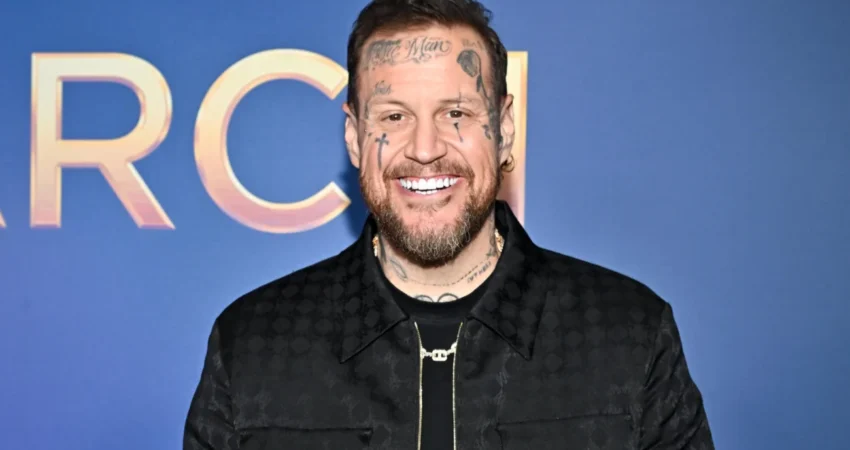
The intersection of celebrity health, political discourse, and public scrutiny reached a new flashpoint this week as country music sensation Jelly Roll, born Jason DeFord, addressed recent allegations regarding his physical transformation. During a featured appearance on Jimmy Kimmel Live!, the Grammy-nominated artist responded to televised remarks made by Fox News host Jesse Watters, who suggested that Jelly Roll’s recent political commentary was a potential "side effect" of the weight-loss medication Ozempic. The exchange has sparked a broader conversation regarding the transparency of celebrity health journeys and the increasing tendency of media personalities to weaponize medical narratives within political contexts.
The controversy began when Jesse Watters aired a segment on his Fox News program targeting Jelly Roll’s comedic criticisms of former President Donald Trump. Watters utilized the artist’s physical change as a rhetorical device, jokingly diagnosing him with "Trump Derangement Syndrome" (TDS)—a term frequently employed by conservative commentators to describe intense negative reactions to the 45th president. Watters further suggested that Jelly Roll’s weight loss was the result of GLP-1 receptor agonists, specifically Ozempic, and humorously proposed that the drug should carry a warning label for increased risk of political irritability.
The Response on Jimmy Kimmel Live!
Appearing before a national audience, Jelly Roll utilized his platform to clarify the timeline and methodology of his health transformation. With his characteristic blend of self-deprecating humor and raw honesty, the singer-songwriter directly refuted the claim that he utilized Ozempic or similar weight-loss injections.
"Okay, first of all, Jesse, I’ll have you know Ozempic is the only drug I haven’t tried," Jelly Roll quipped, referencing his well-documented history with substance abuse and incarceration. "I know it sounds unbelievable, but I lost weight the old-fashioned way: cocaine." While the joke elicited laughter from the audience, Jelly Roll quickly pivoted to a more serious defense of his efforts. He emphasized that his fitness journey preceded the current cultural obsession with GLP-1 medications, stating, "I got in shape before the GLP-1 craze started. And I’m kind of proud of the fact that I did it through diet and exercise."
The artist likened his traditional approach to a "horse and buggy" being purchased right before the invention of the automobile, acknowledging that while modern pharmaceutical aids have become the industry standard, his results were the product of a rigorous, multi-year commitment to lifestyle modification.
Chronology of a 275-Pound Transformation
To understand the scope of Jelly Roll’s health journey, it is necessary to look at the timeline of his physical and professional evolution. At his heaviest, the singer weighed approximately 540 pounds. His journey toward a healthier lifestyle began in earnest several years ago, long before Ozempic became a household name in 2023 and 2024.
According to medical records and personal accounts shared in interviews with Men’s Health and other outlets, Jelly Roll’s transformation involved a total loss of roughly 275 pounds, bringing him down to a current weight of approximately 265 pounds. This change did not occur overnight but was the result of a phased approach to wellness that integrated medical intervention with physical discipline.
In the early stages of his journey, Jelly Roll admitted to briefly experimenting with weight-loss medication. However, this trial lasted only two weeks. The artist reported that the side effects, particularly severe acid reflux, posed a significant threat to his professional career. As a vocalist, the risk of stomach acid damaging his vocal cords was a deterrent that led him to abandon pharmaceutical weight-loss aids in favor of a holistic medical protocol.
Medical Protocol and Professional Support
The "old-fashioned way" described by Jelly Roll was, in reality, a sophisticated medical and nutritional program overseen by specialists. He partnered with Ways2Well, a medical clinic specializing in hormone optimization and comprehensive blood work analysis. This data-driven approach allowed his team to identify specific physiological barriers to weight loss that had plagued him for decades.

The clinical intervention included:
- Metformin Administration: To address insulin resistance, a common metabolic hurdle for individuals with significant adipose tissue.
- Testosterone Replacement Therapy (TRT): Blood tests revealed severe hormone deficits, which can impede muscle growth and energy levels. TRT was utilized to restore his hormonal balance to healthy levels.
- Nutritional Oversight: Jelly Roll employed a full-time chef and nutritionist, Ian Larios, who traveled with him on tour. Larios focused on high-protein, nutrient-dense meals while managing caloric intake to sustain the demands of a high-energy touring schedule.
Physical activity became a cornerstone of his daily routine. Jelly Roll incorporated "weighted walks," saunas, and cold plunges into his regimen. He has spoken candidly about the "misery" of the initial phase of exercise, describing a psychological breakthrough where the physical struggle eventually gave way to a sense of empowerment and improved mental health.
The Political Context: "Trump Derangement Syndrome" and Legislative Rhetoric
The comments by Jesse Watters that prompted Jelly Roll’s response are reflective of a larger trend in American political discourse. The term "Trump Derangement Syndrome" (TDS) has moved beyond punditry and into the legislative sphere. Recently, Representative Warren Davidson introduced the "Trump Derangement Syndrome (TDS) Research Act of 2025." The proposed bill aims to define the phenomenon as a clinical condition marked by "extreme negative reactions" to the former president.
By linking Jelly Roll’s political views to Ozempic, Watters tapped into a burgeoning cultural trope that equates celebrity weight loss with a lack of authenticity or a reliance on "shortcuts." Jelly Roll’s defense of his "hard work" serves as a counter-narrative to the assumption that all rapid physical transformations in Hollywood are chemically induced.
Broader Implications of the "Ozempic Stigma"
The public exchange between a news host and a musician highlights the growing "Ozempic stigma" currently permeating the entertainment industry. As GLP-1 medications like Wegovy and Zepbound see record-breaking prescriptions, celebrities who have lost weight are frequently subjected to "Ozempic shaming," where their physical achievements are dismissed as purely pharmaceutical.
For Jelly Roll, whose brand is built on the concept of "redemption" and "earning" his place in the world, the accusation of using a "shortcut" drug carries weight beyond simple aesthetics. His music often explores themes of struggling against one’s own nature and overcoming the odds. By clarifying that his weight loss was achieved through "diet and exercise," he reinforces the core message of his artistry: that significant life changes require significant personal sacrifice.
Analysis of the Impact on Public Perception
From a journalistic perspective, Jelly Roll’s response is a masterclass in reputation management. By acknowledging his past drug use with humor, he disarms critics who might use his history against him. By providing specific details about his medical team (Ways2Well) and his nutritionist (Ian Larios), he offers a factual foundation that is difficult to dispute with mere speculation.
The impact of this transparency is two-fold. First, it provides a realistic blueprint for individuals struggling with morbid obesity, demonstrating that while medications like Metformin or TRT can be useful tools, they are often secondary to the fundamental requirements of caloric deficit and physical exertion. Second, it challenges the media’s tendency to use health data as a weapon in partisan bickering.
Jelly Roll’s transformation remains one of the most visible success stories in the music industry. His ability to maintain a 275-pound weight loss while managing a grueling career suggests a sustainable lifestyle shift rather than a temporary pharmaceutical fix. As he told Men’s Health, "I’m loving my body… I’ve worked really hard and lost the weight the right way. It’s just a dramatically different world."
As the 2024-2025 political and cultural seasons continue to unfold, the intersection of celebrity health and media commentary is likely to remain a volatile space. However, Jelly Roll’s refusal to let his history be rewritten provides a clear example of an artist taking control of his own narrative in the face of national scrutiny.

0 Comments