
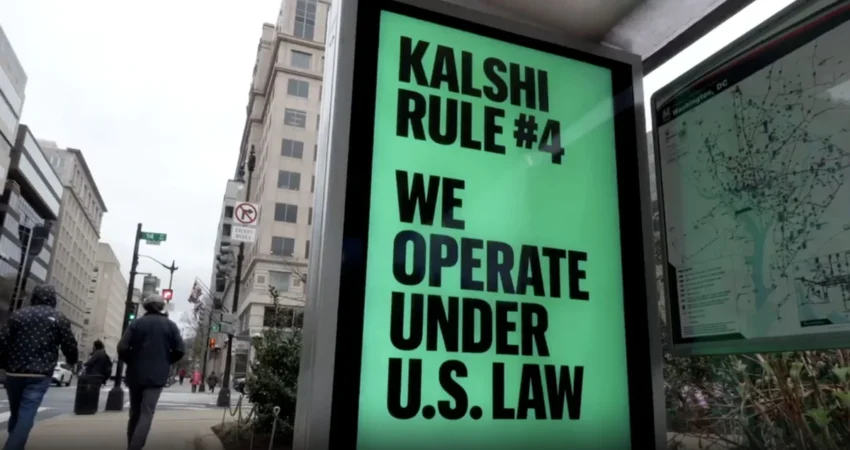
The 9th U.S. Circuit Court of Appeals delivered a significant blow to the burgeoning prediction market industry, unequivocally rejecting requests from prominent platforms Kalshi, Crypto.com, and Robinhood for injunctive relief against the Nevada Gaming Control Board. In a landmark decision, the court concluded that sports-related event contracts, offered by these platforms, do not qualify as financial derivatives regulated by the federal government but are, in fact, a form of sports betting, thus falling under state gaming laws. This ruling creates a direct conflict with an earlier decision by the 3rd U.S. Circuit Court of Appeals, setting the stage for an almost certain review by the Supreme Court of the United States.
The Core of the Conflict: Derivatives vs. Gambling
At the heart of this protracted legal battle lies a fundamental dispute over classification and regulatory jurisdiction. Prediction market platforms like Kalshi, Crypto.com, and Robinhood have introduced "event contracts," which allow users to trade on the outcome of future events, including sports, economic indicators, or political outcomes. These platforms, along with their federal regulator, the Commodity Futures Trading Commission (CFTC), contend that all event contracts, irrespective of their underlying subject matter, are a type of financial derivative known as "swaps." Under the Commodity Exchange Act (CEA), the CFTC asserts exclusive jurisdiction over the regulation of swaps, arguing that this federal oversight preempts state laws.
Conversely, the state of Nevada, through its Gaming Control Board and Attorney General’s office, along with a coalition of 44 other states, argues that sports-related event contracts are merely a thinly veiled form of sports betting. They maintain that the nomenclature "event contract" does not alter the fundamental nature of the transaction, which they believe is gambling and therefore subject to existing state-level gaming regulations. Nevada’s position emphasizes the state’s long-standing authority in regulating its highly controlled and licensed gaming industry, designed to protect consumers and maintain integrity.
The 9th Circuit’s Definitive Stance
The 9th Circuit Court of Appeals sided firmly with Nevada. In its opinion against Kalshi, the court explicitly stated, "The sports event contracts were not ‘swaps’ because they were sports bets." This clear distinction directly challenges the CFTC’s expansive interpretation of its regulatory authority under the CEA. The court’s ruling effectively means that, within the 9th Circuit’s jurisdiction, any event contract tied to a sports outcome will be treated as gambling, making it subject to state-specific licensing and regulatory frameworks.
This decision rejected the appeals lodged by Kalshi, a platform specifically designed for event contract trading, and Crypto.com, a broader cryptocurrency exchange that also features such contracts. Robinhood, a popular retail trading platform that has expanded into offering event contracts, also saw its request for injunctive relief denied. These platforms had sought to prevent Nevada from enforcing its regulations, which threatened to halt their operations within the state on the grounds that their offerings constituted unlicensed gambling.
A Widespread Regulatory Minefield
The conflict over prediction markets extends far beyond Nevada. The legal tussle between state gaming regulators and the CFTC has been intensifying across the nation. Forty-four states have explicitly argued that sports-related event contracts are, in essence, sports betting, not financial derivatives. This widespread opposition highlights a collective concern among states about potential circumvention of established gaming laws, which typically involve stringent licensing, tax regimes, and consumer protection measures.
The CFTC, in its vigorous defense of its perceived exclusive jurisdiction, has even taken the unusual step of suing nine states. These lawsuits underscore the federal agency’s commitment to its position that it holds the sole right to establish rules for prediction markets, regardless of the underlying event. The agency views these markets as innovative financial instruments that fall squarely within its purview of regulating commodity futures, options, and swaps. This aggressive stance by the CFTC indicates a deep-seated belief in the financial nature of these contracts and the agency’s role in fostering market integrity and preventing fraud within this nascent sector.
Official Reactions and Disparate Views
The 9th Circuit’s ruling elicited strong reactions from all parties involved, reflecting the deep divisions in this regulatory debate.
Alcinia Whiters, deputy communications director for the Nevada Attorney General’s office, hailed the decision as a "major victory." In a statement, Whiters articulated the state’s position: "Kalshi sought to sidestep Nevada’s gaming laws by claiming its sports wagering products were federally regulated financial instruments beyond the reach of state regulators. The Ninth Circuit rejected that argument and made clear what we have maintained from the beginning: sports betting does not become something else simply because a company calls it an ‘event contract’… Our office is proud to have defended Nevada’s authority." This statement underscores Nevada’s commitment to preserving its regulatory sovereignty over its highly lucrative and regulated gaming industry.
The Commodity Futures Trading Commission, however, expressed profound disagreement with the court’s interpretation. A CFTC spokesperson, in a statement to CNBC, acknowledged the court’s understanding that swaps are exclusively regulated by the commission but asserted that the court erred in its belief that sports-related event contracts do not fall under that definition. "A derivative contract structured as a swap is a swap regardless of the underlying subject matter – the only exceptions in statute are onions and movie box office receipts," the spokesperson stated, referring to specific, narrow exclusions in the CEA. The spokesperson added, "The Ninth Circuit erred today when it invented a new and atextual exception to the CEA," signaling the agency’s intent to challenge the ruling. The CFTC’s position emphasizes the legal text of the Commodity Exchange Act, arguing that the legislative intent was to grant broad regulatory authority over derivatives, with only highly specific carve-outs.
Prediction market platforms also voiced their dissatisfaction. Jovy Dedaj, Kalshi’s head of litigation, took to X (formerly Twitter) to express his views. He contended that while both the 9th and 3rd Circuits agreed that federal law prevents states from regulating federally licensed exchanges, the 9th Circuit had "overstepped" by unilaterally declaring sports-related event contracts not to be swaps. Dedaj reiterated Kalshi’s argument that Congress, through the Commodity Exchange Act, specifically empowered the CFTC to determine if event contracts related to "gaming" are contrary to the public interest, not individual states. This highlights the platforms’ belief that the CFTC, as the expert federal agency, is best positioned to make such nuanced regulatory judgments.
Robinhood, in a statement, announced its intention to appeal the decision. A spokesperson for the company asserted, "Every eligible customer should have access to these markets, which are federally regulated by the CFTC and offered through our CFTC-registered Futures Commission Merchant." This indicates Robinhood’s commitment to providing these products to its user base, framing them as legitimate, federally regulated investment opportunities. Crypto.com did not respond to requests for comment, maintaining a notable silence on the matter.
The Critical "Circuit Split": A Path to the Supreme Court
The 9th Circuit’s decision is particularly impactful because it creates a direct "circuit split," a situation where different federal appeals courts rule differently on the same legal question. This precise scenario occurred when the 9th Circuit’s ruling contradicted an earlier decision from the 3rd U.S. Circuit Court of Appeals in early April. In that case, the 3rd Circuit had ruled that only the CFTC possesses the jurisdiction to regulate sports-related event contracts, effectively siding with the federal regulator and the prediction market platforms.
Joshua Mitts, a professor at Columbia Law School, succinctly captured the gravity of the situation, stating, "This is a classic circuit split. Ultimately, this is the kind of legal controversy or legal difference of opinion which will make its way to the Supreme Court." A circuit split is one of the primary reasons the U.S. Supreme Court agrees to hear cases, as it signifies a lack of uniform application of federal law across different regions of the country. This divergence creates legal uncertainty and inconsistent regulatory environments, necessitating a definitive ruling from the nation’s highest court.
Background and Evolution of Prediction Markets
Prediction markets, while gaining mainstream attention recently, have a longer history. Early iterations, such as the Iowa Electronic Markets, demonstrated their potential for aggregating information and forecasting outcomes. Commercial platforms like Intrade gained popularity in the early 2000s, allowing individuals to bet on everything from political elections to economic indicators. However, their regulatory status remained ambiguous, leading to shutdowns and legal challenges.
The current wave of prediction market platforms, exemplified by Kalshi, has sought to operate within a clearer regulatory framework by registering with the CFTC and structuring their offerings as financial derivatives. They argue that these markets serve a valuable economic function, allowing individuals to hedge against risks, discover price information, and engage in alternative forms of investment. Proponents highlight their potential to democratize access to sophisticated financial instruments and offer unique insights into future probabilities.
However, critics, particularly state gaming regulators, argue that the line between "trading" and "wagering" becomes dangerously blurred, especially when the underlying event is sports. They point to the inherent similarities between placing a bet on a game’s outcome and purchasing a contract tied to that same outcome. The concern is that without robust state-level gaming oversight, these platforms could bypass consumer protection measures, responsible gambling initiatives, and tax revenues traditionally associated with sports betting.
Implications for the Industry and Consumers
The 9th Circuit’s ruling carries significant implications for various stakeholders:
- Prediction Market Platforms: For Kalshi, Robinhood, and Crypto.com, the decision creates substantial operational hurdles, particularly in states within the 9th Circuit’s jurisdiction (which includes nine western states, Alaska, and Hawaii). They face the daunting prospect of having to comply with a patchwork of state-specific gaming regulations, or potentially cease offering sports-related contracts in these areas. This regulatory fragmentation could severely impact their business models, which rely on a unified, federally regulated market.
- Traditional Sports Betting Industry: The ruling offered immediate relief to established online sportsbooks. Shares of DraftKings jumped 7%, while Flutter Entertainment, parent company of FanDuel, rose over 6%. These companies had seen their stocks hit in the past year due to concerns that prediction markets could disrupt their industry. The 9th Circuit’s decision, by categorizing sports-related event contracts as gambling, temporarily reduces the competitive threat from federally regulated prediction market platforms, solidifying the traditional operators’ position within state-regulated markets. However, the long-term threat remains, as these companies themselves have been rushing to develop their own prediction market exchanges, indicating an acknowledgment of the market’s potential.
- Consumers and Investors: For users of these platforms, the ruling introduces regulatory uncertainty. Depending on their state of residence, their participation in sports-related event contracts could be deemed a regulated financial activity or an illegal form of gambling. A definitive Supreme Court ruling is crucial for providing clarity on legality, access, and the level of consumer protection they can expect.
- Federal vs. State Authority: More broadly, the case touches upon fundamental questions of federal preemption and states’ rights. The Supreme Court’s eventual decision will have profound implications for how novel financial technologies are regulated in the U.S., potentially shaping the balance of power between federal agencies and state authorities across various sectors.
Looking Ahead: The Road to the Supreme Court
With a clear circuit split now established, the path to the Supreme Court appears highly probable. The CFTC and the affected prediction market platforms are expected to file petitions for a writ of certiorari, requesting the Supreme Court to hear their appeals. The Supreme Court typically grants such requests when there is a conflict among circuit courts on a matter of federal law.
The arguments before the Supreme Court would likely center on the interpretation of the Commodity Exchange Act and the scope of the CFTC’s exclusive jurisdiction. The Court would have to determine whether Congress intended for "swaps" to encompass all event contracts, including those tied to sports outcomes, or if states retain the authority to classify such activities as gambling. A definitive ruling from the Supreme Court would provide much-needed national clarity, shaping the future of prediction markets and the broader regulatory landscape for innovative financial instruments.
The 9th Circuit’s ruling marks a pivotal moment in the ongoing debate over prediction markets. It underscores the complexities of regulating new technologies that straddle traditional legal categories, setting the stage for a constitutional and economic showdown that will ultimately be decided at the highest level of the U.S. judicial system.
Disclosure: CNBC and Kalshi have a commercial relationship that includes customer acquisition and a minority investment.

0 Comments