
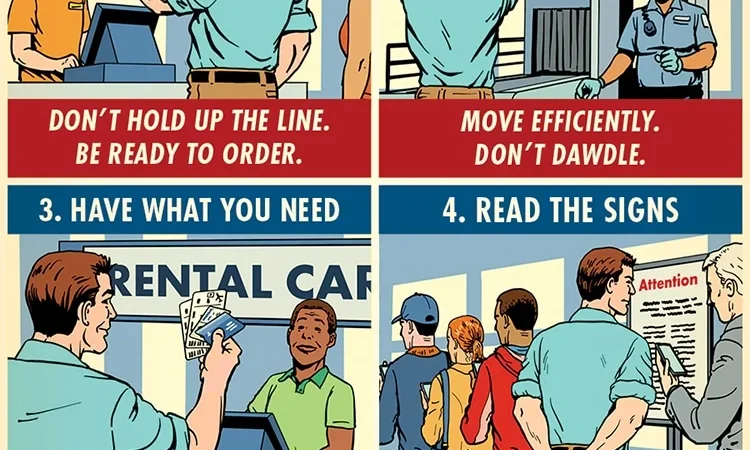
The phenomenon of transactional friction, characterized by a lack of preparation in public service environments, has emerged as a significant point of sociological and economic concern. While the act of standing in a queue is a universal human experience, the increasing frequency of "bottlenecking" caused by individual unpreparedness suggests a decline in social situational awareness. This behavioral shift, often observed in fast-food establishments, travel hubs, and government offices, represents more than a minor annoyance; it signifies a broader erosion of public efficiency and personal agency in an era increasingly dominated by digital distraction.
The Anatomy of Public Inefficiency
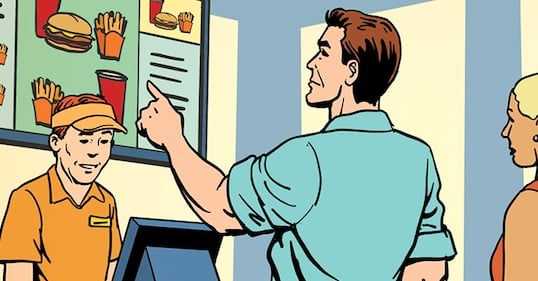
The modern consumer landscape is designed for speed, yet human behavior frequently serves as the primary obstacle to achieving it. A classic illustration of this friction is found in the quick-service restaurant (QSR) industry. Despite the ubiquity of standardized menus at global chains like McDonald’s, service providers frequently report customers reaching the point of sale without having determined their order. This "decision paralysis" occurs even when the customer has spent several minutes in a queue with the menu clearly displayed.
This lack of preparation is not confined to the food industry. In the travel sector, car rental agencies and airport security checkpoints serve as high-stakes environments where unpreparedness causes significant cascading delays. At car rental counters, it is common for travelers to reach the representative before beginning the search for required documentation, such as a driver’s license, credit card, or confirmation number, despite multiple signs and digital prompts advising them to have these items ready.
In government service sectors, such as the United States Postal Service (USPS), the impact of this behavior is even more pronounced. Passport applications, which often require specific appointments and documentation, frequently become flashpoints for conflict. Staff reports indicate that a significant number of individuals attempt to secure services without adhering to posted protocols, leading to administrative delays and heightened social tension within public spaces.
A Chronology of Declining Situational Awareness
The transition from a "heads-up" society to a "heads-down" society has followed a distinct timeline, closely mirroring the integration of mobile technology into daily life.
- The Pre-Digital Era: Prior to the mid-2000s, waiting in line required a degree of environmental engagement. Customers typically observed the menu, read posted signage, and prepared payment methods as a means of passing the time.
- The Rise of the Smartphone (2007–2015): As mobile devices became the primary source of entertainment and information, the "waiting period" transformed into a period of total digital immersion. Environmental scanning—the act of looking around and absorbing information from one’s surroundings—began to decline.
- The Era of Cognitive Offloading (2016–Present): With the advent of apps that handle everything from ordering to navigation, there has been a documented increase in "cognitive offloading." This psychological phenomenon occurs when individuals rely so heavily on technology to manage details that their internal capacity for situational vigilance diminishes.
As a result, many individuals now operate in a state of "environmental sleepwalking," where they are physically present in a space but mentally disconnected from the logistical requirements of that space until the moment of direct interaction.
Supporting Data: The Cost of a Second
The economic implications of these minor delays are substantial when aggregated. According to industrial engineering principles, even a 10-second delay per customer in a high-volume environment can result in significant operational losses.
- Retail and QSR Impact: Research in the Journal of Service Research suggests that perceived wait times are more damaging to customer satisfaction than actual wait times. However, "transactional friction"—the time spent between the customer reaching the counter and the completion of the order—directly impacts the "throughput" of a business. A 15-second delay per customer in a line of ten people adds two and a half minutes to the final person’s wait, increasing the likelihood of "balking" (leaving the line).
- Travel and Logistics: Data from aviation security experts indicate that if every passenger at a TSA checkpoint takes an additional 30 seconds to remove electronics or liquids because they did not read the signage, the total processing time for a single flight’s manifest can be extended by over an hour.
- The "Friction Multiplier": Economists often refer to this as "social friction." When individuals fail to prepare, they impose an "externality" on everyone behind them—a cost in time and frustration for which there is no compensation.
Psychological Perspectives and Expert Reactions
Behavioral scientists point to "inattentional blindness" as a key factor in this trend. Dr. A. K. Pradeep, a specialist in consumer neuroscience, has noted that the human brain, when overwhelmed by digital stimuli, often filters out "static" information like signs and posters. "The brain is looking for movement and novelty on the screen," Pradeep explains. "The printed sign on a post office wall, no matter how important, becomes invisible background noise."
Efficiency experts and service industry consultants have also weighed in on the necessity of "social situational awareness." Many argue that the burden of efficiency has shifted too far toward the service provider. While businesses invest millions in "lean" processes and faster point-of-sale systems, these technological gains are frequently neutralized by a "low-agency" consumer base that is increasingly reactive rather than proactive.
Case Study: The Passport Appointment Conflict
The USPS passport application process serves as a definitive case study in the breakdown of public protocol. Despite clear instructions on the USPS website and prominent signage within branches stating "Passport by Appointment Only," branch managers report daily confrontations with customers who have failed to read the requirements.
The resulting "bad vibes"—a term used to describe the degradation of social harmony—have a measurable impact on employee morale and the efficiency of unrelated transactions, such as the simple purchase of postage stamps. This highlights a critical aspect of situational awareness: it is not merely about speed; it is about the maintenance of the social contract.
Strategies for Cultivating "High-Agency" Behavior
To combat the trend of environmental sleepwalking, experts suggest a return to the principles of "listo"—a Spanish term meaning "ready" or "sharp." Developing this skill set involves three primary behaviors:
1. Environmental Scanning
As soon as one enters a queue or a public facility, the first action should be a visual sweep of the environment. This includes reading all signage, identifying the "flow" of the line, and observing the interactions of those at the front. This allows an individual to create a mental model of the upcoming transaction.
2. Proactive Preparation
Preparation should occur while waiting, not at the point of contact. This includes retrieving identification, opening relevant apps or emails, and finalizing decisions. The goal is to ensure that the transition from "waiting" to "interacting" is seamless.
3. Clarification and Inquiry
High-agency individuals recognize when information is missing. If signage is unclear—such as varying airport policies regarding laptop removal—the individual should seek clarification from an official as soon as possible, rather than waiting until they reach the X-ray belt to begin the process of inquiry.
Broader Impact and Social Implications
The cultivation of situational awareness is a "win-win-win" scenario. The service representative experiences a more efficient and less stressful interaction; the individual completes their task with minimal friction; and the collective public is served more rapidly.
Beyond simple efficiency, "knowing what you’re doing" is an expression of agency. It is the difference between being a passive participant in the world and an active navigator of it. In a society where technology increasingly automates the "what" and the "how" of our lives, the ability to remain alert, prepared, and considerate of others’ time remains a hallmark of high-character citizenship.
The "cluelessness" observed in modern lines is a solvable problem. It requires a conscious decision to put down the device, look at the signs, and prepare for the next step. By reducing the friction in our daily interactions, we not only save time but also restore a sense of order and mutual respect to the public square. The message for the modern age is simple: Pay attention, be prepared, and do not make the world wait on you.

0 Comments