
GUADALAJARA, Mexico — Known as the "Pearl of the West," Guadalajara has long stood as a bastion of Mexican tradition, serving as the birthplace of mariachi, tequila, and the national sport of charrería. However, in recent years, Mexico’s second-largest metropolis has undergone a sophisticated transformation, merging its deep-rooted artisanal heritage—locally known as oficios—with a burgeoning contemporary design and culinary scene. This evolution has positioned the city of nearly six million residents as a premier global destination for 2026, balancing its famously Catholic and hedonistic identity with a rigorous commitment to architectural and artistic excellence.

The Artistic Foundation: Orozco and the Man of Fire
The emotional and intellectual center of Guadalajara’s identity remains the Hospicio Cabañas, a former 19th-century orphanage that now serves as a UNESCO World Heritage site. Between 1937 and 1939, the renowned muralist José Clemente Orozco adorned the chapel’s interior with 57 frescoes. These works represent a harrowing yet hopeful chronology of Mexican history, moving from the violence of the Spanish Conquest to the industrialization of the 20th century.
At the apex of the central dome sits the "Man of Fire," a masterpiece depicting a figure ascending in flames, surrounded by allegorical representations of science, art, and labor. For the residents of Guadalajara, known as Tapatíos, this mural is more than a historical artifact; it is a testament to the city’s dedication to oficios—the vocations and artisanal practices that define the local culture. These disciplines, ranging from carpentry and glassblowing to high-concept cooking, form the backbone of the city’s current cultural resurgence.

A Chronology of Urban Transformation
Guadalajara’s architectural history is marked by a tension between preservation and the aggressive modernization efforts of the mid-20th century.
- Founding and Early Growth (1542–1900): Established in its current location in the Atemajac Valley in 1542, the city served as a spartan commercial capital for Western Mexico. Its early architecture was characterized by neoclassical and colonial styles, much of which was centered around the Guadalajara Cathedral.
- The Garden Suburb Movement (1900–1930): The development of Colonia Americana introduced Beaux-Arts villas and European-style boulevards, creating a residential epicenter for the city’s elite.
- The Rise of Regionalism (1920s–1940s): Architects like Luis Barragán, a Jalisco native and Pritzker Prize winner, began experimenting with "Regionalism." Works such as the Casa Clavijero utilized local materials, fountains, and spatial poetry to create a uniquely Mexican modernism.
- The Modernization Wave (1950s): In an effort to modernize, city planners demolished significant portions of the historic center. While this led to the loss of colonial heritage, it produced mid-century masterworks like the Mercado San Juan de Dios. Designed by Alejandro Zohn and opened in 1958, this Brutalist market is the largest indoor market in Latin America, featuring soaring concrete canopies and a complex network of social and commercial spaces.
- The Contemporary Era (2010–Present): A new generation of architects and designers is reclaiming abandoned spaces. Projects like Plataforma, a contemporary art space housed in a former funeral home, exemplify this trend by stripping away modern facades to reveal traditional brick barrel vaults.
The Architecture of Identity in Colonia Americana
Colonia Americana, recently voted one of the "coolest neighborhoods in the world" by various international publications, serves as the primary laboratory for Guadalajara’s modern identity. Design researchers note that the neighborhood’s significance lies in its "architectural memory."

Contemporary buildings in this district often employ brise-soleil—external shading techniques—made from handmade earthenware. These clay tapestries not only provide functional cooling in the city’s high-altitude sunshine but also link modern structures to the historic limestone of the Hospicio Cabañas. The integration of craft into architecture is viewed by local experts as a matter of cultural survival.
Francisco Chavarría, a design researcher based in the city, suggests that while the mid-century demolitions were an "atrocity" for the city’s historical continuity, they forced a unique synthesis. "Guadalajara has this long tradition of craft, so the integration of craft into our buildings is very Tapatío," Chavarría noted during an analysis of the city’s urban fabric.

Tonalá: The Engine of Global Craft
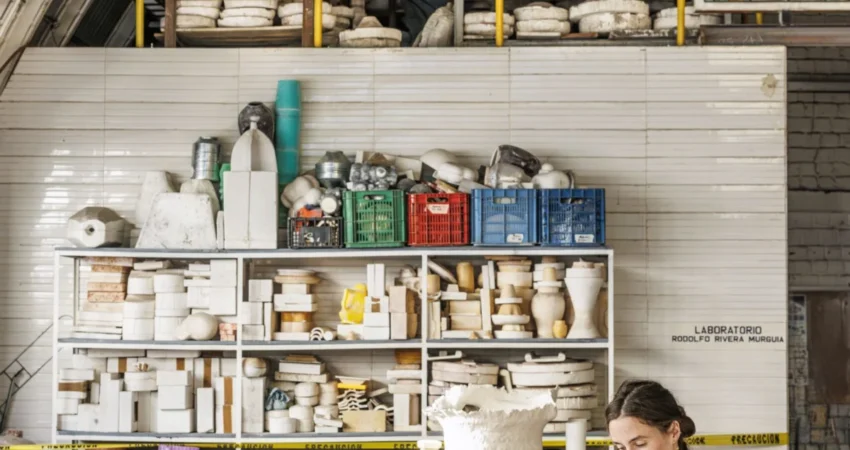
While the showrooms of Colonia Americana display the finished products of Guadalajara’s design scene, the actual production is centered 30 minutes away in the municipality of Tonalá. This area is recognized as one of the most important artisanal hubs in the Americas.
Tonalá’s economy is built on specialized ceramic techniques passed down through generations. Two primary methods define the region’s output:

- Petatillo: An intricate cross-hatching technique used to decorate red clay.
- Bruñido: A burnishing process where the clay surface is rubbed with a smooth stone (often obsidian) to create a natural sheen without the use of lead glazes.
Master craftsmen, such as Ángel Ortiz, warn that the survival of these techniques is essential to the city’s economic and cultural health. "If bruñido disappears, that’s the end of Tonalá," Ortiz stated. However, the industry is seeing a revival through collaborations with international artists. Cerámica Suro, led by José Noé Suro, has become a nodal hub where traditional artisans produce high-end works for global galleries and luxury hotels, effectively exporting the Tapatío oficio to the world stage.
The Culinary Oficio: A Global Powerhouse
Guadalajara’s culinary scene is increasingly regarded as one of the most influential in the Western Hemisphere. The city’s food culture is rooted in the concept of "nostalgia and time," where meals are treated as sacred communal events rather than mere sustenance.

The city’s gastronomic identity is defined by several key pillars:
- The Torta Ahogada: The city’s signature "drowned sandwich," consisting of braised pork on a sourdough birote roll—a bread that only achieves its specific texture in Guadalajara’s unique climate—submerged in a spicy tomato and chili sauce.
- Modern Mexican Cuisine: Restaurants like Xokol, led by chefs Oscar Segundo and Xrysw Ruelas, focus on the diversity of Mexican heirloom corn and indigenous ingredients. Their approach treats cooking as a "revered oficio," emphasizing the emotional response of the diner.
- The "Lunch City" Culture: Unlike the fast-paced dining of Mexico City or New York, Guadalajara maintains a tradition of the "long lunch," often lasting four to eight hours. Observers point out that in Guadalajara, "time is the most basic raw material."
Economic Impact and Future Outlook
The strategic focus on design, craft, and gastronomy has yielded significant economic results. According to data from the Jalisco Ministry of Innovation and Economic Development, the state’s creative industries contribute significantly to the regional GDP. The city’s designation as a "Best Place to Go in 2026" coincides with its role as a host city for the 2026 FIFA World Cup, which is expected to bring a multi-billion dollar influx of tourism and infrastructure investment.

The broader implications of Guadalajara’s growth suggest a model for urban development that prioritizes cultural heritage over generic globalization. By leaning into its oficios, the city has created a sustainable ecosystem where traditional artisans, modern architects, and innovative chefs support one another.
As the city prepares for its international spotlight in 2026, the focus remains on the "Man of Fire" philosophy: that labor and learning are equal paths to enlightenment. For the traveler and the resident alike, Guadalajara offers a rare glimpse into a metropolis that is moving forward by looking deeply into its own past. The city’s "offhand elegance and easy pace" are not merely aesthetic choices but are the results of a centuries-old commitment to the disciplines of the hand and the heart.

0 Comments