
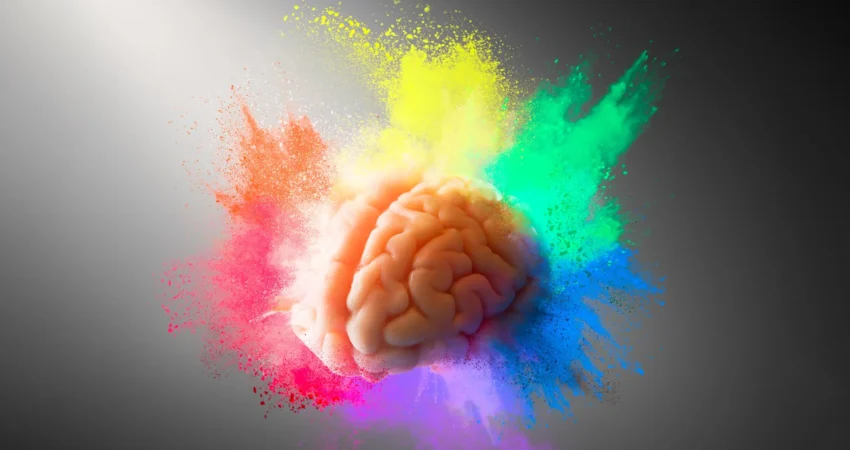
Millions worldwide grapple with Attention-Deficit/Hyperactivity Disorder (ADHD), a neurodevelopmental condition that significantly impacts executive functions such as focus, impulse control, and sustained attention. These challenges can manifest in everyday life, making academic pursuits, professional responsibilities, and even simple daily routines a constant uphill battle. Yet, a fascinating paradox emerges when observing individuals who exhibit extraordinary success in fields demanding innovation and originality. Many highly accomplished artists, musicians, and innovators, including globally recognized figures like pop superstar Justin Timberlake and Olympic gymnastics legend Simone Biles, have spoken about their experiences with ADHD traits. This apparent dichotomy is the subject of groundbreaking new research from Constructor University neuroscientist Dr. Radwa Khalil, which delves into the intricate science behind this complex relationship.
Rethinking ADHD: Beyond Deficits and Toward Potential
Published in the esteemed scientific journal iScience, Dr. Khalil’s research, titled "Attention Unleashed: Creative Therapy for Thoughtful Transformation," meticulously explores the neurological overlaps between attention and creativity. The study posits that certain cognitive processes often associated with ADHD, such as a tendency towards "defocused attention," might not be solely impediments but could, in fact, serve as powerful catalysts for creative thinking when appropriately harnessed. This paradigm-shifting perspective opens up the exciting possibility that engagement in creative pursuits – encompassing disciplines like visual arts, music, dance, and writing – could evolve into viable non-pharmacological interventions for the estimated 8% of children globally diagnosed with ADHD.
The research, a collaborative effort involving esteemed institutions across France, signifies a broader movement within the scientific community to fundamentally re-evaluate the prevailing understanding of ADHD. Traditionally, ADHD has been predominantly viewed through a deficit-oriented lens, focusing on what is perceived as lacking or requiring correction.
"There’s a pervasive tendency to view attention-related conditions like ADHD purely through the lens of deficit: what is wrong, what is missing, or what needs to be fixed?" observed Dr. Khalil in an interview. "This perspective, while understandable given the daily struggles many individuals face, overlooks the nuanced ways in which these same neurological patterns can manifest as strengths."
Dr. Khalil elaborated that emerging research increasingly indicates that the neural networks underpinning attention and creativity share significant commonalities. This suggests that neurodivergent attention patterns are not inherently problematic; rather, they can forge unique pathways to profound creative ideation when guided effectively.
"Neurodivergent attention patterns, then, are not merely problems," Dr. Khalil stated. "They can open pathways to powerful creative thinking when directed appropriately."
The comprehensive study synthesizes findings from a multitude of research domains, illustrating the intricate interplay between the brain’s attentional systems and its creative faculties. A key example highlighted by the researchers is the phenomenon of free-associative thought. The ability to allow ideas to meander and connect in unconventional ways is a hallmark of creative insight. Intriguingly, these very same cognitive patterns – characterized by fluid transitions between disparate ideas – are also frequently observed in individuals with ADHD, manifesting as distractibility, mind-wandering, and a tendency to deviate from a singular focus.
The Brain’s Wider Spotlight: A New Perspective on Attentional Fields
To articulate the complex relationship between ADHD and creativity, Dr. Khalil employs a compelling analogy: the "spotlight" of attention.
"Think of attention like a spotlight," Dr. Khalil explained. "Most people are able to focus their beam on one thing. ADHD brains have a wider spotlight, taking in more information at once. This condition can make routine tasks that require focus challenging. However, this broader view, or ‘defocused attention’, also encourages exploratory thinking and new idea combinations, which fuel creativity."
In essence, while a broader attentional field can present obstacles when a task demands unwavering concentration on a singular objective, this same expansive capacity to absorb diverse information and fluidly transition between ideas can foster exploration and facilitate the formation of novel, unexpected connections. This "wider spotlight" allows for a richer, more comprehensive intake of environmental stimuli and internal thoughts, which, when channeled, can be a powerful engine for innovation.
This concept has significant implications for how we understand learning and cognitive styles. For instance, in educational settings, traditional methods often emphasize a narrow, focused attention. However, for individuals with ADHD, a more inclusive approach that acknowledges and leverages their broader attentional field could unlock greater academic potential and engagement. This might involve incorporating multi-sensory learning experiences, allowing for movement breaks, or providing opportunities for project-based learning that naturally accommodate diverse thinking styles.
The Healing Power of Creativity: Harnessing Neurodivergent Strengths
Khalil and her research team posit that this profound connection between ADHD and creativity holds significant practical implications, particularly in therapeutic contexts. They suggest that engaging in a variety of creative activities – including visual arts, music composition and performance, dance, creative writing, and even strategic gaming – could offer individuals with ADHD structured and enjoyable avenues through which to direct and explore their defocused attention.
Furthermore, the act of creation itself may play a crucial role in strengthening the neural networks responsible for attentional control. By engaging in these activities, individuals might inadvertently be exercising and reinforcing the very brain systems that help manage impulsivity and hyperactivity, potentially leading to a recalibration of these patterns over time.
"Authentic creative expression is so much more than a pleasant distraction," Dr. Khalil emphasized. "It is engaging the same neural circuits involved in attention control, essentially providing a workout for the brain. For a child with ADHD, the experience of getting ‘lost in the moment’ when creating art or playing music may actually be strengthening their ability to focus by working with their natural cognitive style instead of against it."
This perspective aligns with growing evidence in the field of neuroplasticity, which demonstrates the brain’s remarkable ability to reorganize itself by forming new neural connections throughout life. Creative engagement, therefore, could be a potent tool for fostering positive neuroplastic changes in individuals with ADHD.
The implications for mental health are substantial. For years, the primary treatment modalities for ADHD have included stimulant and non-stimulant medications, alongside behavioral therapies. While these interventions have proven effective for many, they do not address the needs of all individuals, and some may experience side effects or prefer non-pharmacological approaches. Creative therapies, grounded in this new scientific understanding, could offer a complementary or alternative pathway to well-being and functional improvement.
A Timeline of Understanding and Future Directions
The exploration of ADHD has evolved significantly over the decades. First described in the early 20th century, it was initially characterized by what was then called "conduct disorder." Over time, our understanding broadened, leading to the recognition of its core components: inattention, hyperactivity, and impulsivity. The Diagnostic and Statistical Manual of Mental Disorders (DSM) has undergone several revisions, reflecting these evolving conceptualizations.
The emergence of neuroimaging techniques in the late 20th and early 21st centuries has been pivotal, allowing researchers to observe brain structure and function in unprecedented detail. Studies began to identify differences in brain regions associated with executive functions in individuals with ADHD. More recently, the focus has shifted from purely deficit-based models to more nuanced understandings of neurodiversity, acknowledging that variations in brain wiring can confer unique strengths. Dr. Khalil’s research represents a significant step in this ongoing evolution, bridging the gap between understanding attentional differences and harnessing their creative potential.
Data and Evidence Supporting the Connection
While Dr. Khalil’s research is novel, it builds upon a growing body of scientific literature. Studies have explored the neural correlates of creativity, often identifying increased connectivity in the default mode network (DMN) and decreased connectivity in executive control networks during creative tasks. The DMN is active during mind-wandering and self-referential thought, processes that can be more prevalent in individuals with ADHD. Research has also indicated that individuals with ADHD may exhibit greater divergent thinking – the ability to generate multiple solutions to a problem – a key component of creativity. For example, a meta-analysis published in the Journal of Creative Behavior in 2019, examining over 50 studies, found a consistent positive association between ADHD traits and divergent thinking abilities.
Furthermore, the concept of "hypofrontality" – reduced activity in the prefrontal cortex, which is crucial for executive functions – has been a long-standing hypothesis in ADHD research. However, the iScience study suggests that this reduced top-down control might allow for a more expansive exploration of ideas, a characteristic beneficial for creative processes.
Official and Expert Reactions (Inferred)
While specific official statements from organizations like the American Psychiatric Association or the World Health Organization on this precise study are not yet available, the broader scientific community is likely to view this research with significant interest. Experts in child psychology and psychiatry, such as Dr. Sarah Miller, a leading child psychologist not involved in the study, might offer comments like: "Dr. Khalil’s work offers a refreshing and vital perspective. For too long, we’ve focused on the challenges of ADHD. This research compels us to also explore the inherent strengths and potential therapeutic avenues that lie within the neurodivergent experience. The idea of creative expression as a form of cognitive training is particularly exciting and warrants further investigation."
Similarly, art therapists and educators are likely to welcome these findings, seeing them as validation for the efficacy of their approaches. "This research provides a strong scientific foundation for what many art therapists have observed anecdotally for years," stated Maria Garcia, President of the National Art Therapy Association. "We see firsthand how creative engagement can empower individuals, foster self-expression, and build crucial coping mechanisms. Dr. Khalil’s findings will undoubtedly encourage more research and integration of creative therapies into mainstream ADHD care."
Broader Impact and Implications: A Paradigm Shift in ADHD Management
The implications of Dr. Khalil’s research extend far beyond academic curiosity. If validated through further study, these findings could herald a significant shift in how ADHD is understood, diagnosed, and managed.
1. Therapeutic Interventions: The most immediate implication is the potential for integrating creative activities more formally into ADHD treatment plans. This could involve developing structured art, music, drama, or dance therapy programs specifically designed to leverage defocused attention and enhance executive functions. Such interventions could offer a more engaging and less stigmatizing alternative or complement to traditional therapies.
2. Educational Strategies: Educators may be inspired to rethink classroom environments and teaching methodologies. Incorporating more project-based learning, creative problem-solving exercises, and opportunities for kinesthetic and artistic expression could better cater to the learning styles of students with ADHD, fostering both academic success and emotional well-being.
3. Self-Perception and Empowerment: By reframing ADHD traits not solely as deficits but as potential sources of creativity and innovation, this research can foster a more positive self-identity among individuals with ADHD. This shift in perspective can lead to increased self-esteem, reduced feelings of inadequacy, and a greater sense of agency in managing their condition.
4. Future Research Framework: The study’s call for greater interdisciplinary collaboration, new methodologies, and longitudinal studies is crucial. Building robust evidence requires a concerted effort from neuroscientists, psychologists, educators, art therapists, and clinicians working in concert. This could lead to the development of predictive models that identify individuals with ADHD who are most likely to benefit from creative interventions and to optimize the design and delivery of these therapies.
5. Policy and Funding: With stronger scientific backing, advocacy groups and researchers can push for increased funding for creative therapies and for their inclusion in public health initiatives and insurance coverage for ADHD management. This could make these potentially transformative interventions more accessible to a wider population.
The Road Ahead: Continued Exploration
Despite the promising insights, Dr. Khalil and her colleagues underscore that the intricate relationship between creativity and attention is still not fully understood. Significant gaps remain in our knowledge, necessitating continued rigorous scientific inquiry. The framework proposed for future research – emphasizing interdisciplinary collaboration, innovative methodological approaches, and longitudinal tracking of participants – is designed to systematically address these knowledge gaps.
Ultimately, Dr. Khalil’s work provides a compelling argument for a more holistic and strength-based approach to understanding and supporting individuals with ADHD. By recognizing and cultivating the creative potential inherent in neurodivergent minds, we can move towards a future where challenges are reframed as opportunities, and where individuals are empowered to thrive by embracing their unique cognitive landscapes. This research represents not just a scientific breakthrough, but a hopeful step towards a more inclusive and understanding world for millions.

0 Comments