
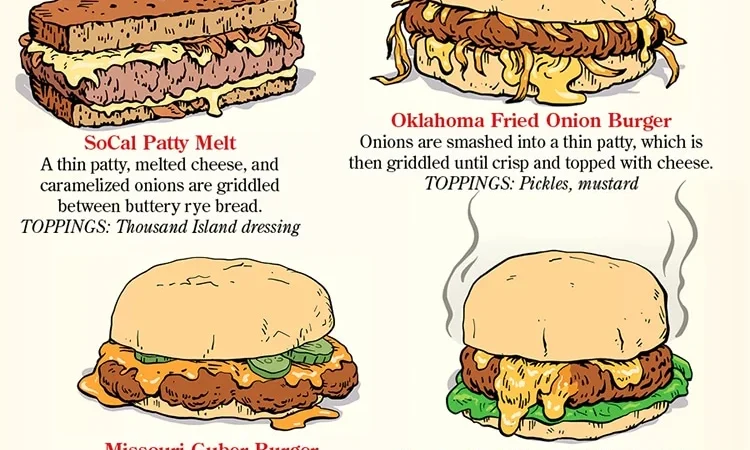
The hamburger stands as a definitive pillar of American culinary identity, representing a versatile canvas upon which different regions have painted their unique cultural histories. From the industrial corridors of the Northeast to the sun-drenched coast of Southern California, the evolution of the burger reflects local economies, agricultural availability, and the ingenuity of cooks during periods of both prosperity and hardship. While the basic components of a hamburger—ground beef and bread—remain constant, the methodologies applied to these ingredients vary significantly across the United States. Unlike regional hot dogs, which often adhere to strict topping protocols, regional hamburgers are characterized by specific preparation techniques or singular, defining ingredients that transform the patty itself.
The Historical Trajectory of the American Hamburger
To understand the diversity of contemporary regional burgers, one must examine the chronological development of the dish. While its exact origins remain a subject of friendly debate among food historians, the transition from the German "Hamburg steak" to the American sandwich occurred in the late 19th and early 20th centuries.
In 1900, Louis Lassen of Louis’ Lunch in New Haven, Connecticut, reportedly served the first hamburger to a hurried customer who requested a meal that could be eaten on the go. By the 1904 St. Louis World’s Fair, the hamburger gained national exposure, though it was initially viewed with some skepticism regarding the quality of the ground meat. This perception shifted in 1921 with the founding of White Castle in Wichita, Kansas. By standardizing cleanliness and industrializing production, White Castle legitimized the hamburger as a safe, affordable staple for the working class.
The Great Depression further cemented the burger’s status. During the 1930s, resourcefulness became a culinary necessity. In Oklahoma, for example, the scarcity of beef led to the creation of the Onion Burger, where large quantities of thinly sliced onions were smashed into a smaller portion of meat to provide volume and flavor. This era established the precedent for regional variations born out of economic necessity rather than mere preference.
A Taxonomy of Regional Styles and Preparations
The modern landscape of American burgers is defined by several distinct styles, each possessing a dedicated following and a specific geographic anchor.
The Steamed Cheeseburger: Central Connecticut
Unique to a small radius in the Connecticut River Valley, particularly Meriden and Middletown, the steamed cheeseburger eschews the traditional griddle. Instead, both the beef and the cheese—typically a sharp white cheddar—are cooked in individual stainless steel trays within a steam chest. This method, popularized by establishments like Ted’s Restaurant (founded in 1959), results in a moist, juicy patty and a molten, viscous cheese coating that differs fundamentally from the texture of a melted slice on a grilled burger.
The Oklahoma Onion Burger: El Reno and Beyond
Born during the Depression at the Ross Cafe, this style involves piling a handful of paper-thin white onions onto a ball of ground beef on a hot griddle. The cook then uses a heavy spatula to smash the onions into the meat. As the beef sears, the onions caramelize in the rendered fat, creating a savory, charred exterior. This style has seen a resurgence in metropolitan areas like New York and Los Angeles as part of the "smash burger" trend, yet its roots remain firmly in the Oklahoma soil.
The Jucy Lucy: Minneapolis, Minnesota
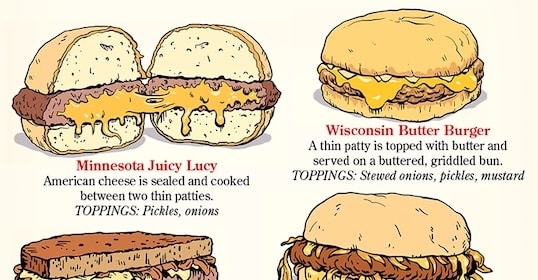
The Jucy Lucy (or Juicy Lucy) is defined by a reversal of the traditional burger architecture: the cheese is placed inside the raw meat patty before cooking. When grilled, the cheese melts into a liquid core. Two rival establishments in South Minneapolis, Matt’s Bar and the 5-8 Club, both claim the invention of this style in the 1950s. The technical challenge of the Jucy Lucy lies in creating a perfect seal to prevent "structural failure" (the cheese leaking out) and the safety hazard of the "molten lava" center.
The Green Chile Cheeseburger: New Mexico
In New Mexico, the hamburger is a vehicle for the state’s most famous crop: the Hatch green chile. Whether chopped and sautéed or served as a whole roasted pelt, the chiles provide a smoky, pungent heat that cuts through the fat of the beef. This regional staple is so culturally significant that the New Mexico Tourism Department maintains a "Green Chile Cheeseburger Trail," featuring dozens of historic stops like the Owl Bar & Cafe in San Antonio, New Mexico.
The Slugburger: Northern Mississippi
Another relic of the Depression, the slugburger (named after the "slug" or nickel it used to cost) is found primarily in Corinth, Mississippi. The patty consists of beef or pork mixed with a significant amount of extender, such as soy grits or flour. The patty is deep-fried rather than grilled, resulting in a crispy exterior and a soft interior. It is traditionally served with mustard, pickles, and onions.
The Pastrami Burger: Salt Lake City, Utah
Utah’s contribution to the burger canon is a maximalist creation. Popularized by Greek-American families who founded chains like Crown Burgers in the late 1970s, this style features a standard cheeseburger topped with a generous mound of thinly sliced, spice-rubbed hot pastrami and "fry sauce"—a regional condiment made of mayonnaise and ketchup.
Supporting Data and Economic Significance
The hamburger is more than a culinary preference; it is a massive driver of the American economy. According to data from the United States Department of Agriculture (USDA), Americans consume approximately 50 billion burgers annually. This equates to roughly three burgers per week for every person in the country.
The beef industry, which provides the primary raw material for these regional specialties, contributes over $167 billion to the U.S. economy annually. Furthermore, the "better burger" segment of the restaurant industry—which focuses on regional styles and higher-quality ingredients—has seen a compound annual growth rate (CAGR) of over 10% in the last decade, significantly outperforming traditional fast-food outlets.
Market research indicates that regionality is a key factor in consumer choice. A 2023 survey by the National Restaurant Association found that 62% of consumers are more likely to visit a restaurant that offers a "unique or regional" take on a classic dish. This trend suggests that as the food industry becomes more homogenized, the demand for authentic, geographically specific burgers continues to rise.
Industry Perspectives and Culinary Analysis
Culinary analysts suggest that the enduring appeal of the regional burger lies in its "honest" preparation. "The hamburger is the ultimate democratic food," notes food historian and author George Motz, who has documented over 100 different burger styles. "Regional burgers tell the story of a place. You can’t mass-produce the soul of an Oklahoma Onion Burger in a corporate test kitchen; it requires the specific heat of a seasoned griddle and the technique passed down through generations."
Industry responses to the rise of regionalism have been varied. Large-scale fast-food chains have attempted to capitalize on these trends by introducing limited-time offers (LTOs) based on regional flavors, such as "Western" burgers with onion rings or "Southwest" burgers with chiles. However, purists argue that these corporate interpretations often miss the nuances of the cooking methods—such as the specific ratio of fat to lean meat or the precise temperature of the steam—that define the original versions.
From a nutritional perspective, regional burgers often face scrutiny due to their high caloric and sodium content. However, the movement toward "transparency in sourcing" has led many regional burger specialists to adopt grass-fed beef and locally sourced toppings, aligning the traditional recipes with modern health-conscious values without sacrificing the regional identity.
Broader Cultural Impact and Future Implications
The proliferation of regional hamburger styles serves as a form of "culinary preservation." In an era of globalized food chains, these specific preparations act as a bulwark against the loss of local culture. The rise of social media and food tourism has further amplified this, as travelers now plan itineraries specifically around tasting a "Butter Burger" in Wisconsin or a "Guber Burger" (topped with peanut butter) in Sedalia, Missouri.
Looking forward, the regional burger is likely to face challenges from the rise of plant-based meat alternatives. However, many regional styles are defined by their cooking method rather than just the protein. For example, the "smash" technique used in Oklahoma can be applied to plant-based patties, and the New Mexico green chile is a versatile topping that transcends the type of meat used.
The American hamburger is not a static entity; it is a living document of the nation’s history. Whether it is the fried "slugs" of the South or the steamed trays of the Northeast, these burgers represent a commitment to local flavor and a testament to the fact that, in the American kitchen, there is always room for a new interpretation of a classic. As long as there are local griddles and regional pride, the map of American burgers will continue to expand, offering a flavorful journey through the heart of the country.

0 Comments