
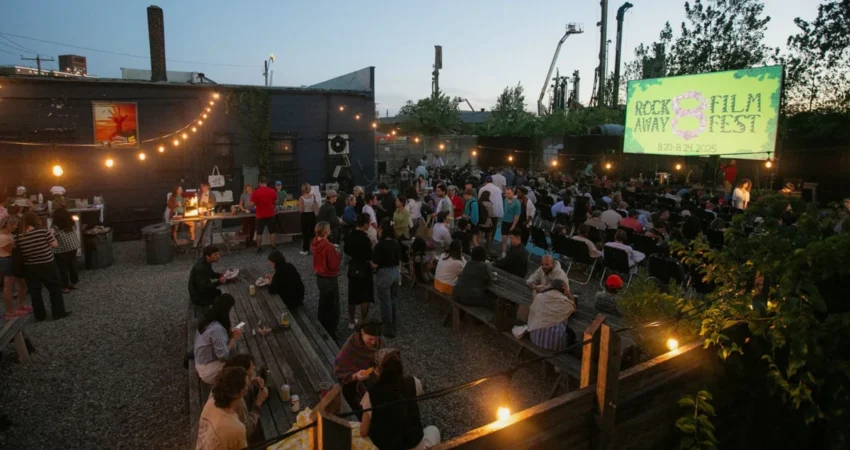
The landscape of New York City is often characterized by its relentless pursuit of the new, yet it remains a city deeply rooted in recursion, where historical echoes frequently re-emerge in contemporary forms. One of the most significant cultural resurrections in recent years is the return of the cinema experience to the Rockaway Peninsula in Queens. Following a 25-year period without a dedicated commercial indoor theater, the region is witnessing a cinematic renaissance led by the Rockaway Film Festival (RFF) and its permanent outdoor home, the Arverne Cinema. This movement not only restores a lost pastime to the local community but also serves as a case study in grassroots urban revitalization and the enduring relevance of communal film-going in an era dominated by digital streaming.
The Golden Age and the Great Cinematic Drought
To understand the significance of the current revival, one must look back at the "Golden Age" of the Rockaways, a period spanning from the 1920s to the 1950s. During this era, the peninsula was a premier destination for New Yorkers seeking leisure, rivaling Coney Island in its density of attractions. The Rockaways were home to multiple grand theaters, including the Arverne Pier Theater, which featured neoclassical architecture with Corinthian columns, and the Arverne Theater, a cultural hub for the vibrant Jewish community that showcased Yiddish performances.
.jpg)
In this mid-century period, movie-going was an accessible, everyday luxury. Tickets typically cost 25 cents, double features were the standard, and theaters were staffed by attendants in faux tuxedos. However, the post-World War II era brought significant demographic shifts. The rise of the suburbs, a series of devastating fires in aging wooden structures, and a general period of urban decline led to the gradual shuttering of these seaside institutions. The final blow to the local industry occurred in 1996 with the closure of the Jerry Lewis Cinema, a franchised theater that had survived longer than most of its peers. For the next quarter-century, the Rockaways remained a "cinema desert," with residents forced to travel deep into other parts of Queens or Brooklyn to see a film on the big screen.
The Emergence of the Rockaway Film Festival
The trajectory changed in 2018 when the Rockaway Film Festival was launched as a four-day experimental event. Founded by Courtney Muller and Sam Fleischner, the festival aimed to prove that the community still harbored a deep-seated desire for curated cinematic experiences. Initially, the festival operated as a nomadic entity, popping up screens at various historical and natural landmarks, including Fort Tilden and Jacob Riis Park.
The success of these early iterations underscored a critical gap in the local cultural infrastructure. In 2021, the nonprofit organization behind the festival took a decisive step by constructing the Arverne Cinema. Located near the Beach 67th Street station, the venue is a testament to sustainable and community-driven architecture. The perimeter is constructed from a mix of Brutalist concrete cubes and salvaged boardwalk planks—remnants of the original Rockaway boardwalk that was destroyed during the catastrophic Hurricane Sandy in 2012. This choice of materials serves as a physical reminder of the peninsula’s resilience and its history of rebuilding after collapse.

RFF9: A Diverse Program for a Diverse Borough
The ninth annual Rockaway Film Festival (RFF9) exemplifies the eclectic and inclusive programming that has become its hallmark. Unlike major international festivals such as Cannes or Sundance, which often focus on industry deals and Oscar-contending premieres, RFF9 prioritizes accessibility and local relevance. Tickets are capped at $10, and several screenings are offered free of charge to ensure that the event remains a community resource rather than an exclusive luxury.
The RFF9 lineup reflects the diversity of Queens, often cited as one of the most ethnically diverse urban areas in the world. Key highlights of the current season include:
- Eternity One: A documentary by Baltimore-based filmmaker Marnie Ellen Hertzler, exploring the environmental precarity of Tangier Island in the Chesapeake Bay. The film’s themes of erosion and climate crisis resonate deeply with a Rockaway audience that remains hyper-aware of sea-level rise.
- The History of Concrete: The first feature-length project from Ridgewood-based documentarian John Wilson, known for his unique observational style.
- Cultural Workshops: The festival concluded with a Dabke dance workshop led by El-Funoun, a traditional Palestinian dance company, blending cultural celebration with themes of social resistance.
- Generational Classics: Screenings of The Muppet Movie (1979) were programmed to attract young families, bridging the gap between the peninsula’s older residents and newer arrivals.
The Integration of Live Performance and Local Flavor
A distinguishing feature of the Rockaway Film Festival is its commitment to pairing screenings with live musical performances. This approach transforms a standard movie viewing into a multi-sensory event. For instance, the premiere of Eternity One was preceded by a performance by Kyp Malone (of TV on the Radio), while the screening of The History of Concrete featured a set by Bellerose rapper Heems.
.jpg)
The setting of the Arverne Cinema further enhances this atmosphere. Situated in a residential cul-de-sac and framed by the silhouettes of tower cranes from nearby construction sites, the theater is an "al-fresco" experience. The soundscape of the films is frequently punctuated by the roar of airplanes departing from the nearby John F. Kennedy International Airport, a reminder of the Rockaways’ unique position at the edge of the metropolis.
Economic and Social Implications of the Revival
The success of the Arverne Cinema comes at a time when the broader film industry is grappling with significant shifts. While major chains like AMC have reported a post-pandemic rebound in attendance, the industry faces challenges from surging ticket prices and shrinking "theatrical windows"—the period between a film’s cinema release and its availability on streaming platforms.
The Rockaway model suggests an alternative path for the future of cinema. By operating as a nonprofit and focusing on community-centric programming, the RFF bypasses the high-pressure commercial demands of the multiplex. Rafael Espinal, Commissioner of the Mayor’s Office of Media and Entertainment, noted during the festival’s opening that the initiative sends a clear message: "Cinema belongs everywhere in New York City, not just in the places where people expect them, but right here, by the beach with this community."

Furthermore, the festival contributes to the local economy by drawing visitors to the peninsula during the "shoulder season" of early September. The festival provides a curated guide to local businesses, encouraging attendees to visit local coffee shops, dispensaries, and the Rockaway Hotel, thereby supporting the small-business ecosystem of the area.
Resilience and the "Story of Things Coming Apart"
Courtney Muller, RFF co-founder, has described the underlying theme of this year’s programming as "stories of things coming apart" and the subsequent growth that occurs in the spaces left behind. This narrative mirrors the history of the Rockaways itself. From the devastation of Hurricane Sandy to the grassroots mutual aid networks that formed after the September 11 attacks, the peninsula has a long history of finding renewal through communal effort.
The Arverne Cinema is a literal manifestation of this theme—a vacant lot converted into a cultural hub through the labor of friends and neighbors. It serves as a rebuttal to the idea that movie theaters must be sterile, high-tech "sarcophagi." Instead, it embraces the imperfections of its environment, from the sand underfoot to the ambient noise of the neighborhood.

Logistics and Accessibility for Visitors
As the Rockaway Film Festival continues to grow, it has become a destination for cinephiles across the five boroughs. The festival organizers have emphasized ease of access, providing multiple transportation options for those traveling from outside the peninsula:
- NYC Ferry: Often cited as the most scenic route, the ferry provides direct access to the Rockaways from Lower Manhattan and Brooklyn.
- MTA Subway: The Far Rockaway-bound A train serves the Beach 67th Street station, placing the theater within an eight-minute walk.
- Bus and LIRR: The Q22 bus and connections via the Long Island Rail Road provide additional links for regional visitors.
While many online tickets for the current season have sold out, the festival maintains a policy of selling a limited number of tickets at the door and operating a waitlist for popular screenings, ensuring that the event remains as accessible as possible to the local population.
Conclusion: The Enduring Power of the Shared Screen
The nine-year journey of the Rockaway Film Festival from a "four-day experiment" to a permanent fixture of the Queens cultural landscape highlights a fundamental human desire for shared storytelling. In an era where digital consumption is often a solitary act, the Arverne Cinema provides a space for collective experience. It proves that even in a region that went decades without a screen, the appetite for cinema was never extinct—it was merely waiting for a venue that reflected the unique spirit and resilience of its community. As the festival moves into its second decade, it stands as a model for how the arts can serve as an anchor for neighborhood identity and urban recovery.

0 Comments