
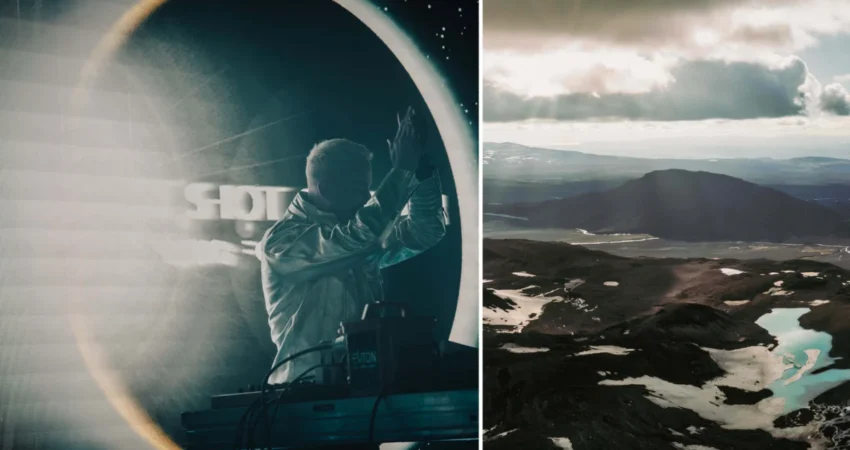
The intersection of high-end experiential travel and rare celestial events reached a new peak in August as the Iceland Eclipse festival drew more than 3,300 attendees to the remote Snæfellsnes Peninsula. While the primary draw was a total solar eclipse, the festival’s most exclusive secondary event took place deep within the frozen interior of Langjökull, Iceland’s second-largest glacier. This 11-hour excursion, titled "Into the Glacier," offered a limited group of 100 participants the opportunity to attend a rave inside a man-made ice tunnel, highlighting a growing trend in the tourism industry known as "last-chance tourism." As global temperatures continue to rise, travelers are increasingly willing to pay premium prices—in this case, approximately $600 per person—to witness and engage with natural wonders that may not survive the coming decades.
The Festival Landscape and the Total Solar Eclipse
The Iceland Eclipse festival was conceived as a multi-day celebration of the 2024 total solar eclipse, an event that has historically galvanized "eclipse chasers" to travel across the globe. Located on the Snæfellsnes Peninsula in western Iceland, the festival grounds served as a hub for a diverse array of activities, ranging from late-night electronic dance music performances to cacao ceremonies and academic lectures on whale communication. The event’s organizers sought to blend the communal, "hippie-chic" energy often associated with festivals like Burning Man with the rugged, otherworldly landscape of the Icelandic Highlands.

Fridrik Olafsson, the festival’s co-producer and a veteran of the Icelandic music scene, envisioned the event as a spiritual successor to the Secret Solstice festival, which he founded in 2014. That earlier venture gained international notoriety for its $1 million ticket packages, which included private jet travel and personal chefs. While the Iceland Eclipse festival was more accessible, it maintained a focus on exclusivity and high-concept programming. The total solar eclipse, occurring two days prior to the glacier rave, acted as the emotional and chronological anchor for the week’s festivities. Attendees, many of whom had traveled from as far as New York, Chicago, and Miami, described the eclipse as a profound, unifying experience that set the stage for the more intimate gatherings that followed.
Logistics and Operational Challenges in the Icelandic Highlands
The execution of a large-scale festival in the Icelandic wilderness presented significant logistical hurdles. According to Olafsson, the festival was struck by a severe three-day storm system just as events were beginning. The storm produced roaring gusts of nearly 70 miles per hour, which damaged three main-stage tents and completely ruined 50 glamping units. The recovery effort required crew members to work 24-hour shifts, utilizing heavy machinery to secure remaining structures. Olafsson noted that while Icelanders might view such conditions as a "windy day," the severity of the weather was a shock to international participants and staff.
Transporting guests to the "Into the Glacier" event at Langjökull was equally demanding. The journey from the Snæfellsnes festival grounds to the glacier involved navigating a stark, volcanic landscape punctuated by gravel roads and sudden shifts in elevation. The specialized vehicles used for the ascent featured massive, spiked tires to maintain traction on the ice. As the cars climbed higher onto the 395-square-mile mass of ice, drivers were frequently forced to stop and manually adjust tire pressure to redistribute the vehicle’s weight and prevent them from becoming stuck in the softening slush. This process, coupled with the "Jäger"-branded aesthetic of the transport vehicles and the soundtrack of classic rock and techno, contributed to a surreal atmosphere that participants described as "sci-fi" in nature.
cc.jpg)
The "Into the Glacier" Experience: Acoustics and Artistry
The rave itself took place within the world’s largest man-made ice tunnel, a 1,640-foot labyrinth carved directly into the glacier. The tunnel leads to a series of larger chambers, including a space designed to resemble a chapel, complete with wooden benches and decorative floral arrangements. Upon entering the sub-zero environment, staff members provided guests with "Cinderella treatment," quickly fitting crampons—spiked traction devices—over their hiking boots to ensure safety on the slippery floors.
The acoustic environment of the glacier provided a unique challenge for the performing artists. Icelandic DJs Höllmar (known as Acid Tourist) and Margeir Steinar Ingólfsson performed back-to-back sets, tailoring their track selections to the "vibe" of the ice. The sound dynamics within a glacier are distinct; the high-density ice walls cause bass frequencies to bounce and echo in a manner similar to a large industrial warehouse, yet the sound also feels "concentrated" due to the enclosed nature of the tunnels.
Margeir Ingólfsson noted that he brought a "special gift" for the glacier: drops of water collected by a specialist from various glaciers around the world, which he ceremoniously placed near the DJ booth. This gesture underscored the reverence many participants felt for the setting. Despite the festive atmosphere, which included "Flamingo"-flavored vodka cocktails and neon-lit attire, the organizers enforced a strict "leave no trace" policy. Staff members meticulously collected trash in plastic bags to ensure that the fragile glacial environment remained as undisturbed as possible.
c.jpg)
Scientific Context: The Retreat of Langjökull
The festive atmosphere of the rave was underscored by a sobering scientific reality. Langjökull, which sits at approximately 1,300 meters above sea level, is retreating at an accelerating rate. According to a 2020 study published in the journal Frontiers in Earth Science, Langjökull lost an estimated 29 percent of its mass between 1890 and 2019. The glacier’s retreat is a visible indicator of the broader climate crisis affecting the North Atlantic region.
Attendees like Lyndsay Klebba, a 36-year-old writer from Chicago, noted the physical evidence of this retreat during the drive to the ice cave entrance. Signs along the path indicated where the glacier’s edge had stood only 40 years prior, highlighting the miles of territory the ice has conceded in a relatively short period. The loss of Langjökull follows the total disappearance of Okjökull, which in 2014 became the first Icelandic glacier lost to climate change. Its name was officially shortened to "Ok," removing the suffix jökull (glacier) to reflect its new status as a mere mountain.
This environmental context has given rise to "last-chance tourism," where travelers seek out landscapes specifically because they are threatened. For many at the Iceland Eclipse festival, the knowledge that future generations might find the idea of partying inside a glacier to be a "myth" was a primary motivator for attendance. Hayley Sharkey, a 27-year-old attendee from Miami, remarked that the feeling of being surrounded by ancient, natural ice was the defining feature of the trip, transcending the music and the social aspects of the festival.

Economic and Strategic Implications for Luxury Travel
The success of the Iceland Eclipse festival and its glacier rave highlights a shift in the luxury travel market. Modern affluent travelers are increasingly prioritizing "transformative" and "one-of-a-kind" experiences over traditional material luxury. Mitch Morales, the 41-year-old CEO of IMXP and the founder of the festival, is positioning his company to capitalize on this trend through what he calls the "Eclipse Trilogy."
The "Eclipse Trilogy" is a series of planned totality events that aim to pair celestial phenomena with historically or geographically significant sites. Morales is currently scouting locations in Luxor, Egypt, for a 2027 eclipse event, and is considering Australia or New Zealand for 2028. His long-term ambitions are even more expansive, including the eventual goal of hosting an eclipse viewing on the moon.
Morales argues that natural wonders like glaciers should be viewed as "temples" that hold the memory of the world within their frozen layers. By hosting events in these locations, he believes travelers can form a deeper connection to the planet’s history and its future. However, this model of travel also raises questions about the carbon footprint associated with flying thousands of people to remote, fragile ecosystems. Organizers maintain that the awareness generated by such events can lead to increased advocacy for environmental protection, though critics often point to the inherent contradiction of "last-chance tourism."
.jpg)
Broader Impact and the Future of Experiential Events
As the Iceland Eclipse festival concluded, the impact on the local economy and the international festival circuit became clear. The event demonstrated that there is a significant market for high-concept, high-cost travel that blends entertainment with environmental and scientific themes. For the Snæfellsnes Peninsula, the festival provided a temporary but substantial boost in tourism revenue, though it also required careful coordination with local authorities and the mayor’s office to ensure that the influx of 3,333 visitors did not overwhelm local infrastructure.
The "Into the Glacier" rave serves as a case study for the future of experiential marketing and luxury travel. It combined the thrill of exclusivity with the emotional weight of environmental awareness, creating a narrative that resonated deeply with its target audience. As glaciers like Langjökull continue to melt, the window for such experiences is closing. For the 100 people who danced within the ice of the Icelandic Highlands, the event was more than a party; it was a fleeting communion with a world that is rapidly changing, a "clash of titans" between ancient history and modern culture.
In the coming years, the tourism industry will likely see more events that follow this blueprint—leveraging the rarity of natural phenomena to create high-value, high-impact experiences. Whether these events can balance their commercial goals with the need for genuine environmental stewardship remains a central question for organizers and travelers alike. For now, the echoes of house and techno off the walls of Langjökull stand as a testament to the lengths to which modern travelers will go to capture a moment of a disappearing world.

0 Comments