
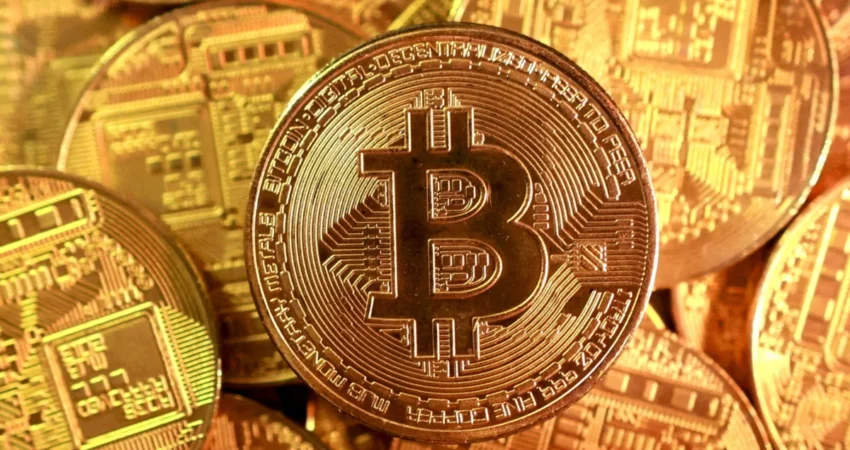
Bitcoin, the world’s leading cryptocurrency, is poised to close its third consecutive week of gains, signaling a robust resurgence in investor confidence as traders increasingly seek safe-haven assets amidst turbulent conditions across global equities, currencies, and bond markets. This sustained upward momentum has propelled the digital asset to levels not seen in months, reigniting discussions about its role as a potential hedge against traditional financial instability. The token recorded a significant 4.6% week-to-date increase, hitting an overnight high of $82,272.31. This remarkable peak marks its highest valuation since May 11, when Bitcoin briefly touched $82,499.99, demonstrating its proximity to retesting previous significant resistance levels. At the time of reporting, Bitcoin was trading at $81,151.10, consolidating its position above the critical $80,000 psychological threshold.
A Return from the Doldrums: Bitcoin’s Recent Trajectory
For much of the current year, Bitcoin had been navigating a period of relative stagnation, commonly referred to as the "doldrums," trading predominantly within a constrained range of $60,000 to $70,000 since early June. This phase was characterized by a confluence of factors, including persistent macroeconomic uncertainties, a cautious approach from institutional investors, and a lack of significant catalysts following the initial excitement around various regulatory developments earlier in the year. Geopolitical tensions, coupled with fluctuating interest rate expectations from major central banks, contributed to a broader risk-off sentiment that kept speculative assets like cryptocurrencies under pressure. Regulatory scrutiny in several key jurisdictions also cast a shadow, preventing a sustained breakout.
However, a notable shift occurred in late August when the digital asset decisively breached the $70,000 mark. This breakthrough was not an isolated event but rather the culmination of renewed investor interest, largely driven by the re-emergence of the "debasement trade." This strategy, which involves investors moving away from traditional fiat currencies like the U.S. dollar and into perceived store-of-value assets such as cryptocurrencies or gold, has gained significant traction. Since breaking out of its previous trading range, Bitcoin has continued its ascent, demonstrating a newfound resilience and demand that has surprised some market observers. The sustained upward trajectory suggests a fundamental change in market sentiment, with capital flowing back into the digital asset space as global economic anxieties persist.
The Re-emergence of the "Debasement Trade"
The primary catalyst for Bitcoin’s recent price breakout and continued climb has been widely attributed to the re-emergence of the "debasement trade." This investment thesis posits that an expanding money supply, government spending, or policies that devalue fiat currency will lead investors to seek refuge in assets with limited supply or intrinsic value. Dominika Nestarcova, Executive Director of Digital Assets at Goldman Sachs, highlighted this phenomenon in a recent note, stating, "The price breakout came towards the [end of August] with the re-emergence of the debasement trade re-igniting investor interest in BTC – the U.S. Treasury announced it would increase purchases of longer-dated Treasuries, long yields fell, the dollar weakened, and BTC and gold moved higher."
This sequence of events perfectly illustrates the mechanics of the debasement trade. When the U.S. Treasury announces increased purchases of longer-dated Treasuries, it typically signals an intention to inject liquidity into the financial system or manage the yield curve. Such actions can lead to a decrease in long-term bond yields, making fixed-income investments less attractive. Concurrently, a perception of increased money supply or future inflation can weaken the U.S. dollar, as its purchasing power is diluted. In this environment, assets traditionally seen as inflation hedges or stores of value, such as gold, and increasingly Bitcoin, become more appealing. Investors rotate capital from declining or less attractive assets into those perceived to retain or increase value in an inflationary or uncertain economic climate. The narrative of Bitcoin as "digital gold" — a scarce, decentralized asset impervious to government manipulation — resonates strongly with this investment philosophy, particularly when confidence in traditional financial systems wavers.
Macroeconomic Headwinds and Investor Retreat
The backdrop against which Bitcoin’s rally is occurring is one of heightened macroeconomic uncertainty. Global markets have been characterized by significant volatility across various asset classes. Equity markets, for instance, have experienced sharp swings influenced by corporate earnings reports, geopolitical events, and central bank policy pronouncements. The CBOE Volatility Index (VIX), often referred to as the "fear gauge," has seen intermittent spikes, reflecting investor apprehension. Currency markets have also been turbulent, with major pairs experiencing notable fluctuations as central banks grapple with inflation and growth concerns. The U.S. Dollar Index (DXY), which measures the dollar against a basket of major currencies, has seen periods of weakness, contributing to the attractiveness of alternative assets.
Bond markets, traditionally seen as bastions of stability, have not been immune. Yields have fluctuated significantly, driven by inflation expectations, monetary policy decisions, and sovereign debt concerns. For example, a sharp decline in longer-dated Treasury yields, as observed following the U.S. Treasury’s announcement, can make traditional safe-haven investments less appealing, prompting a search for higher returns or more robust hedges elsewhere. This pervasive instability has created an environment where investors are actively searching for "refuge," assets that can preserve capital or even generate returns when traditional portfolios face headwinds. Bitcoin, with its unique characteristics and growing institutional acceptance, has increasingly emerged as a viable candidate for this role.
Broader Cryptocurrency Market Rally
Bitcoin’s ascent has not been an isolated phenomenon; it has spurred a broader rally across the cryptocurrency market, signaling renewed optimism and a potential shift in sentiment across the digital asset ecosystem. Other major cryptocurrencies, often referred to as altcoins, have followed Bitcoin’s lead, recording substantial gains and reaching significant price milestones.
Ether (ETH), the native cryptocurrency of the Ethereum network and the second-largest digital asset by market capitalization, hit a high of $2,545.62 on Friday. This marks its most elevated level since August 27, demonstrating its strong correlation with Bitcoin’s performance and the overall health of the crypto market. Ethereum’s robust ecosystem, encompassing decentralized finance (DeFi), non-fungible tokens (NFTs), and various decentralized applications, often makes it a beneficiary of broader market uptrends as investor confidence in the digital asset space grows.

Solana (SOL), another prominent smart contract platform, also experienced a significant surge, jumping to as much as approximately $105.70. This price point represents its highest valuation since August 31, highlighting the renewed interest in high-throughput blockchain networks. Solana’s appeal lies in its speed and low transaction costs, attracting developers and users to its growing ecosystem of dApps and DeFi protocols. The synchronous movements of Bitcoin, Ether, and Solana underscore a market-wide positive sentiment, suggesting that investors are not merely seeking a single safe haven but are re-engaging with the broader potential of blockchain technology and digital assets. This correlation often indicates a "risk-on" environment within the crypto sphere, where capital flows from Bitcoin into altcoins as confidence builds.
Analyst Perspectives and Market Sentiment
The recent surge has prompted renewed analysis and commentary from financial experts. Dominika Nestarcova’s insights from Goldman Sachs underscore a critical understanding of the underlying macroeconomic drivers. Beyond the immediate catalysts, other analysts have weighed in on the sustainability and implications of this rally. Many point to the increasing institutional adoption of Bitcoin, particularly with the advent of spot Bitcoin exchange-traded funds (ETFs) in several jurisdictions, as a foundational element bolstering its legitimacy and accessibility for traditional investors. While not a direct cause of the current "debasement trade" surge, these vehicles provide a pathway for larger capital inflows, influencing long-term sentiment.
Market sentiment indicators, such as the Crypto Fear & Greed Index, have shifted markedly from "fear" or "neutral" zones into "greed," reflecting heightened investor enthusiasm. Trading volumes across major cryptocurrency exchanges have also seen a noticeable uptick, indicating increased participation from both retail and institutional traders. Analysts from firms like Standard Chartered and Bernstein have recently adjusted their price targets for Bitcoin upwards, citing factors such as continued institutional accumulation, the upcoming halving event, and the growing narrative of Bitcoin as an inflation hedge. However, a degree of caution persists, with some analysts highlighting the inherent volatility of the asset class and the potential for profit-taking pullbacks, especially after such rapid gains. The consensus, however, leans towards a more constructive outlook, with the current rally seen as a potential precursor to further growth if macroeconomic conditions remain conducive to the "debasement trade."
Historical Context and Previous Peaks
To fully appreciate Bitcoin’s current trajectory, it is essential to place it within its historical context. The previous peak of $82,499.99 on May 11 serves as a significant reference point. That period was characterized by a confluence of factors, including robust institutional inflows, a bullish macroeconomic environment, and widespread excitement surrounding the potential for wider adoption. However, that rally ultimately faced strong resistance and subsequently corrected, leading into the "doldrums" period. The current approach to similar price levels suggests a test of market resilience and demand.
Bitcoin has a well-documented history of parabolic rallies followed by significant corrections, often referred to as "bull" and "bear" cycles. Understanding these cycles helps temper expectations while acknowledging the asset’s potential. Past surges have been driven by narratives ranging from digital cash to digital gold, and now increasingly as a hedge against fiat currency debasement. Each cycle brings new market participants and a deeper understanding of Bitcoin’s utility. The fact that Bitcoin is now re-testing levels close to its mid-May peak, but under different macroeconomic circumstances (i.e., less speculative exuberance, more defensive positioning), suggests a potential shift in the quality of demand. It implies that a more mature investor base, perhaps driven by genuine concerns about global financial stability, is now entering the market, rather than purely speculative retail interest. This could lend greater stability to future price movements, although volatility remains an intrinsic characteristic of the crypto market.
Potential Implications and Future Outlook
The sustained rally in Bitcoin and the broader cryptocurrency market carries several significant implications for investors and the wider financial landscape. Firstly, it reinforces Bitcoin’s narrative as a viable "digital gold" or an inflation hedge. In an era where traditional safe havens like bonds are yielding less and fiat currencies are subject to inflationary pressures, Bitcoin’s appeal as a scarce, decentralized asset grows. This could lead to its increased inclusion in institutional portfolios as a diversification tool.
Secondly, the performance of altcoins like Ether and Solana suggests a renewed confidence in the underlying blockchain technology and its applications. A sustained rally could fuel further innovation and development within the DeFi, NFT, and Web3 sectors, attracting more talent and capital to the ecosystem.
Looking ahead, several factors could influence Bitcoin’s trajectory. The ongoing macroeconomic environment, particularly inflation trends and central bank policies, will remain crucial. Further weakening of the U.S. dollar or sustained low bond yields could continue to fuel the debasement trade. Regulatory developments, especially concerning the approval of more spot Bitcoin ETFs globally, could also unlock significant institutional capital. The upcoming Bitcoin halving event, typically a bullish catalyst, is also on the horizon, though its impact is often priced in well in advance. While short-term corrections are always possible given the asset’s volatility, the current momentum suggests that Bitcoin is entering a new phase of price discovery, potentially targeting new all-time highs if current trends persist and global economic uncertainty continues to push investors towards alternative assets.
Risks and Considerations
Despite the compelling narrative and recent performance, investing in Bitcoin and other cryptocurrencies carries inherent risks that investors must carefully consider. The market remains highly volatile, and rapid price swings are common. While the "debasement trade" provides a strong fundamental argument for current inflows, shifts in macroeconomic conditions, such as a stronger-than-expected recovery in traditional markets or a hawkish pivot by central banks, could quickly reverse sentiment. Regulatory uncertainty also persists in many jurisdictions, and potential future crackdowns or changes in policy could impact market liquidity and investor confidence. Furthermore, the cryptocurrency market is susceptible to various external factors, including technological vulnerabilities, security breaches, and geopolitical events. While Bitcoin’s recent rally is a testament to its growing resilience and importance in the global financial system, a diversified approach and a thorough understanding of the associated risks remain paramount for any investor considering exposure to digital assets.

0 Comments