
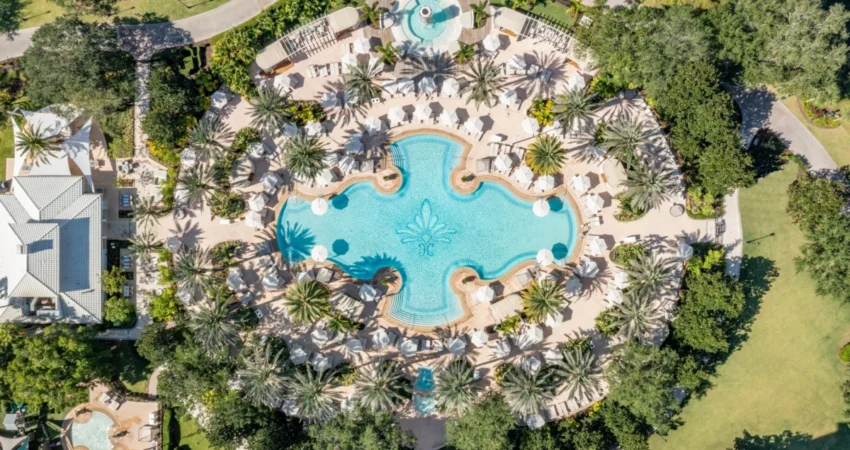
The landscape of luxury travel has undergone a seismic shift over the last decade, transitioning from exclusive enclaves for couples to sophisticated, multi-functional environments designed to accommodate multigenerational groups. As the demand for high-end family experiences increases, a select group of properties across the United States and the Caribbean has emerged as the gold standard for balancing adult-oriented luxury with child-centric engagement. These resorts are no longer merely providing "kids’ clubs"; they are engineering comprehensive ecosystems that anticipate the logistical and emotional needs of families at various developmental stages, from the "stroller phase" to the "adventure-seeking adolescent" era.
The Strategic Shift Toward Multigenerational Hospitality
Market data from the luxury travel consortium Virtuoso indicates that multigenerational travel—defined as three or more generations traveling together—remains one of the most resilient and profitable sectors of the tourism industry. In 2023, industry analysts estimated that the global luxury travel market was valued at approximately $1.3 trillion, with family-oriented expenditures accounting for a significant portion of that growth. This trend is driven by a desire for "legacy travel," where grandparents and parents seek to create shared memories in environments that remove the friction of daily life.
The resorts identified in current hospitality rankings, such as the Four Seasons Resort Orlando at Walt Disney World and The Resort at Paws Up in Montana, represent a strategic response to this demand. These properties have invested heavily in infrastructure that allows for both communal gathering and private retreat. By integrating high-touch service with specialized programming, these institutions have moved beyond the traditional hospitality model to become curators of family experiences.
Regional Spotlight: The Caribbean and the Logistical Advantage of Turks and Caicos
For luxury travelers based in North America, the Caribbean remains the primary destination for winter sun and coastal relaxation. However, the logistical complexity of reaching many Caribbean islands has historically served as a deterrent for families with young children. Travel logistics data suggests that "travel friction"—the time spent in transit between an airport and a final destination—is a primary factor in guest satisfaction for the luxury family segment.
Turks and Caicos has emerged as a leader in this space, largely due to the accessibility of Providenciales International Airport (PLS). With direct flight paths from major financial and cultural hubs such as New York, Chicago, and London, the island offers a streamlined entry process. Most high-end resorts on Grace Bay are located within a 20-minute radius of the airport, a critical metric for families traveling with infants or toddlers.
In contrast, more exclusive destinations like Saint Barthélemy require a higher degree of effort to access, often involving secondary flights or ferry transfers. Despite this, properties like Cheval Blanc St-Barths continue to command high occupancy rates by offering a distinct European-inflected luxury. The resort’s ability to provide a sophisticated environment that remains welcoming to children is a hallmark of the LVMH Hotel Management philosophy, which emphasizes "art de recevoir" (the art of receiving) across all age groups.
The Evolution of the Domestic Luxury Resort: A Chronological Perspective
The development of the American luxury family resort can be traced through several distinct eras of hospitality.
The Mid-20th Century: The Grand Mountain Houses
In the early to mid-1900s, luxury family travel was defined by "grand mountain houses" like the Mohonk Mountain House in New York’s Hudson Valley. Founded in 1869, this National Historic Landmark pioneered the concept of the all-inclusive American plan, where families engaged in wholesome outdoor activities like canoeing and hiking. This era focused on the "summer camp for adults" aesthetic, which remains a cornerstone of its appeal today.
The 1990s and 2000s: The Rise of the Branded Experience
The opening of the Four Seasons Resort Orlando at Walt Disney World Resort represented a turning point in the early 21st century. It proved that "Disney" and "Ultra-Luxury" were not mutually exclusive. By providing a five-star sanctuary with private water parks and Michelin-distinguished dining within the gates of the world’s most famous theme park, the Four Seasons captured a demographic that sought the magic of the parks without sacrificing the refinement of a high-end hotel.
The 2010s to Present: The Experience Economy and Glamping
The last decade has seen the rise of "adventure luxury." The Resort at Paws Up in Greenough, Montana, serves as the primary case study for this evolution. Established on a 37,000-acre working cattle ranch, Paws Up was a pioneer in the "glamping" (glamorous camping) movement. By offering luxury tents with en-suite bathrooms and private chefs alongside traditional ranch activities like fly fishing and cattle drives, the resort tapped into the "experience economy," where affluent families prioritize unique, rugged activities over traditional poolside relaxation.
Analyzing the Infrastructure of Top-Tier Resorts
To maintain their status as "crowd-pleasers," these resorts must execute a complex operational strategy. The following data points illustrate the amenities that distinguish a luxury family resort from a standard high-end hotel:
- Staff-to-Guest Ratios: Top-tier properties often maintain a ratio of 2:1 or higher, ensuring that "unexpressed needs" are met.
- Specialized Accommodations: The shift toward multi-bedroom villas and residential suites. For example, Terranea Resort in Rancho Palos Verdes, California, offers casitas and villas that provide the privacy of a home with the service of a resort, making it a hub for Southern California’s multigenerational gatherings.
- Educational Integration: Moving beyond babysitting, resorts now offer "edutainment." Winnetu Oceanside Resort in Martha’s Vineyard incorporates local ecology and maritime history into its youth programming, appealing to parents who value cognitive engagement during vacations.
Economic and Industry Implications
The concentration of wealth in the upper-income brackets has insulated the luxury family travel sector from broader economic volatility. While the general travel market may fluctuate based on fuel prices or inflation, the "ultra-high-net-worth" (UHNW) segment continues to prioritize family travel as a non-negotiable expenditure.
Industry experts observe that this has led to a "luxury arms race" among resorts. Properties are constantly renovating and expanding their family-oriented offerings to stay competitive. In Nevis, the Four Seasons Resort recently underwent a multi-million dollar renovation to modernize its lush, green grounds and enhance its family suites, responding to the trend of longer-duration stays by families who may be "working from anywhere."
Furthermore, the rise of "skip-gen" travel—where grandparents take grandchildren on vacation, skipping the middle generation—has forced resorts to adapt their medical and safety protocols. Luxury resorts are increasingly employing on-site medical staff and offering "concierge medicine" to cater to the specific health needs of both the elderly and the very young.
Future Outlook: Sustainability and Personalization
As the luxury family travel market continues to mature, two factors are expected to dominate the conversation: sustainability and hyper-personalization.
Families are increasingly inquiring about the environmental footprint of their travel. Resorts like Terranea, located on the sensitive Pacific coastline, have integrated land conservation and sea salt harvesting into their guest experience, appealing to the values of the "Generation Alpha" traveler.
Simultaneously, the use of AI and data analytics is allowing resorts to personalize the family experience before the guest even arrives. From pre-stocking villas with a child’s favorite organic snacks to tailoring adventure itineraries based on a teenager’s previous interests, the future of luxury family travel lies in the seamless integration of technology and human touch.
In conclusion, the best luxury family resorts in the US and Caribbean are those that recognize the family unit as a dynamic, evolving entity. By providing the infrastructure for both high-octane adventure and quiet reflection, properties like Paws Up, Cheval Blanc, and the Four Seasons have secured their positions as the definitive destinations for the modern, affluent family. As the industry moves forward, the emphasis will remain on creating environments where every generation, from the infant to the patriarch, finds equal measures of comfort and inspiration.

0 Comments