
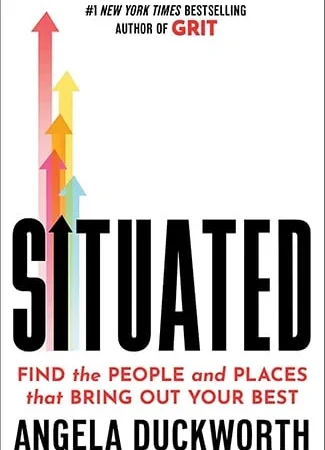
The Evolution of Behavioral Science: From Internal Grit to External Context
The transition from focusing on internal character traits to external situational factors marks a pivotal moment in contemporary psychology. For years, the "person-situation" debate has divided scholars: is behavior driven by who a person is (personality) or where they are (situation)? While Duckworth’s earlier work emphasized the "person" side of the equation, her recent findings suggest that the situation often holds the "remote control" to human behavior.
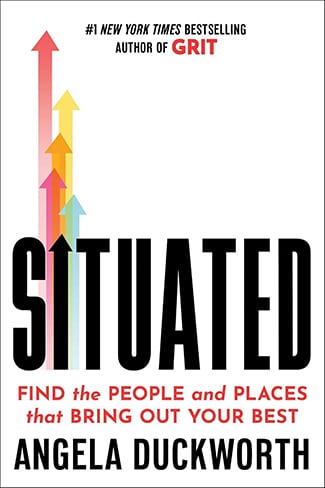
In the newly released Situated, Duckworth acknowledges that while grit remains a valuable asset, it does not exist in a vacuum. The psychological community has increasingly recognized the "Fundamental Attribution Error"—a cognitive bias where individuals overemphasize personality-based explanations for behaviors observed in others while underestimating the influence of situational factors. By shifting the focus toward "situational self-control," Duckworth aligns her research with modern behavioral economics and choice architecture, suggesting that humans are not just products of their will, but products of their surroundings.
The Three-Box Model of Behavior
Central to Duckworth’s new framework is the "three-box model," a tool designed to help individuals deconstruct why they do what they do. This model breaks down every human action into three chronological stages:
- The Situation: The objective physical and social environment (e.g., a phone sitting on a desk, a group of friends ordering drinks, or a quiet library).
- The Person: The internal processing of that situation, including perceptions, thoughts, and emotions.
- The Behavior: The resulting action taken by the individual.
Traditional self-improvement methods typically target the middle box—the "Person." These methods encourage individuals to "try harder," "be more disciplined," or "visualize success." Duckworth argues that this is the most difficult point of intervention because changing one’s internal state in the heat of the moment requires immense cognitive effort. Conversely, by intervening at the first box—the "Situation"—an individual can bypass the need for willpower entirely. If the phone is in another room (Situation), the urge to check social media never arises (Person), and the distraction is avoided (Behavior).
The Fallacy of Willpower and the Science of Situational Self-Control
A growing body of empirical data supports the idea that willpower is a finite and unreliable resource. Research by psychologists such as Wilhelm Hofmann and Roy Baumeister has shown that people with the "highest" self-control actually report using willpower less often than their peers. They do not have stronger "mental muscles"; rather, they are better at structuring their lives to avoid temptations in the first place.
Duckworth’s analysis suggests that relying on willpower is a "last resort" strategy. When an individual is forced to use willpower, they are already in a losing battle against their environment. The "situational self-control" strategy involves "proactive" rather than "reactive" measures. This includes:
- Situation Selection: Choosing to enter environments that make success easier (e.g., joining a professional networking group).
- Situation Modification: Changing an existing environment to reduce friction for good habits (e.g., prepping gym clothes the night before).
The Impact of Social Contagion and Peer Influence
The most potent element of any situation is often the people within it. Duckworth highlights the concept of "social contagion," where behaviors—both positive and negative—spread through social networks like a virus. Data from the long-running Framingham Heart Study has demonstrated that if a person’s friend becomes obese, that person’s own risk of obesity increases by 57%. Conversely, academic and professional performance is highly correlated with the "average" achievement level of one’s immediate social circle.
In Situated, Duckworth emphasizes that mentors and peers act as situational "nudges." They provide the "scripts" for how to act in specific contexts. Changing one’s social circle is often the fastest way to change one’s identity. This is not merely about networking for professional gain; it is about "identity migration," where an individual adopts the norms and values of a new group to facilitate personal growth.

Geography and the "Zip Code" Effect on Achievement
Duckworth’s research also touches on the broader socio-economic implications of situational influence. She references the work of Harvard economist Raj Chetty, whose research on "The Opportunity Atlas" shows that a child’s zip code is one of the strongest predictors of their future income and life expectancy. This data suggests that "grit" alone cannot always overcome the systemic situational hurdles of a disadvantaged environment.
By acknowledging the power of geography, Duckworth moves the conversation beyond individual habits to societal structures. For the average individual, this might mean recognizing that their current city, neighborhood, or even the layout of their office is either acting as a catalyst or a cage. The decision to move across the country or change jobs is, in this framework, the ultimate act of situational self-control.
Chronology of the Situational Movement in Psychology
The shift toward situational focus has been building over several decades, leading to the current synthesis presented by Duckworth:

- 1960s-1970s: Social psychologists like Walter Mischel (the Marshmallow Test) and Stanley Milgram explore how external pressures override internal traits.
- 2008: The publication of Nudge by Richard Thaler and Cass Sunstein introduces "choice architecture" to the mainstream, focusing on how small environmental changes affect large-scale behavior.
- 2016: Angela Duckworth publishes Grit, sparking a global conversation on perseverance.
- 2020-2024: Post-pandemic research highlights how the shift to remote work (a massive situational change) radically altered productivity and mental health across populations.
- 2026: The release of Situated marks a maturation of the field, blending the internal mechanics of grit with the external mechanics of environment.
Practical Applications: Micro and Macro Environmental Design
Duckworth provides a roadmap for "situational engineering," categorizing changes into micro and macro levels:
Micro-Level Changes
These are immediate adjustments to one’s physical space.
- The "Friction" Principle: Increase the "friction" for bad habits (e.g., deleting a distracting app) and decrease it for good ones (e.g., putting a book on your pillow).
- Visual Cues: Using "environmental prompts" to trigger desired behaviors without conscious thought.
Macro-Level Changes
These involve significant life shifts that alter the fundamental "Box 1" of a person’s life.

- Community Immersion: Moving to a neighborhood where the desired behavior (e.g., walking, cycling, or community engagement) is the default.
- Social Auditing: Evaluating one’s social circle to ensure that the "most frequent five" contacts align with one’s long-term aspirations.
Implications for the Future of Self-Improvement
The implications of Duckworth’s latest work are profound for educators, parents, and managers. If behavior is "situated," then the goal of leadership is not to "fix" people, but to "fix" the systems they operate within. In a corporate setting, this might mean redesigning office layouts to encourage spontaneous collaboration or changing incentive structures to reduce burnout. In education, it suggests that fostering a "culture of achievement" in the classroom is more effective than simply teaching study skills.
Critical analysis of this shift suggests a more compassionate approach to human failure. When an individual fails to meet a goal, the question is no longer "What is wrong with your character?" but "What was wrong with your situation?" This perspective reduces the shame associated with a lack of willpower and replaces it with a strategic, engineering-based approach to problem-solving.
As Angela Duckworth concludes in her latest work, the "situated self" is not a victim of its environment, but an architect of it. By recognizing the invisible forces that shape our choices, we gain the power to redesign those forces to bring out our best versions. The journey of self-improvement, therefore, is not a trek inward into the psyche, but a journey outward into the world we inhabit.

0 Comments