
When Guillaume Excoffier, a French dealer turned interior designer, first began visiting Beirut in the early 2010s, he was captivated by a facet of the city often overlooked: its modernist architectural heritage. Erected primarily between the 1950s and mid-1970s, a period marked by significant economic expansion and a palpable sense of optimism, these buildings represented an ambitious era of architectural experimentation. Excoffier found himself drawn to a diverse array of structures, from robust Brutalist office buildings and sweeping concrete basilicas to colorful edifices that paid homage to Le Corbusier’s "Radiant City" vision, all designed to accommodate an emerging middle class. This architectural boom was not confined to Beirut; across the region, international trends in prefabrication and the use of novel materials were being adapted to the specific context of the Middle Eastern and Mediterranean locales. These adaptations often incorporated elements suited to the balmy climate, such as shade structures, breezeways, and intricate screens. Structural innovations addressed the challenging topography of sloping terrains, while vernacular elements were reinterpreted, most notably the city’s iconic triple arches, a design feature historically defining Ottoman-era dwellings.

The history of construction in Beirut, then as now, has been frequently punctuated by disruption due to geopolitical instability and conflict. This reality meant that many ambitious projects, such as Oscar Niemeyer’s grand but ultimately unfinished plans for the Tripoli International Fair in 1963, became testaments to unrealized potential. Excoffier’s fascination was not merely academic; it evolved into a personal quest to preserve and inhabit this architectural legacy. He articulated this sentiment, stating, "People believed in a brighter future." This conviction led him to collaborate with photographer Matthieu Salvaing on the book Modernist Beirut, published by Éditions Norma, which documents these forward-looking projects.

The Rediscovery of a Mid-Century Haven
Excoffier’s personal journey culminated in 2023 when he discovered his ideal space in Ashrafieh, a fashionable district east of Beirut’s city center. He found a 1952 apartment building that offered the loft-like atmosphere he sought, characterized by an impressive 13-foot-high ceiling. "That height makes it feel a bit inside-outside," he remarked, referring to the apartment’s connection to its surroundings. Expansive windows open onto verdant terraces, providing panoramic views of the diverse architectural landscape: a blend of traditional Levantine structures, contemporary high-rises, and the midcentury apartment blocks that were his primary interest.

The apartment itself had undergone a less-than-inspired renovation, which Excoffier promptly stripped away. He then laid down polished concrete floors and installed period-appropriate windows, transforming the space into what he described as "a blank canvas." This deliberate approach allowed him to begin the meticulous process of furnishing and curating the interiors, blending his passion for modernist architecture with his discerning eye for design and art.

A Collector’s Journey: From Bordeaux to Beirut
Guillaume Excoffier’s path to interior design is rooted in a lifelong passion for objects and spaces. Born in Bordeaux, France, to a judge and an English teacher, his early life was shaped by a voracious appetite for design magazines. After a brief period immersed in the art world, he transitioned into design in the early 2010s, establishing his own gallery in Paris named Guillaume. Subsequently, he partnered with Nancy Gabriel, a former advertising and film producer residing in Beirut, to co-found Gabriel et Guillaume. Their first joint exhibition in Beirut in 2013 marked a pivotal moment, solidifying Excoffier’s decision to divide his time between Paris and the Lebanese capital. He was profoundly captivated by Beirut’s unique confluence of cultures, ideas, and aesthetics.

"My main interest in life is looking for things," Excoffier stated, underscoring his identity as an avid collector and treasure hunter. In 2023, he departed from the gallery to establish his own interior design firm. Now navigating life between Paris, Beirut, and Dubai, he dedicates himself to scouring global markets for his clients and, naturally, for his own discerning taste, finding joy in the pursuit of everything from iconic designer pieces to the most unassuming everyday objects.

Curating a Dialogue Between Eras: Excoffier’s Interior Design Philosophy
Within Excoffier’s Beirut apartment, a compelling dialogue unfolds between disparate design eras and artistic movements. His design philosophy is deeply informed by an appreciation for historical context, particularly the evolution of form and function in design. "I wanted to mix ’80s furniture with pre-20th-century pieces," he explained, a concept partly inspired by a recent auction of items from the collection of Mica Ertegun. This experience, he noted, ignited a renewed appreciation for the clean lines and streamlined elegance of Biedermeier furniture, a 19th-century style that represented a departure from the more ornate Empire designs and is often considered a precursor to modernist aesthetics.

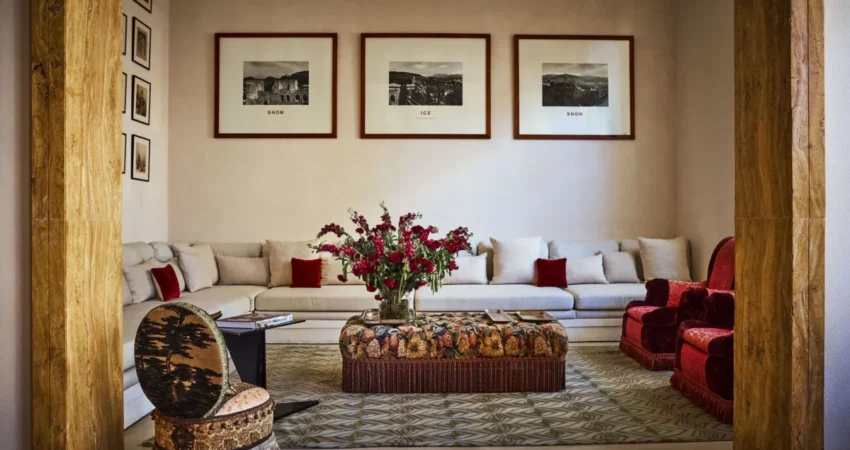
The drawing room serves as a prime example of this curatorial approach, where discussions on ornamentation and its deliberate omission come to life through a carefully assembled collection of chairs. Philippe Starck’s distinctive tubular Dr. Sonderbar seats are positioned opposite Josef Hoffmann’s Purkersdorf chairs, embodying different interpretations of modernist principles. The dynamic, curvilinear form of André Dubreuil’s "Spine" sculpture creates a visual counterpoint to the delicate intricacy of an embroidered slipper chair. This juxtaposition creates an atmosphere reminiscent of the vibrant social gatherings that are characteristic of Beirut. "Beirut is not about minimalism," Excoffier observed. "Here, you might host 40 people, and that’s considered small." This reflects the city’s renowned hospitality and its lively social fabric, which his interior design seeks to complement.

Living with antiques, Excoffier believes, need not be confined to a "froufrou and château-like" aesthetic. Instead, he champions the creation of groupings that are both visually striking and intellectually stimulating. He often highlights the interconnectedness between pieces from different historical periods. For instance, a circa 1810 Biedermeier cabinet in the dining room shares a striking formal resemblance—specifically its pyramid top and overall silhouette—with a postmodern cabinet by Aldo Rossi in the adjacent drawing room. This juxtaposition demonstrates a thoughtful engagement with historical precedents and a sophisticated understanding of design evolution.

A Fusion of Global and Local Craftsmanship
Excoffier’s commitment to his adopted city extends to his integration of local craftsmanship alongside his international acquisitions. The apartment features several pieces fabricated by local artisans, reflecting a conscious effort to support and showcase regional talent. A sleek, clean-lined sectional sofa in the lounge was produced nearby, as was a substantial concrete dining table. Bookshelves fashioned from plastered construction bricks and Arts and Crafts-inspired kitchen stools further exemplify this blend of global design sensibilities and local execution.

Even elements that might appear whimsical, such as the oversized ice cream cones displayed as if they were ready-made sculptures by Claes Oldenburg, were sourced from within the city. Excoffier recounted how, after encountering these charmingly faded faux desserts on his daily walks, he became so enamored with their nostalgic appeal that he offered to purchase them. "They’re so faded and charming—they feel like Lebanon in the summer," he explained, associating them with the sensory experiences of the region. This integration of found objects and locally produced items underscores Excoffier’s belief that an interior should be a personal and contextually relevant reflection of its environment.

Modernist Architecture: A Legacy of Resilience
The modernist buildings of Beirut, erected during a period of significant growth and optimism, represent a crucial chapter in the city’s architectural history. These structures, built between the 1950s and the mid-1970s, often incorporated innovative design solutions tailored to the local climate and topography. Features like strategically placed shade structures, cooling breezeways, and decorative screens were common, reflecting an understanding of passive cooling techniques. The use of reinforced concrete allowed for bold structural experiments, and many buildings integrated reinterpreted vernacular elements, such as the traditional triple arches found in older dwellings.

However, the socio-political landscape of Beirut has frequently presented challenges to the completion and preservation of architectural projects. The city has experienced periods of intense conflict and instability, which have inevitably impacted construction and development. Projects like Oscar Niemeyer’s ambitious Tripoli International Fair, conceived in 1963, stand as poignant reminders of the disruptions that have marked the region’s history, leaving some visionary designs incomplete.

Excoffier’s dedication to documenting and inhabiting this modernist legacy is therefore not just an aesthetic pursuit but also an act of cultural preservation. By showcasing these buildings and infusing them with contemporary life and art, he contributes to a broader understanding of Beirut’s architectural heritage and its enduring spirit of creativity and resilience. The Modernist Beirut book and his own curated living space serve as testaments to the lasting impact of this architectural era and its relevance in contemporary design discourse. His work highlights how architectural styles, even those from decades past, can continue to inspire and inform modern living, fostering a rich dialogue between history, art, and personal expression.

0 Comments