
For Jarno Zaffelli, the Italian racetrack designer and founder of Dromo, the past three years have been a whirlwind of intense dedication and meticulous planning. With a career spanning a quarter-century and over 200 circuits designed across various motorsports, Zaffelli’s latest endeavor, the Madring, a highly anticipated Formula 1 street circuit in Spain’s capital, is set to make its grand debut this weekend. This ambitious project represents a significant moment not only for Zaffelli and his firm, with offices in Italy, Singapore, and the United Kingdom, but also for the evolution of Formula 1’s urban racing landscapes.
"Testing was very positive, so I am quite excited to see what Formula 1 has to say," Zaffelli shared in an exclusive interview. Street circuits, a genre often met with mixed reactions from drivers and fans alike due to concerns about narrow layouts hindering overtaking, are frequently debated for their potential to produce less dynamic racing. However, Zaffelli is optimistic that the Madring will defy these criticisms. "No other course has this particular character, in my opinion, in terms of its flow," he asserted, hinting at innovative design elements aimed at fostering closer racing and strategic opportunities. The Ferrari F1 team conducted initial tests on the circuit in July, providing valuable feedback that Zaffelli hopes will validate his design philosophy.

The surge in Formula 1’s global popularity, significantly boosted by the immersive narrative of the Netflix docuseries Drive to Survive, has fueled a demand for new and exciting venues. This cultural phenomenon has transformed drivers like Lewis Hamilton and Max Verstappen into household names, attracting a fresh demographic to the sport. Consequently, the sport has expanded its footprint, introducing new circuits in key markets such as Miami, Las Vegas, Saudi Arabia, and Qatar, each bringing its unique challenges and spectator experiences. The Madring now joins this growing list of contemporary F1 venues, aiming to carve out its own distinct identity.
Engineering a World-Class Street Circuit: The Madring Project
The journey from concept to completion for a Formula 1 racetrack is a complex undertaking, and the Madring project was no exception, requiring a demanding three-year development period. Zaffelli’s vision necessitated a seamless integration of the circuit with IFEMA (Institución Ferial de Madrid), Madrid’s premier convention center, while simultaneously incorporating existing public roads within the rapidly developing Valdebebas neighborhood, strategically located near Madrid-Barajas Airport. This intricate balance between a modern sporting facility and an urban environment presented unique design and logistical hurdles.
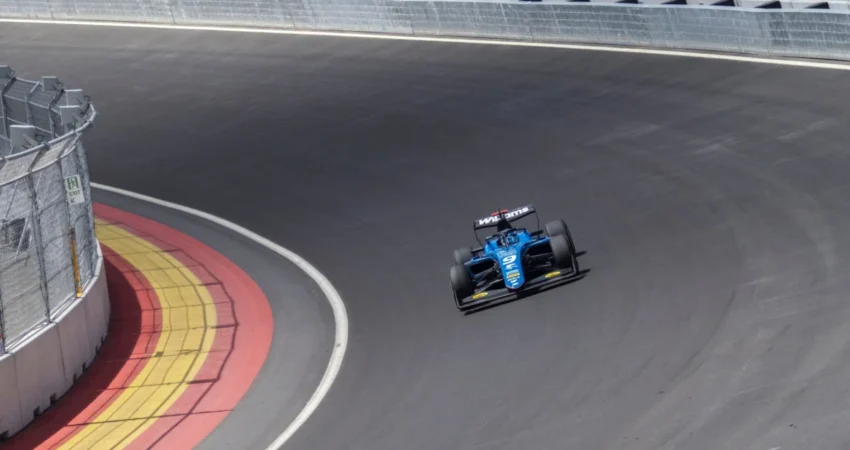
The resulting circuit measures 5.4 kilometers in length, ingeniously utilizing 1.5 kilometers of public roads. It features a challenging 22-turn layout, highlighted by a signature element: "La Monumental." This nickname refers to the highly banked Turn 12, a breathtaking corner boasting a formidable 24% gradient and a peak elevation change of 10 meters. This makes it the second steepest corner on the current Formula 1 calendar, a testament to Zaffelli’s ambition to create thrilling on-track action. Drivers are expected to reach speeds exceeding 300 km/h through various sections of the circuit, demanding peak performance from both machine and driver.

The design process involved extensive simulations and on-site analysis to ensure the track’s viability and safety. Zaffelli emphasized his objective to create a dramatic and challenging experience for the drivers. "We wanted to create something really dramatic and difficult for the drivers," he stated. "A banked corner, on its own, can be boring—what’s interesting here is that we have 10 meters of different elevation changes in the corners preceding it. The key of circuit design is the feeling that you can give to the drivers, to make them go fast but also feel as if they’re going even faster." This philosophy underscores a commitment to not only speed but also the visceral, sensory experience of racing.
A critical decision in the early stages of design was the placement of the paddock, the nerve center for each team’s operations, including pit garages and hospitality suites. Zaffelli opted to leverage the existing infrastructure of the IFEMA conference center on the southern flank of the circuit. Furthermore, a key refinement involved reducing the footprint of public roads incorporated into the track. This strategic adjustment, cutting the initial requirement by more than half, was driven by a dual purpose: minimizing disruption to the local community and streamlining the complex administrative processes involved in utilizing public thoroughfares. "When dealing with the public roads, you need to coordinate with 50 different entities," Zaffelli explained, "from the transportation department to the environmental agencies to the nearby airport, and so on. That is one of the most difficult parts of designing a track on public streets."
Spectator Experience and Technical Considerations
Zaffelli’s design ethos also prioritized the spectator experience, ensuring optimal viewing opportunities and an immersive atmosphere. A notable achievement is the strategic positioning of grandstands and hospitality centers in close proximity to the track. This design choice culminates in the creation of two expansive grandstands flanking "La Monumental," fostering an almost stadium-like environment that aims to enhance the connection between fans and the on-track action. "The drivers need to feel the spectators, and the fans need to feel the cars," he remarked. "My hope is that the audience really feels these cars—their vibrations—in the pits of their stomachs."

The construction phase of the Madring was equally impressive, spanning 17 months and commencing in April 2025. During this period, approximately one million cubic meters of earth were moved to sculpt the circuit’s contours and features. The project’s completion marks a significant engineering feat, transforming a vision into a tangible racing venue ready to host the pinnacle of motorsport.
Expert Perspectives: Anticipation and Scrutiny
As the Madring prepares for its maiden Formula 1 Grand Prix, scheduled for September 11-13, 2026, the motorsport community is abuzz with anticipation, tempered by expert analysis. Opinions on the circuit’s potential are largely positive, though some seasoned observers have raised points of contention. Robert Barnard, a respected track designer whose portfolio includes the Adelaide Street Circuit in Australia, expressed reservations regarding the Madring’s numerous tight corners. "The thing I hate are all of the blind corners," he commented. "If drivers don’t have a good sight line, they might not really attack the corner at full speed—they need to be confident there’s not another car stuck on the other side."
Barnard’s concerns are partly informed by the recent Formula 3 test session held at the Madring in August. This preliminary run resulted in a notable 19 red flags, incidents that halt racing due to crashes or dangerous situations. He posits that the unfamiliarity of the circuit for the Formula 1 drivers, coupled with its challenging layout, might lead to a more cautious approach during the race weekend. "These drivers are brave, but they’re not stupid," he concluded, suggesting that safety and track comprehension might take precedence over aggressive maneuvers in the inaugural event.

However, other figures within the Formula 1 ecosystem remain optimistic. David Hobbs, a veteran Formula 1 analyst and former lead commentator, offered a contrasting perspective, highlighting the positive feedback received from the Formula 3 drivers despite the red flag count. "I find that Formula 3 is always a bit more prone to red flags than Formula 1," he observed. "It’ll be an interesting race, for sure. The mechanics will have to set up the cars to lift the ride height and put some stronger springs in there to counteract the G force, which will be quite high." Hobbs, who has witnessed numerous inaugural Grand Prix events throughout his career, including the 1991 Spanish Grand Prix in Barcelona, anticipates an electrifying atmosphere in Madrid.
"The vibes are always good at a brand-new race, and, of course, you get a lot of new fans," he remarked. "Having the races in city centers, where the people are, also brings a different crowd." This sentiment points to the broader appeal of street circuits in urban environments, capable of drawing in a diverse audience beyond traditional motorsport enthusiasts.
The Future of Urban Racing: Zaffelli’s Vision
Jarno Zaffelli, currently navigating a demanding schedule that includes a planned visit to Kuala Lumpur, intends to be present in Madrid to witness the Madring’s debut. His ultimate hope is that the circuit will deliver a compelling spectacle, one that redefines expectations for urban racetracks. "I hope it gives the drivers and fans a unique feeling," he expressed. "And I would hope that people walk away recognizing that it’s possible to build a street circuit that is not boring."

The Madring represents more than just a new venue; it embodies a forward-thinking approach to racetrack design, aiming to balance the high-octane demands of Formula 1 with the intricacies of urban integration and the imperative of an engaging fan experience. As the engines roar to life this weekend, the world will be watching to see if Zaffelli’s ambitious vision for the future of street circuits comes to fruition on the streets of Madrid. The success of the Madring could serve as a blueprint for future urban motorsport developments, potentially reshaping the landscape of Formula 1 for years to come.

0 Comments