
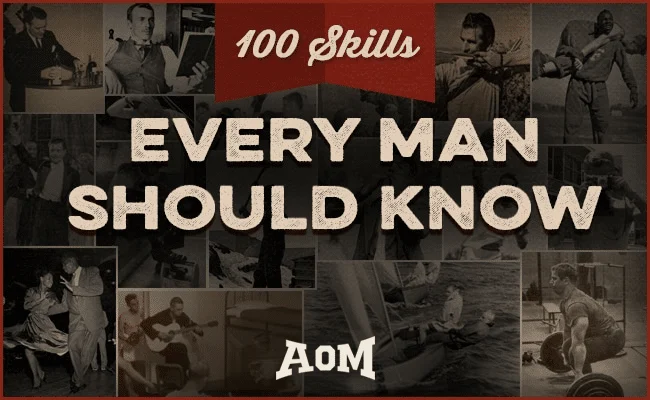
The concept of masculine competence has undergone a significant transformation over the past century, transitioning from a narrow focus on physical survival to a broad requirement for interdisciplinary versatility. In the modern era, the definition of a well-rounded man increasingly relies on a diverse portfolio of capabilities that span domestic maintenance, social navigation, mechanical proficiency, and emergency response. This evolution reflects a growing cultural movement toward self-reliance—a reaction against a decades-long trend of outsourcing basic life functions to specialized service providers and digital platforms. Sociologists and lifestyle experts suggest that the drive to master these skills is rooted in the psychological need for agency, defined as the capacity to act effectively within one’s environment rather than being a passive recipient of circumstances.
The Evolution of Competence: From Primitive to Polymath
Historically, the essential skill set for men was dictated by immediate survival needs, primarily focused on hunting, gathering, and tribal defense. However, the contemporary landscape demands a "confident competence" that integrates hard and soft skills. According to cultural analysts, the modern man must function as a "warrior and diplomat, a woodsman and a scholar." This shift is documented in the rise of the "maker movement" and the resurgence of traditional crafts, which market research indicates has grown into a multi-billion dollar industry as individuals seek more tangible connections to the physical world.

The following analysis categorizes the 100 essential skills into functional domains, providing context on their practical application and broader socio-economic implications.
Domestic Maintenance and Personal Presentation
In an age of "fast fashion" and disposable goods, the ability to maintain one’s personal effects and living space remains a cornerstone of self-sufficiency.
The Art of Appearance
Professional attire remains a critical tool for social and economic mobility. Mastering the four-in-hand or Windsor knot for a necktie is more than a sartorial choice; it is a signal of adult readiness for high-stakes environments such as job interviews, weddings, and funerals. Furthermore, the ability to select, fit, and maintain a quality suit—including the technical knowledge of fused versus canvassed construction—ensures long-term financial efficiency. Supporting skills include the manual ritual of shoe shining, which preserves leather longevity, and the ability to iron trousers and shirts to professional standards.

Home Repair and Utility
Economic data suggests that basic home maintenance skills can save homeowners thousands of dollars annually. Essential tasks include fixing a leaky faucet, unclogging a toilet without professional assistance, and hanging pictures or shelving correctly. On a deeper level, sewing a button or performing basic garment repair prevents unnecessary waste. These skills represent a return to the "stewardship" model of homeownership, where the occupant possesses the technical literacy to manage their immediate infrastructure.
Survival, First Aid, and Emergency Response
The necessity for emergency preparedness has been highlighted by recent global disruptions and natural disasters. The ability to act as a first responder within one’s own family or community is a primary tenet of modern masculinity.
Life-Saving Interventions
Statistically, immediate bystander intervention significantly increases survival rates in medical emergencies. Proficiency in Cardiopulmonary Resuscitation (CPR), the Heimlich maneuver, and the application of a modern tourniquet are non-negotiable skills. While 20th-century medical protocols often viewed tourniquets as a last resort, data from recent conflicts in Iraq and Afghanistan has led to a revival of their use in civilian medicine to prevent exsanguination from limb trauma.

Wilderness and Primitive Survival
Despite the urbanization of the global population, wilderness survival skills remain vital for recreational safety and disaster resilience. This domain includes:
- Fire Mastery: Building a fire under adverse conditions and making fire without matches (using friction or magnification).
- Navigation: Using a map and compass, identifying North via celestial bodies or shadow sticks, and maintaining situational awareness.
- Resource Procurement: Finding and purifying potable water, identifying edible versus poisonous plants, and basic fishing techniques such as casting a line and filleting the catch.
- Shelter and Tool Use: Building a survival shelter, sharpening a knife, and felling a tree safely.
Social Intelligence and Communication
As the global economy shifts toward service and information-based sectors, "soft skills" have become high-value assets. The ability to navigate complex social hierarchies and build rapport is a critical component of modern effectiveness.
The Rhetoric of Leadership
Public speaking remains one of the most feared yet impactful skills a man can possess. Whether delivering a eulogy, a business presentation, or a wedding toast, the ability to organize thoughts and speak with clarity is a hallmark of leadership. This is complemented by the art of storytelling and the ability to tell a joke, which serve as social lubricants in both professional and casual settings.

Interpersonal Etiquette
In the digital age, the "analog" skills of a firm handshake, maintaining eye contact, and the art of small talk are becoming increasingly rare. Furthermore, the ability to write a handwritten letter in cursive and send formal thank-you notes distinguishes an individual in a crowded digital landscape. Negotiation and haggling, particularly in commercial transactions, are also essential for financial stewardship and conflict resolution.
Mechanical Proficiency and Physical Capability
Physical agency requires both the strength to move objects and the technical knowledge to manage machinery.
Automotive Self-Sufficiency
Despite the increasing complexity of modern vehicles, basic mechanical tasks remain accessible to the layperson. Knowing how to change a tire, jump-start a dead battery, and change the engine oil are fundamental for safety and cost-saving. Additionally, the ability to drive a manual transmission (stick shift) and back up a trailer are specialized skills that expand a man’s utility in various transport scenarios.

Physical Benchmarks
Functional strength is categorized by the ability to perform basic human movements under load. The deadlift and the squat are cited by kinesiologists as the most practical exercises for maintaining lifelong mobility and strength. Complementary skills include the pull-up, the push-up, and the ability to swim the front crawl—a survival skill that doubles as a high-intensity workout.
The Culinary and Craft Arts
The transition from consumer to producer is most evident in the kitchen and the workshop.
Culinary Fundamentals
Basic nutrition and hospitality require a man to move beyond processed foods. Essential culinary skills include:

- The Signature Dish: Mastering one complex meal for guests.
- Breakfast Basics: Cooking eggs (scrambled, poached, or fried) and making pancakes from scratch.
- Protein Management: Grilling with charcoal, cooking a steak to the desired temperature, and frying bacon correctly.
- Harvesting: For those who hunt, field dressing game and carving a turkey are necessary skills for the "water-to-table" or "field-to-table" experience.
Technical Craft
The safe and effective use of tools—from the humble hammer to the chainsaw—allows for the modification and repair of the physical environment. This domain also includes more specialized skills like tying a bowline knot (essential for securing loads or rescue operations) and picking a basic pin-tumbler lock for emergency access.
Chronology of Skill Acquisition: A Lifelong Pursuit
The mastery of these 100 skills is rarely achieved in a single decade. Instead, educators suggest a tiered approach to development:
- Adolescence (Ages 12-18): Focus on basic domestic tasks (ironing, sewing buttons), physical fitness (push-ups, swimming), and social foundations (handshakes, small talk).
- Early Adulthood (Ages 19-30): Mastery of professional presentation (tying a tie, buying a suit), automotive basics (changing oil, tires), and emergency first aid (CPR).
- Full Maturity (Ages 30+): Advanced skills such as negotiation, public speaking, home repair, gardening, and passing on "uncle tricks" or stories to the next generation.
Broader Impact and Implications
The pursuit of competence has implications far beyond individual satisfaction. Sociologists argue that a population of self-reliant individuals contributes to "community resilience." When more citizens can perform CPR, manage a small fire, or repair basic infrastructure, the burden on state resources during crises is reduced.

Furthermore, the psychological impact of skill acquisition is profound. The "competence-confidence" loop suggests that as a man masters a physical or social skill, his perceived self-efficacy increases, leading to lower rates of anxiety and a greater sense of purpose. In an era often defined by digital abstraction, the 100 skills represent a grounded, factual pathway to a more engaged and effective life.
Ultimately, these skills are not merely about "manliness" in a performative sense, but about the universal human value of being useful. A man who can navigate a forest, fix a sink, comfort a crying baby, and lead a meeting is a man who can act rather than be acted upon—a distinction that remains as relevant today as it was for the primitive hunters of antiquity.

0 Comments