
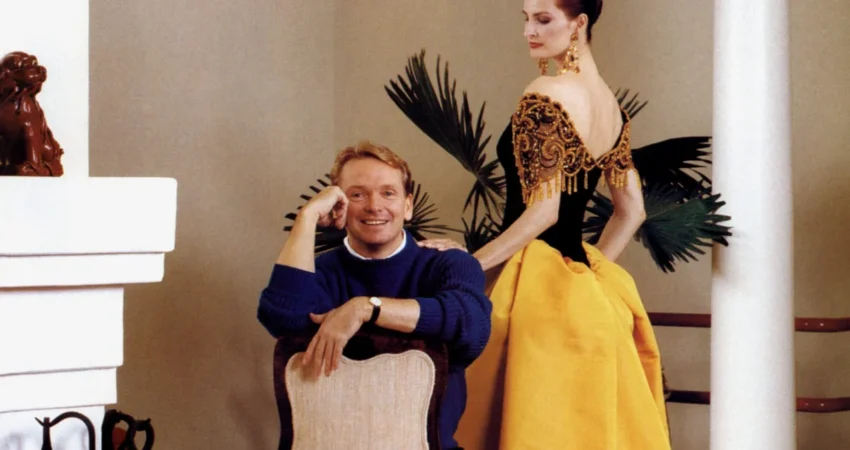
Fashion icon Bob Mackie, the visionary designer renowned for his dazzling and unforgettable costumes that defined the careers of countless celebrities, has passed away at the age of 87. Mackie’s prolific career, spanning over six decades, was marked by an unparalleled ability to translate pure glamour into wearable art, earning him nine Emmy Awards and a Tony Award. He was the mastermind behind the show-stopping sequined ensembles and feathered creations that adorned legends such as Carol Burnett, Cher, Diana Ross, and Tina Turner, solidifying his reputation as the "Guru of Glitter." While his public persona and creations exuded an extravagant, nocturnal allure, his personal sanctuary in Beverly Hills, as showcased in a 1989 Architectural Digest tour, revealed a starkly different, yet equally captivating, aesthetic – a casual, comfortable retreat bathed in sunlight.
A Legacy of Glamour: From Stage to Screen
Bob Mackie’s name became synonymous with show business spectacle. His designs were not merely garments; they were transformative tools that amplified the personas of the stars who wore them. From Carol Burnett’s iconic comedic costumes on her weekly variety show to Cher’s famously daring and scanty ensembles that pushed the boundaries of fashion and taste, Mackie’s creations were always a focal point. His work with Diana Ross, Barbra Streisand, Bernadette Peters, and Raquel Welch further cemented his status as Hollywood’s premier costumier. The common thread in these diverse collaborations was Mackie’s signature use of sequins, feathers, and an abundance of beads, creating looks that were undeniably glamorous, slinky, and utterly unforgettable.
His creations were designed for the spotlight, destined for gala events, Academy Awards ceremonies, and the grand stages of Las Vegas. Mackie himself described his most famous designs as "clothes designed for night – you cannot conceive of their being worn before the moon comes up and the limos come out and the house lights go down." This philosophy underscored his understanding of theatricality and the power of costume to create an immersive experience for the audience.

The Unexpected Sanctuary: A Contrast in Design
In a striking departure from the dazzling, nocturnal world he created for his clients, Bob Mackie’s Beverly Hills home, toured by Architectural Digest in September 1989, presented a vision of understated elegance and serene comfort. The house, originally built and previously owned by an architect, was designed to embrace natural light, a stark contrast to the dimly lit, dramatic environments often associated with Mackie’s work.
Mackie, upon purchasing the home five years prior to the feature, embraced its inherent luminosity. He retained its clean lines and comfortable, uncluttered aesthetic, eschewing the sequins, feathers, and rhinestones that defined his professional output. "People come expecting black and chrome and glitter – I don’t know what they expect," Mackie once mused. "But when they walk in they say, ‘Oh.’ I’ve never liked a lifestyle that reflects the clothes I design – it doesn’t appeal to me. I bought the house for the light and the privacy."
This deliberate separation between his professional and personal life highlighted Mackie’s nuanced approach to design. While he excelled at crafting fantastical costumes for public personas, his private space was a refuge, a place to recharge and escape the demands of his high-profile career. The home was a testament to his ability to appreciate beauty in simplicity, a quiet counterpoint to the exuberant theatricality he so masterfully orchestrated.
A Curated Collection: Personal Treasures and Antiques
Mackie’s approach to furnishing his home was organic and deeply personal. He largely retained the existing furnishings, choosing to reupholster a sofa in the library and incorporating pieces he had meticulously collected over many years. His collaboration with his friend Robert Kelly, proprietor of the Los Angeles antique store Baldacchino, proved instrumental in selecting items that resonated with Mackie’s sensibility.

The designer’s affection extended to both significant antique pieces and more idiosyncratic objects. "It’s important to have your toys around," he once stated, referring to items like a striking blue and black-striped wooden tiger, acquired in Paris, that served as a portable decorative element. His bedroom also featured a singular ceramic high-heeled shoe, a gift from his long-time muse, Cher, a subtle nod to his professional life that remained a personal memento.
The house was far from devoid of personality or charm. Mackie actively resisted what he termed "giving interiors a case of the cutes," favoring open spaces over clutter. However, touches of humor and drama were subtly woven into the fabric of the home, reflecting his innate theatricality. In the living room, masks from Bali, Mexico, and Africa were displayed alongside Japanese lacquered wood dogs and a hat mannequin from the 1930s sporting a cloche. An 18th-century French armoire and a Heriz carpet added historical gravitas, while elaborate chaps and masks mounted above the fireplace hinted at his iconic creations.
The Primary Bedroom: A Tropical Oasis
The primary bedroom offered a particularly enchanting glimpse into Mackie’s personal aesthetic. Behind the bed, he created a captivating vignette using Balinese wood banana trees and Oaxacan "fantasy animals," transforming the space into a lush, whimsical jungle. This arrangement exemplified his talent for juxtaposing disparate elements to create a unique and evocative atmosphere. A Northwest Coast Indian mask commanded attention in the entrance hall, and smaller masks from various cultures were strategically placed throughout the residence, showcasing his appreciation for global artistry and craftsmanship.
A Life Dedicated to Work and Rest
Bob Mackie’s unwavering commitment to his craft was legendary. Despite a demanding schedule and a burgeoning ready-to-wear empire that encompassed furs, lingerie, eyewear, and swimwear, he maintained his Los Angeles home as a vital sanctuary. His business headquarters were in New York, where he also maintained an apartment, necessitating considerable travel. Mackie himself acknowledged a sense of urgency about his work, describing his foray into ready-to-wear as a response to a "mid-life crisis." "When you’re in your twenties and thirties you think you have all the time in the world," he reflected. "Then you realize you’d better start doing your work because you may never get to it."

This drive fueled his creative output, making his hillside residence all the more cherished. While he entertained on occasion, he primarily sought comfort and relaxation within its walls. "I cook and spend time in the kitchen, I sit and read the paper on Sunday morning," he described. "I love spending a weekend there – it’s restful and easy, just a nice place to be." It was a place where the demands of the spotlight faded, replaced by the quiet satisfaction of a life well-lived and a career brilliantly executed. The absence of overt glamour in his home was not a deficiency, but a deliberate choice, a testament to his understanding that true comfort and personal fulfillment reside not in glitter, but in a sanctuary built for peace and quiet enjoyment.
A Lasting Impact on Fashion and Entertainment
Bob Mackie’s passing marks the end of an era in costume design and fashion. His influence extends far beyond the red carpet and the stage. He democratized glamour, making it accessible to a wider audience through his ready-to-wear lines, while simultaneously setting an impossibly high standard for theatrical costume design. His nine Emmy Awards and Tony Award are testaments to his unparalleled skill and artistic vision. The vibrant, bold, and often daring creations he brought to life will continue to inspire designers and captivate audiences for generations to come. His ability to blend artistry with commercial success, and to maintain a distinct personal aesthetic separate from his flamboyant public persona, showcases a depth and complexity that will be deeply missed. The fashion world mourns the loss of a true original, a legend who painted the world with his inimitable touch of glitter and glamour.

0 Comments