
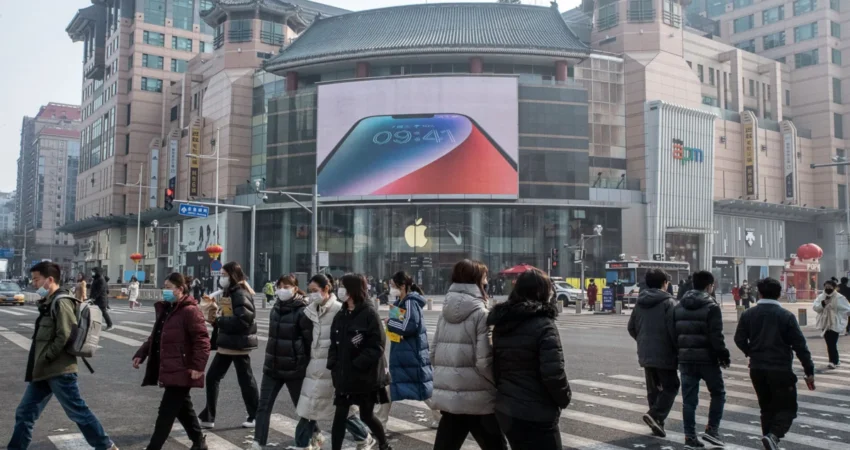
Beijing, China – China’s economic recovery, a subject of intense global scrutiny following the dismantling of its stringent "zero-COVID" policies, is grappling with a complex array of challenges, as evidenced by a mixed bag of economic data released for August. While industrial output demonstrated unexpected resilience, consumer spending growth slowed significantly, and the crucial fixed-asset investment slump deepened, signaling persistent weaknesses in the world’s second-largest economy. Authorities have candidly acknowledged an "acute" domestic imbalance between "strong supply and weak demand," coupled with intensified adverse impacts from the external environment, painting a picture of an economy struggling to regain its pre-pandemic momentum.
The National Bureau of Statistics (NBS) reported on Tuesday that retail sales, a key indicator of consumer confidence and spending, grew by a mere 0.4% in August from a year earlier. This figure marks a further deceleration from the 0.6% growth recorded in July and substantially missed economists’ forecasts of a 0.8% expansion in a Reuters poll. The sluggish retail performance underscores lingering caution among Chinese households, who appear hesitant to loosen their purse strings despite the economic reopening earlier in the year. Conversely, industrial output offered a glimmer of optimism, expanding by 5.2% last month. This accelerated from July’s 4.5% growth and surpassed economists’ expectations for a 4.8% rise, suggesting that the manufacturing sector, buoyed by export demand and potentially government-backed projects, is demonstrating some robustness. However, this industrial strength is juxtaposed against a worrying trend in investment. For the first eight months of the year, urban fixed-asset investment (FAI), a broad measure encompassing property and infrastructure spending, shrank by 7.2% from a year earlier. This decline steepened from the 6.7% contraction observed in the January-to-July period and aligned with analysts’ gloomy expectations, highlighting the profound drag exerted by the struggling property sector and subdued private investment. The urban survey-based unemployment rate also saw a slight uptick, rising to 5.3% in August from 5.2% in July, remaining unchanged from the same period last year, indicating a persistent challenge in job creation, particularly for recent graduates.
A Chronology of Post-Reopening Disappointments
The narrative of China’s economic trajectory in 2023 has been one of initial optimism followed by increasing disappointment. At the beginning of the year, economists and policymakers alike anticipated a robust rebound, fueled by pent-up consumer demand after three years of strict COVID-19 controls. The lifting of zero-COVID policies in late 2022 and early 2023 was expected to unleash a wave of "revenge spending" and business investment, propelling the economy towards ambitious growth targets.
- January-February 2023: Early data suggested a modest recovery in consumer activity, boosted by the Lunar New Year holiday and the initial excitement of reopening. However, the anticipated surge in consumption failed to materialize into sustained, broad-based growth.
- March-April 2023: Economic indicators began to show signs of faltering. Consumer confidence remained stubbornly low, and the property market, a perennial engine of growth, continued its protracted slump. Local governments, heavily reliant on land sales, faced increasing fiscal pressures.
- Second Quarter 2023: The growth momentum visibly weakened. Gross Domestic Product (GDP) expanded by 4.3% in the second quarter, marking the weakest pace in more than three years, excluding the initial COVID-19 shock of early 2020. This performance fell short of market expectations and underscored the fragility of the recovery.
- July 2023: Key economic data points, including retail sales and industrial output, showed a slowdown, prompting renewed concerns among analysts. Youth unemployment soared to record highs, reaching over 21%, before the NBS temporarily suspended the publication of age-specific unemployment data, further fueling anxieties about the job market.
- August 2023: The latest data continues this trend of mixed signals and deepening concerns. While industrial output provided a modest upside surprise, the persistent weakness in consumer spending and the deepening investment slump highlight the structural impediments to a stronger, more balanced recovery.
Consumption Stalls: A Closer Look at Retail Sales
The anemic growth in retail sales is perhaps the most concerning aspect of the August data, as robust domestic consumption is crucial for China’s pivot towards a "dual circulation" development strategy. The 0.4% year-on-year increase in August retail sales is starkly lower than pre-pandemic growth rates, which often hovered in the 6-8% range. This slowdown can be attributed to several factors:
- Eroding Consumer Confidence: Lingering uncertainty about future income, job security, and the health of the property market has made households more cautious. Many consumers, especially those with significant exposure to real estate, have seen their wealth diminish, leading to a preference for saving over spending.
- Property Market Fallout: The ongoing crisis in the real estate sector has a direct and indirect impact on consumption. Direct impact comes from reduced spending on home furnishings and related services. Indirectly, the decline in property values and the fear of developer defaults have made households more risk-averse, curtailing discretionary spending.
- Wage Growth Stagnation: While overall employment has been relatively stable in some sectors, wage growth has not kept pace with expectations, limiting disposable income and thus spending power for many families.
- Shift in Spending Patterns: There’s evidence of a shift towards essential goods and services, with discretionary spending on big-ticket items like automobiles or luxury goods remaining subdued. While catering and hospitality showed some signs of recovery, this has not been sufficient to offset broader weakness.
Industrial Resilience Amidst Headwinds
In contrast to the consumption slump, China’s industrial sector demonstrated a degree of resilience in August. The 5.2% expansion in industrial output, surpassing forecasts, can be attributed to several factors. Export demand, particularly for high-tech components and electronics, has been a key driver. A global investment boom in artificial intelligence, for instance, has translated into increased demand for Chinese semiconductors and tech hardware, providing a boost to manufacturing. Furthermore, government-led infrastructure projects, while not fully offsetting the property slump, may have contributed to demand for industrial materials and machinery. The official manufacturing purchasing managers’ index (PMI) also offered a positive sign, showing that new orders and output both returned to expansion in August after contracting in July, indicating improving business sentiment and production activity. However, it’s crucial to note that this industrial strength is primarily supply-side driven and does not necessarily reflect robust domestic demand, aligning with the NBS’s warning of a "strong supply, weak demand" imbalance.
Investment Slump: The Shadow of the Property Crisis
The deepening slump in urban fixed-asset investment (FAI) is arguably the most critical structural challenge facing China’s economy. The 7.2% contraction for the first eight months of the year reflects the profound and ongoing crisis in the property sector, which traditionally accounts for a significant portion of FAI and contributes up to a quarter of China’s GDP when related industries are included.
The property sector has been mired in crisis since 2020 when Beijing introduced the "Three Red Lines" policy to deleverage highly indebted developers. While well-intentioned, these policies triggered a liquidity crunch, leading to defaults by major developers like Evergrande and Country Garden, widespread project suspensions, and a collapse in buyer confidence. This has had a cascading effect:
- Developer Defaults: A growing number of developers have either defaulted on their debts or are teetering on the brink, creating systemic risks for the financial sector.
- Housing Market Downturn: Property sales have plummeted, and housing prices in many cities are declining, eroding household wealth and deterring potential buyers.
- Local Government Finances: Local governments, which historically relied heavily on land sales for revenue, are facing severe fiscal strain, limiting their ability to fund public services and infrastructure projects.
- Diminished Confidence: The uncertainty surrounding property values and the fear of unfinished homes have made potential homebuyers extremely cautious, further depressing demand and exacerbating the crisis.
While the government has introduced incremental measures to stabilize the property market, such as easing mortgage rules, providing financing support to state-backed developers, and encouraging property project completion, these efforts have yet to yield a significant turnaround. The lingering debt burden, coupled with a fundamental shift in demographics and housing demand, suggests that the property sector will remain a significant drag on FAI and overall economic growth for the foreseeable future.
Employment Landscape: Graduation Season and Structural Shifts
The slight uptick in the urban survey-based unemployment rate to 5.3% in August, while modest, points to persistent challenges in the labor market. NBS spokesperson Fu Linghui attributed this rise primarily to the "graduation season," a perennial phenomenon where a large influx of university graduates enters the job market, temporarily pushing up unemployment figures. Indeed, youth unemployment (16-24 age group) had been a significant concern, reaching a record high of 21.3% in June before the NBS suspended its publication.
However, beyond seasonal fluctuations, structural shifts are also at play. While the NBS highlighted stable employment in manufacturing and good prospects for tech jobs, suggesting a pivot towards higher-value industries, the overall job market is still adapting to economic restructuring and technological advancements. The growth in hospitality and catering sectors, while positive, often represents lower-wage, less secure employment, and may not fully absorb the large number of educated youth seeking professional roles. The challenges in the property sector and among small and medium-sized enterprises (SMEs) also contribute to a subdued hiring environment. Sustained job creation, particularly for the youth, is vital for maintaining social stability and boosting long-term consumer confidence.
Beijing’s Policy Conundrum: Balancing Growth and Reform
The mixed economic signals and the acknowledgment of "acute" domestic imbalances put Beijing’s policymakers in a difficult position. The statistics bureau’s English-language release explicitly warned of an "intensified" adverse impact from the external environment and an "acute" imbalance domestically between "strong supply and weak demand," adding that some businesses still faced operational difficulties. In response, the NBS called for stepping up macro-policy adjustments and boosting domestic demand, while advancing industrial upgrades for "innovation-led" development.
Despite these calls, policymakers have so far resisted implementing aggressive, large-scale stimulus measures, opting instead for a series of incremental, targeted interventions. This cautious approach stems from several considerations:
- Debt Concerns: Years of stimulus and infrastructure spending have led to a significant build-up of debt at both the central and local government levels, as well as among state-owned enterprises. Beijing is wary of exacerbating this debt burden.
- Focus on "High-Quality Growth": The leadership has repeatedly emphasized a shift from quantity to quality in economic growth, prioritizing sustainable development, technological self-reliance, and environmental protection over simply hitting high GDP targets.
- Avoiding Moral Hazard: In the property sector, there’s a delicate balance to strike. While the government wants to prevent a systemic collapse, it also aims to avoid bailing out heavily indebted developers, which could create moral hazard and discourage market discipline.
- Limited Efficacy of Past Stimulus: Some policymakers may believe that past large-scale stimulus programs, while boosting short-term growth, also exacerbated structural imbalances and led to unproductive investments.
Monetary and Fiscal Levers: Limited Impact So Far
The incremental policy response has involved both monetary and fiscal measures, though their impact has been limited to date. The People’s Bank of China (PBoC) has pledged more policy support, including targeted liquidity injections and adjustments to reserve requirements, but has largely refrained from explicit, large-scale interest rate cuts that might signal broad economic distress or risk capital outflows. While some minor rate adjustments have occurred, they have not been sufficient to significantly stimulate credit demand.
On the fiscal front, Beijing has stepped up government bond issuance and expanded loan-interest subsidies for small private businesses and consumers in recent weeks. However, these efforts have largely fallen short of expectations. China’s credit expansion in August missed forecasts by a wide margin, with government bond financing unable to offset sluggish corporate and household demand. New bank loans expanded by just 60 billion yuan ($8.95 billion), significantly less than the roughly 400 billion yuan forecast and down sharply from 590 billion yuan a year earlier. Furthermore, outstanding loan growth slowed to a record-low 4.9%, indicating weak appetite for borrowing and investment across the economy. This suggests that without a significant boost in confidence or more aggressive policy intervention, the existing measures may not be enough to turn the tide.
The Broader Economic Picture: External Pressures and Domestic Challenges
Beyond the domestic imbalances, China’s economy is also contending with an "intensified" adverse external environment. Global economic growth has slowed, driven by persistent inflation in major economies, aggressive interest rate hikes by central banks (like the U.S. Federal Reserve and the European Central Bank), and ongoing geopolitical tensions. These factors contribute to:
- Weakening Export Demand: While some high-tech exports have performed well, overall global demand for Chinese goods is softening, impacting the manufacturing sector.
- Supply Chain Disruptions: Geopolitical tensions and efforts by some Western countries to "de-risk" or "decouple" from China could lead to long-term shifts in global supply chains, affecting Chinese manufacturers.
- Currency Volatility: The strength of the U.S. dollar, driven by higher interest rates, puts pressure on the yuan, making imports more expensive and potentially impacting capital flows.
- Energy Prices: While China’s massive oil stockpiles have offered a buffer against surging energy prices, allowing the world’s biggest crude importer to scale back oil purchases, global energy market volatility remains a potential risk.
The NBS’s explicit mention of "strong supply and weak demand" domestically is a crucial acknowledgment. It implies that while China’s industrial capacity remains robust, the ability of its vast population to consume those goods and services is constrained. This structural issue requires not just short-term stimulus but deeper reforms to boost household income, strengthen the social safety net, and rebalance the economy away from an over-reliance on investment and exports.
Outlook and Implications: A Path Towards "Innovation-Led" Development
Looking ahead, economists offer cautious assessments of China’s economic trajectory. Zhiwei Zhang, president at Pinpoint Asset Management, noted that "The market is waiting for the fiscal policy to become more supportive in Q3," but cautioned that the economy would likely "continue facing downside risks as fiscal support takes time to take effect." Oxford Economics estimates third-quarter growth at 4.3%, posing downside risks to its 4.7% annual growth target and veering further from Beijing’s annual target of 4.5% to 5%. They emphasize that weak consumption and the property slump remain the biggest drags on growth, even as exports and high-tech manufacturing add some momentum.
A team of economists led by Raymond Yeung, China economist at ANZ Research, suggested that "September could represent an important policy window to revive business confidence ahead of October’s Golden Week holidays," implying a potential for more targeted fiscal support, though they deem a policy rate cut unlikely.
However, a consensus among some analysts suggests that Beijing is unlikely to ramp up stimulus meaningfully as long as export growth remains strong enough to power the economy within its target range, highlighting the internal debate on the appropriate level of intervention. The call for "innovation-led" development signals a long-term strategy to shift towards higher-value industries and technological self-reliance, but this ambitious goal may not offer immediate relief to the current demand-side challenges.
In conclusion, China’s economy finds itself at a critical juncture. While certain sectors like industrial output and high-tech manufacturing show resilience, the overarching narrative is one of a fragile recovery hampered by deepening investment woes, particularly in the property sector, and persistently weak consumer demand. Beijing’s cautious, incremental approach to policy stimulus reflects a complex balancing act between short-term growth imperatives and long-term structural reforms, debt management, and a strategic pivot towards a more sustainable, innovation-driven economic model. The coming months, particularly leading up to the Golden Week holidays and beyond, will be crucial in determining whether these measured interventions can effectively reignite confidence and steer the world’s second-largest economy back onto a path of robust and balanced growth.

0 Comments