
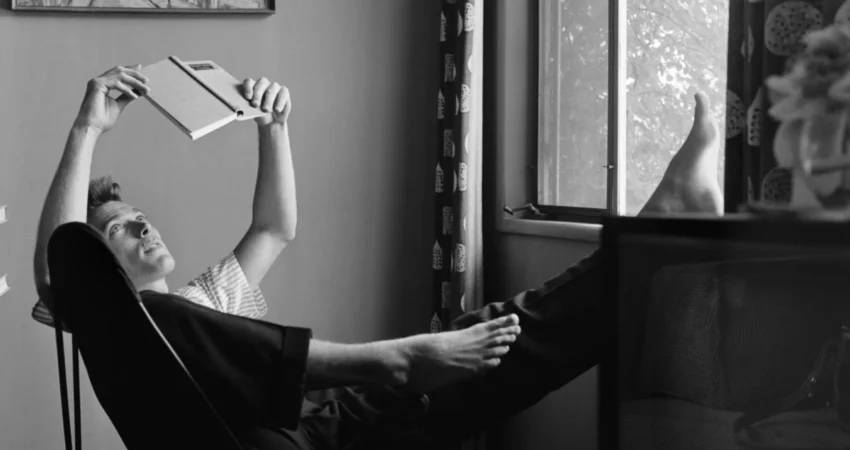
The picturesque coastal haven of Carmel-by-the-Sea and the broader Monterey Bay region have held a profound and enduring place in the heart of cinematic icon Clint Eastwood. His connection to this stunning stretch of California coastline began in his formative years, dating back to his military service. Stationed at Fort Ord as a 20-year-old in the early 1950s, Eastwood was immediately captivated by the area’s natural beauty. "The first time I saw the place I thought it was terrific," he confided to Architectural Digest in 1993. "Visually it was something else, and I thought it was the place I’d like to call home. So I kind of adopted Carmel." This sentiment, expressed decades later, underscores a deep-seated affinity that has shaped his life and career, extending far beyond his initial military assignment.
While the allure of Carmel was immediate, Eastwood’s early life and career trajectory did not immediately align with settling down in such a serene locale. He admitted in a 2007 interview, "Back then I didn’t plan on owning too much of anything." Following his honorable discharge from the army, Eastwood pursued a degree in business administration at Los Angeles City College, dedicating his evenings to honing his craft in acting classes. This period of diligent study and ambition soon paid off with his breakthrough role as Rowdy Yates in the highly popular CBS Western series, Rawhide. Hollywood became his professional home during the burgeoning era of his spaghetti Western fame, yet the magnetic pull of Carmel never waned. This article delves into the rich tapestry of Eastwood’s relationship with the Monterey Bay area, exploring his evolving presence and profound connection through a series of significant moments and properties.

Early Years and the Seeds of Affection
Clint Eastwood’s journey from a young soldier to a global film star is intrinsically linked to his experiences in and around Carmel. His initial exposure to the area during his military service at Fort Ord provided him with a unique perspective on the region’s charm. Unlike many who might view a military post as a temporary obligation, Eastwood found himself drawn to the unique aesthetic and atmosphere of Carmel. This early appreciation laid the groundwork for a lifelong connection, a sentiment he would later articulate as feeling like Carmel was the place he "kind of adopted."
Following his military service, Eastwood’s life took him to Los Angeles to pursue his acting ambitions. His studies in business administration at Los Angeles City College and his commitment to acting classes were instrumental in launching his career. The pivotal role of Rowdy Yates in Rawhide (1959-1965) propelled him into the national spotlight. During this period, Eastwood’s life was largely centered around the demands of Hollywood. However, the memory and appeal of Carmel remained a constant undercurrent.
Apartment Living and the Dawn of a Career
The mid-1950s marked the beginning of Eastwood’s professional acting career, albeit with smaller film roles before his ascent. His appearance in the 1956 Western comedy The First Traveling Saleslady, starring Ginger Rogers, Carol Channing, and Barry Nelson, was a significant step. During this time, Eastwood and his first wife, Maggie Johnson, whom he married in 1953, resided in Studio City, near the Universal Pictures lot. They rented an apartment at the Valli Sands complex, a U-shaped, two-story structure. According to Patrick McGilligan’s comprehensive biography, Clint: The Life and Legend, their monthly rent was $125.

A photograph from June 1956 captures Eastwood at the wheel of his Austin-Healey 100M sports car, parked outside the Valli Sands apartment building. This image offers a glimpse into his life during his early acting days. The Valli Sands complex was known to house other aspiring actors, including Gia Scala and Lili Kardell. McGilligan’s account notes that when Kardell was dating James Dean, Dean would reportedly speed down the street in his Porsche, adding a touch of Hollywood lore to the Valli Sands neighborhood. This period, characterized by modest living and the pursuit of his acting dreams, was further punctuated by his passion for automobiles, a theme that would recur throughout his life.
Riding in Style: A Passion for Automobiles
Clint Eastwood’s biographer, Patrick McGilligan, has noted that fast cars and women were central priorities in Eastwood’s life. McGilligan wrote in Clint: The Life and Legend, "He owned his first car even before he could legally carry a license." This early fascination with automobiles continued into his burgeoning career. After retiring his Austin-Healey, Eastwood acquired a Jaguar XK150, a quintessential sports car of its era. His fondness for this vehicle was so profound that it was prominently featured in his directorial debut, the 1971 psychological thriller Play Misty for Me. This cinematic integration of his personal passion highlights the deep connection he felt with his vehicles, treating them not just as modes of transport but as extensions of his persona.
The ownership and appreciation of classic automobiles have remained a constant throughout Eastwood’s life. This reflects a broader fascination with fine machinery and craftsmanship, a trait that also informs his interest in property development and restoration. The Jaguar XK150, in particular, represents a period of growing success and discerning taste, foreshadowing his later ventures into luxury real estate and automotive collecting.

Upgrading in Los Angeles: A Modest Hillside Ranch
By 1959, Eastwood and Maggie Johnson had moved to a new residence at 3512 Beverly Glen Boulevard in Sherman Oaks, Los Angeles. McGilligan describes this home as a "modest hillside ranch house" offering a "scenic outlook." A visitor to the home at the time observed that it appeared "stripped to bare essentials," suggesting a minimalist approach to their living space. However, the couple began to infuse the house with personal touches, particularly after Maggie Johnson transitioned from her professional life to focus on her artistic pursuits.
Maggie Johnson was known for her "dark, moody portraits," as noted by McGilligan. Her artistic endeavors brought a new dimension to their home, and some have speculated that the distinctive visual style of Eastwood’s later films may have been influenced by the atmospheric quality of her paintings. A poignant photograph from this era captures Maggie sketching her husband’s portrait at home, illustrating the creative and personal synergy within their relationship. This period in Sherman Oaks represented a domestic phase in Eastwood’s life, characterized by the quiet development of a shared home and the cultivation of artistic interests.
Sunny Days and a Sherman Oaks Oasis
The Sherman Oaks residence, while not expansive, did feature a modest swimming pool, providing a welcome amenity for enjoying sunny California days. A snapshot from 1960 shows Eastwood and Maggie Johnson in their backyard, clad in swimsuits, embodying a relaxed domestic scene. This image offers a rare glimpse into their private life away from the pressures of Hollywood.

Eastwood and Johnson eventually sold the Sherman Oaks house in 1983, the year before their divorce was finalized. The property was acquired by their friend and film producer, Fritz Manes, for $250,000. This sale marked the end of an era for the couple in that particular Los Angeles residence, as Eastwood’s life continued to evolve, and his ties to Carmel grew stronger.
Tee Time: A Lifelong Passion for Golf
Beyond his film career and his love for automobiles, Clint Eastwood has cultivated a deep and abiding passion for golf. This interest dates back to his youth, and it has evolved into a significant aspect of his life, culminating in his involvement in developing high-end golf properties. Eastwood’s connection to golf is so profound that he co-founded the Tehama Golf Club, a sprawling 2,000-acre residential community in Carmel, featuring an 18-hole championship course.
Reflecting on his relationship with the sport, Eastwood told Architectural Digest in 2005, "I started caddying at 13 and knew I could carry clubs but never thought I’d swing one." He explained his collaborative process with architect Alan Williams in the late 1990s to design the exclusive, membership-only golf course, aiming to create an atmosphere that felt like "home." This endeavor exemplifies his commitment to excellence and his desire to blend his personal passions with his entrepreneurial spirit. His involvement in golf transcends mere recreation; it reflects a broader appreciation for landscape, community, and the pursuit of perfection.

A Man of Many Talents: Music and Military Roots
Eastwood’s multifaceted talents extend to a significant interest in music. In fact, music was his initial academic aspiration before his military service interrupted his educational path. He once recounted, "I was trying to get into Seattle University on a music program, but I applied too late." This redirection led to his draft into the U.S. Army during the Korean War in 1951, where he was stationed at Fort Ord. It was during this period that he became intimately familiar with the Carmel area, spending time in Monterey, Carmel, Pebble Beach, and Salinas. This early exposure to the Monterey Peninsula, born out of military duty, ultimately planted the seeds for his enduring connection to the region. His early aptitude for music also hints at a broader artistic sensibility that would later manifest in his filmmaking and his appreciation for the arts.
Ranch Life: The Acquisition of Rising River Ranch
In 1978, Clint Eastwood made a significant investment in Northern California’s landscape by purchasing Rising River Ranch, a sprawling 1,067-acre property. Acquired from the estate of the late actor Bing Crosby for $1.9 million, this ranch represented a substantial commitment to a more rural and expansive lifestyle. At the time of the purchase, Eastwood was in a relationship with actress Sondra Locke, whose personal circumstances were complex. Locke described Eastwood’s transformative experience upon arriving at the ranch, noting that he would undergo a "metamorphosis" and would pause at the front gate to inhale the scent of sage.
"Clint would get like a little boy," Locke recalled, emphasizing the uninhibited joy and freedom he experienced in this natural setting. "That was the best part of Clint." The ranch also served as a filming location, with reports indicating that scenes from Eastwood’s 1982 film Firefox were shot on its grounds. The acquisition of Rising River Ranch underscores Eastwood’s deep connection to the land and his appreciation for the tranquility and natural beauty that such expansive properties offer. It signifies a move towards a more grounded existence, away from the bustling environment of Hollywood.

Cruising in Carmel: The First Home Owned
Eastwood’s cinematic endeavors also led him back to Carmel. He filmed his directorial debut, Play Misty for Me, in Carmel and surrounding areas of the Monterey Peninsula. This experience solidified his bond with the community, as he stated in a 1993 interview with Architectural Digest, "I just gradually became part of the community. Carmel gave me a different perspective from the movie business."
One of his earliest real estate acquisitions in the area was a "little house across from the Monterey Peninsula Country Club." He expressed his affection for this property, calling it "the first home I ever owned." Eastwood purchased this home for $20,000 and later sold it for $25,000. This modest beginning in Carmel marked a pivotal moment, signifying his transition from a renter to a property owner in a place that had already captured his heart. It was a tangible step in fulfilling his early desire to "call home" this idyllic coastal setting.
Mayor on a Mission: Service to Carmel-by-the-Sea
Eastwood’s commitment to Carmel extended beyond property ownership to active civic engagement. He purchased his 22-acre Mission Ranch for $5 million, eight years after a photograph captured him in Pebble Beach. In 1986, he was elected mayor of Carmel-by-the-Sea, serving a two-year term. His decision to run for mayor was reportedly spurred by frustrations with the city council’s refusal to approve his request to update a building he owned downtown. Discovering that many other residents faced similar bureaucratic hurdles, Eastwood was inspired to step into leadership.

"We couldn’t get anyone else to [run for mayor]," he explained, "So after a few glasses of wine, I said I’d do it. Being a very determined person, I decided to win." His tenure as mayor reflects his pragmatic approach to problem-solving and his dedication to improving the community he cherished. He described Carmel as "primo," a place that "just gets in your blood." His sentiment, "When you’ve been away and you come back here, you always feel like you’re coming home," powerfully articulates the deep emotional resonance the area holds for him. His mayorship underscored his commitment to preserving the unique character and quality of life in Carmel.
Chef Clint: The Culinary Spirit of Hog’s Breath Inn
Eastwood’s integration into the Carmel community culminated in his establishment of the Hog’s Breath Inn in 1970. This iconic restaurant, he felt, embodied the spirit of Carmel: "unpretentious, artistic, and wrapped in a touch of mystique." The restaurant became a beloved local establishment, and Eastwood himself was known to occasionally step into the kitchen. In a 1978 interview, he was seen preparing a "Dirty Harry Burger," a signature dish that remains on the menu to this day. "I’m not the normal chef," he quipped, "but once in a while, I come in and whip one of these up for myself."
This personal involvement in his restaurant venture highlights Eastwood’s hands-on approach and his desire to contribute to the fabric of his adopted hometown. The Hog’s Breath Inn stands as a testament to his enduring affection for Carmel and his ability to translate his vision into tangible realities that enrich the community. His connection to Carmel is not merely as a resident or a property owner, but as an active participant in its cultural and economic landscape, a legacy built on decades of appreciation and dedication.

0 Comments