
For decades, the Women’s National Basketball Association (WNBA) has been a league of exceptional talent, yet its stars often found themselves playing a global game not just on the court, but in their careers. The economic realities of the WNBA meant that for many players, the off-season was not a time for rest and recuperation, but a necessity to seek lucrative contracts overseas. This migratory pattern, while allowing some to experience the world in considerable comfort, like retired star Diana Taurasi who enjoyed personal amenities and expansive views in Yekaterinburg, Russia, also highlighted a fundamental instability for the league’s athletes. Others, like Marina Mabrey, found themselves in more modest circumstances abroad, in a Latvian apartment with limited amenities. This constant pursuit of financial stability beyond the league’s borders meant that the concept of a stable, year-round "home court advantage" in the United States remained largely a distant aspiration for WNBA players.

This pursuit of professional and personal stability was a driving force behind the intense negotiations that culminated in a monumental shift for the WNBA. In May 2026, after more than a year of rigorous discussions, the WNBA players’ union and the league’s management finalized a groundbreaking Collective Bargaining Agreement (CBA). This agreement represents a seismic shift in the financial landscape of women’s professional basketball in the United States.

A Financial Revolution: Record Salary Increases
The most immediate and impactful change brought about by the new CBA is the dramatic increase in player salaries. The minimum salary for the 2026 season has been set at $270,000, a staggering 300% jump from the $66,079 minimum in the preceding 2025 season. This significant raise is designed to bring WNBA player compensation closer to a sustainable living wage, allowing athletes to build wealth and financial security within the U.S. Furthermore, the league’s supermax salary has been capped at $1.4 million. While these figures still represent a fraction of the earnings of their male counterparts in the National Basketball Association (NBA), the increase is transformative for the majority of WNBA players, fundamentally altering their career trajectories and personal financial situations.

This financial uplift is not merely about increased paychecks; it’s about enabling players to establish roots and build lives without the constant pressure of international play. For years, the low salaries necessitated playing abroad to supplement income, leading to fatigue, increased risk of injury, and extended periods away from family and personal support systems. The new CBA directly addresses this by providing a pathway for players to earn a professional salary that can support a life and career primarily within the United States.

Addressing Player Housing: A Gradual Transition
Beyond salary increases, the new CBA also significantly impacts player housing, a critical aspect of player welfare and stability. Historically, the WNBA has provided player housing, a benefit that has been in place since 1999. However, the league’s initial proposal in the recent negotiations included an immediate and complete cessation of team-provided housing. This proposal met with strong resistance from the WNBA Players Association (WNBPA).

Nneka Ogwumike, president of the WNBPA and a pivotal figure in the negotiations, emphasized the players’ need for financial stability before such a drastic change. "We need players to be afforded an opportunity to build the wealth so that they can afford housing," Ogwumike stated, articulating the union’s stance. The WNBPA argued that abruptly removing player housing would create an immediate financial burden for many players, negating some of the benefits of the salary increases.

Ultimately, the league conceded to a more phased approach to phasing out player housing. This compromise represents a major victory for the players, allowing them time to adjust financially and plan for their housing needs independently. This gradual transition acknowledges the complex financial realities players face and ensures that the move towards player self-sufficiency in housing is managed responsibly.

A New Era of Focus and Freedom
The implications of the new CBA extend beyond finances and housing. Ogwumike expressed her hope that this new era will empower WNBA players to "focus only on basketball." The reduction in the necessity to play overseas, coupled with improved financial stability and more stable housing arrangements, allows athletes to dedicate their full energy and attention to their performance on the court. This shift is expected to lead to a higher quality of play, increased player retention within the league, and a more consistent product for fans.

The ability for players to choose where and how they live, whether it’s a family home in Las Vegas or a league-provided high-rise in Seattle, offers a level of personal autonomy previously unavailable to many. This freedom to establish a stable home base can contribute significantly to a player’s overall well-being, mental health, and long-term career satisfaction.

Player Perspectives: Homes as Sanctuaries
The new financial landscape and the shift in housing policies are already beginning to manifest in the personal lives of WNBA players, transforming their living spaces into true sanctuaries and reflections of their journeys.

Nneka Ogwumike: Building a Legacy of Homeownership
Los Angeles Sparks forward Nneka Ogwumike, often affectionately called "Madame President" for her decade-long leadership of the WNBPA, embodies the spirit of this new era. Having announced her intention to retire after the 2026 season, her legacy as a fierce advocate for player rights, particularly concerning housing and fair compensation, is firmly cemented. Ogwumike’s personal journey reflects the growing emphasis on homeownership and financial independence for WNBA athletes.

Ogwumike has strategically invested in real estate, now owning two homes: one in her hometown of Houston, a testament to her close-knit Nigerian-American upbringing, and another in Los Angeles, where she has spent the majority of her illustrious WNBA career. Her West Coast condo, purchased in 2022 after years of diligent saving, is a vibrant space that reflects her personality. Decorated with bold colors and a distinct 1970s aesthetic, the home is bathed in natural light, a feature that Ogwumike notes has contributed to a "sunnier outlook and stronger sense of self." The space is adorned with artwork by her cousin, photographer Chinaedu E. Nwadibia, and feels deeply personal, filled with family touches. The room where she practices Pilates has even earned the moniker "the Nneka-lodeon room," a playful nod from her sister, ESPN broadcaster Chiney Ogwumike, inspired by the room’s vibrant orange sofa reminiscent of the Nickelodeon logo. This home serves not only as her personal haven but also as a welcoming hub for family and friends, a testament to her generosity and the security she has built.

Lexie Hull: Finding Home in the Heartland
Indiana Fever guard Lexie Hull offers a compelling narrative of finding unexpected belonging and establishing a permanent residence in the Midwest. Having grown up on the West Coast and played collegiately at Stanford, Hull initially harbored no illusions of making Indiana her permanent home after being drafted by the Fever in 2022. However, her perspective has undergone a significant transformation.

Hull and her fiancé, Will Matthiessen, purchased a three-bedroom ranch home in Indianapolis in 2024, a decision that reflects their commitment to putting down roots. The home, characterized by its soaring ceilings and an immediate sense of warmth, has become a focal point for community engagement. Initially, some neighbors were unaware of Hull’s professional status, but the visible presence of team flags and the growing number of season ticket holders among them have fostered a strong sense of local support. This Midwestern kindness, from neighbors offering help with chores during road trips to assisting with yard work, has deeply resonated with Hull. The couple enjoys entertaining, with their backyard featuring comfortable seating, a television, and two grills, creating an inviting space for gatherings. Their miniature Australian labradoodle, Libby, adds to the home’s lively atmosphere, running along the fences and facilitating neighborly interactions. Hull’s experience underscores the potential for WNBA players to forge genuine connections and build fulfilling lives in diverse communities across the country.

Natisha Hiedeman: A Sky-High Sanctuary for Pets and Possibilities
Seattle Storm guard Natisha Hiedeman, a rising star and one-half of the viral "StudBudz" duo with Courtney Williams, is embracing her first West Coast living experience in a spacious high-rise apartment provided by the Storm. This modern dwelling, featuring floor-to-ceiling windows with panoramic views of Mount Rainier, reflects the league’s commitment to providing elevated living conditions for its players.

Hiedeman’s apartment is designed to accommodate her beloved pets: two dogs, Frankie and Finn, and two cats, Maverick and Saint. The apartment’s ample space allows her felines to roam freely and perch in sunlit hammocks, while her dogs, particularly Frankie with his distinctive mohawk, are frequent attractions in Seattle’s pet-friendly urban landscape. The apartment boasts three bedrooms, two balconies, and a substantial dining room table, capable of hosting a significant portion of the Storm’s roster. Hiedeman describes it as "by far the nicest" accommodation she has experienced during her WNBA career. The sleek, modern aesthetic is complemented by furniture that mirrors her vibrant and energetic personality, including a bright orange BE@RBRICK inspired by her favorite comic, Garfield. While she enjoys her Seattle home, Hiedeman also maintains strong ties to her hometown of Green Bay, Wisconsin, where she recently purchased her first property, indicating a future focus on building her real estate portfolio.

Chelsea Gray: Crafting a Family-Centric Dream Home
Las Vegas Aces guard Chelsea Gray, widely celebrated as the "Point Gawd," has achieved a long-held dream of homeownership with her wife, Tipesa. Their Las Vegas residence is a meticulously designed space that blends elegance with a profound sense of warmth and family. "When you come into our house, I want it to be warm, sophisticated, and to feel like, Oh yes, Black people live here," Gray articulated, emphasizing the desire to create a home that reflects their identity and heritage.

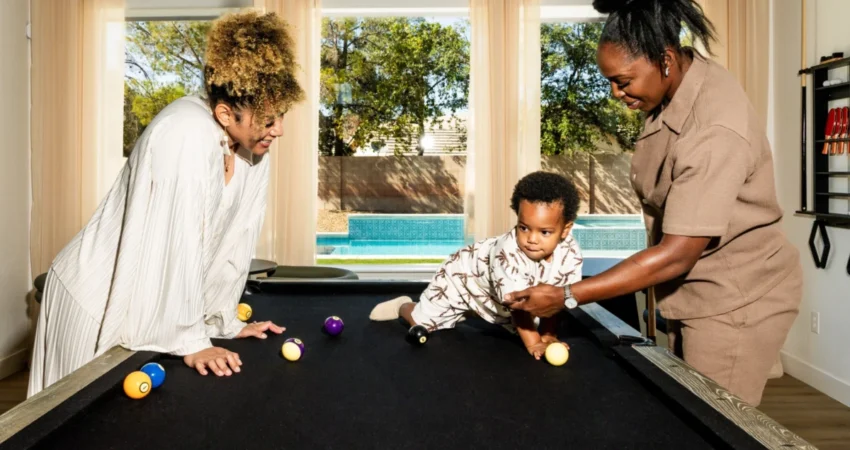
Having met as college basketball players 15 years prior, Gray and Tipesa have built a life together, navigating international careers before welcoming their son, Lennox, in February 2024. Their home design philosophy centers on creating an environment that nurtures their son’s development. The open floor plan encourages family interaction, with Gray often found cooking in the kitchen, enjoying the proximity to the living room where the family gathers. Morning routines often involve Lennox as a "sous-chef," assisting with simple tasks. The home is filled with personal touches, from a collage of family photos to Gray’s childhood pool table. Basketball memorabilia, including their college and WNBA jerseys, is proudly displayed in the office. A dedicated movie room, decorated in rich chocolate tones and featuring posters of influential Black actors, serves as a cozy space for family movie nights. The design is intentionally flexible, allowing the space to evolve as Lennox grows, ensuring their home remains a dynamic and supportive environment for their family’s continued journey.

The recent landmark CBA in the WNBA signifies more than just a financial upgrade; it represents a fundamental shift in the league’s commitment to its athletes’ long-term well-being and stability. By addressing crucial aspects like salaries and housing, the WNBA is paving the way for a future where its stars can not only compete at the highest level but also thrive, build lasting careers, and establish deep roots within their communities. This new era promises enhanced player focus, greater personal fulfillment, and a more robust and sustainable future for women’s professional basketball in the United States.

0 Comments